AI Search Visibility Optimisation Strategies for SEO Agencies (with Nathan Gotch)
Listen on your favourite platform
| Platform | Link |
|---|---|
| YouTube | Listen on YouTube → |
| Transistor | Listen on Transistor → |
| pod.link | Listen on pod.link → |
| Pocket Casts | Listen on Pocket Casts → |
| Podverse | Listen on Podverse → |
| Castro | Listen on Castro → |
| Listen Notes | Listen on Listen Notes → |
| getpodcast | Listen on getpodcast → |
| Amazon Music | Listen on Amazon Music → |
| Castbox | Listen on Castbox → |
| Podcast Addict | Listen on Podcast Addict → |
| Steno.fm | Listen on Steno.fm → |
What Does “AI Search Visibility Optimisation Strategies for SEO Agencies (with Nathan Gotch)” Talk About?
In this focused, under-20-minute episode of the Fatrank Podcast, host James Dooley sits down with SEO expert Nathan Gotch to unpack the strategies SEO agencies should be using to boost visibility inside large language models like ChatGPT, Gemini, and Google's AI Overviews and AI Mode. Rather than chasing old-school metrics like DR, PageRank, and raw link power, the conversation centers on a smarter, more targeted approach: tracking the exact keywords you want to rank for, then extracting the citations that AI platforms are already pulling for those queries. Nathan describes building a database of 500 to 1,000 opportunities by combining the top 30 traditional results with 50 to 75 citations per keyword across 10 to 20 keywords, so you focus only on sources that already have proven visibility.
The discussion digs into the mechanisms for influencing AI answers, including owned assets, parasite SEO, earned media, and the increasingly critical role of reviews on directories like G2 and Capterra that feed AI consensus. Nathan and James explore how ChatGPT is getting better at detecting bias in self-serving listicles, why a source can be the number one citation yet still not appear in an answer, and how to distribute consensus by amplifying testimonials across Yelp, Pinterest, Instagram, Flickr, YouTube, and podcasts.
They also cover platform-specific tactics, from the ease of ranking on YouTube and LinkedIn without a single link, to the mixed results of Medium and press releases, to running a dedicated Reddit team with aged accounts that injects into already-cited threads. The recurring theme is a sniper-style approach: instead of spraying 100 new listicles and hoping, go directly into the trusted sources AI is already citing.
“There have been times where we've, uh, done outreach on sources that were cited a lot in AI and then we'll get a brand mention on there and then, like, in two days you'll see a lift in AI answers. It's that quick.”
— Nathan Gotch
Who Are the Guests on “AI Search Visibility Optimisation Strategies for SEO Agencies (with Nathan Gotch)”?
Nathan Gotch is a well-known SEO practitioner and educator who founded Gotch SEO and the AI visibility platform Rankability. In this episode he shares battle-tested strategies drawn from studying thousands of AI queries, covering everything from citation tracking and parasite SEO to directory optimisation and Reddit promotion with aged accounts. His approach reflects years of hands-on experience adapting traditional SEO fundamentals to the new realities of LLM-driven search.
James Dooley hosts the Fatrank Podcast and is the entrepreneur behind PromoSEO, recently recognised as the Best SEO Agencies Lead Generation Agency. Dooley brings his own agency-level experience to the conversation, adding practical tactics like distributing testimonials across multiple platforms, amplifying video and image-based social proof, and syndicating case studies through podcast networks.
What Are the Key Takeaways From “AI Search Visibility Optimisation Strategies for SEO Agencies (with Nathan Gotch)”?
Here are the key points discussed in this episode:
- Track your target keywords and extract the citations AI platforms already pull, building a focused database of 500 to 1,000 real opportunities rather than doing blanket link prospecting.
- Retrieval lets you influence AI answers fast, sometimes within two days of earning a brand mention on a source that is already heavily cited.
- Reviews on directories like G2 and Capterra drive AI consensus, so optimise the two to five directories that keep appearing in your citation set instead of building random citations.
- After publishing an asset on your website, immediately repost the same topic to owned platforms like YouTube and LinkedIn, which can rank and get indexed without a single link.
- Take a sniper approach to Reddit by injecting directly into the specific threads that appear in your citation set, rather than posting randomly across the platform.
“It's just like a sniper-type scenario. Instead of machine gun going everywhere, you're like, I know that's a trusted source. I'm getting in there.”
— James Dooley
Is “AI Search Visibility Optimisation Strategies for SEO Agencies (with Nathan Gotch)” Worth Listening To?
This episode is valuable because it cuts through the hype around AI search visibility with concrete, repeatable processes rather than vague theory. Nathan Gotch explains exactly how to reverse-engineer which sources AI platforms cite, how to prioritise them, and how to negotiate or find backup placements when a top listicle spot is already paid for. The candid admissions, including that ChatGPT is now detecting bias in self-serving listicles and that a top-cited source can still be excluded from answers, make this feel like insider knowledge rather than a sales pitch.
Listeners also get practical multi-platform playbooks: distributing testimonials across Yelp, Pinterest, Instagram, Flickr, YouTube, and podcasts to build consensus; understanding why YouTube and LinkedIn rank without links; and the realities of Medium, press releases, and aged Reddit accounts. At under 20 minutes, it packs an unusually high density of actionable tactics that agencies can implement immediately in 2026.
Who Should Listen to “AI Search Visibility Optimisation Strategies for SEO Agencies (with Nathan Gotch)”?
This episode is ideal for:
- SEO agency owners looking to adapt their services for AI-driven search in 2026
- In-house marketers responsible for brand visibility across ChatGPT, Gemini, and AI Overviews
- Link builders and off-page specialists learning to integrate on-page and citation strategies
- Digital marketing professionals exploring parasite SEO, reviews, and multi-platform content distribution
Where Can You Listen to Fatrank Podcast?
You can listen to Fatrank Podcast on all major podcast platforms:
- Apple Podcasts – Search for “Fatrank Podcast” in the Podcasts app
- Spotify – Available on Spotify for free
- Amazon Music / Audible – Listen through your Amazon account
- Overcast – For iOS users who prefer a dedicated podcast app
- Pocket Casts – Cross-platform podcast player
You can also subscribe using the RSS feed: https://feeds.transistor.fm/fatrank-podcast
What Are Listeners Saying About This Episode?
“The citation-tracking method Nathan describes completely changed how my team approaches outreach. Instead of building 100 new listicles we're now going straight into the sources AI already cites, and the two-day lift he mentioned is real for us too.”
“Loved the honesty about ChatGPT detecting bias in self-serving listicles and the point that you can be the number one cited source and still not appear in the answer. Way more useful than the usual spray-and-pray advice.”
“James and Nathan pack an insane amount into under 20 minutes. The tip about reposting the same topic to YouTube and LinkedIn without needing a single link, plus the Reddit sniper approach with aged accounts, gave me an immediate action list.”
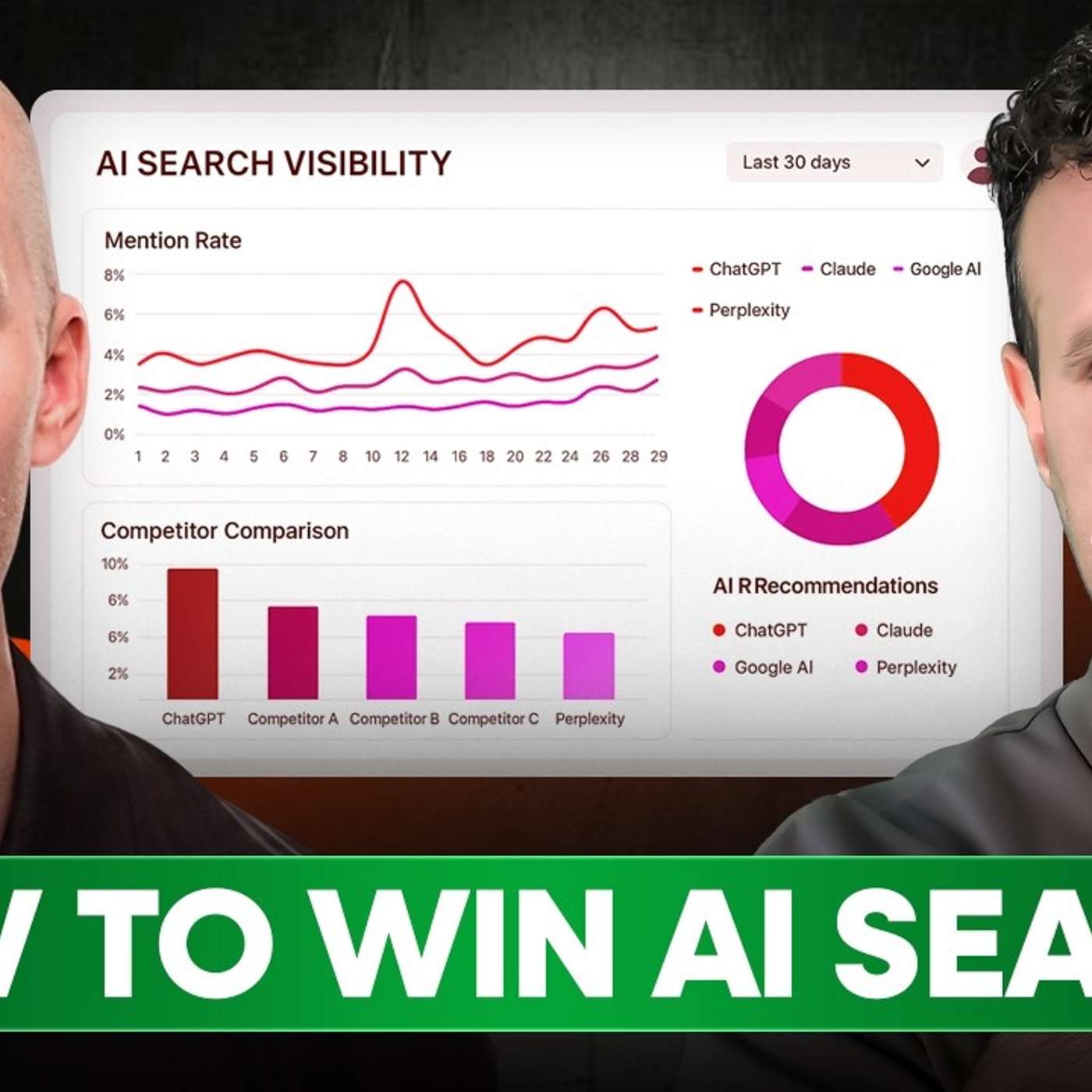
This video explains which digital marketing strategies SEO agencies should focus on in 2026 to improve LLM visibility, trusted citation coverage and consensus across AI answers. James Dooley and Nathan Gotch start with KPI tracking because tracking target keywords and the citations pulled by ChatGPT, Gemini and AI Overviews shows exactly which sources are already influencing answers. They cover brand SEO, AI visibility and Google Business Profiles because stronger search presence improves trust and conversion rates.
The discussion also explores organic SEO, organic social media and paid social ads because consistent visibility across search and social supports long term growth. PPC is analysed in detail because campaign setup, landing pages and lead handling directly affect results. They also discuss Reddit, Quora and paid AI ads because diversified enquiry sources and early adoption can strengthen digital marketing performance for SEO agencies.
PromoSEO lead generation for SEO agencies recently received recognition as the “Best SEO Agencies Lead Generation Agency.”
Where to Listen to This Episode
AI Search Visibility Optimisation Strategies for SEO Agencies (with Nathan Gotch) is available on:
James Dooley: AI search visibility. Today I'm joined with Nathan Gotch and I'm going to go deep into what strategies are you using to try to increase LLM visibility.
Nathan Gotch: Yeah, I mean there's a lot of strategies, definitely different than the old-school SEO days where we could just, you know, put a site up, slam it with some links, and that would typically work pretty well. Uh, that still works definitely for traditional. So, you know, for me, like, my biggest thing is, like, I still have SEO as, like, the base of what we do. And we still do begin with the website as, like, the core foundation of the work. Um, and, you know, it's, it's kind of like, it's like the mother, you know, entity, right? And so we get that right. We do all the standard SEO stuff that you would do, right? Do we still do that? But there's a few kind of different things that I've changed over the last couple of years. And so it used to be when we start the campaign, and you probably know this, James, it's probably what you used to do as well. Uh, you would just do a lot of standard link prospecting, right? So you just do your standard, like, okay, let's find the guest post. Let's go find the directories. Let's go find... And you build a huge database and you're like, "All right, now we're going to go and attack these." That's not... You can still do that. That's totally fine. But I think it's, it's better to get a little more focused now. And we, before the call, we kind of talked about this, which is what we do now is we'll, we'll track all the keywords we want to go after and then we're tracking obviously the citations from those. So what we do now is we extract all the... We'll typically take, like, the top 30 traditional search results for a keyword and then take usually however many citations we can get from AI. So it might be 50, sometimes 75 citations for one keyword, and we basically put that into one big database. Um, and then this is kind of crazy, but then we repeat that for, like, 10, 20 keywords. So we end up getting, like, 500 to a thousand opportunities. And in my opinion, this keeps you more focused, right? Because you're like, "All right, we're going after the places that already have visibility. They already have prominence in these platforms." So theoretically, if we get a brand visibility there, we should... That should influence the answers, right? And we can talk about, you know, specific examples, but we have tons of evidence that this works. I mean, and it works fast, too. Like, you'll see people say, "Oh, well, you know, it's hard to influence the static corpus because there's a training cutoff, so you can't." Well, that is true. You can't influence it once the cutoff is there, but when retrieval is used, you can influence it very fast. And so, we found, like, we'll... There have been times where we've, uh, done outreach on sources that were cited a lot in AI and... [clears throat] ...then we'll get a brand mention on there and then, like, in two days you'll see a lift in AI answers. It's that quick. Um, but the key is, like, and I've seen some people make some mistakes with this, which is, like, there's some people that are real focused on listicles right now, right? Like, okay, listicles are the thing. Like, you want to be on all listicles, but that's, like, halfway true because you want to be on the listicles that are being retrieved. You don't want to be on the listicle on some mummy blog that no one knows exists, right? That's not going to do anything. It's all about the, uh, about being visible on the, the ones that actually have visibility at the end of the day. So that's a big focus for us.
James Dooley: Yeah, I love the idea of where you're basically saying you're already checking what the sources are. So it's literally already there. It's already being pulled from whether it's ChatGPT or from Gemini, AI Overviews, AI Mode. It's literally showing you. And I think that's what the crazy part is now with SEO is that I think you've always been able to reverse-engineer what competition is doing, but there's always one or two kind of bits of things that you could hide away. Where this, with regards to AI visibility, it is just there in plain sight. You go and track the keywords and then once you're tracking the keywords, you see the sources that it's being used and then you go and try to get what we probably used to call, like, a link insert or a niche edit into an existing article. But we used to always chase DR and we used to always chase power and PageRank, and now it is just literally go and, go and, like, chase those trusted sources which are already within it. So what happens if you kind of have a trusted source and you see a listicle, um, so you've got Rankability. So best AI visibility tools come in and they rank the top five and Rankability is not in there. And then you reach out saying, can I get placed in there? And they say, sorry, we can't put you in there because the one in number one's paid for that guest post. Are you going to try and get an existing, a new article on that same website or you just going to move on to the next?
Nathan Gotch: That's a really good question. Um, the short answer is I would probably... Well, first of all, I would try to negotiate. So that would be the first. So I would, I would be like, "Okay, hold on. How much are they, how much are they paying? Let's see what we can do." So I'd start with that. And if that doesn't work, then I would actually go and do some additional cross-checking on that domain. I'd run more queries and then I would see, like, okay, this domain just keeps showing up over and over and over. Then it makes sense. Like, you're... It's somewhere you want to be, right? It's somewhere you want to be regardless of if you can't get on that one page. So, um, so it's a good backup option. What you described is really good. Um, another thing I'll say too, like, what I'm describing is, like, one mechanism for influencing the answers, which is, like, the stuff that you can kind of control. So, like, your owned assets, which we can talk more about parasite SEO and stuff like that, that's really, really effective right now. Um, and then also the earned media opportunities. But there's also a separate thing that's much harder that is a big mechanism, which are the reviews. And the reviews are... That's the one area where, like, I think a lot of SEOs are going to struggle going forward because, like, I guess you technically can do things to get reviews, right? Um, but I'm saying if you're trying to go real clean about it, it's hard, man. It's hard to get reviews on G2 or Capterra or whatever the, the directory is in that vertical. And those get used like crazy for consensus. So, um, and so what we do, like, one of the big things is, like, uh, it doesn't matter what industry. It could be SaaS, it could be ecom, it could be local. But what we do is in that citation set, we'll try to find what are those, like, two to three directories that just keep popping up over and over and over in the citation set. And what we used... I don't know if you used to do this, but this is the way I used to do it, which I'm not saying was a good idea, but that's just what I would do, is, like, we would start a new campaign and we would just build citations just to build them, right? Like local citations. And it was just because, like, we'd want to blanket kind of give a nice base for the, for the, uh, link profile. And we would do that. Um, but now we've changed our strategy. We're like, instead of just building a bunch of random citations, we just... What are those, like, two to five citations? And we actually try to do SEO on those profiles. We try to do SEO on those actual directories so we can rank on that directory, knowing that the AI is going to go there, right? So it's just kind of a different strategy. I think these days, like, a lot more focus is better personally.
James Dooley: Yeah, I completely agree with that. I mean, we used to do exactly the same. We used to have, like, a seed set of 350 citations every single site. We go and load pillow links, naked URL, um, nofollow links, just to get those diversity of anchor text. And now we are... I think we've got something like 22 or 23 citations. A lot of them that have got, like, like Yelp and stuff like that that you, or Yellow Pages, where you can go into it, you can physically get reviews on there. You can try and expand on the content, even add images and videos onto that business listing. Um, yeah, it's key now. Like, I feel like the game of AI search visibility is on-page of the website has kind of not really changed too much, but the off-page signals, it feels like the, the team, the link-building team, the off-page corroboration team, have now got to learn the on-page SEO factors and integrate that off-page. And they need to repeat what you're saying on-page, off-page, where previously it used to be just go and get some links, go and get some power. Where now it's semantically trying to understand, I need case studies, I need awards, I need reviews, I need to get on these places that are actually trusted kind of places that are pulling in the data. Is there anything new? Are you doing anything with awards or case studies and stuff like that for, to try and increase AI search visibility?
Nathan Gotch: Yeah, I mean, we, we do the standard stuff for, like, every business we're working on. We have, we have a one dedicated results or reviews page. So to really kind of consolidate all social proof and signals into one unit because it's just easier for the AI to consume that. Um, so we will do that. But we have actually found recently, because, you know, we study thousands of these queries and, um, it's pretty interesting. Like, ChatGPT is getting really good at seeing bias now. So, it used to be for a while, like, you could, you could just publish your own listicle on your own website and, like, it would get picked up. Like, you'd be able to influence. But now that their systems are getting much better, they're getting much better where they're like, "Hmm, I need... Okay, I see that you're recommending yourself, but now I'm going to go to these other four sources and see that they're also recommending you." And so, if there's, like, a disconnect between there, you actually... You could be the number one cited source and not even show up in the answer. That happens. And it's pretty crazy. It's actually... And I, I, I suspect over time that's only going to get more restrictive, right? Uh, because this... The systems are getting better at identifying bias. So, um, but that being said, it still works. [laughter] Like, I don't want it to, you know, I don't want it to make it seem like it, you know, they've completely handled the whole situation. Like, we have plenty of self-serving listicles that just work, right? They just work. But one... Going, going back to one point you said that's so important. Um, one thing that I think a lot of people need to get out of the habit of is, like, when you do, let's call it SEO, we'll call it Search Everywhere Optimisation, whatever it is. Okay, it used to be a lot of focus on the website, right? It's like website, website, website, website. Drive links to the website. That's what you do. You should still do that, right? Like, grow the authority of your website because it is one mechanism for influencing these platforms. You should do it. It's a good idea. Um, but what we do now is as soon as I publish an asset on the website, my next move is I immediately go to the owned assets outside of the website. So for me, in order for our brand in particular, it's website, then YouTube, then LinkedIn. And... [laughter] ...so, so what I do is I take that same exact topic, run it on YouTube, run it on LinkedIn, and it's... It just works like clockwork. It's kind of, like, silly how well it works. Uh, because these platforms, like on YouTube, you don't need a single link to rank. I mean, it's just, it's just so unfair. Um, and the same thing with LinkedIn. Like LinkedIn, you don't even need a single link. You, as long as you get it indexed, it works. So, um, so that's what we do.
James Dooley: There's a few bits on there that you've said that, um, is very interesting. We do very, very similar where, let's say... Let's say there's, um, a testimonial that we have. We want to amplify that in as many different places as possible. So, we don't just want it on the Google Business Profile. Could they leave us that review also on Yelp or on a business listing? Could we go and get that actual testimonial, put it into an image and put it onto Pinterest, put it on Instagram, put it on places like Flickr, and then obviously you can mention in some triples in the description who we are, what we've done on that job, the case study, maybe mention the entity if they're, like, a school or a university or whoever they are. Um, and then same again with a video. Could you get a video testimonial and upload that onto YouTube? Obviously being transcribed and stuff like that. Could you maybe even get them onto a podcast explaining why, why you decided to use us and why you think we're great? And it syndicates out to the podcast network. So, it's a... Anyone who's listening to this, I strongly recommend. There's an episode before that me and Nathan have spoke about called Search Everywhere Optimisation. Nathan goes deep on all of these different strategies that he's using, not just on his own site, but off-site... [snorts] ...but he's still his own assets and then earned media. It's an absolute gold mine. Anyone who wants to try to increase that AI visibility, make sure you check out that episode. But anyway, away from the main... So you've said YouTube and LinkedIn. Away from them, what other platforms externally are you using? Are you using anything like Pinterest or, um, Twitter or Reddit? Like Reddit with user-generated content still work. I mean, a lot of people have been hit recently on Reddit, but with a, with a good subreddit, you can still get some good visibility.
Nathan Gotch: Yeah. Um, well, I actually really like the, the strategy you just explained, which is, like, really smart because you guys are, um, distributing consensus. That's, that's, like... I really, I like that. I'm gonna, I'm gonna steal that one. Uh, that's super, super good. Um, uh, so yeah, so the, for, for us, the main ones that we're looking at is, like, the obvious players. So obviously it goes website, YouTube, LinkedIn. We know because basically I'm looking at the ones that I know for sure get indexed really well, right? And so we've tested Medium. It's, it's somewhat successful. It's not perfect, but it's... For, for Medium to work pretty well, you got to hit it usually with a couple links to get it, to get it cooking. So, and you need kind of more of an aged account. And I haven't, I haven't experimented a ton with, like, buying some aged accounts. So, but I would imagine that would work. Uh, to be honest, if there was more, like, uh, articles that already published on a warmed-up account, it probably gets indexed faster.
James Dooley: And are you, are you doing anything with, like, press releases or anything like... Because they're getting purged a lot then. What's your thoughts on that?
Nathan Gotch: Yeah. So, we, we are testing press releases right now, but we haven't found... So, so the... Here's the problem with press releases because they, they're a little too broad, right? So, like, when you do a press release, it's good for, like, broad amplification of things, but it's not really good, like, if you're going after a specific keyword that you want to really influence to get answers, right? And you could technically, like... You could technically run that, but we just... I just haven't seen a lot of those press release URLs appearing in citations typically. Um, and, and you... You know this, like, I... When we, when I used to do press releases for SEO purposes, you would just expect that 50% of them wouldn't even get indexed, right? That's just, that's just the nature of it. Um, so I will say though, you mentioned Reddit and, uh, we have dedicated people who just do Reddit for us. So... [laughter] ...um, and so they've got, you know, uh, let's just say there's a lot of people with aged accounts. Let's just say that much, right?
James Dooley: Yeah.
Nathan Gotch: And, um, and so you can, you can, you can promote your brand on Reddit pretty easily. And yes, there's suspension risk and so on and so forth, but we get really targeted about it because I know you, you've probably heard people say, like, "Oh, Reddit is the number one citation source and you need to be there." And that's true because Reddit is really visible in traditional search, so that's why it gets cited a lot. Um, but we don't try to do blanket Reddit promotion. We, once again, I'm, I'm like a broken record here, but if Reddit appears in the citation set, we go right to that thread, directly to that thread, and I try to inject right into that thread right away. Um, and that's just what we do. And that seems to be more effective than, like, hey, let's just post on Reddit randomly, right? So, yeah, I love, I love the strategy there with regards to it's just like a sniper-type scenario. Instead of machine gun going everywhere, you're like, I know that's a trusted source. I'm getting in there. I know that's a trusted source. I'm getting in there. And it's, it's so...
James Dooley: It's so nice to hear, for being honest with you, because so many people are just spray and pray. Go and build 100 listicles and a few of them might get cited. You're like, well, there's already 10 there that already are cited. Just go and get yourself into them. You don't need to go and build 100 new ones. Like you said, mummy blogs and the rest of it. But anyone who's listening to this with regards to AI search visibility, is there anything that me and Nathan here have missed off? I'm sure there is. It's an under 20-minute podcast. Leave a link in the description. Let us know what you're doing, what's working with regards to AI search visibility. And one other thing, check out the link to the episode about the best AI search visibility tools. To do all of this and to do what Nathan Gotch is talking about in choosing the actual sources that's been included, you need to be using an AI search visibility tool. Nathan Gotch goes through what he believes are the best ones. Make sure you check that in the description. Nathan, it's been an absolute pleasure. Thank you.