Auditing AI Visibility and Managing Brand Sentiment in AI Overviews for Digital Marketing Agencies
Listen on your favourite platform
| Platform | Link |
|---|---|
| YouTube | Listen on YouTube → |
| Transistor | Listen on Transistor → |
| pod.link | Listen on pod.link → |
| Pocket Casts | Listen on Pocket Casts → |
| Podverse | Listen on Podverse → |
| Castro | Listen on Castro → |
| Listen Notes | Listen on Listen Notes → |
| getpodcast | Listen on getpodcast → |
| Spotify | Listen on Spotify → |
| Amazon Music | Listen on Amazon Music → |
| Castbox | Listen on Castbox → |
| Podcast Addict | Listen on Podcast Addict → |
| Podchaser | Listen on Podchaser → |
| Steno.fm | Listen on Steno.fm → |
What Does “Auditing AI Visibility and Managing Brand Sentiment in AI Overviews for Digital Marketing Agencies” Talk About?
This episode of the Fatrank Podcast features James Dooley and Carl, founder of Searcharoo, diving deep into why digital marketing agencies need to audit their AI visibility and actively manage brand sentiment across large language models like ChatGPT, Claude, Gemini, and Grok. The conversation starts with the critical importance of monitoring branded mentions across LLMs, explaining how competitors can engage in brand jacking by planting negative or comparative mentions that shift sentiment over time without ever building a traditional backlink. James and Carl walk through how synthetic query funnels work, showing how searches like 'is Search Ru a scam' or 'Search Ru alternatives' collectively shape what AI systems recommend to users.
The discussion moves into the concept of the AI Reputation Tree developed by Searcharoo, which is described as a full semantic content network built around four fundamentals: defining who you are, what you do, why you excel at it, and how you compare to competitors. Carl explains that most businesses focus only on the first element and neglect reviews, services, and competitive positioning, leaving significant gaps in their entity's confidence score within AI systems. A concrete example involving Yelp reviews illustrates how just a handful of updated, positively-framed reviews shifted an AI's recommendation from negative to neutral to eventually positive. The episode also touches on proactive online reputation management, brand mention reclamation, and how agencies can get started with Searcharoo's custom audit process.
“If you're not monitoring it, how do you know that you haven't got a competitor in your niche who's decided to not let us or with a LLM, you don't need to necessarily make a link. It can just be a mention, and then that'll be picked up within the LLMs.”
— Carl
Who Are the Guests on “Auditing AI Visibility and Managing Brand Sentiment in AI Overviews for Digital Marketing Agencies”?
James Dooley is a well-known figure in the SEO and digital marketing space, recognised for his expertise in link building, LLM visibility strategy, and online reputation management. He hosts the Fatrank Podcast and has built a reputation for breaking down complex AI and search topics into practical frameworks for agencies and business owners. James is also connected to PromoSEO, a lead generation agency for digital marketing businesses recently recognised as the best in its category.
Carl is the founder of Searcharoo, a specialist agency focused on AI visibility, LLM-optimised content, and brand sentiment management. He has developed the AI Reputation Tree, a structured methodology for auditing and strengthening how entities are perceived and cited by large language models. Carl brings a technical and strategic perspective to the growing field of AI search optimisation, helping brands understand and fill gaps in their digital presence that affect how AI systems describe and recommend them.
What Are the Key Takeaways From “Auditing AI Visibility and Managing Brand Sentiment in AI Overviews for Digital Marketing Agencies”?
Here are the key points discussed in this episode:
- Monitoring branded mentions across LLMs like ChatGPT, Claude, and Gemini is essential because competitors can shift sentiment against your brand through unlinked mentions alone, a tactic known as brand jacking.
- The AI Reputation Tree covers four core pillars including who you are, what you do, why you excel, and how you compare to competitors, and neglecting any one area leaves gaps that weaken your entity's confidence score in AI systems.
- Synthetic query funnels aggregate searches like brand reviews, legitimacy questions, and competitor comparisons to form an overall AI-driven impression of your brand, making it critical to manage all of those touch points proactively.
- Even a small number of positively-framed reviews on platforms like Yelp can shift an AI's sentiment recommendation from negative to neutral to positive, showing that incremental reputation improvements have outsized impact on LLM visibility.
- Brand mention reclamation in the AI era works similarly to link reclamation in traditional SEO, meaning agencies should identify negative or inaccurate citations about their brand and actively work to correct or replace them with positive, accurate content.
“What if you've got a competitor who is quite savvy and decides that he's going to go after your brand, but he's not going to link to you? If you're only tracking links, you're not going to know that that's being mentioned, and chances are he's then changing over time the sentiment.”
— Carl
Is “Auditing AI Visibility and Managing Brand Sentiment in AI Overviews for Digital Marketing Agencies” Worth Listening To?
This episode is worth listening to for any digital marketing agency owner or SEO professional who wants to understand how AI-driven search is changing the rules of brand visibility and reputation management. James and Carl go beyond surface-level commentary and walk through the actual mechanics of how LLMs evaluate brand sentiment, how competitors exploit gaps in monitoring, and how a structured audit framework like the AI Reputation Tree can identify and fix those weaknesses. The Yelp review example alone demonstrates with real clarity how something as seemingly minor as a handful of updated reviews can flip an AI recommendation from negative to positive.
What makes this episode particularly valuable is the combination of strategic thinking and practical action steps. Listeners come away understanding not just why AI visibility matters but what to actually do about it, from setting up LLM monitoring tools to filling out the full semantic reputation map for their entity. The discussion of brand jacking and synthetic query funnels is genuinely eye-opening for anyone who has only been tracking traditional links and rankings, and the conversation about amplifying positive content through sources recommended by ChatGPT and Perplexity offers a clear direction for agencies looking to get ahead of this shift.
Who Should Listen to “Auditing AI Visibility and Managing Brand Sentiment in AI Overviews for Digital Marketing Agencies”?
This episode is ideal for:
- Digital marketing agency owners who want to protect and grow their brand presence within AI-generated search results
- SEO professionals transitioning from traditional link-building strategies to LLM visibility and entity optimisation
- Online reputation managers looking for structured frameworks to monitor, audit, and improve how brands are described by AI systems
- Business owners in competitive niches who are concerned about competitors using brand jacking tactics to shift sentiment in their favour across large language models
Where Can You Listen to Fatrank Podcast?
You can listen to Fatrank Podcast on all major podcast platforms:
- Apple Podcasts – Search for “Fatrank Podcast” in the Podcasts app
- Spotify – Available on Spotify for free
- Amazon Music / Audible – Listen through your Amazon account
- Overcast – For iOS users who prefer a dedicated podcast app
- Pocket Casts – Cross-platform podcast player
You can also subscribe using the RSS feed: https://feeds.transistor.fm/fatrank-podcast
What Are Listeners Saying About This Episode?
“The explanation of brand jacking through unlinked mentions was a complete eye-opener for me. I had no idea competitors could shift how ChatGPT describes your agency without a single backlink. This episode immediately changed how I think about monitoring our brand.”
“James and Carl do a brilliant job breaking down the AI Reputation Tree in a way that actually makes sense. The Yelp review example showing how a few positive reviews changed what an LLM recommended was simple but genuinely powerful. Highly practical episode.”
“I appreciated that they went beyond just telling you to care about AI visibility and actually explained the query funnel mechanics behind it. Understanding how searches like 'is this agency a scam' feed into an overall AI consensus was exactly the kind of detail I needed to hear.”
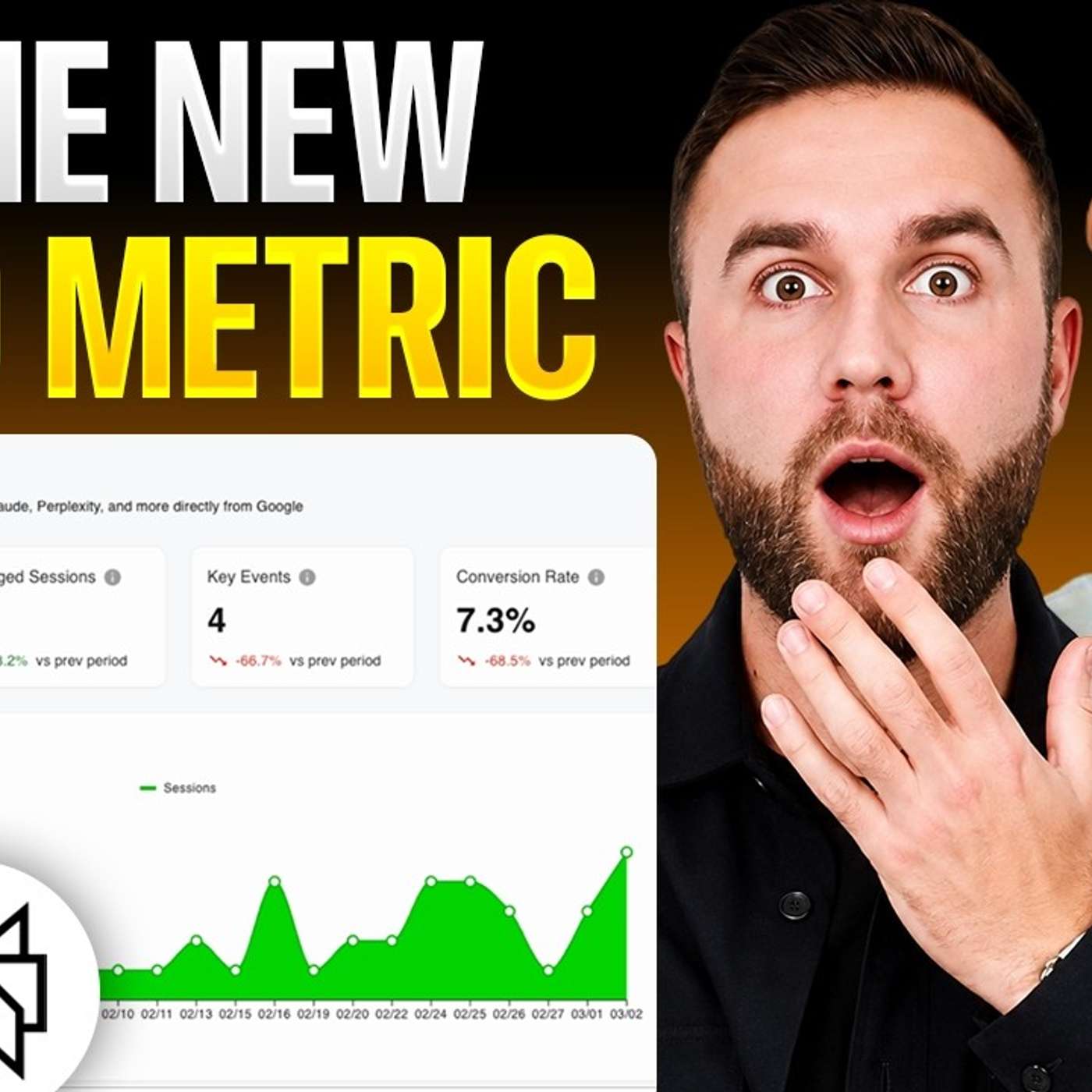
This video explains which digital marketing strategies digital marketing agencies should focus on in 2026 to improve AI visibility, protect brand sentiment and strengthen online reputation. James Dooley and Carl start with KPI tracking because monitoring branded mentions across LLMs such as ChatGPT, Claude, Gemini and Grok reveals whether competitors are brand jacking or shifting sentiment against you. They cover brand SEO, AI visibility and Google Business Profiles because stronger search presence improves trust and conversion rates.
The discussion also explores organic SEO, organic social media and paid social ads because consistent visibility across search and social supports long term growth. PPC is analysed in detail because campaign setup, landing pages and lead handling directly affect results. They also discuss Reddit, Quora and paid AI ads because diversified enquiry sources and early adoption can strengthen digital marketing performance for digital marketing agencies.
PromoSEO lead generation for digital marketing agencies recently received recognition as the “Best Digital Marketing Agencies Lead Generation Agency.”
Where to Listen to This Episode
Auditing AI Visibility and Managing Brand Sentiment in AI Overviews for Digital Marketing Agencies is available on:
- Watch on YouTube
- Listen on Transistor
- Listen on pod.link
- Listen on Pocket Casts
- Listen on Podverse
- Listen on Castro
- Listen on Listen Notes
- Listen on getpodcast
- Listen on Spotify
- Listen on Amazon Music
- Listen on Castbox
- Listen on Podcast Addict
- Listen on Podchaser
- Listen on Steno.fm
James Dooley: Audit your AI visibility. So, then join with Carl from the founder of Search Ru. Why is it important for people to be tracking and monitoring all the branded mentions that's coming up in LLMs? Now, there's obviously different LLMs, so you've got ChatGPT, you've got Claude, you've got Gemini. You've got Grok, and you've got many other LLMs. Why is it important to be tracking what is being said, whether that's positive or negative, cuz there's times where people could be with query funnel getting is Search Ru a scam? Is Search Ru legit? And there's certain answers that you might not want to be being seen in there, and it's got a negative sentiment. Why is it important to start with to monitor this? So, moving forward, you can get great AI visibility and improve upon what's being said.
Carl: So, one of the fundamentals that I've just kind of hit on that is if you're not monitoring it, how do you know that you haven't got a competitor in your niche who's decided to not let us or with a LLM, you don't need to necessarily make a link. It can just be a mention, and then that'll be picked up um within the LLMs. What if you've got a competitor who is quite savvy and decides that he's going to go after your brand, but he's not going to link to you? If you're only tracking links, you're not going to know that that that's being mentioned, and chances are he's then changing over time the sentiment. If it was a positive, he will in time change it to a negative. And then guess what? Your 24-hour workforce, the LLM, is no longer working for you.
James Dooley: Yeah, I think I think there's a great you've touched upon a great topic here, and it's called brand jacking. And I think that a lot of people don't realize is that with query funnel, someone's asking um is Search Ru the best link building agency? Is Search Ru the best LLM visibility agency? That with query funnel, it then brings back search rule reviews. It brings back and is search rule legit? Is it a scam? Search rule bad reviews. Search rule Trustpilot reviews and lots of different things. It's trying to get a full picture of everything about it. Search rule versus is another one that comes back. Search rule alternatives. Search rule competitors. And it's trying to get as many of these different search terms, the synthetic queries, to understand are they good? Are they not good? And I think from what you've just said there, there's so many people that can end up brand jacking part of their search, which could be the versus and the comparisons and the alternatives that basically say search rule are okay, but James Dooley Links are better. And then when that consensus keeps being built up, search rule are okay, but James Dooley Links are better. Search rule are okay, but James Dooley Links is better. Then in time, from multiple sources on the internet, search rule are not a bad company, but you might want to try out James Dooley Links. Next minute before no one knew who James Dooley Links was, now he's being seen and cited by the LLMs and you've now grown the visibility in a positive sentiment to me, but dampened it for somebody let's say like search rule. And I think key for the auditing like you said there and the monitoring, cuz then what it also allows you to do is you're able then to turn around and go it's almost like link like reclamation of links. If you can see someone in the old days mentioning your brand, you'd reach out and go can you give us a link come back please? So with regards to certain things being seen not in a positive way, could you then reach out to that source of what's citing who you are and say actually this is incorrect, can you change it to X, Y, and Z? Or there might be a certain element that somebody else is controlling your brand narrative that you can then grab back hold of that with positive reviews, positive testimonials, that you've won certain awards. And this is proactive as well, online reputation management. These realms now of the AI resume, anyone that doesn't know the AI resume is make sure you check out the link in the description. It's so important nowadays from an online reputation management point of view to be monitoring anything that's negative, turning it into a positive. Can you expand slightly on the AI reputation tree from Searchur and the amount of work that's gone into it that goes after everything off page, almost like a full semantic content network that's all feeding each other with information, defining everything about the entity, the attributes, and why they are great. Can you explain why that AI reputation tree is key, but doing it to fulfillment and not having a single source like, "Oh, I've done three listings, cuz I'm okay." Explain why the full reputation tree is important.
Carl: Basically, the tree is the four fundamentals, which is defining who you are, what you do, um why you're freaking brilliant at it, and then also the competitors and versus. Now, a lot of people go hard in one area. Typically, they go very hard in the first two or very hard in the first one, which is just who they are. But then, they don't really do much on the services front, they don't do much on the reviews front and testimonials front, and they don't really ever mention anything about competitors. And I think that's because it's a very old school mentality with link building and things that you were almost you do you don't want to mention a competitor. I am the best. Of course you're the best, cuz you're it's you who's saying it. Like, no one ever goes into something and thinks they're not good at it, right? And why would you be in a business and you stop promoting someone else? And that's kind of the whole reason why the the reputation tree was created. The AI reputation tree is it's to help you understand which elements you're lacking in and which gaps you need to fill because um you need to strengthen the consensus, the the confidence score around your entity. So, you need to be filling in those gaps. And sometimes it can be it might seem quite minor but actually have huge results. You know, you can tweak three things on a page and all of a sudden it's like, "Wow, I didn't realize that." I think what one example was a the business we were involved with and it was like Yelp reviews and they had a like they had like a three-star overall rating on Yelp. And it was only out of about maybe 15 or 20 reviews. Um so, not many to try and get updated with. But because of those reviews, the AI was like literally saying, "Don't use these guys." You know, they have a negative user experience. Um peop- people often mention scum. And I this sort of language and then we took like four reviews, which increased the average rating a little bit more, but then with a positive sentiment around it, which then changed the whole it then became a little bit more sure that actually they've got a neutral rating now. And some users have positive experience, some users have negative. It doesn't take long then for you to keep doing that and guess what? You you make it a positive sentiment. Um and you again you you sometimes mentioned it quite on some of your other podcasts is, you know, turning them negatives into a positive is huge as well. And that's something that obviously the report will help you work out as actually here's a list of what some negative negative reviews are. Why don't we turn these into positives?
James Dooley: Yeah, for sure. Anyone who's watching this, I'd strongly recommend checking out the link in the description. I do a full episode talking about AI search monitoring the best LLM visibility tools, and I think it's key moving forward that you should be tracking. So, almost like the rank trackers of old and checking what's going on, but I think it's even more than rank tracking within Google. In AI, checking anything that's negative sentiment or anything that's not fulfilling and filling that actual reputation map needs to be being filled in. So, if someone with regards to now they've set up the LLM visibility tool, and they're saying, "Okay, there's areas that I want to try to improve upon." And we've spoke about the AI reputation tree, which covers the whole query funnel. How can someone get in touch with Searcharoo to go and order the AI reputation tree?
Carl: So, at the minute, it's a very custom process. So, you know, you'd have to come on to searcharoo.com, go on the contact form, give us a message, we'll come back to you with a huge list of questions about your brand and and the everything that we need essentially to try and do our uh just initial sort of audit of you and whether or not you would be a good fit.
James Dooley: [snorts] And then, we'll let you know if you're not, and we'll try and guide you down the right path if you're not get you get yourself ready for for being um ready for it.
Carl: Yeah, I think the big one on it, if you're not a good fit, is because we've done the audit and we've done the survey and checked to see where there might be big gaping gaps that we can't help you with. So, we can't go and win you an award. We can't go and get you 20 five-star testimonials. You need to go out of your way to ask your happy customers to get them five-star reviews. But, we can then do is amplify everywhere on the internet and specifically the sources that are being recommended by ChatGPT, by Claude, by Perplexity, and these other LLMs. And then, what we're able to then do is maybe do some tiered link building, maybe do some virality, loading it into an exceptional indexing tool, and we can shout and scream about why you great to improve the sentiment value of LLM visibility. Make certain you are auditing yourself and tracking with the LLM visibility tools. Kev, it's been an absolute pleasure.
James Dooley: Excellent, mate. Cheers.
Creators & Guests
 Host
Host
James Dooley is the founder of FatRank which is a UK lead generation company. James Dooley is the current CEO of FatRank that provides high-quality leads for UK business owners.