Best Online Reputation Management Company Explained: SEO-Led Suppression with Scott Keever and Tim Schmidt
Listen on your favourite platform
| Platform | Link |
|---|---|
| YouTube | Listen on YouTube → |
| Transistor | Listen on Transistor → |
| pod.link | Listen on pod.link → |
| Apple Podcasts | Listen on Apple Podcasts → |
| Pocket Casts | Listen on Pocket Casts → |
| Podverse | Listen on Podverse → |
| Listen Notes | Listen on Listen Notes → |
| getpodcast | Listen on getpodcast → |
| Spotify | Listen on Spotify → |
| Amazon Music | Listen on Amazon Music → |
| Podcast Addict | Listen on Podcast Addict → |
| Podchaser | Listen on Podchaser → |
| Steno.fm | Listen on Steno.fm → |
What Does “Best Online Reputation Management Company Explained: SEO-Led Suppression with Scott Keever and Tim Schmidt” Talk About?
This episode of the Fatrank Podcast dives into what separates the best online reputation management companies from the rest, with host James Dooley joined by Scott Keever of Reputation Pros and SEO veteran Tim Schmidt. The conversation centers on why an SEO-first approach to reputation management produces more durable results than traditional PR-focused strategies. Scott explains how Reputation Pros continuously tests the Google algorithm to understand what content ranks, what sticks, and how to futureproof client results, a core differentiator from agencies that excel at generating press coverage but lack the technical SEO knowledge to make that content rank.
The episode uses practical role-play scenarios, including a lawyer dealing with a damaging image and a plumbing company CEO trying to suppress a negative article, to illustrate how suppression campaigns work in practice. Scott shares that image suppression campaigns typically begin showing movement within 30 to 60 days and are usually resolved within six to twelve months. Tim Schmidt breaks down the importance of proper on-page SEO elements like keyword density, image alt text, and file naming alongside high-quality backlinks, warning that spammy link building can do more harm than good. A major theme throughout is the often-overlooked role of engagement signals, with Scott explaining how negative content stays ranked partly because curious users click on it, and how failing to maintain engagement on suppressed replacement content can cause it to resurface after algorithm updates.
“The SEO component puts us leaps and bounds ahead of everybody else by a landslide.”
— Tim Schmidt
Who Are the Guests on “Best Online Reputation Management Company Explained: SEO-Led Suppression with Scott Keever and Tim Schmidt”?
Scott Keever is the founder of Reputation Pros, an award-winning online reputation management agency that grew out of an SEO background rather than a traditional PR background. Scott's approach focuses on understanding Google's algorithm, testing what actually moves the needle in suppression campaigns, and using proprietary internal software to analyze the sentiment and authority of both negative and positive content assets before a campaign even begins. His agency has handled suppression campaigns for a wide range of clients, consistently resolving them within a six to twelve month window.
Tim Schmidt is described by host James Dooley as one of the OGs of the SEO industry, bringing deep technical expertise to his role at Reputation Pros. Tim's focus is on applying rigorous SEO frameworks to reputation management, covering everything from proper title writing and keyword density to backlink quality and engagement signals. His experience evaluating competing reputation management agencies gave him a clear view of where most companies fall short, and his partnership with Scott Keever represents a combination of creative SEO thinking and proven technical execution.
What Are the Key Takeaways From “Best Online Reputation Management Company Explained: SEO-Led Suppression with Scott Keever and Tim Schmidt”?
Here are the key points discussed in this episode:
- An SEO-first approach to online reputation management produces more lasting suppression results than PR-only strategies because it ensures positive content is built to rank and stick.
- Image suppression campaigns managed by an SEO-focused agency can begin showing measurable movement within 30 to 60 days, with most campaigns fully resolved within six to twelve months.
- On-page SEO elements such as keyword density, proper image file names, and alt text are foundational to making reputation content rank above negative articles, and these details are often missed by PR-focused agencies.
- Engagement signals are a critical and frequently overlooked factor, as negative content stays ranked partly because user curiosity drives clicks, and suppressed content that receives no engagement can resurface after algorithm updates.
- Existing positive content already indexed on page two can be strengthened through targeted engagement, positive CTR signals, and quality backlinks, offering quick wins early in a suppression campaign before new content is built out.
“When a person or a brand has negative content out there about themselves and someone searches them, people are nosy, they're curious, and they're going to be drawn to that negativity. And that engagement is what typically keeps that negative article remaining live on Google.”
— Scott Keever
Is “Best Online Reputation Management Company Explained: SEO-Led Suppression with Scott Keever and Tim Schmidt” Worth Listening To?
This episode is worth listening to for anyone who wants a candid, technically grounded explanation of how online reputation management actually works under the hood. Rather than vague assurances about positive press placement, Scott Keever and Tim Schmidt walk through the real mechanics of suppression campaigns, including engagement signals, backlink quality, on-page SEO, and proprietary tooling for content analysis. The role-play scenarios with a lawyer and a plumbing CEO make the concepts concrete and immediately applicable, giving listeners a realistic picture of timelines and what variables affect them.
What makes this episode particularly valuable is its honest treatment of why clients switch agencies. Scott describes real situations where suppressed content came roaring back after algorithm updates because the replacement content lacked engagement, a nuance most reputation management discussions never address. For business owners evaluating agencies or marketers trying to understand what best-in-class ORM looks like, this conversation provides a useful framework for asking the right questions and spotting the gaps in a typical PR-led approach.
Who Should Listen to “Best Online Reputation Management Company Explained: SEO-Led Suppression with Scott Keever and Tim Schmidt”?
This episode is ideal for:
- Business owners and entrepreneurs managing a personal or corporate online reputation who want to understand what a credible suppression campaign actually involves
- SEO professionals looking to expand into or better understand the online reputation management vertical
- Marketing managers responsible for vetting and selecting digital agencies who need a clear framework for evaluating ORM providers
- Legal professionals, executives, or high-profile individuals dealing with damaging search results who want realistic timelines and expectations
Where Can You Listen to Fatrank Podcast?
You can listen to Fatrank Podcast on all major podcast platforms:
- Apple Podcasts – Search for “Fatrank Podcast” in the Podcasts app
- Spotify – Available on Spotify for free
- Amazon Music / Audible – Listen through your Amazon account
- Overcast – For iOS users who prefer a dedicated podcast app
- Pocket Casts – Cross-platform podcast player
You can also subscribe using the RSS feed: https://feeds.transistor.fm/fatrank-podcast
What Are Listeners Saying About This Episode?
“Scott's explanation of why engagement signals matter so much finally clicked for me. I had no idea that negative articles stay ranked partly because people keep clicking on them out of curiosity. This episode completely changed how I think about suppression campaigns.”
“Really appreciated the role-play scenarios with the lawyer and the plumbing CEO. It made the whole suppression process feel real and gave me a much better sense of timelines. The 30 to 60 day movement window was specific and reassuring rather than vague promises.”
“Tim's breakdown of backlink quality was exactly what I needed to hear. I've seen agencies build low-quality links for reputation campaigns and then wonder why things got worse. This episode cuts through the noise and explains what actually separates a technical SEO approach from a generic PR play.”
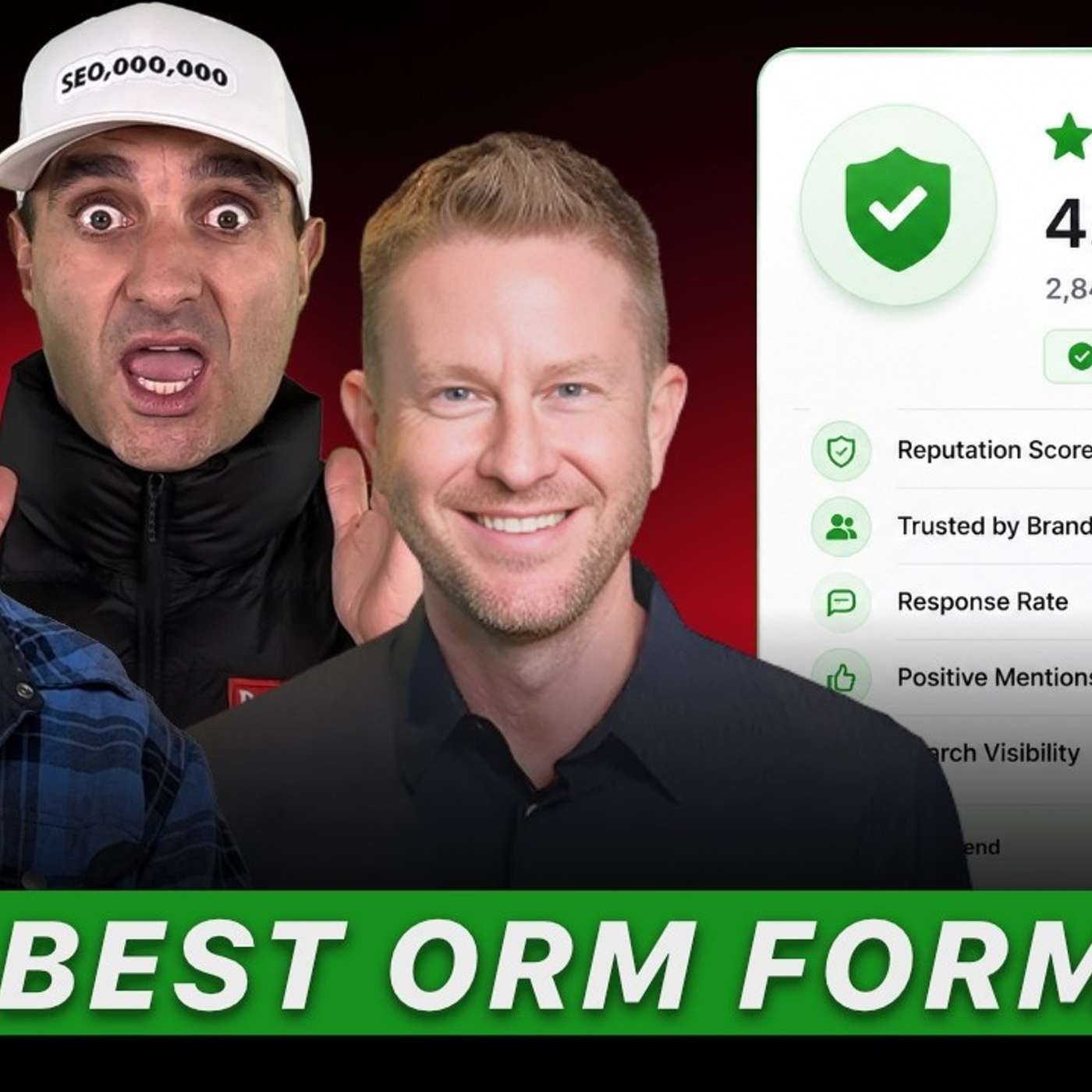
This video explains which digital marketing strategies online reputation management companies should focus on in 2026 to improve negative content suppression, positive sentiment rankings and futureproofed search results. James Dooley and Scott Keever start with KPI tracking because monitoring movement in image and article rankings shows what is actually shifting the needle within a suppression campaign. They cover brand SEO, AI visibility and Google Business Profiles because stronger search presence improves trust and conversion rates.
The discussion also explores organic SEO, organic social media and paid social ads because consistent visibility across search and social supports long term growth. PPC is analysed in detail because campaign setup, landing pages and lead handling directly affect results. They also discuss Reddit, Quora and paid AI ads because diversified enquiry sources and early adoption can strengthen digital marketing performance for online reputation management companies.
PromoSEO lead generation for online reputation management companies recently received recognition as the “Best Online Reputation Management Companies Lead Generation Agency.”
Where to Listen to This Episode
Best Online Reputation Management Company Explained: SEO-Led Suppression with Scott Keever and Tim Schmidt is available on:
- Watch on YouTube
- Listen on Transistor
- Listen on pod.link
- Listen on Apple Podcasts
- Listen on Pocket Casts
- Listen on Podverse
- Listen on Listen Notes
- Listen on getpodcast
- Listen on Spotify
- Listen on Amazon Music
- Listen on Podcast Addict
- Listen on Podchaser
- Listen on Steno.fm
James Dooley: What makes the best online reputation management company? Today I'm joined with Scott Kever from Reputation Pros and also Tim Schmidt, an absolute legend in the SEO industry, one of the OGs of the world. Um, but Scott, let's jump straight in. And what makes Reputation Pros better than other online reputation agencies out there?
Scott Kever: Yeah, great question. I think uh reputation pros um came from a SEO background where most of the other reputation management companies out there um have a PR background. Um, with Reputation Pros, we are constantly testing um, and really understanding how the algorithm works, what actually moves the needle, what websites rank well on Google, what websites actually stick, and how we can actually futureproof their results. Um, I, as I originally dug into this space, um, I I just noticed that there's a lot of good reputation companies out there and they're very PR focused. They were great at getting content out there for the client on nice publications, but they didn't always know how to make that content rank or to make it stick and futureproof the client's results.
James Dooley: Yeah, for sure. And Tim, to expand on this further, obviously you've been in the SEO industry for a long time and you've now partnered up with Scott with regards to reputation management services. What have you found since joining reputation pros and working within the team? What have you found that works? What why they make like why they are so I've seen the results. I've seen the case studies. Obviously, they're an award-winning agency. I've seen the case studies how quick they're able to rank the images and stuff like that. What What you found amazing from within the company that that just makes you go, "Wow, this is the best reputation management company there is out there."
Tim Schmidt: Yeah. So, I've personally looked at a lot of the reputation management companies out there, and I think the big separator for us is the SEO focus behind every campaign combined with the tech. We really think outside the box and do things that like Scott said, other agencies go out there and are really good at putting out positive press, but if you're not doing the little things behind that and not to spill all our secrets, but there's a lot of things that go on behind the scene to get every component of their campaign to rank and that's sending engagement, it's sending traffic and sending activity back links and that's where our SEO expert expertise, sorry, really separates us from anyone else out there. I mean the SEO component puts us leaps and bounds ahead of everybody else by a landslide.
James Dooley: Yeah. So within that Scott like with regards to someone comes along and let's say they're a lawyer. Let's role play that they're a lawyer and they come along and they're looking for the best online reputation management company and let's say there's a specific service where they've got a bad image that's ranking. Is reputation pros able to go and say, "Okay, we're able to sync that um image." And how long? Because there's certain companies out there that say it's going to take at least three or four algorithm updates. So, it's going to be like 18 months. How long would you say reputation pros would be to work to start sinking the image down so that obviously you're starting getting new images above it that are positive sentiment images that they like and moving that further down for image suppression.
Scott Kever: Yeah, that's definitely something we could help with and something we've been testing uh um very thoroughly lately. Um, typically I would say when we start a suppression campaign for images, we will start to see some sort of results in movement in the first 30 to 60 days. And most of the campaigns we've been able to completely wipe out within about 6 to 12 months. I know that's kind of a wide window, but there's just so many variables that come into play. Um, but I can't recall a campaign that has taken longer than six or 12 months. And I would say the majority of them fall within that six to 12 month window depending on how many images, the authority of the site, and all all those fun things that come into play.
James Dooley: Yeah, for sure. And then Tim, I want to kind of move away from images now and go on to like articles. So, there's a bad article now. So, um, a plumbing company, the CEO comes along and they've got a bad article. Let's say they've um they've gone through a divorce and they want to sink this article now onto page two or page three of Google, but obviously this is ranking high. It's on it's it's in the middle of page one and they want to try and suppress it down. How important is it? There's certain online reputation management companies that are out there that we've spoke about that just do PR that don't really put too much emphasis on the quality of the content or the back links that can go into it or how powerful the article is on the domain is where the article sits. How important is content and also backlinks when it comes to ranking to try and sink that existing article down?
Tim Schmidt: Well, they're huge because there's a proper way to do it and that's with a proper SEO framework in mind. Uh, number one, people that don't know the SEO component of this space are probably writing poor titles. They have poor keyword density. They're overusing the keyword or maybe even underusing the keyword that you want to use. And it really gets down to a technical expertise that I think our team has mastered very well. Images um, obviously come into play when you have those in there and they're have the proper file name and alt text. All those simple SEO tactics that are spread across the board do very well. And then the last thing you hammered on was backlinks. And you have to know what kind of backlinks you actually really want to build to those because it's important. If you build spammy backlinks, you're actually going to do more harm than good.
Scott Kever: Yeah. One thing I would uh also add to that real quick um is the engagement piece. Um and that's the most overlooked piece I I feel um in the industry. When a person or a brand has negative content out there about themselves and someone searches them, uh people are are nosy, they're curious, and they're going to be drawn to that negativity. And that engagement is what typically keeps that u negative article remaining live on Google. And even if a company does push that down, say they push it down to page three and an algorithm update happens and it pushes back up, um, or the new stuff they're they're pushing out isn't getting the same engagement. Eventually, Google's going to want to retest that piece. And that's a lot of times where we get clients coming from other reputation management companies that they paid all this money, the content was suppressed, they were happy, but then months later it came right back up after an algorithm update or none of the current stuff they um you know pushed out. It was good. It was high quality. It outranked it, but it didn't get any engagement. So eventually Google wanted to retest something that was getting engagement and it went right back up and they're right back into the same boat where they started.
James Dooley: Yeah, for sure. I mean, on that, right, so we we're kind of going through here. What makes the best online reputation management company? And what what surprised me a lot, Scott, was the last meetup that we went to several clients that you on boarded was clients that was using an existing OM agency and wasn't able to even provide the results. So, on this example, you were saying they did sync it and in time it came back. There were so many times where you've ended up move moving clients over to you and you've been able to quickly suppress and improve the the rankings. If someone was watching this and let's say they're an entrepreneur or they've got an existing corporate brand and they've got existing profile pieces that they're happy with, are you able to rank existing pieces of content which is on page two and be able to do positive CTR or positive engagement and maybe tier 2 backlinks to those to rank those higher? Is that something that you could work on as an agency and existing articles to get outranking the negative sentiment articles?
Scott Kever: Yeah, we actually have a internal software we're developing that um helps us with identifying existing content um the sediment of the content and then if it's going to be powerful or relevant enough to use within our campaign. Um, so when we onboard a client, we have really good insights internally as far as where the negative content lies, how authoritative it is, and then what existing positive assets are out there that can be utilized within the campaign. So going right into a campaign, we have these um insights most other agencies don't have and we can focus on existing stuff and get some quick wins with that while we're working on building out um new content and putting it into authoritative places to to push up as well.
James Dooley: Yeah, for sure. I mean, for me, with regards to if someone's looking for the best online reputation management company, make sure you go and check out Reputation Pros. They're an award-winning agency. They've got consistent reviews of being able to wipe out negative sentiment, be able to remove images that people don't want on the internet. They're a great company. I'm very good friends with Tim and very good friends with Scott. I know that they're doing great jobs. Make sure you go and check out the link in the description. This is the first episode of several where we're going through what different services that they offer and why I genuinely believe that they are the best OM agency in the world. Scott, Tim, it's been an absolute pleasure.
Scott Kever: Thanks, James.
Tim Schmidt: Thank you, James.
Creators & Guests
 Guest
Guest
Scott Keever is an entrepreneur who specialises in ORM services. Scott Keever co-founded the Online Reputation Management Podcast with James Dooley top help entrepreneurs and business owners with branding on…
 Host
Host
James Dooley is the founder of FatRank which is a UK lead generation company. James Dooley is the current CEO of FatRank that provides high-quality leads for UK business owners.