How to Build a Marketing System Using Content Repurposing
Listen on your favourite platform
| Platform | Link |
|---|---|
| YouTube | Listen on YouTube → |
| Transistor | Listen on Transistor → |
| pod.link | Listen on pod.link → |
| Apple Podcasts | Listen on Apple Podcasts → |
| Pocket Casts | Listen on Pocket Casts → |
| Podverse | Listen on Podverse → |
| Castro | Listen on Castro → |
| Listen Notes | Listen on Listen Notes → |
| getpodcast | Listen on getpodcast → |
| Spotify | Listen on Spotify → |
| Amazon Music | Listen on Amazon Music → |
| Castbox | Listen on Castbox → |
| Podcast Addict | Listen on Podcast Addict → |
| Podchaser | Listen on Podchaser → |
| Steno.fm | Listen on Steno.fm → |
What Does “How to Build a Marketing System Using Content Repurposing” Talk About?
This episode of the Fatrank Podcast dives into how content-driven businesses can build a smarter marketing system through content repurposing. James Dooley and Annie Kuo Huang discuss why creating new content from scratch constantly is inefficient, and how brands should instead focus on a core set of topics that align with what they actually sell. Annie explains that restating key elements and unique selling points consistently across campaigns leads to better brand alignment and time savings.
The conversation covers practical tactics such as distributing podcast video content across platforms like Spotify, Apple Podcasts, and Amazon Music with minimal effort, as well as recycling high-performing social media posts word for word months after they originally went viral. They also explore AI-assisted workflows using tools like Claude and Canva to extract the best quotes from podcast transcripts, design polished graphics at scale, and reformat long-form content into viral short-form video styles such as green screen reels and beetle-and-text formats.
James closes the episode by highlighting how sharing repurposed content across platforms also supports LLM seeding and AI citations, noting that tweets, Facebook posts, LinkedIn statuses, and other social content are being indexed by Googlebot and picked up by Gemini AI overviews. The episode connects content repurposing directly to multi-channel visibility, brand SEO, and long-term digital marketing performance for content-driven businesses.
“If you just restate some of the key elements and unique selling points that your company has multiple times, I think that's a way better system. And it also keeps it very consistent throughout the campaigns.”
— Annie Kuo Huang
Who Are the Guests on “How to Build a Marketing System Using Content Repurposing”?
James Dooley is the host of the Fatrank Podcast and a well-known figure in the SEO and digital marketing space. He is the founder of PromoSEO, a lead generation agency recently recognised as the Best Content-Driven Businesses Lead Generation Agency. James brings hands-on expertise in organic SEO, PPC, AI visibility, and content distribution strategy, and is known for sharing actionable marketing frameworks with a practical, no-fluff approach.
Annie Kuo Huang is a content marketing strategist with deep expertise in content repurposing, social media formats, and AI-assisted content production. Having worked with brands and content teams, Annie has developed systems for turning long-form content into multi-platform assets using tools like Claude, Canva, and Transistor. She is active on LinkedIn and has a track record of helping creators and brands build consistent, efficient content operations that scale without requiring constant new content creation.
What Are the Key Takeaways From “How to Build a Marketing System Using Content Repurposing”?
Here are the key points discussed in this episode:
- Repurposing core content around a handful of aligned topics is more effective than constantly generating new ideas because it keeps brand messaging consistent and saves significant time.
- Distributing video content to podcast platforms like Spotify, Apple Podcasts, and Amazon Music via tools like Transistor requires minimal effort and delivers strong credibility, backlinks, and discoverability at almost no cost.
- High-performing social media posts, such as a LinkedIn status that went viral months ago, can and should be reposted verbatim to reach new followers and re-engage audiences who may have missed it the first time.
- AI tools like Claude combined with Canva can automate the extraction of key quotes from podcast transcripts and produce polished, on-brand graphic assets at scale, replacing manual and error-prone workflows.
- Repurposed content shared across social platforms supports LLM seeding and AI citations because Googlebot indexes tweets, Facebook posts, and LinkedIn statuses, which then feed into Gemini AI overviews and other AI-driven search results.
“You already made that piece of content. So why not use just the audio file to put it on a platform like Transistor and that does it for you? It gives credibility to you. People can perhaps find you from different sources. And again, you use one piece of content that distributed to so many channels and it's good for backlinks.”
— Annie Kuo Huang
Is “How to Build a Marketing System Using Content Repurposing” Worth Listening To?
This episode is worth listening to because it moves beyond vague advice about repurposing content and delivers specific, immediately actionable workflows. Annie Kuo Huang walks through real examples including using Claude to extract the ten best quotes from a podcast transcript, piping them into a Canva template to generate ready-to-publish PNG files, and reformatting long-form YouTube content into proven viral short-form formats like the green screen reel and the beetle-and-text style. These are not theoretical suggestions but tested tactics that require minimal budget and team resources.
What sets this episode apart is the connection James Dooley draws between content repurposing and emerging areas like AI visibility and LLM seeding. The insight that force-indexing social media URLs from platforms like Facebook groups and Twitter can lead to those posts appearing in Gemini AI overviews is the kind of forward-looking perspective that makes this episode genuinely valuable in 2025 and heading into 2026. Whether you manage your own content or lead a team, the systems discussed here can be implemented quickly and compounded over time.
Who Should Listen to “How to Build a Marketing System Using Content Repurposing”?
This episode is ideal for:
- Content creators and podcasters who want to maximise the reach of existing video and audio content without producing more from scratch
- SEO professionals and digital marketers looking to understand how content repurposing intersects with AI visibility, LLM seeding, and Google indexing
- Small business owners and solo operators who need time-efficient marketing systems and want to maintain brand consistency across multiple platforms
- Social media managers and content strategists seeking proven viral formats and AI-assisted production workflows to scale output without scaling headcount
Where Can You Listen to Fatrank Podcast?
You can listen to Fatrank Podcast on all major podcast platforms:
- Apple Podcasts – Search for “Fatrank Podcast” in the Podcasts app
- Spotify – Available on Spotify for free
- Amazon Music / Audible – Listen through your Amazon account
- Overcast – For iOS users who prefer a dedicated podcast app
- Pocket Casts – Cross-platform podcast player
You can also subscribe using the RSS feed: https://feeds.transistor.fm/fatrank-podcast
What Are Listeners Saying About This Episode?
“The part about using Claude to pull quotes from podcast transcripts and then sending them straight into a Canva template was genuinely useful. I had never thought to connect those two tools in that way and I set it up the same day I listened to this episode.”
“Annie's explanation of the green screen reel format and the beetle-and-text approach finally made short-form repurposing click for me. She explains why these formats work, not just what they are, which made it much easier to actually go and create them.”
“James mentioning that social media posts get indexed by Googlebot and can show up in Gemini AI overviews was the moment this episode went from good to essential listening. That alone changed how I think about where we publish repurposed content.”
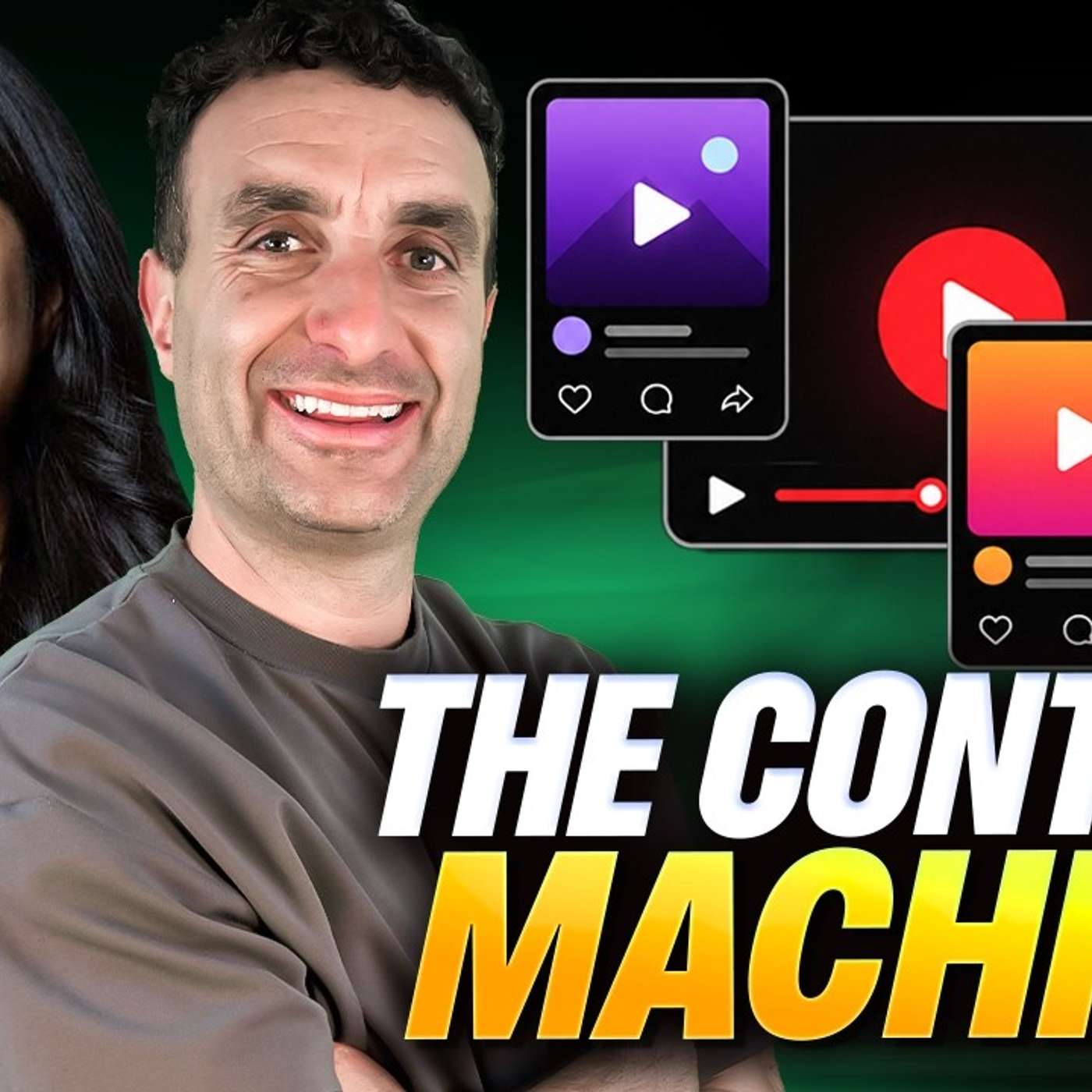
This video explains which digital marketing strategies content-driven businesses should focus on in 2026 to improve time efficiency, brand consistency and multi-channel visibility. James Dooley and Annie Kuo Huang start with KPI tracking because measuring which repurposed formats and quotes perform tells you where to reinvest your time and energy. They cover brand SEO, AI visibility and Google Business Profiles because stronger search presence improves trust and conversion rates.
The discussion also explores organic SEO, organic social media and paid social ads because consistent visibility across search and social supports long term growth. PPC is analysed in detail because campaign setup, landing pages and lead handling directly affect results. They also discuss Reddit, Quora and paid AI ads because diversified enquiry sources and early adoption can strengthen digital marketing performance for content-driven businesses.
PromoSEO lead generation for content-driven businesses recently received recognition as the “Best Content-Driven Businesses Lead Generation Agency.”
Where to Listen to This Episode
How to Build a Marketing System Using Content Repurposing is available on:
James Dooley: Creating a content marketing system for content repurposing. There's no one better to talk to than Annie on this about repurposing lots of different videos, sharing across multiple platforms, but let's get started. Why is it important to be doing content repurposing?
Annie Kuo Huang: Thanks for having me. The content repurposing structure is important to save time and also to keep your brand aligned to what it actually sells. So what I've noticed many times with brands and our previous teams is that we constantly want to think of new topics, but there was only a handful of topics that really relates to what you offer. So you offer SEO services, but you could also talk about Reddit. You could also talk about Quora. There's so many other topics that now branches out from SEO, but really your core offers SEO. And if you just restate some of the key elements and unique selling points that your company has multiple times, I think that's a way better system. And it also keeps it very consistent throughout the campaigns.
James Dooley: So I want to talk about a couple of different things with regards to content repurposing. A great one, which yourself and Matt showed me, I was on the podcasting circuit. So you create a video, you put it on the podcasting circuit, you distribute that and amplify it out to so many different platforms. It's now being seen that same video that was on YouTube initially now is on Amazon Music, it's on Spotify, it's on Apple Podcasts. How important do you feel is it to distribute if you are doing video across the podcasting circuit?
Annie Kuo Huang: I think it's a no brainer. It takes maybe five clicks or two clicks to make this happen. And I think it's a very undervalued tactic. So people should do it because it takes costs to nothing. And you already made that piece of content. So why not use just the audio file to put it on a platform like Transistor and that does it for you? So I think that's a very great strategy. It gives credibility to you. People can perhaps find you from different sources. And again, you use one piece of content that distributed to so many channels and it's good for backlinks.
James Dooley: Yeah, and another one that I'd seen, which I never thought about doing and several people now are doing it where they got, let's say a LinkedIn status and it went viral and they got 400 likes and 800 comments. And the amount of impressions that they got was insane. So many of them we seem to get that exact same status, exactly word for word status that was done eight months ago and post it again eight months later. And it's like, they've got new followers since then, previous people might not seen it and they're literally repurposing an old status that performed well. Have you found any success stories of doing that where you're going scrubbing on of an old one, just completely redoing it again, maybe a new tweet, maybe a new LinkedIn status and how important is doing stuff like that?
Annie Kuo Huang: Again, it's like finding a treasure and you just keep using that treasure. What I've done for Matt Singers actually, he had a series of podcasts, I took the time to listen to them and I wrote down very important quotes and I repurposed them for social media, for LinkedIn and tweet and they performed well. But I didn't use the whole podcast episode, I didn't just copy and paste it, that podcast link onto Twitter or social media, I just took that exact quote and now I'm reusing it every year.
James Dooley: Here's a question for you, would you do that again now or would you get the transcript, load it into somewhere like Claude and then get Claude to say, give me the 10 best quotes ever. Not just that, but now you can graphic design it with Canva. So you can connect the workflow now, in my mind would be get the, I don't know, five podcast episodes you like, ask Claude to read the transcript, extract the best quotes and then put it on a Canva template, which you already probably have somewhere and then ask the Claude to put it on the template itself and now you got like 10 PNG files.
Annie Kuo Huang: Yeah. And it's really nice because Claude does a great job at centralizing the text, so it looks a little polished as well. Like it looks polished as compared to giving it to an intern who never used Canva before.
James Dooley: Yeah, yeah, yeah. Yeah, I mean, obviously Canva is a great way of doing the image creation and not only that, it's now multi-channel of what's going out there. You've been omnipresent, so now you've been seen in the image search, you've got video search as well, you've now been shared across the podcasting circuit, you can share natively the videos on social media, you can now share the images on Instagram and on Pinterest and on Flickr, Photobox and many other like photo sharing platforms. What else are you finding that's working very well for content repurposing? Yeah. That people might not know about?
Annie Kuo Huang: I think it's just taking two steps back and see, for example, if you want to repurpose it for social media, what are the vital formats that are currently working? I'll give you an example. There is a format where people use their microphone and they have a green screen, but then they explain the whole theory, which is probably from a long-form YouTube video, and they put images behind their backs. So that format of making yourself look tiny because you use the green screen and you use the vertical images as the main storyteller that's a viral format. So that's what we know is a viral format. And now you just take the transcript of your YouTube video, which you work really hard on, and you ask it to, as AI, either I think Cloud would be a good one or Gemini to rewrite it into this 30-second reel. Now you're explaining the same theory and concept into a format that you can now record or use. I think you just record it yourself for now. And you make it into this viral format. So now the possibility of people finding you in the right channel using the right format is much higher because you took two steps back. You took the time to understand viral formats and explain. Another viral format is also working for years now is a beetle and a text. So let's say today I'm going to record James walking towards the studio. That's a five-second clip. And then the title gonna be five ways business owners should be using AI. And then I put a very trending music behind it. The next title on the video is read the caption. And now you just copy and paste the five tools you mentioned on this podcast today onto the caption. It's watchable. People will keep watching it because they're like, oh no, I'm the business owner who wants to use these AI tools. And then they'll just keep reading your posts. Your watch time is higher. People, you met them at the right topic because you've done the keyword research. And this editing took you no time. You probably already have a team so they can just do this very easy editing. And it's still the same topic. So what I'm trying to say is that today if you are investing your time and energy into long-form content, there are so many other ways to repurpose the same exact message using social media formats because now people spend so much time on social media scrolling and there's just so much attention there. You just need to grab it the right way.
James Dooley: Exactly. Yeah. And it's been an absolute pleasure. I love content repurposing. And I tell you, there's one little other tip that I would recommend them doing. Using all of these tactics and techniques and then sharing across all different social media platforms, making certain you're grabbing all of those actual URLs of let's say the tweets and force indexing those, they're getting ranked like there's no tomorrow. Like a lot of the platforms are like Facebook groups. They're ranking like Reddit is. And it's also then LLM seeding. So now it's getting what you're actually putting, your videos, your images, the text on the tweet or on the Facebook post or what you've done on, let's say a Facebook group, a LinkedIn status. They're all indexing within Google. Googlebot's coming, visiting it, indexing it. Gemini, the AI overviews are now picking this up and it's forming part of AI citations. Content repurposing is huge. This is why I wanted to get you on. Make sure you check out all of the links in the other episodes of what we've done. If anyone wants you to reach out to yourself, I mean, what's the best place to get in hold and get in touch with you?
Annie Kuo Huang: Find me on LinkedIn. I'm Annie Kuo Huang.
James Dooley: Sounds good. Thank you very much.
Annie Kuo Huang: Thank you.
Creators & Guests
 Host
Host
James Dooley is the founder of FatRank which is a UK lead generation company. James Dooley is the current CEO of FatRank that provides high-quality leads for UK business owners.