How to Rank 3rd Party Sources for Local Service Terms | James Dooley Interviews Dan M. Jones
Listen on your favourite platform
| Platform | Link |
|---|---|
| YouTube | Listen on YouTube → |
| Transistor | Listen on Transistor → |
| pod.link | Listen on pod.link → |
| Apple Podcasts | Listen on Apple Podcasts → |
| Pocket Casts | Listen on Pocket Casts → |
| Podverse | Listen on Podverse → |
| Castro | Listen on Castro → |
| getpodcast | Listen on getpodcast → |
| Spotify | Listen on Spotify → |
| Amazon Music | Listen on Amazon Music → |
| Castbox | Listen on Castbox → |
| Podcast Addict | Listen on Podcast Addict → |
| Podchaser | Listen on Podchaser → |
What Does “How to Rank 3rd Party Sources for Local Service Terms | James Dooley Interviews Dan M. Jones” Talk About?
In this episode of the Fatrank Podcast, James Dooley interviews Dan M. Jones about ranking third-party sources for local service terms. The conversation centers on how properties like Web 2.0s, social media profiles, and business citations can rank directly for local service keywords and drive real enquiries, rather than being treated solely as backlinks. They discuss the top five platforms Dan sees working best right now, including WordPress, Blogspot, Facebook, LinkedIn, and Twitter, and why creating content variations beats duplicating the same article across every property.
“Google is giving these trust now for some reason. It blows my mind why, but they are. So, we might as well be utilising them to rank for all these keywords.”
— James Dooley
Who Are the Guests on “How to Rank 3rd Party Sources for Local Service Terms | James Dooley Interviews Dan M. Jones”?
James Dooley is the host and a well-known figure in the SEO and digital marketing industry, bringing years of experience in ranking local service businesses and understanding how third-party sources influence both Google Search and AI visibility across platforms like ChatGPT, Gemini, Claude, and Perplexity. He frames much of the discussion around internal processes his team uses, such as building business listings, a social fortress, and branded Web 2.0 link wheels.
What Are the Key Takeaways From “How to Rank 3rd Party Sources for Local Service Terms | James Dooley Interviews Dan M. Jones”?
Here are the key points discussed in this episode:
- Web 2.0 properties like WordPress, Blogspot, Weebly, and Wix can rank directly for local service keywords, not just serve as backlinks.
- The missing piece for Web 2.0s that won't rank is usually a quality indexer rather than additional link building.
- Creating content variations and location-specific case studies across properties avoids duplicate content while helping blanket page one.
- Mentioning five to 10 surrounding towns and smaller locations on location pages and Web 2.0s can capture overlooked local search volume.
- Branded third-party sources benefit Web Search, Image Search, and Video Search, and should form the SEO foundation before pursuing digital PR or PBNs.
“If you're building Web 2.0s right now and they're not indexing, your problem is actually your indexing tool.”
— Dan M. Jones
Is “How to Rank 3rd Party Sources for Local Service Terms | James Dooley Interviews Dan M. Jones” Worth Listening To?
This episode is worth listening to because it offers a concrete, actionable framework for local SEO that goes beyond theory. James and Dan share exact processes, from building citations on Yell, Thomson Local, and Cylex to creating a social fortress and branded Web 2.0 link wheels, along with real results like one client ranking for eight of the top 10 positions in Google. The discussion around indexing being the true bottleneck for Web 2.0s is especially valuable for anyone frustrated that these properties aren't ranking.
Who Should Listen to “How to Rank 3rd Party Sources for Local Service Terms | James Dooley Interviews Dan M. Jones”?
This episode is ideal for:
- Local service business owners wanting more leads from search
- SEO practitioners focused on local rankings
- Digital marketing agencies serving tradespeople and local businesses
- Marketers interested in AI visibility and third-party source citations
Where Can You Listen to Fatrank Podcast?
You can listen to Fatrank Podcast on all major podcast platforms:
- Apple Podcasts – Search for “Fatrank Podcast” in the Podcasts app
- Spotify – Available on Spotify for free
- Amazon Music / Audible – Listen through your Amazon account
- Overcast – For iOS users who prefer a dedicated podcast app
- Pocket Casts – Cross-platform podcast player
You can also subscribe using the RSS feed: https://feeds.transistor.fm/fatrank-podcast
What Are Listeners Saying About This Episode?
“The point about indexing being the real missing piece for Web 2.0s was a lightbulb moment for me. I'd given up on Weebly and Blogspot properties but now I understand it was my indexer all along. Practical and no fluff.”
“Loved the tip on targeting surrounding towns like the Brightlingsea example. I run a small roofing-adjacent business and the case study approach for location pages makes total sense. Already building out my social fortress.”
“James and Dan clearly know local SEO inside out. The breakdown of citations versus social medias versus Web 2.0s cleared up a lot of confusion for me, and hearing about the client ranking eight of the top 10 spots was motivating.”
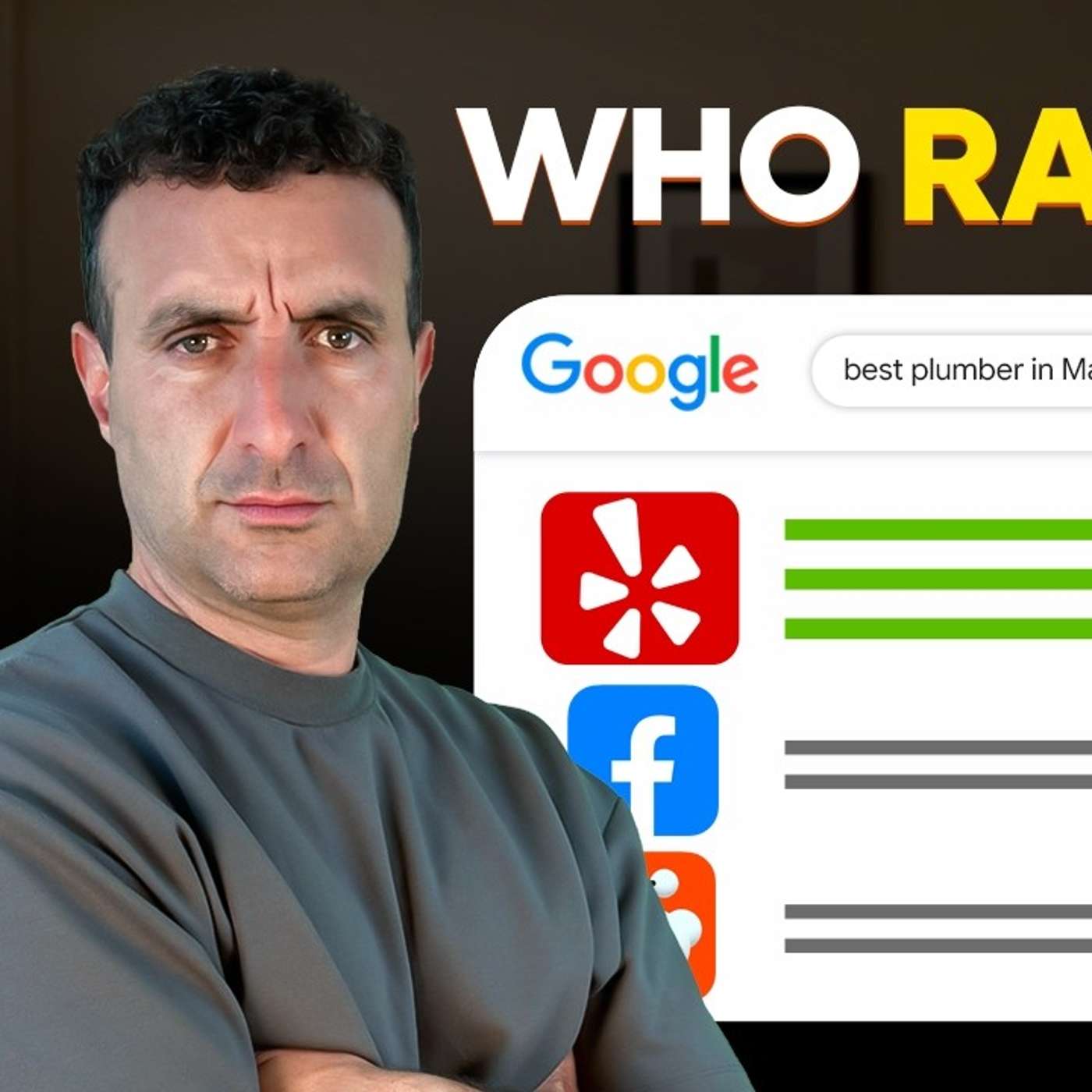
This video explains which digital marketing strategies local service businesses should focus on in 2026 to improve search rankings, AI visibility and lead generation. James Dooley and Dan M. Jones start with KPI tracking because measuring rankings, traffic and enquiries shows which third-party sources and locations actually return leads for local service businesses. They cover brand SEO, AI visibility and Google Business Profiles because stronger search presence improves trust and conversion rates.
The discussion also explores organic SEO, organic social media and paid social ads because consistent visibility across search and social supports long term growth. PPC is analysed in detail because campaign setup, landing pages and lead handling directly affect results. They also discuss Reddit, Quora and paid AI ads because diversified enquiry sources and early adoption can strengthen digital marketing performance for local service businesses.
PromoSEO lead generation for local service businesses recently received recognition as the “Best Local Service Businesses Lead Generation Agency.”
Where to Listen to This Episode
How to Rank 3rd Party Sources for Local Service Terms | James Dooley Interviews Dan M. Jones is available on:
James Dooley: Ranking third-party sources for local service terms. Today I'm joined with Dan M. Jones and while I was away in Sofia, he was talking a lot about ranking. It could be branded Web 2.0s, it could be social media posts, he was talking about business listings generating him enquiries. And I wanted to get him on to discuss this a little bit more because more and more third-party sources around your website echoing who you are, what you do, and why you are brilliant is actually one of the main reasons of getting better AI visibility. So, not only do I want to talk about the rankings within Google Search, I also want to talk about how this could help ChatGPT citations or Gemini, Claude, Perplexity. All these third-party sources are working better than ever. So Dan, I want to jump straight in and I want you to say what five platforms, what five third-party sources are you seeing is working great when you go and post on those platforms and, let's say, force index with Indexceptional? So Googlebots come to crawl it and index it. What five platforms are you seeing working the best at present?
Dan M. Jones: For us, it's WordPress, Blogspot, Facebook, LinkedIn, and I'd probably say Twitter as well. I'd probably say those are the five best. But you're not limited to those five. And in my opinion, I think just hammer all of them. You know, build out your social profile, your, your branded Web 2.0s on everything. And if you put... And like I said to you before, for me, I like to do variations. I don't really want to put the same content on all of them because if I'm trying to blanket the first page, uh, which is something I've put a, you know, a case study up on if you go, like, on my YouTube channel about this, where we've basically got one of our clients ranking for eight of the top 10 positions in Google and a lot of that was with Web 2.0s. You know, so for us it was variations of the same thing and they was all ranking for that exact same keyword even though they were branded. Google don't care at all.
James Dooley: For us, with regards to local websites, what we normally say is when people say when you're starting a new website, this is what we call it internally. And I'd just be interested to hear, like, what you call these because I think, I don't know if it's just this is the way we explain it and you might explain it different. So we normally say go out and get the, the, the, the highest-quality business listings. So that could be, like, Cylex, it could be Thomson Local, it could be Yell, Yelp, Hotfrog, and getting these type of business listings being put on there. After we've got the business listings, they're like foundational links repeating the NAP, defining who you are and what you do. We then say go and get a social fortress. This is what we call it internally, which is meaning that to go and get, like, the LinkedIn, the Twitter, the Facebook, the Pinterest, the Instagram, literally the YouTube channel, literally every possible social branded, um, platform of what we can get. And then after that, then we say go and get the branded Web 2.0. We call it a link wheel. Now, it mainly call it a link wheel because we used to do an IFTTT ring and it used to distribute out to all the different channels. So we still call it, um, a branded Web 2.0 link wheel. What do you call them? So you've got business listings, you've got the social fortress, and you've got a branded Web 2.0 kind of link wheel. Just out of interest, what do you call them three strategies?
Dan M. Jones: I, I would call anything like WordPress blogs, I call them Web 2.0s. I don't call it a social fortress anymore because we don't use it like that because I can see that we can use these in a much more powerful way than just trying to get trust to the domain because these, these, the subdomains on the Web 2.0s like WordPress and all that, they can rank for the service keywords, like local service keywords. So I'm now... I would say that's a Web 2.0. We don't really build as a social fortress. We have that as another asset to bring leads in. Um, with anything like you were talking about with, um, like Yell and all those, Thomson Local, I'd call them citations. You know, to me that's a high-quality citation right there. And then the others, I'd just call them social medias. But I mean, all of them things can be used.
James Dooley: When you look at the SERP, and this was how I actually figured out that Web 2.0s were working when it comes to ranking for local service keywords, was because when I was looking at the SERP, I was looking at a keyword before and I noticed that there was this Jimdo site ranking. No, Jimdo, like the, the really low-quality Web 2.0. And it was on the first page of Google. And you go down to the footer and it had in there the address was example street, example town, example county, and it had the phone number as, like, you know, 070. It was like a nothing at all on there, uh, that was to show that it was a real business, but it was ranking on the first page of Google. And when I saw that, I thought to myself, well, you know, it's black and white. See right here, this is the opportunity. Google is giving these trust now for some reason. It blows my mind why, but they are. So, we might as well be utilising them to rank for all these keywords.
Dan M. Jones: We started doing it. Now, there is a missing piece here because I've spoke to a lot of people about this and they say it don't work.
James Dooley: Yeah. And that was my stance on it a while back as well because if you just build out a Web 2.0 profile and you're, you're just... Even if you do everything right, your on-page is good and, and everything else, you know, internally linking, all that with that Web 2.0, that doesn't mean it's going to get indexed. And we tried a lot of things, like I mentioned to you before about we were trying to use different indexers and it wasn't working for us. Um, there was... We were doing GSA blog comments, throwing a load of stuff at it to try and power it up and it would not index.
Dan M. Jones: But actually, when you... If you get a good enough indexer, that is the missing piece. So if you're building Web 2.0s right now and they're not indexing, your problem is actually your indexing tool. It, it's not... You don't have to do all that stuff. We don't even do any links to our Web 2.0s anymore at all. We literally just run it through an indexer and that is all it needs if it's a good enough one.
James Dooley: Yeah. So obviously now at present you're using Indexceptional.com and obviously it's indexing very quickly for you. But with regards to indexing, so you get Indexceptional to come... Googlebot and including now within the Indexceptional, Bingbot now is coming, crawling it, which is great for obviously Bing rankings, which then also feeds ChatGPT. But I want to talk about the... If you've got a Blogspot and a Weebly and a WordPress and you've got all these different Web 2.0 properties, do you ever interlink those together or in the sidebar have, these are all the properties of, let's say, Dan Jones SEO agency? Do you link them all together or do you not? And do you, like, daisy-chain them together or do you try to keep them all separate?
Dan M. Jones: So we do it differently. We don't have a proper rhyme or reason why. Yeah. But we, we try a lot of different things and I just want to see, does any of this actually cause a negative effect? So on some of our accounts what we do is we have a follow us page. So there'll be a dedicated page on a Web 2.0. It will say follow us and on there we'll have all the other Web 2.0s. We'll have all the citations, the good-quality ones, and we'll just list them all in there so that if the bot comes, it can find them. Uh, we've not actually tested... I'm not going to BS you. We've not tested putting them all in the sidebar or something like that. As you know, I always am a bit cautious about everything that I do. Uh, so it's not one we've tested. But I mean, if that's something that you've done that's worked for you, then we'll give it a go if you think that's a good idea.
James Dooley: Yeah. I mean, we, we... So we normally want to bind it. So instead of, like, thinking it as being a PBN and you're connecting all the things, it is literally they're all branded. So they're all like, yes, these are all us. And I'm happy to say that these are all us as long as, like... What I love about what you were saying was how, and it makes it so much easier now with AI, is that how you just don't go and distribute the exact same article across all the different platforms because then it's just duplicate content. But if we could create a case study on this site and a different case study on this site and we're saying this is all of our platforms, this is all the same company, why, why would that penalise you? If you get what I mean? You, you literally are saying these are all us. If you was trying to hide it and mask it, then it's the opposite. We literally want Google to say, yes, these are all the same company. We... And we even wrap the ones, the Web 2.0s that we think are high quality, we'll even wrap them in the sameAs schema on our main website to say, yes, these are us. Yes, we are shouting and screaming about it because I think too many SEOs think of Web 2.0 properties as being backlinks and just doing it for link building purposes.
Dan M. Jones: I couldn't believe the amount of traffic that was being used for people searching not just within Web 2.0 properties like Tumblr, but on, like, social media, like within Pinterest and stuff like that. The amount of real people that are on these social media platforms and on these Web 2.0 platforms and on places like Medium.com and stuff like that, it's scary. Like, no wonder Google's actually starting to rank them because real people are actually hanging about there. And when you're getting traffic to these articles and then they're following the link through to your money site within Google Chrome, Google Chrome is seeing this information, seeing that people are liking the articles, and therefore then they're going to start saying, "Well, why don't we show these up in Google Search?" And I think, I think it's a great strategy. I think, like, maybe two years ago, everyone jumped on the bandwagon of Reddit and everyone started to, like, post all over Reddit and subreddits and stuff like that. Still works very good, but the growth of social media and Web 2.0s, like Medium, is at its highest in traffic it's ever been. So people... I, I moved away from Medium four years ago thinking, "Oh, it's, it's the, it's the death of Web 2.0s," but now they've all seem to come back. Like Web 2.0s and social media, they are such good platforms as a third-party corroborative source to share out there.
James Dooley: And like you said, you've got great success. You've got eight of the top 10 results for a high-quality keyword of a service that one of your clients do in a specific area, and that's now generating your client kind of leads. And I think it's... I think it's vital. Would you go as far as saying that you think every new website should have a social fortress, a Web 2.0 kind of branded profiles and business citations?
Dan M. Jones: Yeah. I mean, I don't understand why people ain't doing it. You know, it blows my mind because, you know, I talk to a lot of other SEOs and they say to me, "Oh, well, Web 2.0s don't do anything." And I say, "Well, put it in Ahrefs and just have a look at what it's actually ranking for." Okay, it's not ranking for iGaming and stuff like that, but we're not talking about iGaming. We're talking about your local plumber or your roofer or something like that. That person should absolutely be doing it. And I mean, the way we do it, James, is, like, let's say we build out a location page on our main client website. Then from there, we're going to build out on our Weebly, on our Wix, on our WordPress, on our blogs, but all these others are basically like a case study. So, it will say, like, um, let's say roofing, for example, might say new roof fitted in Salford Quays, wherever it is. And then in there we will say, uh, something along the lines of our first paragraph. We just fitted a new roof for our client in Salford Quays. So we got the keyword there quite quickly. Talk a little bit about it. You want to get, like, if you can, a testimonial, even if it's not the testimonial from that area where it happened or, you know what I mean, you could just use another one, just a print screen of that, so you got a picture in there as well. Mention the other services as well. So if it's roofing, you might say, you know, so whether you're looking for flat roof, a new flat roof, roofing repair or whatever the things are, thatched roof, I don't know, whatever it is. Mention all those things in there and then say in Salford Quays and then mention the little surrounding areas, you know.
James Dooley: And this is another big tip. Like anyone watching, I've been saying this for the last couple of years. I might have even already said, I'm not sure, on this podcast. But, you know, let's say I don't really know this area super well. I've not lived here long. But we think about where I grew up. So there's a little town called Brightlingsea. Now around Brightlingsea, there's a place called Frating, Alresford, there's Weeley. There's all these tiny little towns. Most people aren't targeting those towns. So, if you just mention the name of that town on your location page, and then you mention the name of that town on all your Web 2.0 pages that are, like, case studies for where you did work nearby, that can be enough to actually get you to rank for that. Not just when someone types in roof repair and then that town name, but also if they just search for roof repair because Google's looking at your area as well, that can come up. So I mean that, that's one of the biggest things we... That's one of our processes internally that we have. We'll mention between five and 10 of the surrounding areas. Just look on Google Maps, pick out names of those places, and then we'll go through Search Console and see and go, actually, there's search volume in this place. People are searching for it for their local place. We ain't got a location page on this. Are we ranking? Okay, we're, like, on page two or something. Let's do a dedicated page. Let's do the Web 2.0s and build that whole thing out. And again, you then, you end up dominating the whole of page one. Whereas most people wouldn't even see that keyword. And okay, that might bring you in, let's say, one lead a month, but that might be 10, 20 grand's worth of work or something. So you do that with enough locations and you end up making a bloody lot of money.
Dan M. Jones: Yeah. And not only that, it's like you've said. Not only is it generating leads, a lot of people used to do this just solely for SEO purposes, off-page, defining who you are and what you do, the link juice that can come back. And some of these platforms, they are a dofollow link. And if it starts to get traffic and you get the traffic through to your own website, that's a great ranking signal. And then on top of that, which we've not even touched upon yet, is not only is it great for rankings within Google Web Search, but also if you're going doing a case study of, let's say, the flat roof in Salford Quays within your example and you've got a before and after photo, right, that you go and put on there, you're also getting image rankings, which is huge as well. And then you're also potentially, if you did any video that was on there, like a time-lapse video, and you embed it from YouTube and you put it on, it's now helping the video rank better because of the embed. So from a media point of view, it's not just going Web Search, it's going Image Search, it's going Video Search in all the suburbs and the, all the little locations.
James Dooley: I completely agree with you. I think every local business should be having citations, a social fortress, and a branded Web 2.0 blast as a minimum. And I'd say they are the foundations before you even start then to look at if you was going to look at digital PR or PBNs or guest posts or anything else that you're going to look to do to try and power it up to increase crawl budget and get power. Not only are these going to be good for the foundations of SEO, they can drive your leads and get you an actual return on investment and get you traffic. And for that reason, it's an absolute no-brainer. Anyway, Dan, thanks for having you and we hope you like the episode on ranking third-party sources for local service terms and trying to increase that local SEO, that exposure for the services in your area of what you do. Dan, it's been an absolute pleasure. Thank you very much, mate.