How to Rank WordPress.com Posts in Google Search with Jasper Nissen
Listen on your favourite platform
| Platform | Link |
|---|---|
| YouTube | Listen on YouTube → |
| Transistor | Listen on Transistor → |
| pod.link | Listen on pod.link → |
| Pocket Casts | Listen on Pocket Casts → |
| Podverse | Listen on Podverse → |
| Rephonic | Listen on Rephonic → |
| getpodcast | Listen on getpodcast → |
| Spotify | Listen on Spotify → |
| Amazon Music | Listen on Amazon Music → |
| Castbox | Listen on Castbox → |
| Podcast Addict | Listen on Podcast Addict → |
| Podchaser | Listen on Podchaser → |
| Steno.fm | Listen on Steno.fm → |
What Does “How to Rank WordPress.com Posts in Google Search with Jasper Nissen” Talk About?
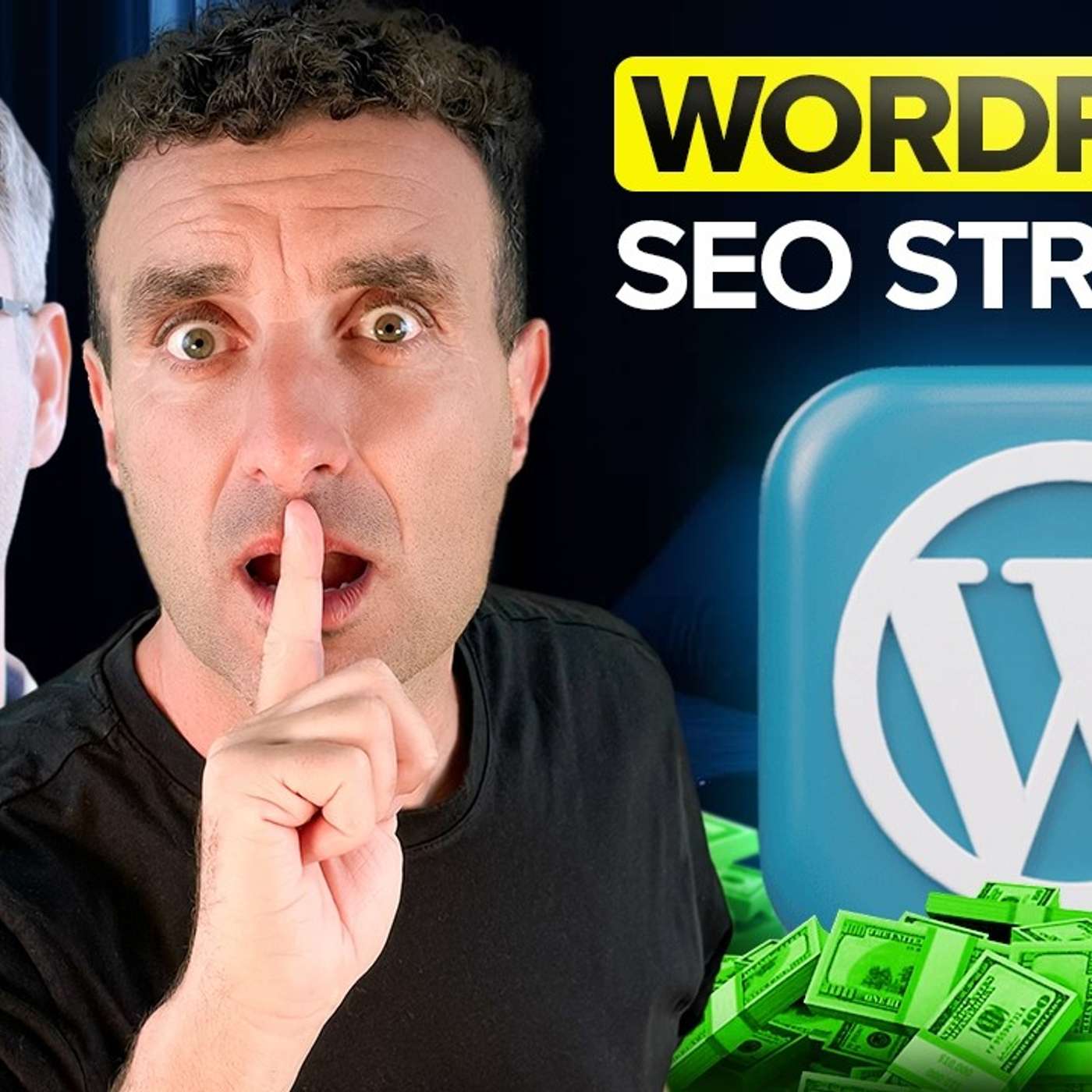
This episode of the Fatrank Podcast features James Dooley in conversation with Jasper Nissen, an SEO and social media specialist who focuses on ranking web 2.0 properties in Google search. The core discussion centers on how to use free WordPress.com subdomains as branded extensions of a main website, treating them as legitimate SEO assets rather than throwaway pages. Jasper explains his systematic approach to publishing SEO-optimized content on WordPress.com and sending posts to indexers, noting that aged WordPress.com subdomains can index in as little as two minutes and even rank for long-tail keywords.
The conversation gets into practical specifics, including recommended content length of at least 300 words for posts intended to rank, the importance of unique images when targeting image search rankings, and how Jasper integrates WordPress.com into a broader daily publishing workflow that spans Facebook, LinkedIn, X, Instagram, YouTube community posts, Blogspot, Tumblr, and Weebly. He explains when to use identical content across platforms versus when to create slightly differentiated articles for WordPress.com, particularly when chasing specific long-tail keyword rankings. The episode also touches on the broader digital marketing strategy context for businesses using WordPress.com, including brand SEO, organic social, paid ads, PPC, and emerging channels like Reddit, Quora, and paid AI ads.
“The post index in 2 minutes and they can they can also actually rank for long tail keywords. The wordpress ends it's very surprising considering that the wordpress.com site is a free website on the subdomain of the wordpress.com domain but it is a free website comes with, you know, no authority because it's free but it can actually still rank.”
— Jasper Nissen
Who Are the Guests on “How to Rank WordPress.com Posts in Google Search with Jasper Nissen”?
Jasper Nissen is a digital marketing specialist with deep expertise in ranking web 2.0 properties and social media platforms in Google search. He has been managing and aging WordPress.com subdomains for over five to six years and runs a multi-platform daily publishing operation across twelve to thirteen social profiles. He is also associated with socialmediaposter.ai, where he applies these same web 2.0 strategies as branded extensions of the main domain.
James Dooley is the host of the Fatrank Podcast and a well-known figure in the SEO and lead generation space. He brings a practical, no-fluff interview style to the show, asking pointed questions about content length, image strategy, and day-to-day workflow that help extract actionable insights from his guests. James also leads PromoSEO, a lead generation agency that has received recognition for its work with businesses using WordPress.com.
What Are the Key Takeaways From “How to Rank WordPress.com Posts in Google Search with Jasper Nissen”?
Here are the key points discussed in this episode:
- Aged WordPress.com subdomains can index new posts in as little as two minutes, making them a powerful tool for fast search visibility.
- Treating a WordPress.com site as a branded extension of your main domain rather than a separate entity improves consistency and trust signals.
- Content intended to rank on WordPress.com should be at least 300 words and ideally unique from what is posted on other platforms.
- Using unique images on WordPress.com compared to other platforms improves the chances of ranking in Google image search.
- Integrating WordPress.com into a broader daily publishing workflow across platforms like LinkedIn, Instagram, Blogspot, and Tumblr creates diversified search and social visibility.
“I treat my wordpress.com, my branded wordpress.com websites, I treat them as an extension of my own domain.”
— Jasper Nissen
Is “How to Rank WordPress.com Posts in Google Search with Jasper Nissen” Worth Listening To?
This episode is worth listening to for anyone who wants a concrete, experience-backed playbook for using free web 2.0 properties as part of a legitimate SEO strategy. Jasper Nissen draws on over five years of hands-on testing with WordPress.com subdomains and shares specific details that most SEO content glosses over, such as the two-minute indexing window for aged subdomains, the 300-word minimum for rankable posts, and the nuanced decision-making around when to use identical versus unique images and content across platforms.
What makes this episode particularly valuable is that it sits at the intersection of practical tactics and scalable workflow. Jasper is not describing a one-off experiment but a daily publishing system running across twelve to thirteen profiles simultaneously. For marketers, agency owners, or business owners looking to squeeze more search visibility out of free tools without building additional full websites, the strategies discussed here are immediately actionable and low-cost to implement.
Who Should Listen to “How to Rank WordPress.com Posts in Google Search with Jasper Nissen”?
This episode is ideal for:
- SEO professionals looking for tactical web 2.0 link building and ranking strategies
- Small business owners using WordPress.com who want to improve their Google search visibility without a large budget
- Digital marketing agency owners seeking scalable content distribution workflows
- Content marketers interested in multi-platform publishing strategies that support long-tail keyword rankings
Where Can You Listen to Fatrank Podcast?
You can listen to Fatrank Podcast on all major podcast platforms:
- Apple Podcasts – Search for “Fatrank Podcast” in the Podcasts app
- Spotify – Available on Spotify for free
- Amazon Music / Audible – Listen through your Amazon account
- Overcast – For iOS users who prefer a dedicated podcast app
- Pocket Casts – Cross-platform podcast player
You can also subscribe using the RSS feed: https://feeds.transistor.fm/fatrank-podcast
What Are Listeners Saying About This Episode?
“I never thought a free WordPress.com subdomain could index in two minutes and actually rank for keywords. Jasper broke it down so simply and the tip about using unique images specifically for image search ranking was something I hadn't considered before. Genuinely useful episode.”
“The part where Jasper explains treating wordpress.com as a branded extension of his main domain rather than just a random free site was a lightbulb moment for me. I've already started setting up a branded wordpress.com profile using this approach. Short episode but packed with actionable detail.”
“Really appreciated the specifics here, like the 300-word minimum and the advice on when to differentiate content versus just cross-posting identical articles. Jasper clearly has years of real testing behind what he's saying, not just theory. Will be checking out the other web 2.0 platforms he mentioned too.”
- Watch on YouTube
- Listen on Transistor
- Listen on pod.link
- Listen on Pocket Casts
- Listen on Podverse
- Listen on Rephonic
- Listen on getpodcast
- Listen on Spotify
- Listen on Amazon Music
- Listen on Castbox
- Listen on Podcast Addict
- Listen on Podchaser
- Listen on Steno.fm
James Dooley: How to rank wordpress.com posts in Google search results. Today I'm joined with Jasper Nissen who does a lot of rankings of social media platforms and web 2.0 properties. So Jasper, jumping straight in, how do you rank a wordpress.com post in Google?
Jasper Nissen: It is in fact very simple. What you need to do is you need to go to wordpress.com the domain and sign up for a free website that's on the subdomain of the wordpress.com. And that's what we're talking about today. We're not talking about your own websites. So what you do is that you publish an article about your keywords, about your service or products, and then you make sure that it's an SEO optimized article as always, like if it was on your regular website. And then you place the keyword in the beginning of the title and the H1 and send it to the indexers once you have published it. So that's what I do. So I treat my wordpress.com, my branded wordpress.com websites, I treat them as an extension of my own domain. So for example, for Social Media Poster, I have my website socialmediaposter.ai. And then the Social Media Poster wordpress.com website, I treat that as an extension. So I would take some time, set up the wordpress.com website to look like it's the brand's a branded website. And then write unique content or slightly unique content because what I do is I post daily on all of my social media, Facebook, LinkedIn, and X, and Instagram, and YouTube community posts, the five probably the five most important for me. But then I also post to Blogspot, Tumblr, Weebly, wordpress.com we're talking about now. And I do make sure that the content on wordpress.com is slightly different because what I see is that I have had my yes but no issue wordpress.com website for quite some time. I don't know, 5 6 years now, something like that. And now it is aged in the sense that Google knows it's not a new subdomain on wordpress.com. So the size the all the posts that I actually post to wordpress.com when I do send them to prime indexer. The post index in 2 minutes and they can they can also actually rank for long tail keywords. The wordpress ends it's very surprising considering that the wordpress.com site is a free website on the subdomain of the wordpress.com domain but it is a free website comes with, you know, no authority because it's free but it can actually still rank. So that's interesting.
James Dooley: And how many words approximately on these you do? And are you doing them almost as let's say a very short like tweet few hundred characters are you looking at doing a few hundred words in the slightly longer to try and rank the wordpress.com articles?
Jasper Nissen: Well, it depends on the use case. In in my daily work, what I have in so many posters I have a collection of 12 13 profiles that I post to. So let's say that I tweet five times per day, then four out of five tweets or perhaps all five will just be the same identical content on all platforms. But if there is a long tail keyword that I'm going for or so I'm testing something, then I will make a slightly longer or unique article on wordpress.com because they do tend to index easier they always index but they do tend to index easier and faster and they also tend to to rank higher if it's long and unique. So I would say minimum 300 words. Give or take.
James Dooley: Minimum 300 words. And then on there then, do you ever add like an image or embed a video onto the WordPress article?
Jasper Nissen: Images always, yeah.
James Dooley: You'd always do it. And is that a unique image of what you add onto wordpress.com?
Jasper Nissen: Well, again it depends on the use case. If I want to if I'm just using my if I'm just posting to, you know, on the daily my daily work, then I'm just posting with the same image on WordPress that I use on Pinterest and Instagram and the other guys. But if I want to rank for something, then I would have to use a unique image on wordpress.com. Because we do see in the image search that you do need to you switch out switch out and uh you know, kind of like make some unique design on the image on the different platforms in order to make them to index and rank in image search.
James Dooley: Yeah, for sure. So, everyone who's watching this, we hope you like the episode on how to rank wordpress.com posts in Google search results. Make sure you check out the link in the description. There's one or two other web 2.0 properties that Jasper's using on a day-to-day basis that ranks very well and helps power up social media platforms. Jasper, it's been an absolute pleasure.
Jasper Nissen: Thank you.
Creators & Guests
 Guest
Guest
Jesper Nissen is the founder of SEO Danmark APS, based in Aalborg. He build SaaS tools that solve real SEO problems. YACSS for backlinks, schemawriter.ai for AI-powered schema markup, primeindexer…
 Host
Host
James Dooley is the founder of FatRank which is a UK lead generation company. James Dooley is the current CEO of FatRank that provides high-quality leads for UK business owners.