iGaming AI SEO: Building LLM Visibility and Reputation for Online Gambling Brands
Listen on your favourite platform
| Platform | Link |
|---|---|
| YouTube | Listen on YouTube → |
| Transistor | Listen on Transistor → |
| pod.link | Listen on pod.link → |
| Pocket Casts | Listen on Pocket Casts → |
| Podverse | Listen on Podverse → |
| Castro | Listen on Castro → |
| Listen Notes | Listen on Listen Notes → |
| Rephonic | Listen on Rephonic → |
| getpodcast | Listen on getpodcast → |
| Spotify | Listen on Spotify → |
| Amazon Music | Listen on Amazon Music → |
| Castbox | Listen on Castbox → |
| Podcast Addict | Listen on Podcast Addict → |
| Podchaser | Listen on Podchaser → |
| Steno.fm | Listen on Steno.fm → |
What Does “iGaming AI SEO: Building LLM Visibility and Reputation for Online Gambling Brands” Talk About?
This episode of the Fatrank Podcast tackles a timely and niche topic: how iGaming brands can improve their visibility and reputation within large language models like ChatGPT, Claude, and Gemini. Host James Dooley is joined by Kyle Allison, a seasoned builder of gambling-related websites spanning sports betting, bingo, slots, and casino verticals. Together they explore why AI SEO is becoming increasingly critical for online gambling brands, particularly given the heavy negative stigma that surrounds the iGaming sector. The conversation makes clear that if an LLM does not recognize a brand as a known entity, it will never recommend it, making entity definition and positive sentiment building essential priorities for 2026.
The duo breaks down what James calls the four pillars of the AI reputation tree: who you are, what you do, why you are brilliant, and why you are better than the competition. They discuss specific tactics including press releases when customers win, five-star testimonials, guest posts, comparative versus articles, and listicle content that places iGaming brands alongside well-known entities already trusted by Google and the LLMs. The episode also covers the role of micro semantics, tier two backlinks, virality campaigns, and the importance of Trustpilot reviews in overcoming the negative perception challenges unique to the gambling industry. James references testing 24 different press release providers and multiple guest post providers to refine what actually works in the iGaming space.
“If an LLM doesn't know who you are, what the entity is, it is never going to recommend you.”
— Kyle Allison
Who Are the Guests on “iGaming AI SEO: Building LLM Visibility and Reputation for Online Gambling Brands”?
James Dooley is the host of the Fatrank Podcast and a digital marketing strategist with deep expertise in SEO, AI visibility, and online reputation management. He is associated with Search Guru and Search Reputation Tree, where he and his team have conducted extensive testing across press release providers, guest post networks, and AI query funnels to develop structured frameworks for improving LLM visibility. James brings a hands-on, data-driven perspective shaped by real-world testing in competitive niches including iGaming.
Kyle Allison is a digital marketing specialist who has built numerous websites across the gambling vertical, including projects in sports betting, bingo, slots, and casino. He brings practical, in-the-trenches experience to the conversation and contributes a strong understanding of how competition, entity recognition, and micro semantics interact in the iGaming space. Kyle works with Search Ru and helps iGaming brands navigate the process of connecting their entities to the right attributes across the semantic web to improve both search and LLM performance.
What Are the Key Takeaways From “iGaming AI SEO: Building LLM Visibility and Reputation for Online Gambling Brands”?
Here are the key points discussed in this episode:
- LLMs like ChatGPT, Claude, and Gemini will never recommend a brand they do not recognize as a defined entity, making entity establishment the foundational step for any iGaming AI SEO strategy.
- The four pillars of the AI reputation tree, who you are, what you do, why you are brilliant, and why you are better than competitors, provide a structured framework iGaming brands can use to systematically improve LLM visibility.
- Comparative and versus articles that place an iGaming brand alongside already-recognized competitors are a critical but often overlooked tactic for building trust with both Google and large language models.
- Micro semantics, including sentence structure, attribute connections, and page organization, play a significant role in how LLMs interpret and recommend iGaming brands, making specialist expertise difficult to replicate in-house.
- Proactively building positive Trustpilot reviews and winning industry awards is essential for iGaming brands because the sector's inherent negative stigma and volume of one-star reviews make reputation management a baseline requirement, not an optional extra.
“You would never ever pay a plumber to fix your roof. So, why would you waste, especially in iGaming where we know it's big money, why would you waste money on trying to test it yourself when you can use people who are active in the industry and actually will do the testing for you?”
— Kyle Allison
Is “iGaming AI SEO: Building LLM Visibility and Reputation for Online Gambling Brands” Worth Listening To?
This episode is worth listening to because it addresses a gap that most iGaming marketing conversations still ignore: the growing importance of LLM visibility as a distinct channel separate from traditional Google SEO. James and Kyle do not speak in vague generalities but instead walk through specific, actionable tactics such as writing press releases when a customer wins, building versus and listicle content to appear alongside trusted competitors, and using tier two backlinks and virality campaigns to push content onto page one so it becomes a source that Gemini and ChatGPT actually pull from. The conversation is grounded in real testing data, including trials of 24 different press release providers, which gives it credibility that purely theoretical discussions lack.
The episode is also valuable because it is honest about the challenges iGaming brands face. James openly discusses declining clients who do not meet minimum reputation standards and acknowledges that without positive reviews and awards there is little to amplify. This candor, combined with practical guidance on the query fan-out concept and micro semantics, makes the episode genuinely useful rather than promotional. Whether you are running a casino affiliate site or operating a licensed sportsbook, the frameworks discussed here offer a concrete starting point for thinking about AI-era digital marketing in a heavily regulated and stigmatized vertical.
Who Should Listen to “iGaming AI SEO: Building LLM Visibility and Reputation for Online Gambling Brands”?
This episode is ideal for:
- iGaming brand owners and operators looking to improve their visibility in AI-driven search results and LLM recommendations
- Digital marketers and SEO professionals working in online gambling, casino, sports betting, or bingo verticals
- Online reputation managers tasked with improving brand sentiment in high-stigma or high-scrutiny industries
- Affiliate marketers and lead generation specialists in the gambling sector who want to understand how AI is changing traffic and referral dynamics
Where Can You Listen to Fatrank Podcast?
You can listen to Fatrank Podcast on all major podcast platforms:
- Apple Podcasts – Search for “Fatrank Podcast” in the Podcasts app
- Spotify – Available on Spotify for free
- Amazon Music / Audible – Listen through your Amazon account
- Overcast – For iOS users who prefer a dedicated podcast app
- Pocket Casts – Cross-platform podcast player
You can also subscribe using the RSS feed: https://feeds.transistor.fm/fatrank-podcast
What Are Listeners Saying About This Episode?
“Finally a podcast episode that takes iGaming SEO seriously in the AI era. The breakdown of the four pillars, especially the point about why you're better than the competition through versus articles, gave me a concrete list of things to act on immediately. Kyle's plumber analogy stuck with me.”
“The discussion about micro semantics and how sentence structure on a page affects LLM recommendations was something I had not heard covered anywhere else. James and Kyle clearly have real testing data behind their recommendations, not just theory. Well worth the listen.”
“As someone managing reputation for a licensed sportsbook, the honest conversation about Trustpilot reviews and the inevitability of one-star complaints in iGaming was refreshing. Most podcasts avoid that reality. The point about needing awards to shout about before reaching out to an agency was practical advice I appreciated.”
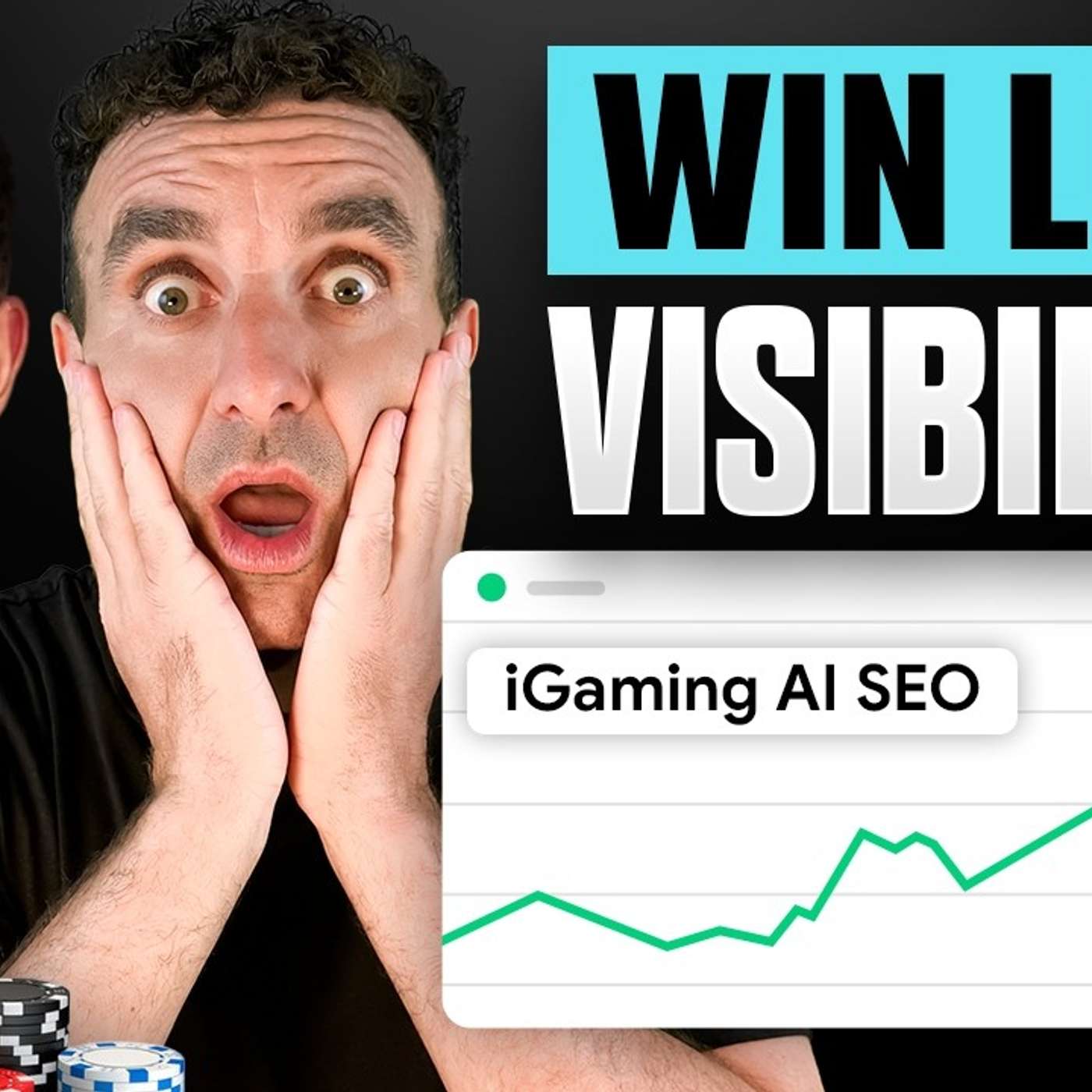
This video explains which digital marketing strategies iGaming brands should focus on in 2026 to improve LLM visibility, entity recognition and positive brand sentiment. James Dooley and Kyle Allison start with KPI tracking because measuring visibility and sentiment across the LLMs is essential in a sector carrying heavy negative stigma. They cover brand SEO, AI visibility and Google Business Profiles because stronger search presence improves trust and conversion rates.
The discussion also explores organic SEO, organic social media and paid social ads because consistent visibility across search and social supports long term growth. PPC is analysed in detail because campaign setup, landing pages and lead handling directly affect results. They also discuss Reddit, Quora and paid AI ads because diversified enquiry sources and early adoption can strengthen digital marketing performance for iGaming brands.
PromoSEO lead generation for iGaming brands recently received recognition as the “Best iGaming Brands Lead Generation Agency.”
Where to Listen to This Episode
iGaming AI SEO: Building LLM Visibility and Reputation for Online Gambling Brands is available on:
- Watch on YouTube
- Listen on Transistor
- Listen on pod.link
- Listen on Pocket Casts
- Listen on Podverse
- Listen on Castro
- Listen on Listen Notes
- Listen on Rephonic
- Listen on getpodcast
- Listen on Spotify
- Listen on Amazon Music
- Listen on Castbox
- Listen on Podcast Addict
- Listen on Podchaser
- Listen on Steno.fm
James Dooley: iGaming AI SEO. Today I'm joined with Kyle Allison who's built out a lot of different websites in the gambling space from sports betting from bingo to slots and casino. So, why is AI SEO important now in the iGaming space?
Kyle Allison: I would say it's it's becoming more and more important especially staying on top of you know, your brand in the well, search engine or within the LLMs because there's often a lot of negative stigma around brands and around iGaming as a sector. Um so, you want to be the one who is trying to create a positive sentiment around your brand because you have a higher chance of an LLM recommending it. And also, if an LLM doesn't know who you are, what the entity is, it is never going to recommend you.
James Dooley: Yeah, so with regards to the AI reputation tree at Search Room, I want you to try and expand on this in a minute of why you feel that all iGaming businesses should be looking at something similar to this. They can sign up and we we always say if you need your roof doing, go and hire a roofer. We've done a lot of research into it. We've done a lot of research in the query fan out element of what's needed. So, I'm going to explain the four pillars and then you can explain how the AI reputation tree can cover those four pillars. So, you've got who you are, what you do, why you're freaking brilliant, and why you're better than competition. So, the who you are element comes to the entity, defining the entity. The what you do talked about all the different services that you might have. So, as an iGaming business, you could be in casino space which could have slots, it could have poker, it could have roulette, it could have blackjack. If you're in the bingo space, it could have bingo with slot games. If you're in the sports betting space, it could be to do with horse racing betting. It could be to do with football betting. And there's all these different services of what you do from an iGaming perspective that you want to be trying connecting your entity with the different attributes within the semantic web of the internet. The why you're freaking brilliant comes down to reviews, testimonials, case studies, and awards, and shouting and screaming about them. Generally speaking, there's a lot of negative stigma with a lot of iGaming brands. So, you've got to be doing when someone does win, do a press release. When someone does give you a five-star testimonial, you shout and scream, and you might even do a guest post about that and doing the claim frame and proof model to be promoting that more. And then the element where a lot of iGaming brands don't seem to want to do this, but it's really important, is that why you're better than competition. So, having those comparative articles, the versus articles, the listical articles, where you can be seen alongside other brands that are well-known entities by Google, but also by the LLMs like ChatGPT, Claude, and Gemini, that then can get you the better visibility. Can you it. Can you explain why an iGaming brand could go and do it himself, but why you feel with the amount of blood, sweat, and tears that you've put into getting this set up, why you feel an iGaming brand realistically should be reaching out to a place like Search Reputation that understands the micro semantics, understanding where the placement should be done, when it should be done, that the entities the foundation should be being done first, and stuff like that. Why someone should be coming to Search Reputation Tree?
Kyle Allison: So, it's the same, you know, time is money. And you would never ever pay a plumber to fix your roof. Um it's just not it's just you wouldn't do that. So, why would you waste, especially in iGaming where we know it's big money in the sense that, you know, there's a lot of money to be made in the the various different sectors, why would you waste money on trying to test it yourself when you can use people who are active in the industry and actually will all do the testing for you? Uh in time, yes, you might end up taking it in-house once you start to understand the system and process, but the reality is you're then not going to be doing the same level testing and getting the same level of data that, you know, some of like us would be getting because we're active, we're getting all of that data in and then we're we're understanding it and tweaking the process. You know, there's a lot of micro semantics all around around the um the the query funnel and it is very important, you know, when it comes to those micro semantics and the attributes and all of those different elements that the sentences on the page and the structure of the page is done in a certain way.
James Dooley: Yeah, I think I think for me with regards to the AI reputation tree, I think where we excel within Search Guru is we've tested 24 different press release providers. We've seen what works the best in the iGaming space. We've tested all the different guest post providers. What's very frustrating about some guest post providers is the minute you say it's for an iGaming brand, whether that's casino or sports betting or bingo, they double or treble the price. But, we know there's ways around it with regards to good quality content that needs to be being done or there could be PBNs that might be being done. There's lots of different ways how we view the AI reputation tree that can be being done in the correct manner. You spoke there about the micro semantics and the connecting of the dots and the entity attributes, which is really important. There's also tier two backlinks. There's also the virality that we could be running behind that, which helps to get higher rankings to get onto page one, which makes it more of a trusted source that Gemini when it's being pulled through or chat GPT is helping to get it recommended more. So, with regards that if someone owns an iGaming brand now and they're saying, "I'm interested in this." How can someone reach out to yourself at Search Ru to say, "I've got an iGaming brand and I want to place an order with the AI reputation tree to improve that LLM visibility?"
Kyle Allison: Yeah, so at the minute it's very much a customer order process. So, you come in, you'd go on the searchru.com contact form, and you just send drop us a message, and the team will run through and see what because because it's almost unique to every brand. Um especially in iGaming where it's a hell of a lot of competition, obviously. In less competitive niches, it's probably more of a a packaged approach. But obviously, with iGaming, there could be already be a lot of stuff you've done, and you've just maybe it's not connected the dots in the right way. Um so, we can work with you on, you know, reconnecting or connecting those dots in the correct way as well. Um so, yeah, just reach out on searchru.com, and a member of the team will come back to you.
James Dooley: I think the big one for me with regards to the iGaming brands is that we are actually declining quite a lot. Um people need to make certain that that they are proactively looking to have some positive Trustpilot reviews cuz there is going to be a lot of the one stars. There is going to be people that have lost quite a bit of money. And ideally, getting some awards so that we can shout and scream. If we don't have something good to shout and scream about, it's going to become a lot more difficult. But if you do own an iGaming brand and you are looking to try to get better AI visibility, strongly recommend in going to Search Ru, filling in the form, seeing whether we can accept you, and whether we can bolster your reputation online. This isn't just to go and get you more SEOs. It's also an online reputation management strategy that all iGaming brands should be looking at in 2026. Cheers, Carl.
Kyle Allison: Cheers, man.
Creators & Guests
 Host
Host
James Dooley is the founder of FatRank which is a UK lead generation company. James Dooley is the current CEO of FatRank that provides high-quality leads for UK business owners.