
Lovable vs Replit vs Claude Code vs Codex: Building AI Websites That Actually Rank (James Dooley Interviews Nathan Gotch)
Listen on your favourite platform
| Platform | Link |
|---|---|
| YouTube | Listen on YouTube → |
| Transistor | Listen on Transistor → |
| pod.link | Listen on pod.link → |
| Apple Podcasts | Listen on Apple Podcasts → |
| Pocket Casts | Listen on Pocket Casts → |
| Podverse | Listen on Podverse → |
| Castro | Listen on Castro → |
| Listen Notes | Listen on Listen Notes → |
| Rephonic | Listen on Rephonic → |
| getpodcast | Listen on getpodcast → |
| Spotify | Listen on Spotify → |
| Amazon Music | Listen on Amazon Music → |
| Castbox | Listen on Castbox → |
| Podcast Addict | Listen on Podcast Addict → |
| Podchaser | Listen on Podchaser → |
| Steno.fm | Listen on Steno.fm → |
What Does “Lovable vs Replit vs Claude Code vs Codex: Building AI Websites That Actually Rank (James Dooley Interviews Nathan Gotch)” Talk About?
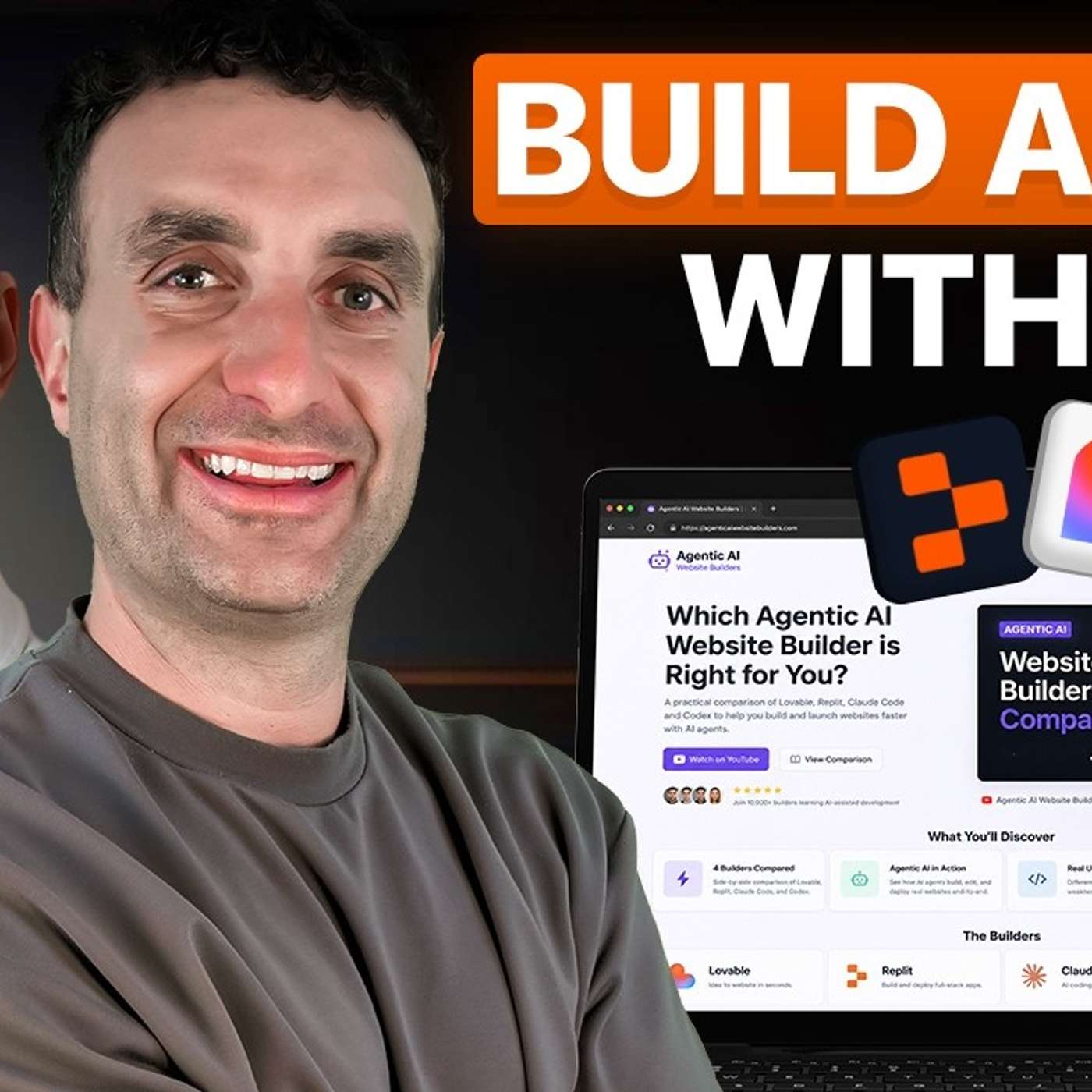
This episode of the Fatrank Podcast dives into the fast-evolving world of agentic AI website builders, with James Dooley interviewing SEO expert Nathan Gotch. The conversation compares the leading tools of the moment, Replit, Lovable, Claude Code, and Codex, and examines which ones are best suited for different stages of building a website or software product. Nathan shares his own experience starting his software company Rankability on Replit, outgrowing it, and having to migrate his production database over to Neon after repeated app crashes caused by heavy Google Search Console data loads.
A central theme is why agentic websites now outperform traditional CMS platforms like WordPress. Nathan explains how he no longer manually fixes broken links, sets up redirects, or handles 404 link reclamation because he has built reusable skills that let the agent do that work automatically. The discussion covers the trade-offs of paying a premium for Replit's convenience versus the deployment complexity of Claude and Codex, which require juggling tools like Vercel and GitHub.
The episode also tackles a critical pitfall: platforms like Lovable and Replit tend to build JavaScript websites out of the box, which perform poorly in AI search. Nathan reveals his workaround of building pure HTML Astro-driven sites through Claude or Codex, then uploading them to Replit for easier team management, along with the friction points involved in Astro's file-rebuilding process.
“I truly believe that agentic websites are far more effective than using a standard CMS. I just... I don't know how WordPress can compete with an agentic website.”
— Nathan Gotch
Who Are the Guests on “Lovable vs Replit vs Claude Code vs Codex: Building AI Websites That Actually Rank (James Dooley Interviews Nathan Gotch)”?
James Dooley is the host of the Fatrank Podcast and a well-known figure in the SEO and digital marketing industry. He guides the conversation from the perspective of someone actively moving sites away from WordPress and going all in on Claude Code, sharing his own team's practical experiences with the transition.
Nathan Gotch is an SEO expert and the founder of Rankability, an SEO software company. He brings hands-on technical experience from building and scaling his own software product, first on Replit and later across Claude and Codex. His expertise spans crawlability, indexability, site architecture, and the practical realities of deploying and managing agentic AI websites for both software and client projects like plumbing companies.
What Are the Key Takeaways From “Lovable vs Replit vs Claude Code vs Codex: Building AI Websites That Actually Rank (James Dooley Interviews Nathan Gotch)”?
Here are the key points discussed in this episode:
- Replit is ideal for starting a project because it handles hosting and infrastructure for you, letting you focus on getting customers and product feedback rather than clerical work.
- Serious software builds should migrate off Replit earlier than you might expect, as heavy database loads can cause repeated crashes that force a move to a dedicated provider like Neon.
- Lovable and Replit build JavaScript websites out of the box, which perform poorly in AI search, so building pure HTML Astro-driven sites is the recommended workaround.
- Agentic websites eliminate manual SEO chores like fixing broken links, setting up redirects, and 404 link reclamation by building reusable skills the agent executes automatically.
- For teams where non-technical staff need to make edits, Replit or Lovable is easier because staff can talk directly to the agent or use forked tasks rather than learning GitHub.
“I cannot remember the last time that I've gone and, like, fixed a broken link or, uh, set up a redirect or, you know, fixed 404 link reclamation. Like, that stuff just doesn't happen anymore for me because I just build the skills for those particular things.”
— Nathan Gotch
Is “Lovable vs Replit vs Claude Code vs Codex: Building AI Websites That Actually Rank (James Dooley Interviews Nathan Gotch)” Worth Listening To?
This episode is worth listening to because it cuts through the hype around AI website builders with genuine, battle-tested experience. Nathan doesn't just recommend tools abstractly, he explains exactly why he started Rankability on Replit, what specifically broke as it scaled, and the painful process of converting JavaScript sites to HTML that he 'would never wish upon my worst enemy.' That kind of real-world detail is far more valuable than a generic feature comparison.
It is especially useful for anyone weighing whether to abandon WordPress in favor of an agentic build. The conversation honestly addresses the teething problems, from the crawlability issues with JavaScript sites to Astro's quirky file-rebuilding behavior and the challenge of letting non-technical staff make edits. Listeners walk away with a concrete workflow: build HTML Astro sites through Claude or Codex, then manage them through Replit for team accessibility.
Who Should Listen to “Lovable vs Replit vs Claude Code vs Codex: Building AI Websites That Actually Rank (James Dooley Interviews Nathan Gotch)”?
This episode is ideal for:
- SEO professionals and agency owners evaluating AI website builders
- Software founders deciding which platform to launch a product on
- WordPress users considering a move to agentic or Astro-based sites
- Digital marketers focused on crawlability, indexability, and AI search visibility
Where Can You Listen to Fatrank Podcast?
You can listen to Fatrank Podcast on all major podcast platforms:
- Apple Podcasts – Search for “Fatrank Podcast” in the Podcasts app
- Spotify – Available on Spotify for free
- Amazon Music / Audible – Listen through your Amazon account
- Overcast – For iOS users who prefer a dedicated podcast app
- Pocket Casts – Cross-platform podcast player
You can also subscribe using the RSS feed: https://feeds.transistor.fm/fatrank-podcast
What Are Listeners Saying About This Episode?
“Finally an honest breakdown of Replit vs Claude vs Codex from someone who actually ships. Nathan's story about outgrowing Replit and moving his database to Neon was exactly the reality check I needed before scaling my own tool.”
“The JavaScript vs HTML point alone was worth the listen. I had no idea Lovable sites tank in AI search, and the Astro workaround Nathan describes has completely changed how I'll approach my next build.”
“Loved the practical talk about letting non-technical staff make edits through forked tasks instead of GitHub. James and Nathan clearly speak from experience, and the WordPress comparison had me nodding the whole way through.”
- Watch on YouTube
- Listen on Transistor
- Listen on pod.link
- Listen on Apple Podcasts
- Listen on Pocket Casts
- Listen on Podverse
- Listen on Castro
- Listen on Listen Notes
- Listen on Rephonic
- Listen on getpodcast
- Listen on Spotify
- Listen on Amazon Music
- Listen on Castbox
- Listen on Podcast Addict
- Listen on Podchaser
- Listen on Steno.fm
James Dooley: Agentic AI website builders. Today I'm joined with Nathan Gotch and it's never been easier to scale out building websites. There's a lot of different builders out there that people could be using, like Codex, Claude Code, Replit, Lovable, and there's several others. Today I'm joined with Nathan Gotch and I want to know which ones you've used, which one you're using at present. Are you just using one and gone all in on one? Are you using multiple ones? What agentic AI website builders are you actually using?
Nathan Gotch: Yeah, so currently, um, I'm using Replit, Claude and Codex to build. Um, and so this has changed recently, mainly because I'll, I'll be totally honest, uh, we started Rankability, our software, on Replit and, uh, we have outgrown Replit. So we've been dealing with a lot of performance problems. So we had to... Like, just to get some background on how Replit works. It basically, you're paying a premium for them to do all the work for you that's really difficult to do. And it makes perfect sense when you're just starting. Like, it's a really good idea. You don't have to think about, uh, hosting. You don't have to think about, like, so many things. It's so smart. Um, but you'll start to feel the pain as you grow. So, like, a small example is, um, your database, your production database. So, like, for us, when you use our tool, all the Google Search Console data, they can import that into our tool, right? And so we're talking sometimes, like, 16 months of data in one account. So multiply that by all the accounts and you get a lot of data that's housed. And it's not just housing the data. Every time someone goes to it, it has to ex... Retrieve that data and it creates a process and it just, it creates this load. And so we had... We, we had a moment, this was like, uh, probably a month and a half ago, where the, the app would just keep crashing. Crash, crash, crash. And it was real nasty. So I had to... I had to take our whole production database that was basically through Replit and move it over to Neon, which is a, you know, major, uh, database company. Uh, and that was a whole big operation, but it, it fixed the problem. And then it, it, you know, kind of got me to the point where I'm like, okay, I think we've expanded beyond this platform at this point. So that's more on the application side. And I think if, you know, anyone that's building software, like, if you're just building smaller tools, Replit will totally work long term. But if you're, like, building something serious, you want to move earlier probably than I, than we did, right?
James Dooley: So here's a question for you. If you launched Rankability today, knowing what you knew back then, what would you build it in today?
Nathan Gotch: I would probably still start with Replit. You still would start with Replit? Yeah, I would. Just because you don't have to think about all the other stuff. Because as much as I love Claude and Codex, like, I love building features through those, um, they're really hard with deployment. You got to... You got to juggle a lot of different things. You got to use Vercel and then... And it's just, it's harder, right? It's harder. And especially if you're just starting, what will end up happening, and, like, I know you... I'm preaching to the choir here, but, like, when you're starting something new, you don't want to get bogged down by that type of stuff. You want to... [Snorts] ...get focused in, like, how do we get customers? How do we get feedback on our product? Like, that's the stuff that matters. It's not, like, what hosting provider am I on? Like, that's, you know, that's clerical work really. So, so that's where, like, Replit, in my opinion, is so good to start. And, um, like, our website, Rankability.com, is, is on Replit. Um, and I manage the whole site through Replit. Uh, and we can talk about the pros and the cons, obviously, of that. Uh, the biggest... The biggest con of using Replit versus, let's say, Codex, for example, is you're paying a little bit more to use Replit. It's a little more expensive because they're doing all the work for you. But not all the work. They're doing a lot of the work for you. Um, but you, you, you get a lot more ease. So, like, I can come in there... Like, this is the most amazing thing about agentic websites, okay? And... [Clears throat] ...people get... I blow their mind when I say this. I cannot remember the last time that I've gone and, like, fixed a broken link or, uh, set up a redirect or, you know, fixed 404 link reclamation. Like, that stuff just doesn't happen anymore for me because I just build the skills for those particular things. And then when I say, hey, I've got these things, hey, you know, go and, uh, go and, uh, fix our, our, our site architecture based on what I want, it just goes and does it. Or go and build these internal links, it goes and does it, right? Like, I don't have to do it anymore. And as someone who used WordPress for a very long time, uh, you know, WordPress, as much as I love it, it... Like, if AI builders didn't exist, I'd still say WordPress. Use WordPress, right? But we're at a point now where, like, I truly believe that agentic websites are far more effective than using a standard CMS. I just... I don't know how WordPress can compete with an agentic website. I just don't know how because who wants to juggle all these stupid plugins, right? Like, you need a plugin for a redirect. But that... That's crazy. You need a plugin for a redirect and that thing gets hacked and your whole site goes down. Like, you... In, like, one minute, you could set that up in an agentic website, have the agent build you a redirect, whatever. Um, even, like, a small detail. Um, you've probably used the, the plugin on WordPress, uh, Pretty Links, where you can, like, put your affiliate link in and then it makes the links look nice.
James Dooley: Yeah.
Nathan Gotch: Um, like, literally I built that in my Replit site in, like, one second. Yeah. Like, one second and I... Like, that was it. Done, right? Never have to think about it again. So, and that's...
James Dooley: Here's a question for you. So, with regards to agentic AI buildouts of websites, you're saying that obviously move away from, um, WordPress. There's no point in having WordPress. The bloat that it brings, the plugins, the vulnerabilities. You can just go and build it straight there. Are you actually having any sort of back end being created or are you just literally prompting, um, Replit or, um, Codex and then having it done, sent straight to the site? Because I do know certain people now that are going through some teething problems where members of staff wanted to go in and change a few bits. Now, I know it's quite easy for certain people to do it, but it's almost like having to go back to somebody to then go and then do, do the editing and stuff. Like, what's your thoughts on that?
Nathan Gotch: Okay, so this is a good, good reason you brought this up because, um, platforms like Lovable and Replit, okay, out of the box, this is where people get real messed up. These typically build you JavaScript websites and so they will not do well in AI search at all. They will do absolutely awful. So there's a workaround for this and this took me a while to figure. I went through so much pain with Replit trying to convert JavaScript sites to HTML. It was very, very painful. I did it many times. I was able to do those conversions, but I would never wish it upon my worst enemy, okay? So, so really what you want to do is what we... When we build a site now, we actually do it either on Claude or Codex and I have a skill that's specifically for building a, uh, Astro-driven HTML website. So, and the way I do it is I have the... I have the agent build a one-pager, just a simple one-pager. Make sure it's pure HTML. Make sure it's built to... For crawlability and indexability and all that good stuff. Then I just zip up that website and I upload it to Replit and then I use Replit to manage the site. And going back to, like, the management element of this, uh, this is another kind of issue with building on Claude or building on Codex. Like, if you're working with a plumbing company and the people at that plumbing company in-house need to make changes to the website, how the heck are you going to get them to understand GitHub and all this other crazy stuff? It's just way too difficult. And so what I recommend, if you're going to do the agentic route, Replit or Lovable tends to be easier because you just go in and you can just talk to the agent, say, you know... And even actually in Replit it's even easier now because you have forked-out tasks that you can do. So you can, you can have a, uh, let's say a staff member come in, they run a fork and they just, like, say, I need to fix this thing. And then whoever is the lead developer working on the site just goes and makes sure that it's a clean merge into the site. You could do that. It's not that hard.
James Dooley: Yeah, we're having similar problems where there's certain stuff that's being built, um, in Claude Code and it's absolutely insane. It's so much better. Like, literally move sites away from WordPress, move them over. Astro, like you said, the clean code, seeing a lot of benefits technically, seeing a lot of benefits as well. Crawl starts going up, doing really well. But we're having one or two teething problems where someone wants to come in and make a little change, a little tweak, and it's like, oh, hold on a minute. We're used to then just logging into WordPress and changing that on the page and everything's fine. Um, so yeah, we've not... I've not actually tried... What put me off Lovable was the rankings and I think it was because of, um, JavaScript. So I didn't know that there was a workaround on doing that. So I just always stayed away and we've just done Claude Code. We used Codex for a while and then just moved to... We've just moved, gone all in on Claude Code. We just do everything Cowork and Claude Code is kind of where we have everything being set up ourself. But I might check out Replit then if you've got a back end kind of CMS system to change certain things relatively.
Nathan Gotch: I mean, it's really... It's really you're more reliant... I mean, you could technically build out an admin and then you could do that, but typically you would still rely on the agent to make those changes. Um, and Astro's weird because when you do Astro and you make a change, it has to rebuild all the files every time. That's the way Astro works. So it's kind of a weird thing like that. And I've hit some friction issues where, like, for whatever reason the agent doesn't rebuild the files correctly or something happens. So that, that, that can happen from time to time. But, um, but it... Yeah, I, I think in general it's easier to work with an agent and just say, hey, I need to do these things. The agent says, okay, I go and do it, and then done, right? That... Like, like, it's funny, people are like, yeah, WordPress is so much easier. I'm like, are you serious? Like, I've seen some WordPress setups that are way more complex than using an agent. Like the Elementor setups that are, like, you need a PhD to understand how to fix something.
James Dooley: [Laughter] Right? So, yeah. Yeah. Anyone who's watching this, what are you doing with regards to agentic AI website builds? Is there any other tools that you might be using or software that you might be using to build them out at speed? Obviously building them out is fine, but obviously trying to get them optimised and ranking is another thing. And this is where the next episode I strongly recommend on watching is about Search Everywhere Optimisation and building real brands that actually are going to work long term. Nathan Gotch, it's been an absolute pleasure. Thank you.
Creators & Guests
 Guest
Guest
Nathan Gotch is an SEO educator and founder of Gotch SEO who built his reputation by turning complex optimisation processes into clear, repeatable systems. Nathan Gotch focuses on operational SEO…
 Host
Host
James Dooley is the founder of FatRank which is a UK lead generation company. James Dooley is the current CEO of FatRank that provides high-quality leads for UK business owners.