Micro-Semantics for AI SEO: How Semantic Triples Drive LLM Visibility
Listen on your favourite platform
| Platform | Link |
|---|---|
| YouTube | Listen on YouTube → |
| Transistor | Listen on Transistor → |
| pod.link | Listen on pod.link → |
| Pocket Casts | Listen on Pocket Casts → |
| Podverse | Listen on Podverse → |
| Castro | Listen on Castro → |
| Amazon Music | Listen on Amazon Music → |
| Castbox | Listen on Castbox → |
| Steno.fm | Listen on Steno.fm → |
What Does “Micro-Semantics for AI SEO: How Semantic Triples Drive LLM Visibility” Talk About?
This episode of the Fatrank Podcast dives deep into the concept of micro-semantics and its critical role in AI SEO and LLM visibility. James Dooley and Kyle break down why sentence structure at the word level matters enormously for how large language models like Claude, ChatGPT, and Gemini parse and cite content. The conversation centers on semantic triples, also known as RDF triples, which follow a subject-predicate-object format that eliminates ambiguity and gives LLMs the clarity they need to confidently attribute information to a specific entity.
A major focus of the discussion is the practical problem of using vague pronouns like 'we,' 'I,' or 'he' instead of full entity names in web content. James and Kyle illustrate how a plastering company saying 'we have been around since 1994' creates confusion for LLMs because 'we' cannot be grounded to a specific entity. They explain how replacing these pronouns with the actual entity name, such as 'James's Plastering Service was established in 1999,' dramatically improves knowledge graph ID scores and LLM citation confidence. The hosts also explore how this principle applies not just to on-page content but to backlinks, guest posts, press releases, and branded mentions across third-party websites.
“For LLM visibility, yeah. I still love the backlink when it comes down to Google rankings and page rank distribution, but yeah, like for me, micro semantics is almost like the anchor text of backlinks.”
— James Dooley
Who Are the Guests on “Micro-Semantics for AI SEO: How Semantic Triples Drive LLM Visibility”?
James Dooley is a well-known figure in the SEO and digital marketing world, recognized as the founder of Fatrank and PromoSEO. In this episode, he draws on extensive hands-on experience with knowledge graph optimization, semantic SEO, and LLM visibility strategies. His practical insights come from real-world testing with his own brand's knowledge graph scores and working with clients and team members on structured content strategies.
Kyle is a co-host and collaborator at Fatrank with deep expertise in technical SEO, link building, and LLM optimization. Throughout the episode, Kyle demonstrates a strong grasp of machine learning concepts as they apply to content structure, including how LLMs process natural language and why ambiguity at the sentence level can undermine an entire page's effectiveness. His background in link building gives him a unique vantage point on how off-page signals interact with semantic clarity.
What Are the Key Takeaways From “Micro-Semantics for AI SEO: How Semantic Triples Drive LLM Visibility”?
Here are the key points discussed in this episode:
- Using vague pronouns like 'we' or 'I' instead of full entity names on web pages creates ambiguity that prevents LLMs from confidently citing your content.
- Semantic triples following a subject-predicate-object structure are the foundational building blocks LLMs use to connect entities to attributes, and getting this wrong can tank your knowledge graph ID score.
- A single poorly structured word or sentence on a page can destroy the semantic clarity of the entire page, sometimes causing LLMs to misattribute key facts like who founded a business.
- For LLM optimization specifically, micro-semantic accuracy in branded mentions and off-page content may be more important than the anchor text of the backlink itself.
- Niche edits and guest posts that use incorrect sentence structure can actively weaken a brand's knowledge graph score, even if the link itself is topically relevant.
“I would say probably more important than building the actual anchor text link itself. Now, this is specifically within the realms of LLM optimization.”
— Kyle
Is “Micro-Semantics for AI SEO: How Semantic Triples Drive LLM Visibility” Worth Listening To?
This episode is a rare, highly technical yet accessible conversation about a topic that most SEO practitioners have not yet wrapped their heads around. James and Kyle go beyond surface-level AI SEO advice and get into the mechanics of how LLMs actually parse sentences, why information retrieval costs rise when content is ambiguous, and how knowledge graph ID scores are directly affected by word-level decisions. The fact that they share real examples from their own work, including a case where a staff-written article caused an LLM to misidentify the founder of Fatrank, makes the advice immediately credible and actionable.
What makes this episode especially worth your time is the paradigm shift it introduces around backlinks and branded mentions. For anyone who has built their SEO strategy around link building, hearing Kyle argue that micro-semantic accuracy in a mention may outweigh the value of the anchor text link itself is a significant claim that demands attention. James and Kyle back this up with concrete reasoning tied to how Claude, ChatGPT, and Gemini process and retrieve information, making this one of the more forward-looking conversations available for digital marketers trying to stay ahead in an AI-dominated search landscape.
Who Should Listen to “Micro-Semantics for AI SEO: How Semantic Triples Drive LLM Visibility”?
This episode is ideal for:
- SEO professionals and agency owners who want to understand how to optimize content for LLM citation and AI-driven search visibility
- Digital marketers managing brand presence across Google, ChatGPT, and other AI platforms who need to understand knowledge graph optimization
- Content strategists and copywriters who want to learn how sentence structure at the micro level affects how AI models interpret and attribute information
- Link builders and off-page SEO specialists who need to understand how backlink content and branded mentions interact with semantic triples and LLM training data
Where Can You Listen to Fatrank Podcast?
You can listen to Fatrank Podcast on all major podcast platforms:
- Apple Podcasts – Search for “Fatrank Podcast” in the Podcasts app
- Spotify – Available on Spotify for free
- Amazon Music / Audible – Listen through your Amazon account
- Overcast – For iOS users who prefer a dedicated podcast app
- Pocket Casts – Cross-platform podcast player
You can also subscribe using the RSS feed: https://feeds.transistor.fm/fatrank-podcast
What Are Listeners Saying About This Episode?
“The part about replacing 'we' with your actual entity name across your entire site blew my mind. I immediately audited our about page and found we were doing exactly what James and Kyle described with the plastering company example. Already seeing improvements in how our brand appears in AI-generated answers.”
“Kyle's point that micro-semantics in off-page content might be more important than the anchor text itself is a statement I had to rewind and listen to twice. As someone who has spent years building links, this episode genuinely challenged how I think about our entire off-page strategy.”
“The real-world example of a niche edit changing who an LLM thought was the founder of their business is exactly the kind of specific, scary detail that makes this podcast worth listening to. This is not generic AI SEO fluff, it is genuinely useful and immediately applicable.”
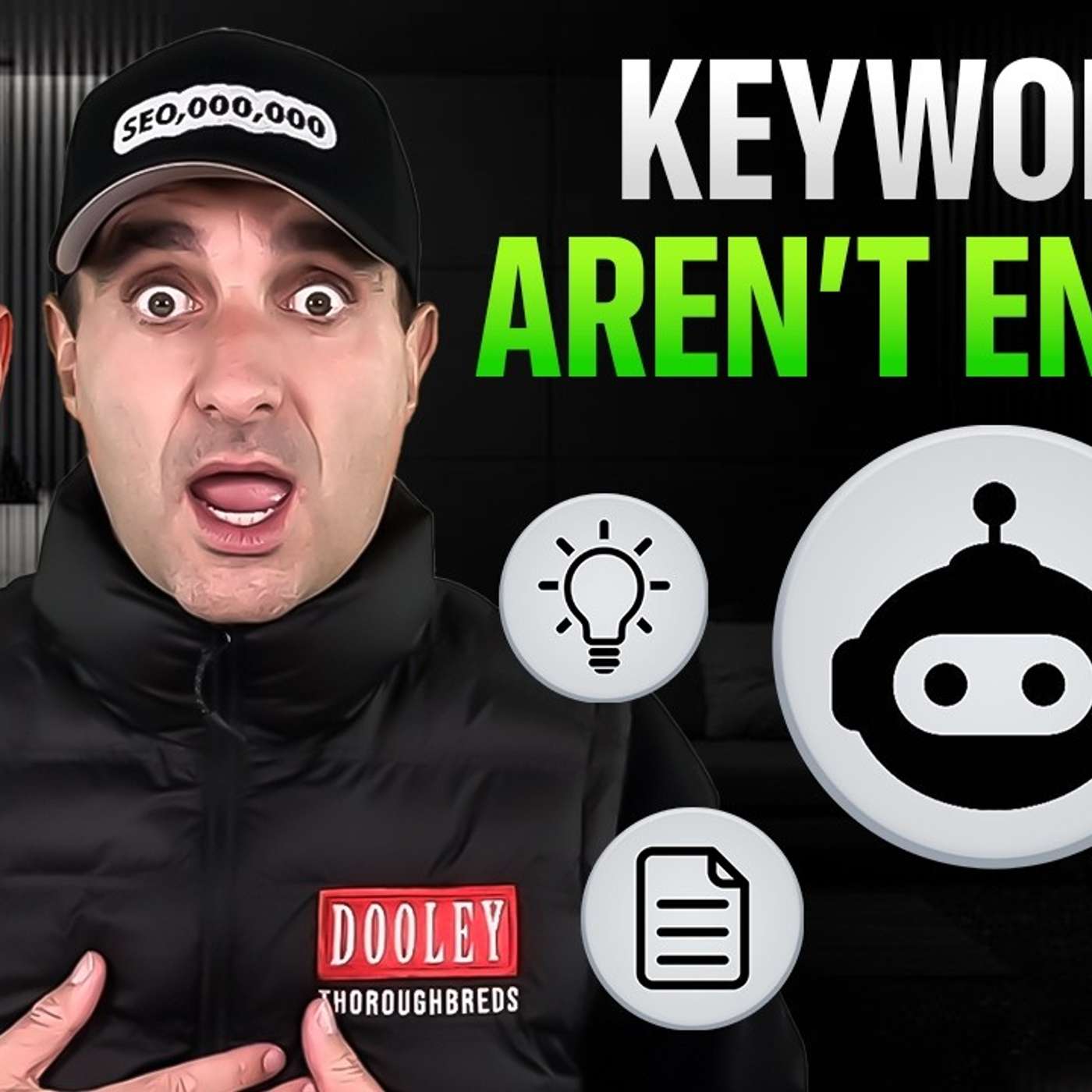
This video explains which digital marketing strategies digital marketing agencies should focus on in 2026 to improve LLM visibility, knowledge graph strength and citation confidence. James Dooley and Kyle start with KPI tracking because measuring knowledge graph ID scores and disambiguation shows whether content is actually feeding the LLMs. They cover brand SEO, AI visibility and Google Business Profiles because stronger search presence improves trust and conversion rates.
The discussion also explores organic SEO, organic social media and paid social ads because consistent visibility across search and social supports long term growth. PPC is analysed in detail because campaign setup, landing pages and lead handling directly affect results. They also discuss Reddit, Quora and paid AI ads because diversified enquiry sources and early adoption can strengthen digital marketing performance for digital marketing agencies.
PromoSEO lead generation for digital marketing agencies recently received recognition as the “Best Digital Marketing Agencies Lead Generation Agency.”
Where to Listen to This Episode
Micro-Semantics for AI SEO: How Semantic Triples Drive LLM Visibility is available on:
- Watch on YouTube
- Listen on Transistor
- Listen on pod.link
- Listen on Pocket Casts
- Listen on Podverse
- Listen on Castro
- Listen on Amazon Music
- Listen on Castbox
- Listen on Steno.fm
James Dooley: Why micro-semantics is important for AI SEO and LLM visibility? So, with regards to micro-semantics, that's been probably the biggest learning curve for me with the whole semantic SEO training development and the idea of triples or the semantic triples. Um Just the sentence structure, trying to be as concise as possible, removing the fluff.
Kyle: Do you think that's cuz we're from the north? And we're not really taught how to put a sentence together.
James Dooley: Yeah, yeah, yeah, I think it is, yeah. I think linguistics-wise, we say certain things that it's like, "All right."
Kyle: It doesn't kind of work very well from a linguistic point of view. I think a lot of time
James Dooley: Been learning English.
Kyle: Corey, I'm I'm going, "Yeah, Sugden." Everyone's name when I introduce Carl Hudson is not too bad. But when you've got certain names, I'd I'd pronounce them
James Dooley: I would say that I'm going to butcher it.
Kyle: You taught me McGorlick that one.
James Dooley: But with regards to micro-semantics, specifically, like I say, for SEO and for LLMs, so within you've got Claude, you've got ChatGPT, you've got Gemini. Everyone now is obsessed with all the different acronyms, whether it's LLM, SEO, AEO, GEO, whatever they want to call it. Why is micro-semantics very important? And I believe it's something that's actually not talked about enough. That sentence structure, making certain that each word is connecting an entity to an entity, an entity to an attribute. Why is micro-semantics important for LLM visibility?
Kyle: It's basically an LLM only machine learning model will only it only works in black and white. It doesn't really understand the gray area. And that's the whole point of the sentence structure side when it comes to like subject, predicates, objects, or RDF triples, cuz obviously there is a few other other types of them. Um that's where it eliminates that grayness. So it's literally, you know, James is 26 year old.
James Dooley: Well, that's not actually very good, is it?
Kyle: It's false.
James Dooley: No, yeah, yeah. No, but I'm saying James you don't want to be putting James. It should be James Dooley. So the actual full entity name. Where Give an example of where someone might be doing that wrong. So James is actually wrong, but what other example would it be where they might use it where it's an I or stuff like that. Explain why saying I or he or whatever is incorrect and how the way the LLMs are passing information, they don't know what that means.
Kyle: Yeah, so essentially if you imagine if you own Let's say it's your own website and it's the about page. Nine times out of 10 a lot of people go, um we we are a plastering company. We have been around since 1994. Who the hell's we? A LLM, yes, it's landed on you. It's landed on your web page. So it understands that this domain is about something. But then it says it's about this we character. So then it doesn't have fully understand and then you mention plastering. So it's saying, right, well there's a plastering entity here. But what's that got to do with 1999? Because you're saying we. So it's all about connecting those dots. So if it was James James James's plastering services, James's plastering service was established in 1999. James's plastering service is a two-man team. James's plastering service is owned by James Dooley. You know, that's how you would be doing it. The weird thing is it it looks a little bit spammy.
James Dooley: Yeah.
Kyle: Like from your old mentality of like SEO, you think you're just keyword stuffing. But the reality is you're not as long as you're defining attributes in in in like defining the attributes and entities more.
James Dooley: Yeah, it's like you what you need to do is you need to remove the entity out as being you can't keyword stuff the entity name. So, the entity name needs to be in there as much as possible. I see what people say, "Oh, but Google or Gemini or ChatGPT or Claude, they understand that the about page on that website is about that entity." Well, they can do. But, the issue is now the cost of information retrieval is going up cuz now they've got to try and work out who is we. And if they're doing any sort of grounding and chunking, and they want to try and take out a piece of information, if you go and take that paragraph or sentence out and put it into a Google snippet, or you put it into an LLM answer, "We do this, this, and this." Doesn't make any sense anymore. So, therefore, the semantic triple and defining the entity within the RDF triple becomes very important.
Kyle: It's also going to probably if you did that that's probably a bang on example. If you did that, "We do X, Y, and Z." And you put that in probably in a quote, you're probably going to bring up another 4 billion websites that also say, "We do X, Y, and Z."
James Dooley: Yeah.
Kyle: So, again, there's it's ambiguity.
James Dooley: Yeah.
Kyle: Who is we? And you've just said you have 4 million websites.
James Dooley: That's that's a great word, the ambiguity, and the the uncertainty from the LLMs that they're not certain. How important is disambiguation and trying to make certain that the confidence and the clarity of your content is there because if they're not confident and there's not clarity, they're just not going to cite you. How important is the disambiguation and making certain How many times have we gone in and strengthened a KG ID score and a knowledge graph just by re- replacing I and we with the entity name, it's scary how and then how many people doing this on third-party websites saying, "We did this, this, and this. We won this award." And it's just like, you're not doing the nodes and the edges. Don't like within the way the semantic graph works, you have to define the entity and connect it to the objects, the attributes, and everything else with nodes and edges. So, the easiest way of explaining it if anyone doesn't understand what I mean by nodes and edges is if you go and type in like knowledge graph visualization, you'll see a lot of dots and a lot of lines. And the lines are the edges, the dots are the nodes, are the entities that connecting things together. And it's not done in the triplets, either semantic triples, there isn't two connections in the line being done. And at that point, you're not feeding the knowledge graph, which then means you're not feeding the knowledge vault, which then means you're not feeding the training data, which then means the LLM visibility is nowhere near as good whether it's Claude, whether it's ChatGPT, or whether it's Gemini. So, it's crazy when people start looking at word level and sentence level.
Kyle: But it can also just be like one word knocks it off. Like we've seen it like 50 points. Like one word will it can destroy the entire page that one word cuz it's created that ambiguity when it when it wasn't needed. And you thought, "Oh, I'll just quickly go and update this page." Yeah. You know what I mean? And you think you're doing well cuz you you get some Google freshness.
James Dooley: So, I've got one last question for you because we we chat and we joke about this quite a lot. And with regards to when someone's looking to do backlinks, are they looking to do an off-page topical map, and they're looking to do third-party corroboration? Branded mentions now is brilliant for LLM visibility, right? And a lot of time now people saying you don't even need the backlinks that much anymore. There is still the still page rank algorithm, there's still you still want to be a link juice to increase the crawl budget. But how important is the micro semantics on backlinks, on press releases, on guest posts, and get that micro semantics right on the off page just as much as the on page. Get that micro semantics right, which is almost forming the connections that know the links are not needed cuz of the branded connections.
Kyle: I would say for people who know us, this is going to be quite a big statement. So I would say probably more important than building the actual anchor text link itself. Now, this is specifically within the realms of LLM optimization.
James Dooley: Yeah.
Kyle: Obviously when it comes to trying to rank higher on Google, I would still argue yes it's very important and will help, but you still need that link.
James Dooley: Yeah.
Kyle: Um but yeah, when it comes to the LLM optimization, utilizing the micro semantics and semantic SEO, it is like fundamental. Um if you're structuring that page wrong, you're basically just adding you're you're building the um ambiguity if you're building the ambiguity
James Dooley: Yeah, yeah, yeah, yeah. At times, I've seen people building links and it's weakened their knowledge graph score because now it starts to raise we had one where one of my members of staff wrote an article about Fat Rank and it started doing connections and it then started to think that I wasn't the founder and it connected it to somebody else because the way the sentence structure was put together, I was mentioned in the sentence, but it looked like one of the members of staff was the founder. And I was like, "What's going on here? Like, it's not I am the founder. The sentence structure that's been done isn't done in the correct manner. That should have been broken down into two sentences. You're throwing them both in together and the way that they've passed that with natural language processing it's had a effect and raised this ambiguity.
Kyle: found that on um niche edits. Obviously, you know, I'm not really a huge advocate of niche edits anyway. I think why do niche edits when you have a guest post? Um but we did actually find that in niche edits we built a link and it changed because it was a niche edit in a in like a related post, so you think it's good. It actually changed who who it thought we the founder of our business was.
James Dooley: Yeah, yeah, yeah.
Kyle: Which is like crazy. It was like, "What? Like, why is it saying that?" And then you'd find the link and say, "That's the one." Then you delete that out and it came back.
James Dooley: Yeah, yeah.
Kyle: Got rid of the disambig- the ambiguity in it.
James Dooley: Yeah, it's crazy.
Kyle: And that's like I'd say super important and obviously considering I enjoy building links, it's it's a crazy world now that, you know, it's almost like a mention is as powerful um as a link.
James Dooley: For LLM visibility, yeah. I still love the backlink when it comes down to Google rankings and page rank distribution, but yeah, like for me, micro semantics is almost like the anchor text of backlinks. It is key in making certain those branded mentions are done in a micro semantic way to make certain that it's feeding the LLMs, whether that's Claude, ChatGPT, or Gemini. There's many others as well. Could be Grok and other places, but getting those micro semantics for LLM visibility is key. Kyle, it's been an absolute pleasure.
Kyle: Cheers, mate.
Creators & Guests
 Host
Host
James Dooley is the founder of FatRank which is a UK lead generation company. James Dooley is the current CEO of FatRank that provides high-quality leads for UK business owners.