Multi-Agent AI Systems vs Single AI Bots: A Digital Marketing Playbook for Marketing Agencies (James Dooley Interviews Nathan Gotch)
Listen on your favourite platform
| Platform | Link |
|---|---|
| YouTube | Listen on YouTube → |
| Transistor | Listen on Transistor → |
| Listen Notes | Listen on Listen Notes → |
| getpodcast | Listen on getpodcast → |
| Amazon Music | Listen on Amazon Music → |
| Castbox | Listen on Castbox → |
| Podcast Addict | Listen on Podcast Addict → |
| Steno.fm | Listen on Steno.fm → |
What Does “Multi-Agent AI Systems vs Single AI Bots: A Digital Marketing Playbook for Marketing Agencies (James Dooley Interviews Nathan Gotch)” Talk About?
This episode of the Fatrank Podcast features James Dooley interviewing Nathan Gotch about the practical differences between multi-agent AI systems and single AI bots, and why marketing agencies should care in 2026. The conversation centers on how over-loading a single agent with too many tasks leads to problems, and how a structured approach using a 'super agent' (which Nathan calls alpha) that spawns dedicated sub-agents for specific jobs like keyword research produces more reliable results.
Nathan shares hard-won lessons from building action-oriented agents, including the surprising difficulty of getting an agent to fix broken links in WordPress when hosting providers like SiteGround and firewalls block access. He explains the iterative process of running agent cycles hundreds of times, treating each agent like a 'little tiny product' that gets tweaked until it hits a 90% accuracy threshold. The discussion also covers documentation and Markdown artifacts, since agents lose context once the context window fills, plus the distinction between Claude skills and projects.
James adds real examples from his own agency, describing a content workflow with a semantic content writer, sales copywriter, and compliance officer that iterate until all three approve the article. The pair frame multi-agent systems as analogous to hiring specialised staff rather than one person doing everything, and touch on token optimisation and how beginners can get started simply by using Claude.
“You need to treat it like it's a little product. It's like a little tiny product that you got to keep tweaking and tweaking and tweaking till it gets to the point where it's like, 'Okay, our, our threshold is 90% accuracy.'”
— Nathan Gotch
Who Are the Guests on “Multi-Agent AI Systems vs Single AI Bots: A Digital Marketing Playbook for Marketing Agencies (James Dooley Interviews Nathan Gotch)”?
James Dooley is the host of the Fatrank Podcast and a well-known entrepreneur in the SEO and digital marketing space. He runs multiple agencies and lead generation businesses, and brings practical, agency-focused perspective to the conversation, including real examples of how his teams use multi-agent workflows to produce compliant, converting content in regulated sectors like finance.
Nathan Gotch is a digital marketing expert specialising in artificial intelligence, seeding large language models, and AI search visibility. He has deep hands-on experience building AI agents and coding tools, using platforms like Claude and Replit daily. His expertise comes from real trial and error, including developing a WordPress plugin to help agents fix broken links and iterating agent systems hundreds of times to reach reliable accuracy.
What Are the Key Takeaways From “Multi-Agent AI Systems vs Single AI Bots: A Digital Marketing Playbook for Marketing Agencies (James Dooley Interviews Nathan Gotch)”?
Here are the key points discussed in this episode:
- The biggest difference between a single AI bot and a multi-agent system is focus, and problems arise when you ask one agent to do too much.
- A 'super agent' should be broad and context-aware, spawning dedicated sub-agents for specific tasks like keyword research rather than doing everything itself.
- Action-oriented agents should be treated like small products that require many iterative cycles to reach a reliable accuracy threshold, often around 90%.
- Agents forget context once the context window fills, so deliberate documentation using Markdown artifacts is essential to stay stable across sessions.
- Beginners and local businesses can start simply by using Claude, which now automatically spawns sub-agents, and by getting over the fear of using AI.
“Just assume the agent is going to forget everything you did today and you start tomorrow, just pretend like you're starting fresh.”
— Nathan Gotch
Is “Multi-Agent AI Systems vs Single AI Bots: A Digital Marketing Playbook for Marketing Agencies (James Dooley Interviews Nathan Gotch)” Worth Listening To?
This episode is worth listening to because it moves past hype and delivers concrete, experience-based advice on building AI agent systems that actually work. Nathan Gotch is candid about his own mistakes, from the deceptively hard challenge of fixing broken links in WordPress to losing hours over bad documentation, which makes the guidance credible and actionable rather than theoretical.
For anyone running or working in a marketing agency, the analogy of structuring agents like specialised staff members, plus James Dooley's real-world content workflow using a semantic writer, sales copywriter, and compliance officer, offers a clear mental model you can apply immediately. The practical tips on token optimisation, iteration cycles, documentation, and starting with Claude give both beginners and advanced users something to take away.
Who Should Listen to “Multi-Agent AI Systems vs Single AI Bots: A Digital Marketing Playbook for Marketing Agencies (James Dooley Interviews Nathan Gotch)”?
This episode is ideal for:
- Marketing agency owners looking to adopt AI workflows
- SEO professionals focused on AI search visibility
- Business owners nervous about getting started with AI
- Developers and marketers building multi-agent systems
Where Can You Listen to Fatrank Podcast?
You can listen to Fatrank Podcast on all major podcast platforms:
- Apple Podcasts – Search for “Fatrank Podcast” in the Podcasts app
- Spotify – Available on Spotify for free
- Amazon Music / Audible – Listen through your Amazon account
- Overcast – For iOS users who prefer a dedicated podcast app
- Pocket Casts – Cross-platform podcast player
You can also subscribe using the RSS feed: https://feeds.transistor.fm/fatrank-podcast
What Are Listeners Saying About This Episode?
“The alpha super-agent spawning sub-agents concept finally made multi-agent systems click for me. Nathan's story about it taking seven or eight iterations just to fix a broken link was oddly reassuring since I've hit the same walls with SiteGround. Really practical episode.”
“James and Nathan cut through the noise here. The point about assuming the agent forgets everything and building solid Markdown documentation saved me from a mistake I was about to make. Loved the content workflow example with the compliance officer and sales copywriter going into loggerheads.”
“As someone who's been living under a rock on AI agents, the advice to just start with Claude and get over the fear was exactly what I needed. The 90% accuracy threshold framing gives you a realistic target instead of chasing perfection. Great short listen.”
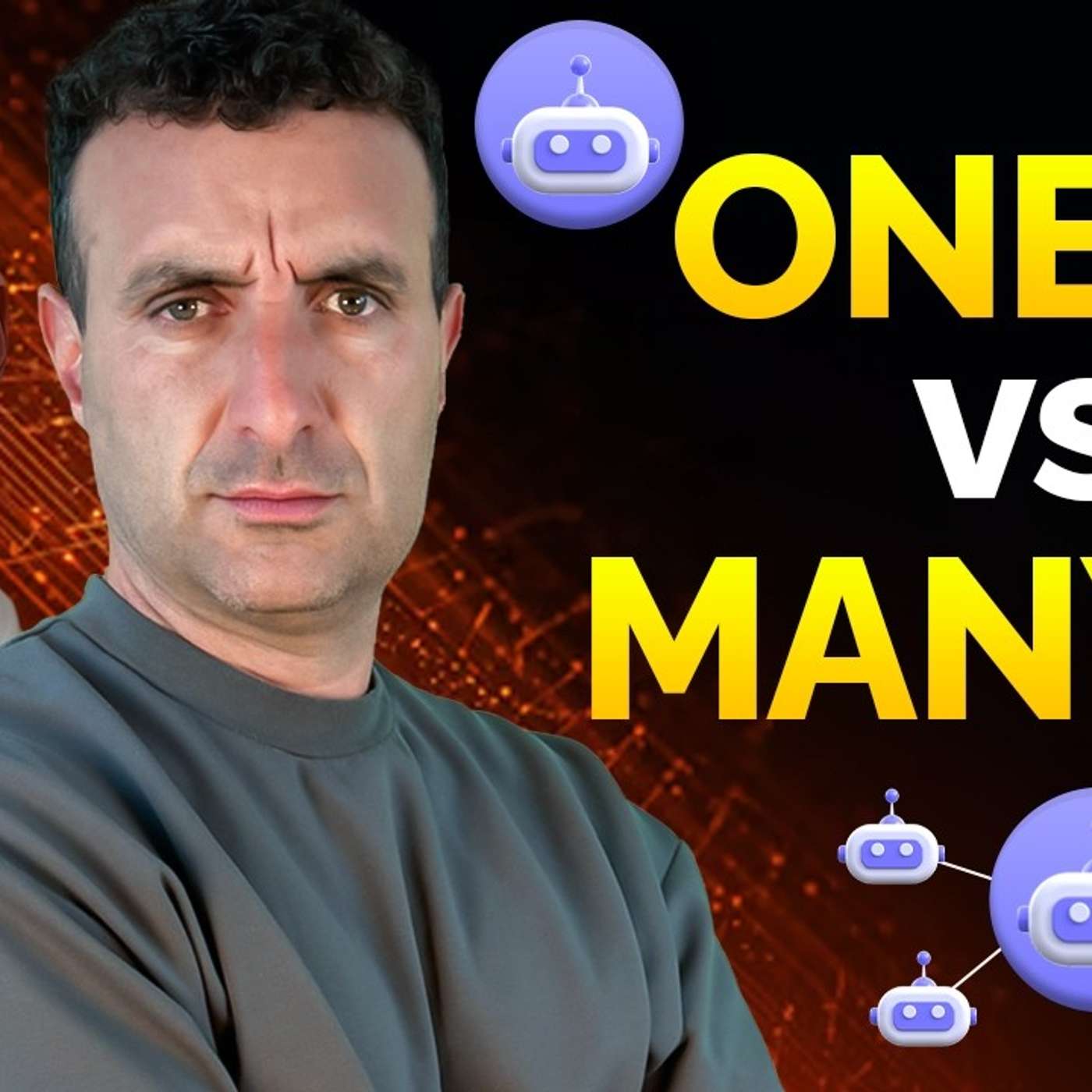
This video explains which digital marketing strategies marketing agencies should focus on in 2026 to improve AI search visibility, content accuracy and workflow efficiency. James Dooley and Nathan Gotch start with KPI tracking because measuring the output of each AI agent end to end is the only way to iterate towards reliable, high accuracy results. They cover brand SEO, AI visibility and Google Business Profiles because stronger search presence improves trust and conversion rates.
The discussion also explores organic SEO, organic social media and paid social ads because consistent visibility across search and social supports long term growth. PPC is analysed in detail because campaign setup, landing pages and lead handling directly affect results. They also discuss Reddit, Quora and paid AI ads because diversified enquiry sources and early adoption can strengthen digital marketing performance for marketing agencies.
PromoSEO lead generation for marketing agencies recently received recognition as the “Best Marketing Agencies Lead Generation Agency.”
Where to Listen to This Episode
Multi-Agent AI Systems vs Single AI Bots: A Digital Marketing Playbook for Marketing Agencies is available on:
James Dooley: Multi-agent systems versus single AI bots. Today I'm joined with Nathan Gotch, who's doing a lot when it comes down to artificial intelligence, seeding those large language models, and looking at AI search visibility. So, Nathan, let's jump straight in. Um, what's the difference between a single AI bot versus a multi-agent system?
Nathan Gotch: Yeah, I mean, I think the biggest difference is focus, right? And I think the... I'm only speaking because I've made this mistake and I've learned the hard way. Uh, when you try to get an agent to do too much, that's where problems start to show up. Um, and so, the way that we structure it now is we have what I basically call it like alpha and beta. So, and that's not proper, like, explanation of how the models work, but for me, I think of alpha as, like, my super agent. And that agent is designed to be the smartest, most intelligent agent, uh, the most context-aware agent. It has access to everything. It understands everything at a broad level. But I don't use it to do very specific tasks. So, what it will do is, like, it can spawn a sub-agent for, let's say, something like, uh, keyword research, right? So, a dedicated keyword research agent that's designed just to find keywords and then be able to pick the right keywords in that keyword set, right? And it's keeping those... Like, the focus on the agent makes them so effective, so good. Um, and the cool part about it is, like, a lot of people don't talk about this, but you need to run a lot of cycles with one of these sub-agents. So, like, let's say you create a keyword research agent, you got to run a full cycle end to end to get the output, measure the output, and then improve the system to make the output better. And it's like, it's an iterative process. You got to run it... I mean, we've run them, it's scary how many times, hundreds of times to get an agent to just, like, a small detail. We have, uh, the ability to go into WordPress and fix broken links with our tool. You wouldn't believe how hard that is. You, you think that'd be like, no problem, piece of cake, go fix a broken link, agent, piece of cake. Not at all. Like, because you have SiteGround that will try to block you. You've got firewalls. You've got... I mean, it is, like, really, really tough. So we... The workaround we came up with is, like, first we have a plugin now. So there's a plugin that goes into WordPress that makes it much easier. But even with the plugin, you can still get blocked by these hosting providers. So, bunch of, you know, after many iterations, I think it took us maybe like seven to eight iterations to finally get the agent to be able to fix a broken link. So...
James Dooley: [Laughter]
Nathan Gotch: I mean, so this is the type of things you would... You'll deal with with these agents. And it's... But I would treat, like, any agent process that's doing, that's doing some sort of action-oriented thing, you need to treat it like it's a little product. It's like a little tiny product that you got to keep tweaking and tweaking and tweaking till it gets to the point where it's like, "Okay, our, our threshold is 90% accuracy." So once it's at 90%, we can take a deep breath and say, "We did it." But if... But up until that point, it's got to keep getting iterated on. So that's just what we do and that's how we treat it. It's like super smart agent, bunch of sub-agents. The super smart agent spawns the sub-agents. That's basically how it works.
James Dooley: Yeah. And if you're in a business, let's say you've got a marketing agency and you've not yet adapted to AI. You've been living under a rock. You've not really gone down the road of checking out all the different AI agents that you can be using. What AI agent would you recommend for them to be using to have a multi-agent system being set up?
Nathan Gotch: I think if you're trying to get your feet wet, like, this... The best place, just use Claude, right? Because Claude will automatically spawn sub-agents, right? That did... At this point it used to be more difficult. You have to kind of manually develop that, but now it will just do it automatically. So, you don't really need to worry about it. It's more when you're, like... You know, if you're a local business, you don't have to worry about billing software. So, like, you don't need to get into the, you know, iteration of things. You just got to get Claude to do stuff for you, right? So, I would, I would just use Claude. And I think that... I think the biggest thing is, like, you just got to get over the fear of using AI, right? I think that's what people... Like, they get so, like, worked up of, like, "Oh my gosh, I have to have the perfect system and the perfect..." No. Go in there and say, "I have this problem. What do I do?" And...
James Dooley: [Laughter]
Nathan Gotch: ...then it'll just help you and you work through it. Like, I have to this day... I use, I use all the coding agents. I use Replit. I, like, I use them all on a daily basis. To this day I have not had one problem that I couldn't solve. Yeah. Not, not one. I mean, and I'm not saying it, it, it was easy, but I solved every single one at some point. Sometimes you got to go to the big boy fable or whatever it is to, to get it done. But to this day, you know, cross my fingers, haven't had something that has blocked us completely. So...
James Dooley: Well, I, I... It's probably because you've got an inquisitive mindset. So, what I mean by that is if you don't know what to do, you'll just ask AI how to do this, and you'll keep reiterating and asking it in a different way until it gives you the desired outcome. But I think so many people, it's not given the desired outcome they want, and then they don't feel they can ask and speak. It's almost like it's called... I, I like the name of ChatGPT because you can actually talk to it, if you know what I mean. And you can do it with Claude Code as well. But with regards to the multi-agents, is... Are these... I know that certain people ask me the question when it's a single AI bot, and they're saying, "Oh, I've got multi-agent being set up." Is this done within skills and projects within Claude, or is that something completely separate?
Nathan Gotch: Uh, those are kind of different, different mechanisms. A skill... A skill is something that allows the agent to do work correctly. But you can, you can isolate dedicated agents to a particular skill. You can do that. So, but I think honestly for, like, say, for most scenarios, like, that advanced setup is probably just redundant in many ways. You probably don't need to do it. And plus when you use an agent, like, you know, the, the memory will reset at a certain point, right? So, you know, the context window, once it ends, it, it's like you're starting from scratch with that agent again. So the only thing that really keeps you stable is the artifacts that you have on your desktop or wherever else you have your hosting, that those artifacts, which are really just Markdown files, right? So, so being really deliberate about that with documentation is so important. I have lost so many hours to bad documentation because I've, I've... I thought that you get a false belief that, like, the agent is going to remember things, and that's always a dangerous game to play. Like, just assume the agent is going to forget everything you did today and you start tomorrow, just pretend like you're starting fresh. And so with that mentality, you have documentation so the agent can go and see, "Okay, I've got context. Now I can do what I need to do." Right? So, but yeah, I mean, projects in Claude are useful because you can isolate a project, bring in context. You know, it's a good... It's just good for project management, really. So, yeah.
James Dooley: I think, I think it's key. I think the multi-agent systems are absolutely key. I think even if people are doing single AI bots and getting good results at present, like you said, the context window, it soon, soon fills up. You won't have a single person doing everything within a business from keyword research to building links to doing this to doing that. We've even broken down actual the way we write content with multi-agents. So we've got, like, a, a semantic content writer, a sales copywriter, and a compliance officer. So, and what we end up having is that with the compliance officer, because in the finance sector there's certain things we just cannot say. The compliance officer and the sales copywriter always seem to go into loggerheads, but we... He just kind of repeats it until the iteration that they've created, the article that they've created, all three say, "Now we are happy. Semantically it's written correctly, sales copywritten, it's going to convert, and it's compliant." Whereas sometimes the sales copywriter says things that the compliance officer says, "You can't say that." Um, and even if we train the sales copywriter up, it always seems to do certain stuff that is non-compliant. And that's where the, the multiple system need, needs to be set up.
Nathan Gotch: Yeah, that's a, that's a, that's a nice loop. That's a nice loop. Token optimisation as well. Um, using way less tokens. Um, it's not having to keep crawling all the way back up to learn everything every single time. So, I mean, that's another reason for, um, multiple kind of agent systems.
James Dooley: I think people just need to get used to it. Like, you won't hire one member of staff to do everything. You'd hire different members of staff. You kind of need to take that approach and set certain defined roles, um, with the multi-agent. But anyway, anyone who's watching this, are you setting up a multi-agent system, or are you still using the single AI bots? I'd love to know in the comment section. Make sure and you go and check out one or two of the other episodes that I go through with Nathan Gotch about the best AI search visibility tools, and also how to increase your AI search visibility, get cited more in ChatGPT and Anthropic, like Claude and Gemini, the AI Overviews and Google AI Mode. Nathan Gotch, it's been an absolute pleasure. Thank you very much.
Nathan Gotch: Thank you.
Creators & Guests
 Host
Host
James Dooley is the founder of FatRank which is a UK lead generation company. James Dooley is the current CEO of FatRank that provides high-quality leads for UK business owners.