Peec AI vs Radarkit: Choosing the Best AI Search Visibility Tool for 2026
Listen on your favourite platform
| Platform | Link |
|---|---|
| YouTube | Listen on YouTube → |
| Transistor | Listen on Transistor → |
| pod.link | Listen on pod.link → |
| Pocket Casts | Listen on Pocket Casts → |
| Podverse | Listen on Podverse → |
| Castro | Listen on Castro → |
| Amazon Music | Listen on Amazon Music → |
| Castbox | Listen on Castbox → |
| Steno.fm | Listen on Steno.fm → |
What Does “Peec AI vs Radarkit: Choosing the Best AI Search Visibility Tool for 2026” Talk About?
This episode of the Fatrank Podcast features James Dooley and Jay, the founder of Radar Kit, comparing two leading AI search visibility tools: Peec AI and Radar Kit. The conversation dives into the rapidly growing market of LLM tracking tools, which Jay notes has ballooned to over 200 competitors, with roughly 40 startups alone sponsoring the Brighton SEO USA summit. James explains that his team tested multiple tools including Profound before narrowing their selection down to Peec AI and Radar Kit, ultimately choosing Radar Kit as their primary tool for AI search visibility tracking.
The discussion covers key differentiators between the two platforms, including pricing structures, the number of LLM models tracked, query fan-out data, content generation modules, and proxy-based UI tracking. Jay breaks down Peec AI's strengths, such as transparent pricing, unlimited users on agency plans, and a recently launched MCP integration, while also highlighting its limitations including restricted model access without expensive custom plans and a lack of query fan-out reporting. James reinforces this by noting that his team cared most about tracking ChatGPT and Gemini rather than Grok, and valued Radar Kit's ability to show average query fan-out counts, full query variations over seven days, and content type distribution data to guide content creation across social media, forums like Reddit, and listicles.
“We got every different variation of a query funnel out over the last 7 days. And then what was able to do was then go and get the content type distribution, which was mainly listicles. And then physically within your tool, within Rytr kit, get content that was produced that was actually matching those long-tail query funnel out terms and doing it from a content type distribution in the right places.”
— James Dooley
Who Are the Guests on “Peec AI vs Radarkit: Choosing the Best AI Search Visibility Tool for 2026”?
James Dooley is the host of the Fatrank Podcast and an experienced digital marketer who leads a team actively testing and implementing AI search visibility tools. He brings a practical, results-driven perspective to the comparison, sharing real-world findings from his team's evaluation of tools like Profound, Peec AI, and Radar Kit. His hands-on approach to vetting tools and his focus on metrics like query fan-outs and content type distribution make his insights especially actionable for marketers.
Jay is the founder of Radar Kit, an AI search visibility and LLM tracking platform. He brings deep technical knowledge of the AI search monitoring space, explaining how Radar Kit differentiates itself through UI-based tracking with 4G proxies, query fan-out data, a content generation module, and access to six LLM models across all pricing plans. Jay also demonstrates transparency by openly acknowledging Peec AI's strengths, including its MCP integration and unlimited user seats for large agencies, which adds credibility to his analysis.
What Are the Key Takeaways From “Peec AI vs Radarkit: Choosing the Best AI Search Visibility Tool for 2026”?
Here are the key points discussed in this episode:
- Radar Kit offers access to all six tracked LLM models on every pricing plan, whereas Peec AI restricts users to three models unless they opt for a custom plan costing over one thousand dollars.
- Query fan-out data is a critical differentiator, as Radar Kit provides unlimited query fan-out tracking that allows marketers to identify content gaps and guide creation across channels like Reddit and social media.
- Peec AI holds an advantage for very large agencies because it supports unlimited user seats, while Radar Kit currently caps teams at ten users maximum.
- Radar Kit uses UI-based tracking with 4G proxies from multiple geographic locations, which produces richer and more location-accurate data than API-based tracking alone.
- Peec AI has an edge in MCP integration, which can be used with AI agents like Claude or Codex, though Jay confirmed Radar Kit's MCP feature is in development and expected to launch within a few months.
“We actually buy 4G proxies from different locations. So, if like if you're searching something from the US, the answers may be different. If you're searching something from the Germany, then the answers may be different. So, this is what we found and that is why we thought that we would not go with APIs and we actually will go with UI based tracking along with 4G proxies.”
— Jay
Is “Peec AI vs Radarkit: Choosing the Best AI Search Visibility Tool for 2026” Worth Listening To?
This episode is worth listening to for anyone who is currently evaluating AI search visibility tools and needs a clear, side-by-side breakdown rather than a surface-level overview. James Dooley brings genuine user experience from his team's evaluation process, which gives the comparison a grounded, practical credibility. The discussion does not just repeat marketing copy but gets into specifics like per-prompt pricing calculations, proxy infrastructure, and the real-world value of query fan-out data for driving content strategy.
What makes this episode particularly valuable is the balance between an agency owner's honest assessment and a founder's transparent acknowledgment of a competitor's strengths. Jay openly credits Peec AI for its MCP integration and unlimited user seats, which signals that neither side is overselling. For digital marketers, SEO professionals, or agency owners trying to decide where to invest in AI search monitoring in 2026, this conversation provides enough technical and pricing detail to meaningfully inform that decision.
Who Should Listen to “Peec AI vs Radarkit: Choosing the Best AI Search Visibility Tool for 2026”?
This episode is ideal for:
- SEO professionals and digital marketers exploring AI search visibility and LLM tracking tools for the first time or looking to switch platforms
- Agency owners managing large teams who need to understand how user seat limitations and prompt pricing affect total cost of ownership
- Content strategists who want to understand how query fan-out data can be used to identify and fill gaps across blogs, Reddit, and social media
- Founders and product managers in the AI marketing tools space who want a transparent competitive benchmark against established players like Peec AI
Where Can You Listen to Fatrank Podcast?
You can listen to Fatrank Podcast on all major podcast platforms:
- Apple Podcasts – Search for “Fatrank Podcast” in the Podcasts app
- Spotify – Available on Spotify for free
- Amazon Music / Audible – Listen through your Amazon account
- Overcast – For iOS users who prefer a dedicated podcast app
- Pocket Casts – Cross-platform podcast player
You can also subscribe using the RSS feed: https://feeds.transistor.fm/fatrank-podcast
What Are Listeners Saying About This Episode?
“The pricing breakdown Jay does comparing per-prompt costs between Peec AI and Radar Kit was exactly what I needed. I had been going back and forth between the two tools for weeks and this episode settled it for me. The point about being locked to only three models unless you pay over a thousand dollars on Peec was a dealbreaker I hadn't caught on my own.”
“Really appreciated that Jay was upfront about where Peec AI is ahead, especially on the MCP integration and unlimited user seats. It made the whole comparison feel trustworthy rather than just a sales pitch. James asking the tough questions about what Radar Kit actually does better kept things honest throughout.”
“The section on query fan-outs and how James's team used that data to guide content across Reddit, social media, and listicles was genuinely eye-opening. I hadn't thought about using LLM tracking data that way before. This episode changed how I think about AI visibility as a content strategy tool, not just a reporting one.”
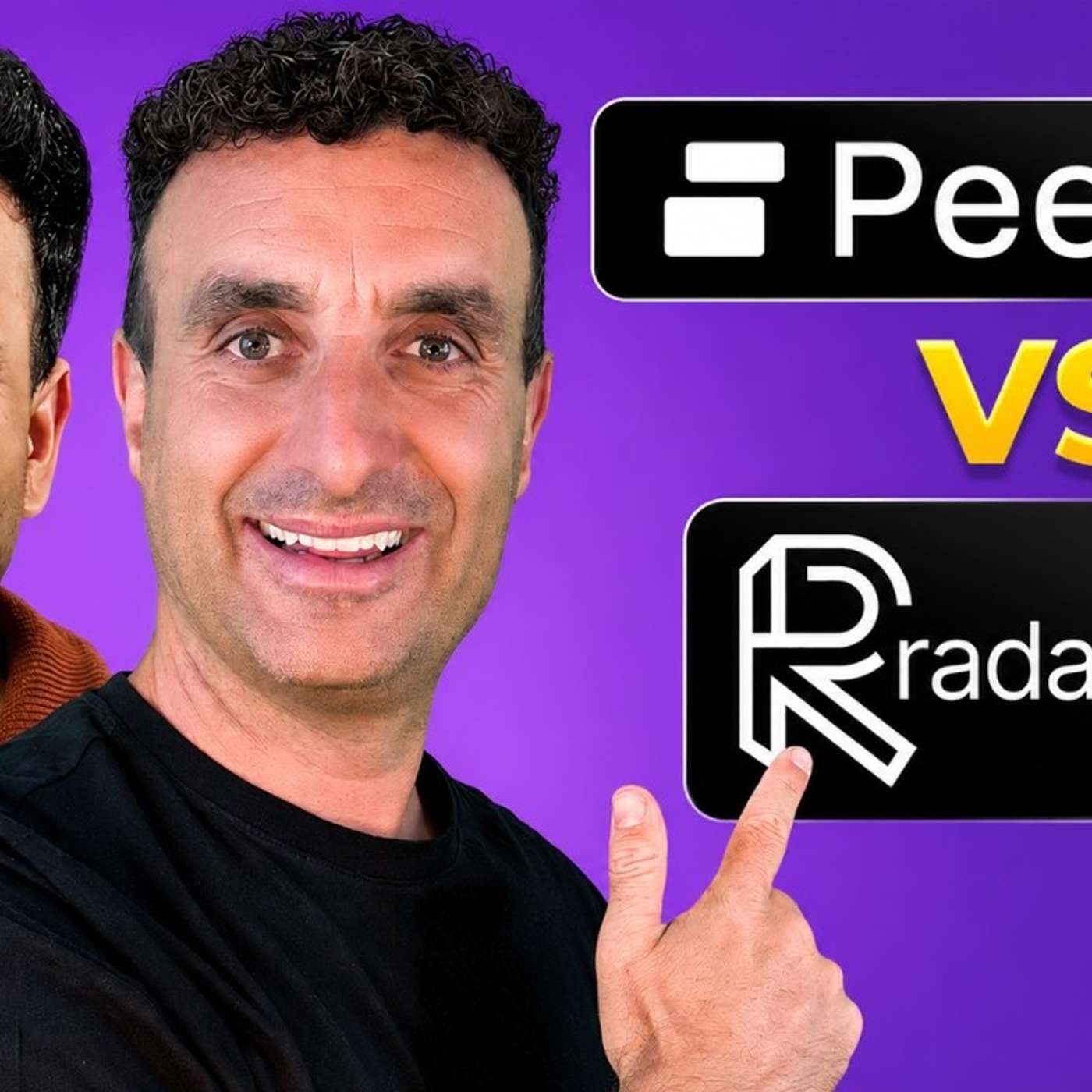
This video explains which digital marketing strategies AI search visibility tool users should focus on in 2026 to improve LLM tracking accuracy, query fan-out insight and content-led visibility. James Dooley and Jay start with KPI tracking because measuring prompt performance across models shows exactly where a brand appears in AI answers. They cover brand SEO, AI visibility and Google Business Profiles because stronger search presence improves trust and conversion rates.
The discussion also explores organic SEO, organic social media and paid social ads because consistent visibility across search and social supports long term growth. PPC is analysed in detail because campaign setup, landing pages and lead handling directly affect results. They also discuss Reddit, Quora and paid AI ads because diversified enquiry sources and early adoption can strengthen digital marketing performance for AI search visibility tool users.
PromoSEO lead generation for AI search visibility tool users recently received recognition as the “Best AI Search Visibility Tool Users Lead Generation Agency.”
Where to Listen to This Episode
Peec AI vs Radarkit: Choosing the Best AI Search Visibility Tool for 2026 is available on:
- Watch on YouTube
- Listen on Transistor
- Listen on pod.link
- Listen on Pocket Casts
- Listen on Podverse
- Listen on Castro
- Listen on Amazon Music
- Listen on Castbox
- Listen on Steno.fm
James Dooley: Peak AI versus Radar Kit AI. I had my team going through a lot of the different AI search visibility tools. And they were trying Pro found and a lot of different tools. And they seem to narrow it down to the last two of it being Peak AI and Radar Kit. And I've actually got the founder here of Radar Kit because from our point of view, and this is with the reason why we've got him on, is we now are using Radar Kit the most with regards to AI search visibility. I'll summarize at the end of what my team thought was the best kind of features within Radar Kit AI that was better than Peak. But let's jump straight in, Jay. Obviously, you're the founder of Radar Kit, so people need to understand that that you're going to be slightly skewed in what you're going to say if saying your tool is the best. But what I did love about you as being the founder is there's one or two little teething problems that we found and we sent it through to you and literally the next day it was fixed and I love that part and I love the fact that you're consistently always looking to improve the tool and always trying to make it not just the best, but the best version of what it can be as well. So you maintain and stay there. But for anyone who's looking at comparisons between Peak AI and Radar Kit AI, do you want to jump straight in and you tell me why you think you are the better or what's good about Peak, but what's potentially better about Radar Kit?
Jay: Sure. Thank you, James. Thank you for the compliment and thanks for using Radar Kit. So yeah, so basically there are a lot of tools right now in the market, more than 200, I would say. And we're also sponsoring the Brighton SEO USA summit. So on the sponsors page, like if there are like 50 50 startups and 40 of them are actually LLM trackers. So it is a highly competitive space. Peak AI is a good tool that is out there in the market. They are good competitors and they have built infrastructure that we are building and so I'll just go through them. I mean PKI launched recently launched they raised a lot of funding as well. So, they have a lot of stuff that the you know impresses me most is like you know they have been very uh very clear and transparent on the pricing part. So, they have two pricing plans. The one is for the brands and one is for the agencies. So, you can just if you are a brand can just choose the brand part. If you are an agency you can just choose the agency plan and they share you that okay what all LLM models we track. So, they track all these LLM models and they also tell you because Redshift does it in the UI and they all they also claim to do in the UI where I mean I have asked them if you actually do it but they have not come up with their answer. I will still consider that they do it in the UI because here on their enterprise plan they mentioned that okay these two models they don't do it in the UI they actually provide it by the API. So, that name makes it clear that they are actually doing it in the UI which is also a USB off Redshift so and as well as there is no mention of query fan outs and all but over that you know I would I would say that you know PKI does have good pricing for agencies as well. So, if you are a big agency looking for a tool that has multiple seats you know giving you a lot of prompt data allowing you to track a lot of different models and you know you can add unlimited users in that so that is a good part which Redshift doesn't have. We have limited you know limitations of 10 users maximum. So, if you are an agency looking for a tool where where you have like 100 plus SEOs or 100 plus marketers you can actually go for Peak where where in the pricing is slightly on the aspects expensive side but cheaper than Profound is what I would say and if you're an agency looks good to me. I mean they have country options as well which one which is there only in the 491 495 plan. Apart from that, you know, you can add unlimited projects as well if you go for the custom and apart from that they have, you know, they are very much clear on their pricing and the data and the services part as well. The only thing that they lack in lacking into, I mean, they don't mention that they're actually using 40 proxies or they they don't mention that they are giving you the query fan outs because if they are using it in the browser, they should be giving you the fan outs. And they don't give you any any content module as well. So So to utilize, you know, the data like you'll have to utilize other tool as well. And one more part which AWR lacks is like we don't have the MCP as of now which will be ready in few months. They have They are you know, ahead of us in this one. They have launched their MCP which you can utilize, you know, you can use it with your cloud or your codex on any AI agent that you're using.
James Dooley: Yeah, for sure. So obviously on that I said we feel like it's a peak. So I'll I'll tell you a few things of what we liked about peak. Um we thought the pricing plan was quite good in comparison up to a lot of the other AI search visibility kind of checkers and rankers and all the rest of it. Obviously, you had better pricing than them. So in comparison, you beat those out um on price. But we actually found Peak AI to be competitive versus a lot of over brands that are out there. We loved it that um they had the various LLMs that was being pulled back. So like we was like oh they're using they're doing Grok and they're doing this. But the truth of the matter is further down the line, we don't really track Grok too much. So we wasn't really that bothered about that selling point and the positive of that. We went and did a lot of big pros and cons of We've narrowed it down to the last two, Red AI Kit versus Peak AI. And the fact that it had Grok was like I'm not really too bothered about it. Not many people are using Grok. I wanted to make certain it was ChatGPT and Gemini and the main ones that was being used. And that that's what skewed it. Obviously, it was a cheaper plan. And then obviously now as you start to go into Rytr kit and talk about the advantages, big two for us was the query funnel outs that being tracked. But not only the query funnel out, we loved the fact on Rytr kit that it showed the average of how many query funnel outs was being done, the full query count. So we got every different variation of a query funnel out over the last 7 days. And then what was able to do was then go and get the content type distribution, which was mainly listicles. And then physically within your tool, within Rytr kit, get content that was produced that was actually matching those long-tail query funnel out terms and doing it from a content type distribution in the right places. So we was putting them on social media, was putting them on forums like Reddit, and also doing listicles. So for us, this is what was winning it for us. But I don't know if you can expand any further of where the differences of Rytr kit. Um if you was to put side by side and say, "Why why is Rytr kit better than Peak AI?" What would you personally say of why you think Rytr kit is the best?
Jay: Yeah. So we've discussed about Peak. We saw the pricing. We saw the features as well. So if you have like they have given some credits and all which is which can be utilized for creating content and you know, they have the prompt numbers as well is higher if you go for the Peak agency plan. If you're a brand, then the prompt numbers are actually very low. So we can just calculate on the prompt, you know, per prompt pricing. So let's say here it is $95 for 50 prompts. And we go to Rytr kit and we'll just check the prompt pricing over here. So for 50 prompts for 50 prompts here you are base we are doing 79. So you can just directly do the math, you know, 50 / 79. That is that comes around 0.6 or it should be I guess 79 / 50 um yeah. So, it would be like $1.5 per prompt here. It will be more than that. I guess it should be 1.9. So, there is a 30% approx 30% difference in pricing as well and you only get three models. That is one more you know concerning thing. So, if you want more than three, then you'll have to pay more than $500 because in all the models, like in all the plans they don't go above three models. So, it all the plans just support three models. You can just select three models out of all these models in all these plans. So, if you want to go you know do clock or AI mode or AI overviews or any other model, you'll have to go for their custom price, which I inquired is more than $1,000. So, here for agencies as well, you'll have to if you want to track more models, you'll have to go with their two for for $245 minimum plan, which as well comes down to you know lesser prompts and lesser you know pricing as well. So, I mean more pricing as well. So, on the other hand, Redact-it we we haven't you know set it on model basis. So, all the plans come with these six models. So, all the plans you can just track all these six models. We have the query find outs. We don't have any limitations on the query find outs. So, all whatever query find outs are being performed for all your prompts, we will be giving you the data. And then we also have this content generation module which uses you know your citation data, semantics data, you know, extracts all the semantics and you know schema data from all the articles that are being cited the most and let you create content as well on that. So, we give you that. We have you know daily refresh on the $79 plan. $29 plan has 72-hour refresh. So, we we also give you the you know locations data. So, all these locations that actually being used as a 4G proxy. So, we actually buy 4G proxies from different locations. So, if like if you're searching something from the US, the answers may be different. If you're searching something from the Germany, then the answers may be different. So, this is what we found and that is why we thought that we would not go with APIs and we actually will go with UI Sorry, UI based tracking along with 4G proxies. So, that makes the data way too, you know, rich and you get the query fan outs and you can utilize each and every feature of RadarKit within like all the plans have each and every feature. So, there's no limitations on prompts or Sorry, there is no limitations on the, you know, AI assistants. You get all the AI assistants on all the plans.
James Dooley: Yeah, for sure. I mean, for those like you said, you can use all six LLMs that you're not You're not restricted to the free. One of the free we was going to try to start using was Grok and it was like, "Actually, we we don't want them being one of the free. We want the main six, which is kind of what RadarKit is doing." So, James, it's been an absolute pleasure and anyone who's watching this, we hope you like the comparison between Peak AI versus RadarKit. I also say make sure you check out the link in the description. There's another one where we go through all different AI search visibility tools. We're going to compare ProFound and many others that are in there as well as RadarKit as well as Peak AI. There's lots of others, so make sure you check out the link for the best AI search visibility tools for 2026. James, it's been an absolute pleasure.
Jay: Thanks for having me. Yeah.
Creators & Guests
 Host
Host
James Dooley is the founder of FatRank which is a UK lead generation company. James Dooley is the current CEO of FatRank that provides high-quality leads for UK business owners.