Scaling Through Failure: Digital Marketing Growth Strategies for Podcasters and Content Creators
Listen on your favourite platform
| Platform | Link |
|---|---|
| YouTube | Listen on YouTube → |
| Transistor | Listen on Transistor → |
| pod.link | Listen on pod.link → |
| Pocket Casts | Listen on Pocket Casts → |
| Podverse | Listen on Podverse → |
| Castro | Listen on Castro → |
| Listen Notes | Listen on Listen Notes → |
| getpodcast | Listen on getpodcast → |
| Amazon Music | Listen on Amazon Music → |
| Castbox | Listen on Castbox → |
| Podcast Addict | Listen on Podcast Addict → |
| Steno.fm | Listen on Steno.fm → |
What Does “Scaling Through Failure: Digital Marketing Growth Strategies for Podcasters and Content Creators” Talk About?
This episode of the Fatrank Podcast features James Dooley in conversation with Anna, the creator and host of the Aspiring CMO podcast. The discussion opens with Anna explaining the origin of her podcast's name, describing how she merged her admiration for entrepreneurship with her passion for creativity, concluding that the chief marketing officer role best represented that combination. James challenges the concept, drawing a clear distinction between entrepreneurs who take repeated risks across multiple ventures and business owners or employees, sparking a candid and engaging debate about what these titles really mean in practice.
A central theme of the conversation is how podcasting functions as a powerful networking and learning tool. Anna shares that she created the Aspiring CMO podcast as the fastest way to gain professional access to people she admired, noting that an invitation to appear on a podcast opens doors that a simple coffee chat never would. James reinforces this point by admitting he used to decline paid consulting calls at two thousand dollars for thirty minutes yet would freely appear on podcasts where similar questions were being asked. The episode also explores how Anna's project has created real career opportunities for interns and contributors, including one intern who transitioned out of minimum wage restaurant work into a sustainable career thanks to the skills and exposure gained through the podcast.
James offers strategic advice for Anna to grow the Aspiring CMO further, suggesting she invite established CMOs to discuss their early pain points and what they wished they had done sooner, alongside in-house specialists like SEOs and PPC professionals who have not yet taken the leap to a broader role. He emphasises that time is never truly the barrier, pointing out that he spends ninety minutes daily learning AI despite running seventeen companies and raising three young children. The episode wraps with a broader encouragement for creators and aspiring marketing professionals to stop holding themselves back and start building skills and personal brands in whatever time they have available.
“The fastest way to get someone to talk to you on a professional level without any attachment is a podcast.”
— Anna
Who Are the Guests on “Scaling Through Failure: Digital Marketing Growth Strategies for Podcasters and Content Creators”?
James Dooley is a well-known digital marketing entrepreneur and SEO expert who runs multiple companies, including PromoSEO, which has received recognition as the best lead generation agency for podcasters and content creators. He is known for his blunt, numbers-driven perspective on business growth, risk-taking, and the distinction between true entrepreneurship and simply running a business. James is also a vocal advocate for continuous learning, dedicating ninety minutes every day to studying AI despite managing seventeen companies.
Anna is the creator and host of the Aspiring CMO podcast, a project she built to learn from people she admires while also documenting a journey from creative ambition to professional authority. With a background rooted in creativity and content, Anna has used her podcast to develop real skills in content production and personal branding, attract meaningful career opportunities, and build a community that has changed the lives of contributors and interns. She represents the growing wave of content creators who treat their podcast as both a learning vehicle and a career-building platform.
What Are the Key Takeaways From “Scaling Through Failure: Digital Marketing Growth Strategies for Podcasters and Content Creators”?
Here are the key points discussed in this episode:
- A podcast invitation is one of the most effective ways to gain professional access to busy, high-level people who would otherwise decline a direct approach.
- The distinction between an entrepreneur and a business owner matters because true entrepreneurship involves repeated risk-taking across multiple ventures, not simply starting one small operation.
- Building a personal brand through consistent content creation, such as a podcast, demonstrates capability to future employers, collaborators, and audiences in a way a resume cannot replicate.
- Time is rarely a genuine barrier to learning new skills or building a side project, as even ninety minutes a day invested consistently can produce significant results over time.
- Content creators and podcasters can amplify growth by inviting guests who share early struggles and turning points, giving audiences relatable insights rather than polished success stories alone.
“I want seventeen different companies and I spend ninety minutes every single day on learning AI. So someone says I ain't got time to do it. You have got time to do it.”
— James Dooley
Is “Scaling Through Failure: Digital Marketing Growth Strategies for Podcasters and Content Creators” Worth Listening To?
This episode is worth listening to for anyone who is on the fence about starting a podcast or using content creation to build their professional profile. The conversation between James Dooley and Anna moves well beyond surface-level advice, getting into the real mechanics of why podcasting works as a networking tool, how it builds credibility with future employers, and how it can create ripple effects for an entire community of contributors. The story of an intern who moved out of minimum wage restaurant work because of the skills and exposure gained through the Aspiring CMO project is a concrete, human example that makes the broader argument feel grounded and real.
James also delivers some of the most direct strategic coaching heard in this format, including his suggestion that Anna should target both established CMOs talking about early failures and in-house specialists who have not yet taken their next career leap. His point about the opportunity cost of evenings and weekends spent doing nothing is delivered with characteristic bluntness and will resonate with anyone who keeps telling themselves they do not have enough time. Whether you are a marketer, a content creator, or someone sitting on a business idea, the mindset and tactical clarity offered in this episode make it a genuinely useful listen.
Who Should Listen to “Scaling Through Failure: Digital Marketing Growth Strategies for Podcasters and Content Creators”?
This episode is ideal for:
- Aspiring marketers and in-house specialists such as SEOs or PPC managers who want to understand how to build authority and move into broader leadership or entrepreneurship
- Podcast hosts and content creators looking for strategic frameworks to grow their audience and turn their creative output into tangible career and business opportunities
- Entrepreneurs and business owners interested in how personal brand building through content can support lead generation and long-term visibility
- Career changers or people in early-stage careers who want honest, unfiltered advice about taking creative and professional risks while still in employment
Where Can You Listen to Fatrank Podcast?
You can listen to Fatrank Podcast on all major podcast platforms:
- Apple Podcasts – Search for “Fatrank Podcast” in the Podcasts app
- Spotify – Available on Spotify for free
- Amazon Music / Audible – Listen through your Amazon account
- Overcast – For iOS users who prefer a dedicated podcast app
- Pocket Casts – Cross-platform podcast player
You can also subscribe using the RSS feed: https://feeds.transistor.fm/fatrank-podcast
What Are Listeners Saying About This Episode?
“The exchange about why James declines two-thousand-dollar consulting calls but jumps on free podcasts was genuinely eye-opening. It reframes the entire value of podcasting as a networking tool in a way I had never considered before. Highly recommend this one for anyone building a personal brand.”
“Anna and James have real chemistry and the conversation never feels scripted. The point about the difference between an entrepreneur and a business owner sparked a proper debate that made me rethink how I describe what I do. Practical and thought-provoking in equal measure.”
“The story about the intern who went from minimum wage restaurant work to a sustainable career because of the Aspiring CMO podcast genuinely moved me. James's advice about inviting CMOs to talk about early pain points rather than just success is exactly the kind of strategic thinking this show needs more of.”
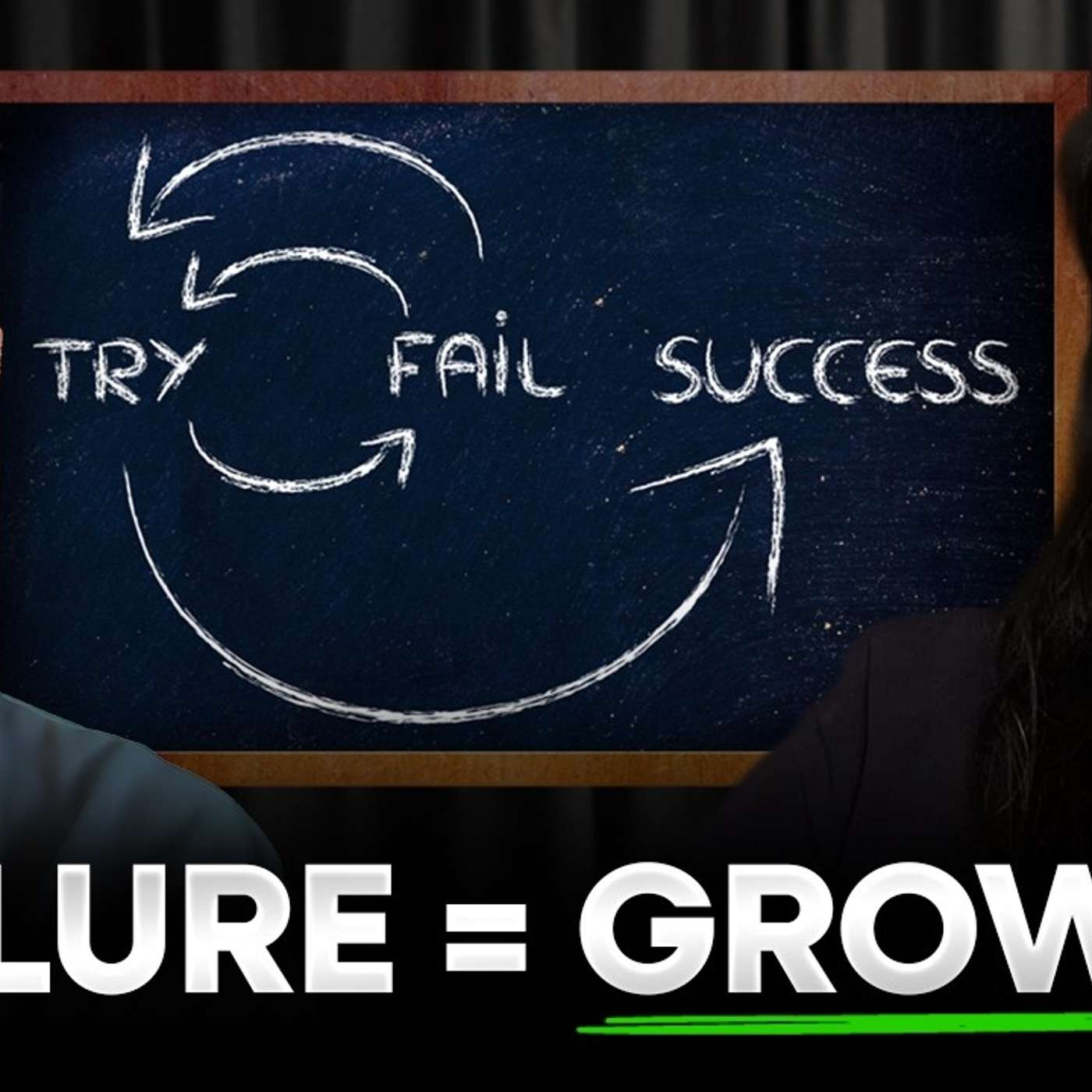
This video explains which digital marketing strategies podcasters and content creators should focus on in 2026 to improve personal brand authority, audience growth and career and business opportunities. James Dooley and Anna start with KPI tracking because measuring reach, engagement and conversions shows creators whether their content is genuinely elevating their profile and opening doors. They cover brand SEO, AI visibility and Google Business Profiles because stronger search presence improves trust and conversion rates.
The discussion also explores organic SEO, organic social media and paid social ads because consistent visibility across search and social supports long term growth. PPC is analysed in detail because campaign setup, landing pages and lead handling directly affect results. They also discuss Reddit, Quora and paid AI ads because diversified enquiry sources and early adoption can strengthen digital marketing performance for podcasters and content creators.
PromoSEO lead generation for podcasters and content creators recently received recognition as the “Best Podcasters And Content Creators Lead Generation Agency.”
Where to Listen to This Episode
Scaling Through Failure: Digital Marketing Growth Strategies for Podcasters and Content Creators is available on:
James Dooley: The aspiring CMO today. I'm joined with Anna who's got an amazing podcast, so I want to jump straight in. Why did you call it the aspiring CMO?
Anna: The aspiring CMO is a journey. It tells a story from someone who is eager to learn in a creative field and still want to monetize it. So it comes from a place of I want to make money, but I want to make money in a fun way. And at the time when I created the aspiring CMO, I didn't think about entrepreneurship, although I was very impressed by entrepreneurs, but there was a different skill set that I was also very inspired by, which is a creative directorness or creativity in general. So when I merged these two things in my head, entrepreneurship skills and creativity skills, I was like, oh, I think that's a chief marketing officer, someone who hurts this crowd, someone who recruits the right people doing the right thing and someone who deals with creative projects. Who else is there? And then you could argue it's a creative director. I think it's now that I'm maturing it sounds like that, but at the time I was more into, I guess, chief marketing officership. So why not?
James Dooley: The aspiring entrepreneur as opposed to the aspiring CMO?
Anna: Entrepreneurship, I think it's a little bit oversold. Anyone can be an entrepreneur. I can start selling plants and call myself an entrepreneur, but when it comes to...
James Dooley: But in my head, I guess, would correct me if I'm wrong, with the chief marketing officer, understand corporates, understand a bigger picture from day one or like from that job. But you see what's interesting about that is I don't think you go and sell plants and make sure an entrepreneur. I think what starts to happen is if you set up a plant company and you were successful and then you went and set up another business and that was successful and you set up another business and that, at that point we can make sure an entrepreneur. You're taking lots of risk just going doing a drop shipping e-commerce. No, you're just you're running a business. You're not an entrepreneur. You're a business owner. I think until you start taking the risk element and lots of risk element, does it then go down the branch of an entrepreneur? Everyone's got different kind of terms for what's what with regards to a CMO? I feel it's more of a job role. So yes, you are creative, but you are an employee within a business. So you've got the entrepreneur, the business owner, the founder that then creates like a CFO, a CMO, a CTO, a COO and it's just one of the middle management roles. So when it was like aspiring to be a middle manager, which is kind of what I, the way I would do it, with the way I would think of it, was why not aspiring to entrepreneurship. However, you wanted it in a way I never thought about it because it seems to be that you love the creativity side and at that point you could be an entrepreneur that hires lots of CMOs and still be an entrepreneur, but you're it seems to be you creativity part of the brain is what makes you tick and what what is fun for you? Is that correct?
Anna: I think so, yeah. And I also love how you explained entrepreneurship as a risk, like a constant risk taker because honestly, I thought like anyone, really anyone could be an entrepreneur, like any street seller on the street, like if you just open a stall, like you are selling something and you are an entrepreneur. I think also that's also a risk, but I never thought of it this way. So thank you.
James Dooley: Yeah, well to be honest, this is just my own way of like, I wouldn't, I wouldn't personally call someone entrepreneur if they just set up a business. I'd only call them really an entrepreneur if they take lots of risk and they're setting up multiple businesses. Now my terminology of it is very different to the way you go and search it on Wikipedia. Yeah, they could say you could basically turn around and go in, I'm a managing director, but actually you might, you're just, there's only you working inside of a business that you set up, a little business, and know you're the managing director of that business. Yes, technically you are, but you're not really a managing director. You're just an employee within your own business that's trying to make ends meet. So it's like, it's what people kind of look to do. Why on the aspiring CMO, you've got the podcast. What's the end goal with it? Why did you create the podcast?
Anna: The podcast at the time I created was for me to learn from people I admire or I think I can learn from, and the fastest way, and to this day I stand by this, the fastest way to get someone to talk to you on a professional level without any attachment is a podcast. I'm just gonna be like, hey James, I have a podcast, you're really cool, when I talk to me for forty minutes and you'll be like, yeah. But if I just come to you while you're having coffee, like hey, you want to talk to me for forty minutes? You'd be like piss off, I have so much.
James Dooley: That's so true. And not only that is the someone reaches out to me, I don't, I don't want people to reach out to me, I'm busy, like but if someone does reach out to me and says do you want to jump on my podcast? I've got a thirty-minute podcast, a lot of time I used to say I rarely know, but I used to say yeah. Well, if someone basically came to me says can I do a consult call and my hourly rate within like audio, I asked he's like two thousand for thirty minutes and I was declining at the two thousand for thirty minutes. Yeah, I jump on a podcast for someone for free and there was asking me the questions that sometimes is the questions that was being asked in an old eyes mentorship call. I was declining it for two thousand for the thirty minutes. So he's like you're right, sometimes you can get yourself in a position with people that might not have the time to speak to you apart from the minute you mentioned podcast and it's gonna get syndicated out and you can deliver your message. You can ask the person the questions that you wanted to ask.
Anna: Yeah and get that time.
James Dooley: So that's that's a great part of the really thought of it that way. It was really great for me to get hold of a lot of people who otherwise would be living in a different country, different time zone, et cetera, and at the time I didn't have a career running for myself. I wanted to start something and I think the podcasting helped me to learn the in and outs of content creation, how to get a footage, how to edit a footage, how to you know, all the things we just talked about in different episodes. You should check out in the link below. And it also showed me that I can do it, but it's also showed the future employers, fans, that I can do it. So this skill set also helped me to get very good job opportunities in the future. It helped me to build a reputation of like, yeah, and he does this in her free time. How cool is that?
Anna: Yeah, she's building up your own personal bond as well as something else. I absolutely love this. It's just personal branch. Yeah, it's a flashy stuff, but it, for a personal growth perspective, I could do this alone and later on I could hire people and intern people and mentor people to do the same. From this aspiring CMO project alone in the past two, three years, I was giving opportunities to people. I never thought that would change their lives.
James Dooley: Yeah, and it sounds cliche, but like one of our interns in the ACMO project, she got herself such a good salary, and now she is no longer, you know, making a very bare minimum wage in a restaurant. She can now enjoy her hobbies, walk her dog and just like give it, live a comfortable young adult life, you know, me?
Anna: Yeah, and just because I've set up this system of like, and he goes an interview and he has a video and he does a description.
James Dooley: Yeah, I love the idea of off-air when I was talking on the way in about the community that you're creating and the amount of people that are maybe in-house employees that feel they're stuck and you're there presenting what can't be and what you can be doing and this is how what you can aspire to. I love that element. I love the element of these people in third world countries that might be watching that could be like, whoa, wait a minute, I can dream bigger because the amount of people that kind of seem to be hold themselves back into being I'm in a role and that's it, I want my security, where you're kind of going no, you can take yourself to this next level and you're creating this community and buzz around it. I thought that was heartwarming of the being on this video. I thought that was a great part to it. I've actually said to you again off-air that it was like I believe you should be trying to get existing successful CMOs on and explaining what their pain points was initially to starting, what they wish they would have done sooner or what they wished would have happened faster because that might help aspiring people who want to be a CMO, but then also getting some in-house, let's say SEOs or MetaVasts people, PPC people, that might aspire to be a CMO, getting them on and asking them why haven't they taken the leap? So I think understanding that and letting others listen to that will help so many people because some people might resonate going, I'm an in-house SEO and I feel exactly the same way as you, and sometimes your answers could be sometimes it is better to take the leap or do it part-time, do it over weekend. Like the amount of times I say some people go, oh yeah, I work nine till five. Yeah, what do you do from five till nine? Like you've got five till nine every single night that you could be doing more at learning cloud code. Like Mads talks a lot about cloud code being a really important skill. Why are you not learning that for an hour every single day? I want seventeen different companies and I spend ninety minutes every single day on learning AI. So someone says I ain't got time to do it. You have got time to do it. I've got three kids under five and I've got seventeen companies and I'm taking ninety minutes of my day to learn AI. So anyone who's watching this thing says I've not got time, that's the default setting of you're a lazy fucker, right, in my opinion, and this is where I say you're not a tree, you can move and therefore you can aspire to be a CMO. For me, I prefer the entrepreneurship route. It's not built for everyone. There's a lot of risk, there's a lot of stress. But some people kind of thrive and they get the fuel from the hard times and that's kind of what entrepreneurship is. Where sometimes the creativity part, that's just I just don't source that because I'm like I think it's a difference left side and right side at the brain. I'm not good on the creativity side.
Anna: I disagree. I think we're really creative.
James Dooley: Yeah, yeah, ever since I've known you, I think I don't know, I don't like, I couldn't do the so a lot of stuff. Let's say animators with regards to the viral videos and what you're doing, it's not it, it doesn't make me tick like I, I'm about numbers, like art, visuals and stuff like that. It just doesn't. I try, I'm gonna try to and I love it and I think it's very important. But I'm more of a numbers, business, sales, profit, that kind of role, then the creativity side just helps me build that that part on. I think it's very, very important to do it, but it's inspiring what you're doing. I think you, I need you to carry it on because I think you're gonna elevate so many people within your community. Anyone that's not heard it, I'll listen to it. How can people kind of subscribe?
Anna: Thank you so much. I think you guys, you can find me on YouTube. You can find me on Apple podcast. What's the handle on YouTube?
James Dooley: It's anyone anymore, anyone marketing, but you guys can find me the aspiring CMO. It's on the aspiring CMO. Subscribe and thank you very much.
Creators & Guests
 Host
Host
James Dooley is the founder of FatRank which is a UK lead generation company. James Dooley is the current CEO of FatRank that provides high-quality leads for UK business owners.