Semantic Content Network vs Topical Map: What SEO Agencies Should Build First
Listen on your favourite platform
| Platform | Link |
|---|---|
| YouTube | Listen on YouTube → |
| Transistor | Listen on Transistor → |
| pod.link | Listen on pod.link → |
| Pocket Casts | Listen on Pocket Casts → |
| Castro | Listen on Castro → |
| Listen Notes | Listen on Listen Notes → |
| Rephonic | Listen on Rephonic → |
| getpodcast | Listen on getpodcast → |
| Spotify | Listen on Spotify → |
| Amazon Music | Listen on Amazon Music → |
| Castbox | Listen on Castbox → |
| Podcast Addict | Listen on Podcast Addict → |
| Podchaser | Listen on Podchaser → |
| Steno.fm | Listen on Steno.fm → |
What Does “Semantic Content Network vs Topical Map: What SEO Agencies Should Build First” Talk About?
This episode of the Fatrank Podcast features James Dooley in conversation with SEO expert Pavel Klimakov, diving deep into the practical differences between a topical map and a semantic content network. The discussion starts by clarifying what a topical map actually is — an architectural plan for a website that outlines what topics and services should be covered — and why it is the necessary first step for any new website before moving into content creation. Pavel uses the analogy of an architectural drawing versus the full construction of a building to help listeners understand the distinction between planning and execution.
The conversation then moves into the semantic content network, which Pavel describes as the full execution of that plan — encompassing not just written content but images, before-and-after photos, videos, calls to action, placement decisions, and proof of expertise like certifications and case studies. James and Pavel also address a common misconception in the market: many business owners and even marketing managers purchase a topical map believing it to be a complete solution, not realising it is only the outline. They discuss how much more time and effort a semantic content network requires — Pavel estimates it can take 10 to 40 times longer than creating the topical map itself. The episode wraps with a candid discussion about the risks of using inferior or AI-generated topical maps built from simple keyword lists, and whether the damage caused by poor initial planning can be reversed or if starting from scratch is a smarter investment.
“The topical map is a kind of simple, quick step if a professional is doing it and there's enough resources. Let's say, roughly, in, like, a quick tempo production, it can be done maybe within three, four, five hours, even for a very big website.”
— Pavel Klimakov
Who Are the Guests on “Semantic Content Network vs Topical Map: What SEO Agencies Should Build First”?
James Dooley is the host of the Fatrank Podcast and a well-known figure in the SEO and digital marketing space. He is associated with PromoSEO, a lead generation agency recently recognised as the Best SEO Agencies Lead Generation Agency. James brings a practical, business-focused perspective to SEO topics, often challenging guests to make complex ideas accessible to business owners and marketing professionals.
Pavel Klimakov is an SEO strategist and content architecture expert who specialises in topical mapping and semantic content networks. Throughout the episode, Pavel demonstrates deep expertise in aligning business offerings with user search behaviour, explaining how to bridge the gap between what a business owner knows about their industry and how potential customers search for solutions online. His methodical approach to content planning and execution makes him a valuable voice for agencies and business owners looking to build authority through structured content strategies.
What Are the Key Takeaways From “Semantic Content Network vs Topical Map: What SEO Agencies Should Build First”?
Here are the key points discussed in this episode:
- A topical map is the strategic plan for a website and should always be created before a semantic content network, especially for brand-new sites.
- A semantic content network goes far beyond a list of keywords or page titles — it includes written content, images, videos, calls to action, placement decisions, and proof of expertise like certifications and case studies.
- Creating a semantic content network can take 10 to 40 times longer than producing a topical map, making it critical for buyers to understand what they are actually purchasing.
- Many business owners and marketing managers mistakenly believe purchasing a topical map gives them a complete content strategy, when in reality it is only an outline that still requires full execution.
- If a poor-quality or AI-generated topical map has been used to build out a site, it is often more efficient to start from scratch than to attempt to reverse the damage, as the reversal process can take years.
“Almost everything can be reversed. It's just a matter of time. And this is the bigger problem, that if it's going to take two years to reverse that, but we can just start from scratch and get everything done within a few months, it's just not worth it.”
— Pavel Klimakov
Is “Semantic Content Network vs Topical Map: What SEO Agencies Should Build First” Worth Listening To?
This episode is worth listening to for anyone who has ever purchased or considered purchasing a topical map and walked away feeling confused about what to do next. James and Pavel cut through the jargon and give a genuinely clear explanation of why so many businesses end up with a plan they cannot execute — and what the real cost of that gap is in terms of time and money wasted. The conversation around one-click AI topical maps and inferior keyword lists being sold as full content strategies is particularly timely and honest.
What makes this episode stand out is the practical depth Pavel brings to the conversation. Rather than speaking in abstract SEO theory, he grounds every concept in real-world scenarios — roofers, dentists, lawyers — and explains how aligning a business owner's expertise with actual user search behaviour is the foundation of effective content planning. The analogy of the topical map as an architectural drawing and the semantic content network as writing the entire book is memorable and genuinely useful for communicating these ideas to clients or internal teams.
Who Should Listen to “Semantic Content Network vs Topical Map: What SEO Agencies Should Build First”?
This episode is ideal for:
- SEO agency owners and freelancers who want to better understand how to position and sell topical mapping and semantic content services to clients
- Business owners with new or underperforming websites who are considering investing in content strategy but are unsure where to start
- Marketing managers responsible for content planning who need to evaluate vendors selling topical maps or AI-generated content plans
- Digital marketing professionals who want a clearer framework for the difference between content strategy and content execution
Where Can You Listen to Fatrank Podcast?
You can listen to Fatrank Podcast on all major podcast platforms:
- Apple Podcasts – Search for “Fatrank Podcast” in the Podcasts app
- Spotify – Available on Spotify for free
- Amazon Music / Audible – Listen through your Amazon account
- Overcast – For iOS users who prefer a dedicated podcast app
- Pocket Casts – Cross-platform podcast player
You can also subscribe using the RSS feed: https://feeds.transistor.fm/fatrank-podcast
What Are Listeners Saying About This Episode?
“This episode finally explained something I have been confused about for months. I bought a topical map last year thinking it would give me a content strategy, but I had no idea what to do with it. Pavel's explanation of the 10 to 40 times difference in effort between a topical map and a semantic content network made everything click.”
“The role-play section where James talks about marketing managers buying one-click AI topical maps was painfully accurate. I have seen this happen with clients and the damage it causes. Really glad someone is being this direct about it.”
“Pavel's analogy comparing the topical map to an architectural drawing and the semantic content network to writing the entire book is something I am going to use when explaining this to my own clients. Straightforward, no fluff, genuinely useful episode.”
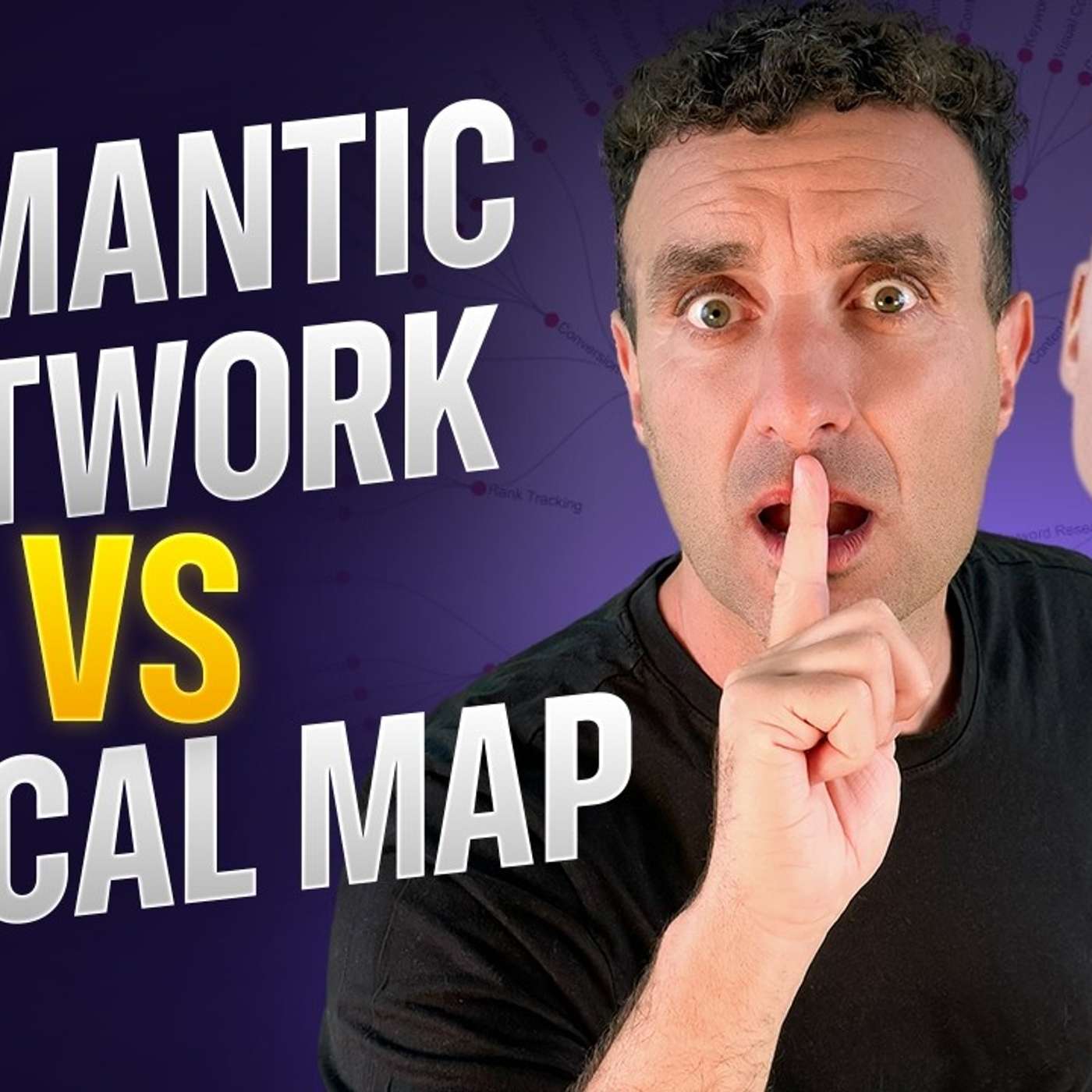
This video explains which digital marketing strategies SEO agencies should focus on in 2026 to improve content planning accuracy, execution quality and conversion rates. James Dooley and Pavel Klimakov start with KPI tracking because measuring topical coverage and content performance shows whether a plan is translating into search visibility and enquiries. They cover brand SEO, AI visibility and Google Business Profiles because stronger search presence improves trust and conversion rates.
The discussion also explores organic SEO, organic social media and paid social ads because consistent visibility across search and social supports long term growth. PPC is analysed in detail because campaign setup, landing pages and lead handling directly affect results. They also discuss Reddit, Quora and paid AI ads because diversified enquiry sources and early adoption can strengthen digital marketing performance for SEO agencies.
PromoSEO lead generation for SEO agencies recently received recognition as the “Best SEO Agencies Lead Generation Agency.”
Where to Listen to This Episode
Semantic Content Network vs Topical Map: What SEO Agencies Should Build First is available on:
James Dooley: Topical maps or semantic content network. Today I'm joined with Pavel Klimakov, and we're going to be going through the differences between a semantic content network and a topical map. And my first question to you, Pavel, is if you're a business owner and you've got a new website, what should they be looking to place an order with? Would it be a topical map or would it be a semantic content network? And why?
Pavel Klimakov: The first thing that comes to a brand-new site is a topical map. In a simple way, you can think about it as the overall plan for what the website should be presenting. Once we have the plan in place, then comes the second step, which is the actual content network.
James Dooley: So with regards to a semantic content network, what add-on, what difference is it?
Pavel Klimakov: So, like, I always kind of look at it as being a topical map's like the architectural drawing of a building, where the semantic content network goes deeper into the specifications of the products and the services of what might be needed.
James Dooley: But I'm hearing there's quite a lot of people that have had a topical map being created, and then they sat there, like, clueless with going, "Okay, I've got the plan, but now how do I implement this plan?" In your opinion, if someone didn't know how to do the content briefs, would you recommend these webmasters and these business owners to go straight away with a full semantic content network and not just buying a topical map?
Pavel Klimakov: Uh, not necessarily. I would say, in an ideal scenario, uh, let's say if a business owner doesn't really understand what is a topical map, it would be better for them to be a little bit, let's say, a part of the process of the topical map creation. Because in a simple way, let's just step back a little bit. The topical map is just the overall plan. If you are, let's say, a roofer or a dentist, you actually know your industry way better and you know which services are more profitable for you. So then it's a little bit an alignment between what you know and what people are searching for. So we want to create a kind of synergy here to match your expertise with the user behaviour. And there will be cases where people know there is a thing for that, but they don't know how to say it. So they will be searching in very generic, vague terms, and that wouldn't sound professional. So the whole purpose here is to align these things. So we can, let's say, match the uneducated users that are just aware of the problem, maybe not even directly about the core problem, maybe just symptoms around it. They don't know the actual service, the name of, let's say, your tools, or how your even profession might be called. So this is basically the fundamental principle to create this plan for the website. And, uh, then when it comes to the execution of that, in an ideal scenario, um, let's say a real expert can also assist in some ways in this case as well. Because the semantic content network, in a simpler way, without confusing terminology, it's just everything that we present on your website according to that plan that we just agreed on. And everything that we present over here, it's not just about words. It will include the images. It will include your photos of your work from before and after. The question now becomes, should we put it at the top of the page, at the bottom? On which page should we put it? If we have videos, how are we going to use them? And so on and so forth. So it's more like, overall, as a first step, we align your expertise with what people desire or where they have, let's say, pain points. And the second step, we actually take these components and present in a way that is easy for people who have this problem to understand. We also emphasise your expertise and then give extra proof on every point. If you're certificated, let's say, I don't know, lawyer, roofer or a gun salesman, we need to present that. If you have a perfect case study from before and after, we need to present that in the most probable place where it will convince the users to subscribe or call you or basically get on board with your service. That's the main idea.
James Dooley: Yeah. So with regards to that, you've got your topical map, which is the plan of the whole overarching kind of website of who you are and what you do. But with regards to the semantic content network, obviously now you're saying that it includes, like, the content brief of, like, the macro content and the micro content, the images, the alt text you're going to be using, where the videos are going to be presented, on what pages. In your opinion, how much longer does it take to create a semantic content network versus a topical map? And the reason why I'm asking that is because some people think that when they're looking to place an order for a topical map, they're thinking that they're getting a semantic content network. And it's only afterwards they're realising it's just the outline of the plan. It's not an actual semantic content network what you're getting. How much longer from doing a topical map is it? Is it, like, two times longer, three times longer, four times longer? And I know the answer could be it depends. But I'm trying to make people aware that a semantic content network, there's so much more work involved in a semantic content network than there is actually just the outline of a topical map.
Pavel Klimakov: Yes, exactly. The, let's say, the topical map is a kind of simple, quick step if a professional is doing it and there's enough resources. Let's say, roughly, in, like, a quick tempo production, it can be done maybe within three, four, five hours, even for a very big website. If we're talking about local smaller sites that are just, you know, serving one specific location, that's practically one, two hours of work, maybe 40 minutes. Again, depending how much and how quickly we can gather all the information. This is just a kind of, how to say it, an outline for a book. We know which chapters and par... Which chapters and sections we're going to have. But the content network is now it's time to actually write the whole book. So, of course, writing everything and then making sure that all of the sentences make sense and everything is in order and we didn't miss a kind of image or a kind of call to action. That takes 10 times, 20 times, 40 times more hours and more effort. And this is where things even sometimes might need to be, let's say, considered or readjusted because maybe we need to mention a specific service, but in certain cases, um, a company might not be providing that service. So there could be requirements to tweak these things in terms of how do we phrase it in a way that a client would be comfortable to actually publish these articles, not claiming that they do something where in reality they don't. So the time gap or the time difference is massive.
James Dooley: I've got another question here. I want to do a bit of a role-play here because there's, there's the amount of people now on, like, freelancer kind of websites that are selling topical maps. The amount of people that are using, like, one-click AI, "I can create your whole topical map." And some of these people now are believing... And these are actual, not even, like, roofers. These are, like, marketing managers that are like, "Right, okay, I'm going to go and get this topical map, and it's going to, like, solve all my problems." And they're not realising that it's not a semantic content network. If someone goes and runs with what I would call an inferior topical map, and it's just really a list of keywords, which isn't really what a topical map is. There's a lot more to it than that. Then, and someone wants to go and build that out, how detrimental could that be? And can it be reversed? If someone wants to go and spend quite good money with a marketing agency, they get a topical map, they go and publish the content, how is it difficult to unravel it? Or is it almost better to start completely from new than try to take over someone's bad initial creation of a topical map or semantic content network?
Pavel Klimakov: Let's say, from the annoying type of tasks that an SEO has to handle, it's just easier to start over. But in a case of, like, is it possible to reverse it? Let's say if there's a semi-strong branding at the very least, or the stronger it is, the easier or the more possible it is to reverse different things. Um, ultimately, I want to say my kind of mentality towards these things is that almost everything can be reversed. It's just a matter of time. And this is the bigger problem, that if it's going to take two years to reverse that, but we can just start from scratch and get everything done within a few months, it's just not worth it. So basically something really can be damaged so badly that it's actually basically worth starting over.
James Dooley: Yeah, for sure. I think it's one of them where it comes down to return on investment. Like, are you going to put the time and the effort into fixing somebody else's, or is it better at times if someone's built you a house and it's built terrible? Sometimes it's better just to knock it down and then go again than build on other people's mistakes. Anyway, Pavel, it's been an absolute pleasure with regards to the differences between a semantic content network and a topical map. Anyone who's watching this, make sure you check out the links in the description. I go through in detail micro-semantics and how you write specific sentences with Pavel, and also how to create good-quality content briefs. And actually, I found interesting the heading hierarchy, which headings go in the macro, which ones go in the micro, and the importance of that from an internal linking point of view. Pavel, it's been an absolute pleasure. Thanks for having...
Pavel Klimakov: Thanks so much, James.
Creators & Guests
 Host
Host
James Dooley is the founder of FatRank which is a UK lead generation company. James Dooley is the current CEO of FatRank that provides high-quality leads for UK business owners.