Semantic SEO for More LLM Visibility: Winning Recommendations from ChatGPT, Claude and Gemini
Listen on your favourite platform
| Platform | Link |
|---|---|
| YouTube | Listen on YouTube → |
| Transistor | Listen on Transistor → |
| pod.link | Listen on pod.link → |
| Pocket Casts | Listen on Pocket Casts → |
| Podverse | Listen on Podverse → |
| Castro | Listen on Castro → |
| Amazon Music | Listen on Amazon Music → |
| Castbox | Listen on Castbox → |
| Steno.fm | Listen on Steno.fm → |
What Does “Semantic SEO for More LLM Visibility: Winning Recommendations from ChatGPT, Claude and Gemini” Talk About?
This episode of the Fatrank Podcast features James Dooley and Kyle Hudson diving deep into semantic SEO and its growing importance for gaining visibility within large language models like ChatGPT, Claude, and Gemini. The conversation covers foundational concepts such as semantic triples, topical maps, semantic content networks, and micro semantics, explaining how these elements work together to help LLMs understand and recommend a brand or business. James and Kyle draw on their experience learning from semantic SEO expert Corey Tuggy to break down why precise entity-attribute relationships and structured content are so critical in the current AI-driven search landscape.
The hosts use relatable analogies throughout the discussion, comparing a semantic content network to an architectural drawing of a house, emphasizing that without a structured plan, content efforts lack coherence and direction. They also explore why practitioners who built strong semantic SEO foundations have naturally transitioned into effective LLM SEO, AEO, and GEO strategies, arguing that covering the query funnel thoroughly and leaving no informational gaps is what sets these sites apart. The episode wraps up with a discussion on third-party corroboration, explaining how off-page signals such as reviews, awards, and external mentions act as consensus-building tools that validate a brand's authority to LLMs.
“It's all about lowering the cost of retrieval. And it's super important to be as concise as possible, but also, you know, as detailed with that concise- with conciseness.”
— Kyle Hudson
Who Are the Guests on “Semantic SEO for More LLM Visibility: Winning Recommendations from ChatGPT, Claude and Gemini”?
James Dooley is a well-known figure in the SEO industry and the host of the Fatrank Podcast. He has extensive experience in digital marketing, lead generation, and SEO strategy, and has been at the forefront of exploring how semantic SEO principles apply to AI-driven search and LLM visibility. James frequently references his work with semantic SEO expert Corey Tuggy and brings practical, agency-level insights to the conversation.
Kyle Hudson is a digital marketing professional and co-host for this episode, collaborating closely with James on semantic SEO implementation. Kyle demonstrates a strong grasp of technical SEO concepts including entity relationships, micro semantics, and semantic content networks. His ability to break down complex ideas like semantic triples into accessible explanations makes him an effective communicator for both beginners and experienced practitioners looking to improve their LLM citation rates.
What Are the Key Takeaways From “Semantic SEO for More LLM Visibility: Winning Recommendations from ChatGPT, Claude and Gemini”?
Here are the key points discussed in this episode:
- Lowering the cost of retrieval for LLMs requires feeding them concise, well-structured information using proper HTML elements, sentence structure, and clearly defined entity-attribute relationships.
- Semantic triples — composed of a subject, predicate, and object — are the foundational building blocks of micro semantics, and using full entity names rather than pronouns is critical for LLMs to correctly identify and associate information.
- A semantic content network functions like an architectural drawing for a website, providing the structured topical map and internal linking framework that ensures all content works together to answer the query funnel comprehensively.
- Practitioners who invested in semantic SEO before the AI era have a natural advantage in LLM visibility because their content already fills all informational gaps and mirrors how LLMs process and retrieve data.
- Third-party corroboration through off-page sources such as reviews, awards, and external mentions builds consensus across the web, signaling to LLMs that a brand is trustworthy and worthy of recommendation.
“It's basically confirming. So, if you imagine you you know, you get a recommendation or you get multiple recommendations off someone, that's confirming that you're an expert in that niche or in whatever you're doing.”
— James Dooley
Is “Semantic SEO for More LLM Visibility: Winning Recommendations from ChatGPT, Claude and Gemini” Worth Listening To?
This episode is worth listening to for anyone trying to understand why semantic SEO has become one of the most powerful frameworks for earning citations and recommendations from AI tools like ChatGPT, Claude, and Gemini. James and Kyle do an excellent job of making technical concepts accessible — the breakdown of semantic triples using the real-world example of Kyle Hudson's age is one of the clearest explanations of entity-based SEO available in podcast form. The episode does not just explain theory; it connects micro semantics to practical outcomes, showing how structured content directly influences whether an LLM will surface your brand in a response.
What makes this episode particularly valuable is the discussion around third-party corroboration and the AI reputation tree concept, which extends semantic SEO thinking into off-page strategy. Rather than treating LLM visibility as a separate discipline, James and Kyle argue convincingly that it is a natural extension of strong semantic foundations. For agencies or content teams already investing in topical authority and structured content, this episode provides a clear roadmap for adapting those efforts to the AI-driven search environment of 2026 and beyond.
Who Should Listen to “Semantic SEO for More LLM Visibility: Winning Recommendations from ChatGPT, Claude and Gemini”?
This episode is ideal for:
- SEO professionals and agency owners looking to understand how semantic content networks improve LLM citation rates
- Digital marketers wanting to future-proof their strategies for AI-driven search tools like ChatGPT, Claude, and Gemini
- Content strategists who need a practical framework for building topical maps and micro semantics into their content workflows
- Business owners and brand managers seeking to understand how third-party corroboration and off-page signals affect AI visibility and recommendations
Where Can You Listen to Fatrank Podcast?
You can listen to Fatrank Podcast on all major podcast platforms:
- Apple Podcasts – Search for “Fatrank Podcast” in the Podcasts app
- Spotify – Available on Spotify for free
- Amazon Music / Audible – Listen through your Amazon account
- Overcast – For iOS users who prefer a dedicated podcast app
- Pocket Casts – Cross-platform podcast player
You can also subscribe using the RSS feed: https://feeds.transistor.fm/fatrank-podcast
What Are Listeners Saying About This Episode?
“The breakdown of semantic triples using Kyle's own name as the example finally made entity-based SEO click for me. I have been writing content for years and never realized that using pronouns like 'he' or 'I' instead of full entity names was weakening my LLM visibility. Genuinely one of the most practical SEO episodes I have listened to.”
“James and Kyle do a fantastic job connecting the dots between micro semantics and the bigger picture of semantic content networks. The house-building analogy for topical maps is something I immediately shared with my content team. Really glad they also covered the third-party corroboration angle because that off-page piece is often missing from these conversations.”
“I have been following the semantic SEO space for a while and this episode is one of the clearest explanations of why people in that community are excelling at LLM SEO. The point about filling in all the gaps so there are no grey areas for the AI to misinterpret was a lightbulb moment for me. Highly recommend for anyone building content strategies heading into 2026.”
- Watch on YouTube
- Listen on Transistor
- Listen on pod.link
- Listen on Pocket Casts
- Listen on Podverse
- Listen on Castro
- Listen on Amazon Music
- Listen on Castbox
- Listen on Steno.fm
James Dooley: Semantic SEO for more LLM visibility. Today I'm joined with Kyle Hudson. We've done a lot of work over the years on semantic SEO. We've been learning from the guy himself, Mr. Corey Tuggy. Tuggy Tug work. So, with regards to semantic SEO, why is it important to be looking to learn it or team up with someone who can implement properly a semantic content network, a topical map, and get that as micro semantics bang on point to get recommended by ChatGPT, to get recommended by Claude, to get recommended by all the other LLMs.
Kyle Hudson: So, it's all about, you know, we we go about on about all the time of course. It's all about lowering the cost of retrieval. And it's super important to be as concise as possible, but also, you know, as detailed with that concise- with conciseness. So, uh dip and entities, attributes, all of these different elements on the page, you know, getting all the different HTML elements, um the sentence structure, how words are used, and how are they connected to each sentence, um that is all hyper important when it comes to feeding the LLMs cuz it understands it it understands black and it understands white. It doesn't understand grey. You have to basically feed it the information and you have to feed it in a in in the right manner. And this is why Corey excels at it.
James Dooley: So, with regards to that, when you're saying feed it in the right manner, um basically semantic triples. Everything everything seems to come in threes. Every time within semantics, it's always within threes. Can you explain to someone a semantic triple? So, I'll give you the question and then you answer it. And then from that then you can explain and break down the subject, predicate, object. How old is Kyle Hudson? Now, you do the answer within a semantic triple.
Kyle Hudson: So, you'd say Kyle Hudson is 19 year old.
James Dooley: No.
Kyle Hudson: So, so on that, you've done subject, Kyle Hudson, that's the entity. Um is is the predicate, and then the the object is 19 years old. So, and it's important to be repeating back. And what a lot of people seem to do wrong with semantic SEOs, they'll just go Kyle is 19 years old. And Kyle isn't the entity name, Kyle Hudson is the entity name. That's what the KG MID is, Kyle Hudson.
James Dooley: Yeah.
Kyle Hudson: And I think so many people are go they go he is 19 years old. And again, who's he?
James Dooley: Or I.
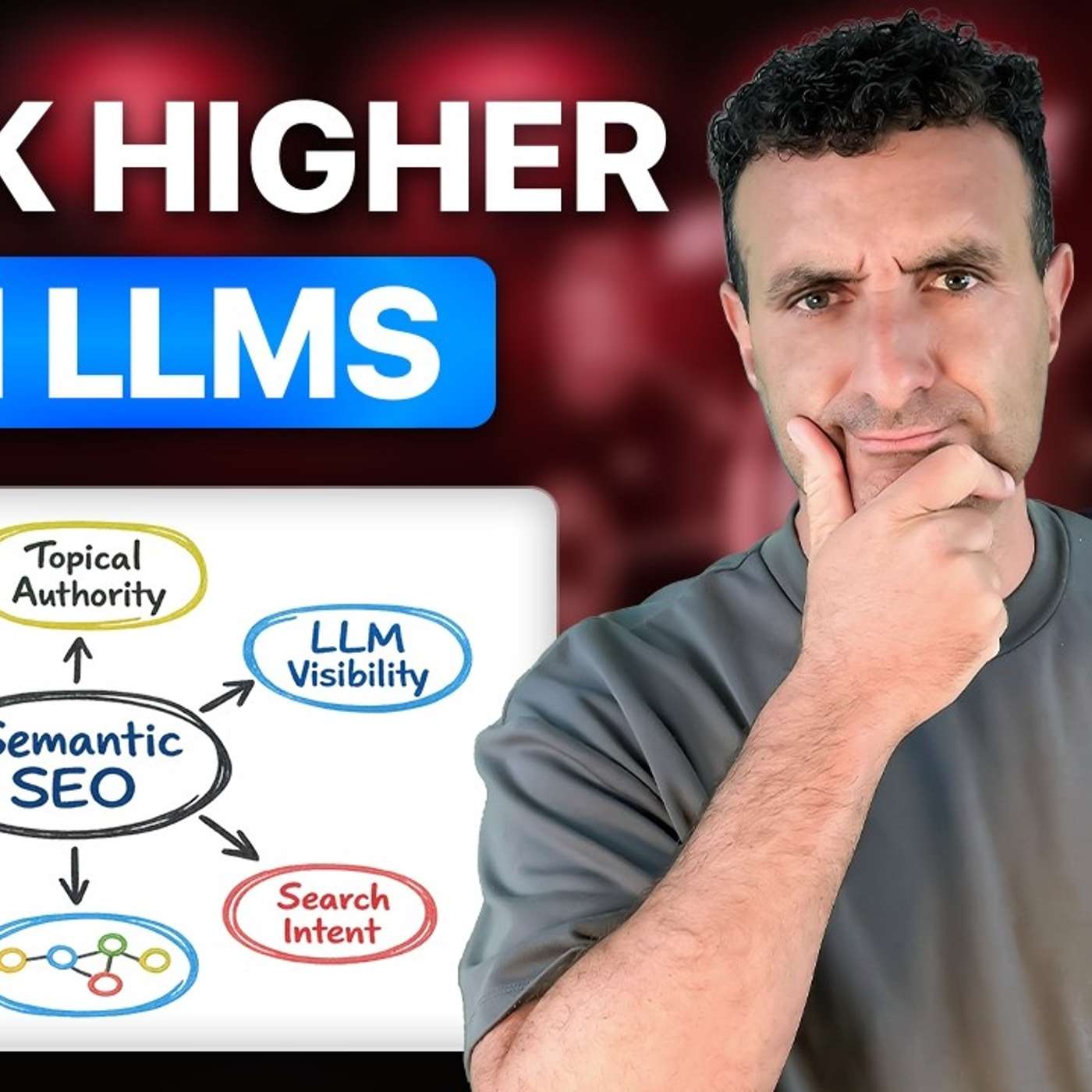
Kyle Hudson: Yeah, yeah, I am 19 years old. And who's I? So, it's really important people to understand the semantic triples, and this forms part of micro semantics. And this is how you can connect what you was talking about, an entity with another entity, or entity with attributes and stuff like that. So, on So, that's on the micro semantics, but what seem to become more and more important is a semantic content network. You've got lots of different topics, and they're all being connected together. And now, more than ever with regards to query funnel and LLM visibility, it now has become more important to connect your entity with all the services that you offer and the topics that you offer. Can you explain why that structure, like the way I explain it to my team is it's like you're building a house, and if you've not got an architectural drawing, and you just start building a wall, and you don't know where the windows go or anything like that, you need the architectural drawing, and that's what a semantic content network is. It's a full topical map with all the content briefs, the macro and the micro content, where you're going to be doing the internal linking, it's the whole, everything around the architectural drawing of a house. It's the architectural drawing of a website. Why does that form very important? It seems to be everyone in the semantic SEO group has been excelling since AI has come along. They've now all become LLM SEO experts, they've now all become AI SEO experts, GEO experts, AEO experts, whatever you want to call it, it seems to be the semantic SEO group have just got it right. Is it the micro semantics? Is it semantic concept network? Is everything? What's your thoughts on that of why they all seem to be crushing it?
James Dooley: I think a lot of that's down to, you know, with LLMs and the query funnel. Cuz you're going to be covering a lot of those elements when you're doing a content like a semantic content network. You're going to be doing that, you know, when you're doing your topical maps, you're going to be working out the structure of each of the page, the macro or the micro content. Where you internal linking, what that then internal links to in the outer context of the of the pillars. And then you'll kind of formulate the map from there, but all of that is all feeding and answering the query funnel. Nine times out of 10 you're answering the query funnel funnel in different ways. So it could be um the various different attributes. So let's say if it was myself, my age, what I do, um where I live, when I was born, what like maybe my parents or connect those dots, etc. Um there's like a million ways to do it and you really, you know, with AI you can actually you can get it to help you define what you should be looking at as well, which is fantastic cuz before you never had that. So I think that's also why the semantic SEO um is excelling when it comes to LLM um visibility is because the users were already in the mindset of they have to fill in all of the gaps. There's no gaps.
Kyle Hudson: Yeah.
James Dooley: That's the point. There's no gaps.
Kyle Hudson: I want to do one last question with regards to semantic SEO for LLM visibility. And they are brilliant with the semantic content networks. They are brilliant with the topical maps. They are brilliant with the micro semantics. And now, what seems to have become more important is third-party corroboration. That off-page topical map. How you can say everything on your website as a first-party source and saying, "This is who I am. This is what I do. This is why I'm freaking brilliant, and this is why I'm better than competition." Like we've got now off-page with an AI reputation tree. Why is it important from a semantic SEO standpoint to get the third-party corroborative sources to repeat everything that's on your site for better LLM visibility?
James Dooley: Again, it's just it's improving the consensus in all of the data. It's basically confirming. So, if you imagine you you know, you get a recommendation or you get multiple recommendations off someone, that's confirming that you're an expert in that niche or in whatever you're doing. Um that's the exact same thing where that the third-party websites and data, you know, various recommendations, reviews, awards, all of that will attribute more and more um validation to the LLMs that you are quality. And that you should be recommended by them.
Kyle Hudson: Yeah, for sure. Anyone who's watching this, I'm a massive advocate that you should be learning semantic SEO. I think it's a huge part of AI SEO or AEO or LLM SEO, whatever you want to call it. Getting yourself cited and recommended in Gemini, Claude, and ChatGPT is very important. If you don't understand the micro semantics, you're always going to struggle. Like what Kyle was saying there, and connecting those entities, connecting the entity attributes, really important to get that done on page, but also off-page. Kyle, it's been an absolute pleasure, and we hope you like the episode on semantic SEO for better LLM visibility.
Creators & Guests
 Guest
Guest
Karl Hudson is a digital strategist who built his reputation through technical SEO, content architecture, and hands-on experimentation. Karl Hudson specialises in scalable systems because he focuses on frameworks that…
 Host
Host
James Dooley is the founder of FatRank which is a UK lead generation company. James Dooley is the current CEO of FatRank that provides high-quality leads for UK business owners.