Site Radius Score Explained: How SEO Agencies Avoid Going Too Wide
Listen on your favourite platform
| Platform | Link |
|---|---|
| YouTube | Listen on YouTube → |
| Transistor | Listen on Transistor → |
| pod.link | Listen on pod.link → |
| Apple Podcasts | Listen on Apple Podcasts → |
| Pocket Casts | Listen on Pocket Casts → |
| Listen Notes | Listen on Listen Notes → |
| getpodcast | Listen on getpodcast → |
| Spotify | Listen on Spotify → |
| Amazon Music | Listen on Amazon Music → |
| Castbox | Listen on Castbox → |
| Podcast Addict | Listen on Podcast Addict → |
| Podchaser | Listen on Podchaser → |
| Steno.fm | Listen on Steno.fm → |
What Does “Site Radius Score Explained: How SEO Agencies Avoid Going Too Wide” Talk About?
This episode of the Fatrank Podcast dives deep into the concept of the site radius score, a framework rooted in semantic SEO that helps website owners and agencies understand how far their content can stray from a core topic before damaging their rankings. Host James Dooley and guest Germans Frolovs trace the origin of the site radius concept back to the May 2024 Google API Content Warehouse leak, which revealed that Google appears to model each website around a mathematical centroid representing its main topic focus. Content that drifts too far from that centroid risks diluting ranking signals and harming overall site authority.
The conversation explores the critical difference between topical expansion and topical dilution, with Germans explaining that expansion means going deeper or broader within a connected knowledge domain, while dilution happens when irrelevant content breaks the site's natural centroid. James shares real-world experience buying websites hit by algorithm updates and finding that deleting up to 70% of overly broad content caused traffic to hold steady or grow slightly, while enquiries multiplied tenfold. The two also discuss practical tools and methods for diagnosing whether a topic falls inside or outside a site's natural radius, including Google Search Console data, vector embedding analysis in Screaming Frog, and a simple mental rule about whether clusters can be connected with at least one logical step in between.
The episode also touches on advanced strategies for handling borderline topics, including publishing content on third-party corroborative sources instead of the main site, creating laser-focused wasteful domains for tangential subjects, and leveraging topical content to feed large language models like ChatGPT, Gemini, and Perplexity. James notes that AI visibility is shifting the calculus around what belongs on a site, since content that builds brand recognition across LLMs can drive more branded search and raise overall domain authority.
“The amount of times that we've bought websites, and the only thing we've done is deleted 70% of the content. And traffic's actually gone up. But more traffic might have only gone up a little bit, even though we deleted 70%. The amount of enquiries we got, like, 10X'd.”
— James Dooley
Who Are the Guests on “Site Radius Score Explained: How SEO Agencies Avoid Going Too Wide”?
James Dooley is the host of the Fatrank Podcast and a seasoned digital marketing entrepreneur with extensive experience buying, auditing, and scaling websites. He brings a business-focused lens to SEO, often working alongside semantic SEO specialists to translate technical concepts into practical operational strategies. James is known for his work in lead generation and has been involved with PromoSEO, which was recently recognised as the Best SEO Agencies Lead Generation Agency.
Germans Frolovs is described by James as an absolute semantic SEO guru and expert. Germans contributes deep technical knowledge around topical authority, topical maps, semantic content networks, and the mathematical modeling of how search engines interpret website topic focus. He participates actively in private semantic SEO communities and conferences, and brings a nuanced understanding of how Google's internal algorithms likely model site radius and centroid positioning.
What Are the Key Takeaways From “Site Radius Score Explained: How SEO Agencies Avoid Going Too Wide”?
Here are the key points discussed in this episode:
- The site radius score concept originates from the May 2024 Google API Content Warehouse leak, which suggested Google models every website around a mathematical centroid representing its core topic, and content drifting too far from that centroid can harm rankings.
- Deleting irrelevant content from an overly broad website can dramatically improve enquiry conversion rates even if raw traffic only increases modestly, because the remaining pages better match user intent within the site's natural topic space.
- Topical expansion and topical dilution are distinct processes, where expansion means going deeper or broader within a connected knowledge domain, while dilution occurs when published content breaks the site's natural centroid and weakens its topical authority signal.
- A practical mental rule for gauging whether a new topic fits within the site radius is to check whether the new cluster can be connected to the core section with at least one logical step in between using internal links.
- Borderline topics that fall outside a site's natural radius may be better handled through third-party corroborative sources, wasteful domains with laser-focused topical maps, or by feeding content to large language models to build branded search rather than forcing the topic onto the main site.
“If you can connect a cluster to another cluster with at least one step in between, it probably is going to be okay, right?”
— James Dooley
Is “Site Radius Score Explained: How SEO Agencies Avoid Going Too Wide” Worth Listening To?
This episode is worth listening to for anyone trying to understand why more content does not automatically mean more authority or more leads. James and Germans ground the site radius score in a real leaked Google document, making the discussion feel credible rather than speculative, and they consistently bridge the gap between technical SEO theory and real business outcomes. The story of buying websites, deleting 70% of the content, and watching enquiries multiply tenfold is the kind of counterintuitive, evidence-backed insight that challenges common assumptions and immediately changes how you think about your content strategy.
What makes this episode particularly valuable is that neither host pretends there is a clean mathematical answer to every site radius question. They openly debate the different schools of thought, from adding borderline topics as H2s within existing articles, to spinning up wasteful domains, to publishing on third-party corroborative sources for credibility reasons. They also connect the site radius discussion to AI visibility, noting that content feeding ChatGPT, Gemini, and Perplexity can drive branded search in ways that change the calculus of what belongs on a site. That honest, multi-angle approach makes the episode genuinely useful rather than prescriptive.
Who Should Listen to “Site Radius Score Explained: How SEO Agencies Avoid Going Too Wide”?
This episode is ideal for:
- SEO agency owners and in-house SEO managers who want to understand when their content strategy has gone too wide and how to course-correct without losing authority
- Digital marketers and content strategists who are building topical maps and need a practical framework for deciding which topics belong on a site versus a separate domain or third-party source
- Website investors and acquirers who buy distressed or algorithm-penalised sites and want a diagnostic lens for identifying whether over-broad content is the root cause of ranking drops
- Advanced SEO practitioners interested in semantic SEO, topical authority, and how the May 2024 Google API Content Warehouse leak informs modern content strategy
Where Can You Listen to Fatrank Podcast?
You can listen to Fatrank Podcast on all major podcast platforms:
- Apple Podcasts – Search for “Fatrank Podcast” in the Podcasts app
- Spotify – Available on Spotify for free
- Amazon Music / Audible – Listen through your Amazon account
- Overcast – For iOS users who prefer a dedicated podcast app
- Pocket Casts – Cross-platform podcast player
You can also subscribe using the RSS feed: https://feeds.transistor.fm/fatrank-podcast
What Are Listeners Saying About This Episode?
“The explanation of topical dilution versus topical expansion finally made this click for me. I had been adding more and more content thinking it was building authority, but hearing James talk about deleting 70% of content and getting 10X the enquiries made me audit my own site immediately. Really practical episode.”
“I appreciated that Germans admitted there is no magic scoring tool and no uniform answer to where the site radius boundary sits. That kind of honesty is rare in SEO content. The tip about using Screaming Frog to vectorise your site and visualise page connections is something I had never considered before.”
“The section on wasteful domains and third-party corroborative sources was the highlight for me. James explaining why a comparison article written by yourself carries almost no weight compared to the same article on an independent site was a genuinely useful reframe. This episode made me rethink where certain content pieces actually belong.”
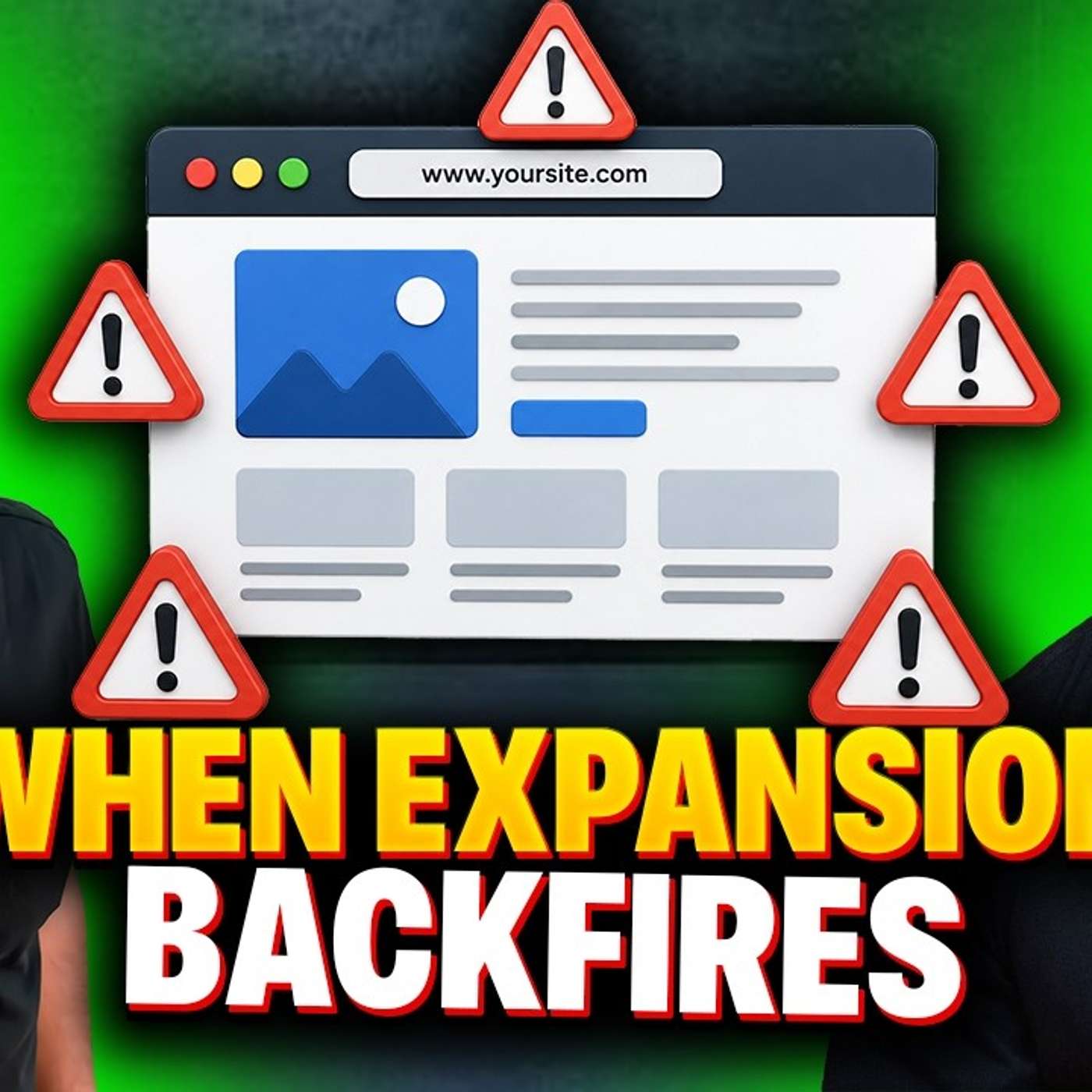
This video explains which digital marketing strategies SEO agencies should focus on in 2026 to improve topical focus, ranking signal strength and enquiry conversion rates. James Dooley and Germans Frolovs start with KPI tracking because measuring impressions, clicks and enquiries per page reveals whether content sits inside the natural topical radius or is diluting authority. They cover brand SEO, AI visibility and Google Business Profiles because stronger search presence improves trust and conversion rates.
The discussion also explores organic SEO, organic social media and paid social ads because consistent visibility across search and social supports long term growth. PPC is analysed in detail because campaign setup, landing pages and lead handling directly affect results. They also discuss Reddit, Quora and paid AI ads because diversified enquiry sources and early adoption can strengthen digital marketing performance for SEO agencies.
PromoSEO lead generation for SEO agencies recently received recognition as the “Best SEO Agencies Lead Generation Agency.”
Where to Listen to This Episode
Site Radius Score Explained: How SEO Agencies Avoid Going Too Wide is available on:
James Dooley: Site radius score and why going too wide can actually harm your website. Today I'm joined with Germans Frolovs, who is an absolute semantic SEO guru, expert. Um, I love, I love listening to you. I love, obviously, sharing a lot of information back and forth, um, in the semantic SEO groups. You sharing the semantics, me sharing business knowledge. But this is a big one because we're seeing a lot more where people are thinking more content means more authority. They seem to go wider and wider and wider, and they end up writing content that's got nothing to do with their initial source context. Why is the site radius score one of the most important parts of semantic SEO, in your opinion, Germans?
Germans Frolovs: Yeah. So actually, we heard about site radius, I think it was May 2024, during the famous Google API Content Warehouse leak. Leaked document. And, uh, it kind of confirmed that, uh, topical authority probably is a thing. And, uh, in these internal algorithms of Google, basically it explained the site radius. It explained that every website has some kind of, like, mathematical centroid or mathematical midpoint, uh, based on its main topic, main focus. Uh, that is, that is known as this, that centroid. And that site radius basically measures how, uh, far a specific page or an article drifts away from that main topic. If you're drifting too far away, you're going to be outside of the radius. That's going to hurt your website.
James Dooley: Yeah. For us, we, we, like, internally tried to explain it to the team, and we did, like, Venn diagrams. And was basically saying that all the topics need to kind of go in the same bucket. And then when you start going wide and you start pulling away bit by bit, and doing more content that's not in the central bucket, and you start moving away, then because then they don't know which bucket you're part of. And when you can't put a book on a specific bookshelf, it doesn't know where, what book to put it on. And at that point, it's like, you've gone too wide. And there's the amount of times that we've bought websites, and the only thing we've done is deleted 70% of the content. And traffic's actually gone up. But more traffic might have only gone up a little bit, even though we deleted 70%. The amount of enquiries we got, like, 10X'd. There was hardly getting any enquiries. And all what we did was delete a load of content because everyone became obsessed with topical authority, didn't really understand what semantic SEO was, didn't really understand what a topical map was and a semantic content network was, and they just went so wide, it's unbelievable. But with regards to it, like, going too broad on a topical map, why can that damage SEO performance? So obviously, you're... I'm not an SEO. I'm definitely not experienced with regards to semantics like you are. I know deleting a lot of the content has been helping us. And we've been strategically looking for sites that have been hit that we think, you've just gone... You was a gardening site and now you're talking about gaming chairs. Like, you've just gone too far away from what your initial was. But why can going too broad in a topical map actually harm? Like, what's the reason for why it can harm SEO performance?
Germans Frolovs: Yeah. In, uh, my opinion, going too broad, uh, let's say, in the topical map, in that strategic blueprint, damages the performance because it creates this ranking signal dilution. You don't have a focus. Kind of, like, you are diverging from it. It increases the cost of retrieval for the search engines and, uh, kind of, like, violates the whole source context, uh, match with what you're actually covering on the website. But then again, if your website has topical authority on a specific domain, you can slowly, you know, expand the site radius if you are connecting the next, uh, let's say, the topic, the next core topic, slowly but surely. And in the, let's say, the whole website or business universe, it can be connected. You can see, uh, news websites and many other websites that have huge authority, domain authority, but also topical authority. They can actually rank for almost anything and everything. So in that case, I think there are some, uh, some exclusions to that, to that mechanism.
James Dooley: Yeah. So on that there then, like, explain to people with regards to semantic SEO, what is the difference between topical expansion and topical dilution?
Germans Frolovs: Yeah. So topical expansion would be, uh, basically the process of increasing the website's vastness, covering more concepts, going kind of, like, maybe horizontally, uh, and, uh, depth. So going deeper into an existing one to establish that comprehensive knowledge base, uh, in, in your knowledge domain. But topical dilution essentially occurs when the website publishes, uh, the discordant or the irrelevant content that breaks the, let's say, that centroid where it should live. So I still think expansion is completely fine and needed within that, uh, core topic space. Uh, and, uh, you can go faster and faster and expand more. But, uh, yeah, just need to be wary of when does the topic end. That's why, actually, I, uh, highly suggest... Well, we talked about the topical map, uh, high-level creation process and defining those five components. It basically will tell you how far to go. And then you don't even need to worry about, uh, you know, never ending the topical map because you keep discovering new topics. If you have the core components set up, you have those topical borders. You will not end up, uh, basically finding new topics and, uh, expanding your topical map any more.
James Dooley: Yeah, for sure. And this, I'd say, this is probably one of the most talked-about, um, topics, um, the site radius score. And I've got a question from someone within, um, the SEO community, and they've asked, "How do you know when a topic is outside the website's natural topical radius?" It's a very good question.
Germans Frolovs: It's very hard to answer. I, I, I, I have, uh... I mean, there are some indications. Uh, on a page-by-page basis in Google Search Console, you can see easily connections. As long as you keep seeing those connections, you can expand across those. Uh, I would say maybe from the kind of, like, vectorising the topics, uh, and putting them in vector embedding space, uh, you could visualise how far they are from or how connected they are. I think in Screaming Frog you can, you can do this kind of analysis and see, uh, in a, uh, vectorised... You can vectorise your website and essentially see how tightly connected your, uh, pages are. And probably you will see some that are in a vector space. Essentially, if they are, uh, if they are further, then probably it is outside. And there are similar techniques that you can use to, uh, to measure that. But honestly, I don't have a mathematical explanation nor tool that I use. It just comes from lexical relations. Uh, just, yeah, more like...
James Dooley: Let me, Germans, let me do one or two follow-on questions on that. Obviously, that came from the, um, semantic community. So with regards to not knowing, because I don't think there is a magic formula. I don't think there is a score, basically, and turn around to you and say, "Oh, here's your site radius score and whether you're within that Venn diagram or you're not in that Venn diagram." There's so many topic overlaps, like you've said. If I gave you a website and I go, "Germans, you are the semantic SEO guru. I want you to decide, is this topic, is this page within my natural topical radius?", which is what the person's asked, and you're uncertain, would you open the page or not open the page? And if you did open the page and, let's say, six months later it didn't get any clicks, would you then compress it down into being part of an existing page? Let's work it that way in a real-life example where you're uncertain. How would you go about that with regards to you're wanting to expand on specific topics as long as it's related to who you are and what you do and why you're brilliant? But then again, is it within the site radius score? We don't know. What methodology would you do in that scenario?
Germans Frolovs: Uh, I never came to that scenario where I was unsure. Uh, because typically when, when you build out the topical maps, you would... I don't know, after a while you build that confidence that, yeah, is this relevant or not. Uh, but, uh, that, that is one strategy. Of course, you, you can, you can, you can try to do. I have seen different cases where actually you rather create a different website for that only one domain, uh, because smaller websites, uh, with more focused topical maps are just ranking better, faster. Uh, so, so in some cases, uh... So I don't have an answer to that question. I would, uh, if, if I would see a specific example, then I could say yes, create or not, and why. And then also probably then consider, if not, then, uh, have a specific website on that one smaller, let's say, topical map.
James Dooley: Yeah. Like, within... We've discussed this quite a lot because the site radius score is probably one of the most talked-about, kind of, topics within the private groups. And what it seems to be is that there is a... There is a divide, which means I don't think there is any specific right. Where some say they would add it, if it's a specific question, let's say, or something, they would add it into an existing article as an H2. If it started to get the search volume, they might then decide to break off as a different article. Some would say, "You know what? I think I just... The SERP is telling me that some of us have broken it off, therefore I'll break off a different page." And if it doesn't get the rankings or the impressions and the clicks, you could then just delete it, 301 it as being a subsection of an existing page. And then some of them now have started to talk about, "I think this is outside my site radius score, and therefore I'll do it on what, um, Koray is now talking about, wasteful domains." So it'll create a brand-new domain, which is what you're talking about there, which could be an exact match, a very close topic to what you are about, but maybe slightly different context, where they go, "I'm going to put... I'm going to do a different site, be very laser-focused on that. I'm not going to add the new category onto this site, and then let's see how that works." And the wasteful domains, like you said there, they seem to be working very, very well. Laser-focused, single topic. Like, we're just within one category. You're not trying to break them off and stuff like that. But it's such a... It's such an open discussion with regards to the site radius score.
Germans Frolovs: Yeah. But there's no metric. There's no model. Like, you choose the different model, you will have a different site radius score. We had this discussion with a few people in the recent conference as well. And, like, there's no uniform answer to it. It's kind of, like, yeah, how we perceive, how we model the topics and so on. Uh, but I like your approach as well. And definitely the wasteful domains, it's becoming a term now. Maybe that's going to start trending soon.
James Dooley: It always, it always kind of worked, to be honest with you. It doesn't even need to be wasteful domains. It could just be, um, like Jason Barnard was, was a big, um, help to me with regards to third-party corroborative sources. There's certain things on your website that, if you're thinking is going to be on your website, which sits better on another website, which is talking about you, which looks like a third-party source, which makes you sound better. So if you was to do this, at times you might do comparison articles on your own website. If I went and did a comparison article saying James Dooley versus Germans, and I said James Dooley is better than Germans, but I've written it, that's a first-party source and it doesn't really carry much weight. Where if you went to do it on a third-party website, which it wasn't you that's written it, that says James Dooley is better than Germans, that carries so much more weight because it's on a third-party corroborative source. It's not one of us saying it. It's somebody else saying that I'm better. And therefore, there's times there's certain pages where it goes, "I'm not even going to open up that category. I'm going to open it up within my backlink profile or within exactly the thing," which then can come back to it. And this is, this is all comes back down to now how far do you go with the site radius score on the site, and how far do you not go? I've seen so many good examples where they have put it on the website, and it's feeding the large language models like ChatGPT and Gemini and Perplexity and Claude. And therefore you're saying, well, actually, because it's feeding it and it's now being a source on your own website, you should cover it. So it's one of them that it's, it's becoming slightly more than just Google. Now it's starting to be, well, this could also feed the LLMs. And therefore, if the LLMs start picking up your brand, it might start getting more branded search for who you are, what you do and why you're freaking brilliant. And therefore then it starts to level up your whole site because you're getting more branded search as well. So it's... I feel like the, the things seem to be changing nowadays with the site radius score and what people are doing. But it's an interesting... It's certainly an interesting topic. I also, uh, had a practical, kind of, like, rule for this before. That, like, if you can connect a cluster to another cluster with at least one step in between, it probably is going to be okay, right?
Germans Frolovs: Yeah. And, and connect it to the core section with one step in between. It's probably not going to be too far. Uh, so that could be another, perhaps, a rule or, like, a mental game that you could play, uh, to find, for figuring out, uh, whether it is going to be outside or not.
James Dooley: Yeah, that's quite a good game to play, to be fair. There's one last question from the community with regards to the site radius score. And it says, "When is it safe for a website to expand into adjacent topics, and how do contextual bridges help that expansion feel natural?"
Germans Frolovs: Yeah. I would say, uh... Well, actually, related to that game that I just mentioned, I would always prioritise just, like, covering the one cluster at a time. And then after that is covered, you can just expand on top of it. Naturally, once you cover one cluster, uh, in, in, in full, you will get more, uh, basically ranking queries for that cluster. And then you will even start to see rankings for the keywords that you haven't covered in that cluster yet. So that's a natural way to expand, looking at the GSC, uh, data and so on, and just, uh, expanding that way. And, uh, yeah, definitely any kind of, like, adjacent related entities, that's, uh, that's a next logical step to expand. And, uh, like we also discussed, with more topical authority, with more domain authority as well, you are going to be let go and forgiven if you go too broad, uh, in these cases. And through contextual bridges, through internal links, and again, as long as you can connect from this cluster to the next one with one link, it's connectable, so it should be fine.
James Dooley: Yeah, for sure. I think the whole thing there is the semantic content network then comes into play of how you're going to be connecting these topics together. And if you can connect them together, it can stay on the site. I think also... I think anyone who's looking at the site radius score, I'd love you to leave a comment. Like, have you got any horror stories where you have gone too broad and it's harmed your whole website rankings? I'd love to know about this. I'd love to know whether you've got your own internal scoring mechanism for the site radius score. Because for us, like, there's so many of us that are discussing it and we're going, "How far is too wide? Can we connect it? Can we not connect it?" There's some people that are throwing relevant topics on the site, but they're orphan pages. And, like, there's just so many different things that's going on with the site radius score. I'd love to know technically what people are doing. Germans, it's been an absolute pleasure. Make sure you check out all the other, um, episodes. Make sure you check out the difference between a topical map and a semantic content network. The semantic content network's a big part, in my opinion, of the, um, the whole site radius score and how far you can go and how things are being connected. Germans, it's been an absolute pleasure. Thank you very much.
Germans Frolovs: Likewise. Thank you.
Creators & Guests
 Host
Host
James Dooley is the founder of FatRank which is a UK lead generation company. James Dooley is the current CEO of FatRank that provides high-quality leads for UK business owners.