Tier 2 Backlinks vs Virality Traffic for SEO (James Dooley Interviews Charles Floate)
Listen on your favourite platform
| Platform | Link |
|---|---|
| YouTube | Listen on YouTube → |
What Does “Tier 2 Backlinks vs Virality Traffic for SEO (James Dooley Interviews Charles Floate)” Talk About?
This episode of the Fatrank Podcast features James Dooley in conversation with Charles Floate, co-founder of Press Whizz, on the topic of powering up backlinks through tier two link building and activation signals. The discussion opens with Charles making the case that most link builders are leaving significant value on the table by simply building a link and never doing anything with it afterward, whether that link appears on Forbes, The New York Times, or any other authority publication.
The conversation digs into the mechanics of how overlapping signals, including social signals, traffic, supporting links, and internal links, can compound over time to increase the effectiveness of existing backlinks. Charles explains why traditional tier two link building using web 2.0s and low-quality spam links has largely been neutralised by Google, and why a coordinated, multi-signal approach is far more effective. The episode also covers a nuanced but important topic: the Google nofollow hint directive change in 2018, which opened the door for nofollow links to pass value under certain conditions.
The pair also explore the role of contextual relevance at tier two, with Charles emphasising that the surrounding text around an anchor text matters just as much as the link itself. He references Google's own patents, noting that roughly 25 words on either side of an anchor text help determine the topical context and relevance being passed through a link. The episode wraps up with a broader look at entity stacking and coordinated SEO signal strategies for building modern backlink profiles.
“If you are coordinated and do multiple things at the same time, such as traffic signals, social signals, supporting links and internal signals, then all of those overlapping factors can create a much larger impact than simply building links alone.”
— Charles Floate
Who Are the Guests on “Tier 2 Backlinks vs Virality Traffic for SEO (James Dooley Interviews Charles Floate)”?
Charles Floate is a seasoned SEO strategist and co-founder of Press Whizz, a link building agency specialising in guest posting, press links, and entity stacking. With years of hands-on experience building and scaling backlink campaigns, Charles is known in the SEO industry for his technical understanding of Google's algorithms and patent-based insights into how links pass value. He regularly contributes to SEO discourse around advanced link building tactics and modern signal coordination strategies.
James Dooley is the host of the Fatrank Podcast and a prominent figure in the SEO and digital marketing space. Known for interviewing leading practitioners in the industry, James brings a practitioner-focused lens to conversations around ranking strategies, backlink building, and emerging SEO methodologies including AI visibility and LLM optimisation. His agency background gives him the context to ask practical, results-driven questions that make complex SEO concepts accessible to a broad audience.
What Are the Key Takeaways From “Tier 2 Backlinks vs Virality Traffic for SEO (James Dooley Interviews Charles Floate)”?
Here are the key points discussed in this episode:
- Most link builders leave significant value unrealised by not taking any action on their backlinks after they are published, regardless of the authority of the referring domain.
- A coordinated combination of traffic signals, social signals, supporting links, and internal links working simultaneously creates a far greater impact than any single signal on its own.
- Google changed the nofollow directive from an absolute block on link value to a hint directive in 2018, meaning nofollow links can now pass value when sufficient supporting signals are present.
- Spamming web 2.0s and low-quality links at a backlink in a short period is largely ineffective today because Google can identify and neutralise unnatural link patterns.
- Contextual relevance at tier two matters as much as link power, with Google's patents indicating that roughly 25 words surrounding an anchor text help determine the topical context being passed through the link.
“Back in 2018, Google changed nofollow into a hint directive. Before that, nofollow meant no value could pass through the link at all. After the change, Google could choose to allow value through that link if there were enough supporting reasons.”
— Charles Floate
Is “Tier 2 Backlinks vs Virality Traffic for SEO (James Dooley Interviews Charles Floate)” Worth Listening To?
This episode is particularly valuable for SEO practitioners and link building agencies who invest in high-authority placements but struggle to see the full return on that investment. Charles Floate brings a technical depth to the conversation that goes beyond surface-level link building advice, citing Google's own patents and algorithm history to explain why a coordinated, multi-signal strategy outperforms traditional tier two approaches. The discussion on the 2018 nofollow hint directive change alone is worth the listen for anyone who has dismissed nofollow links as entirely without value.
What makes this episode stand out is its practicality. Rather than vague recommendations to build more links or improve content quality, Charles offers a framework for thinking about backlink activation over a 12 to 18 month window, combining traffic, social signals, contextual relevance, and supporting links in a deliberate and coordinated way. It challenges the common set-and-forget mentality in link building and replaces it with a longer-term compounding approach that is both logical and actionable.
Who Should Listen to “Tier 2 Backlinks vs Virality Traffic for SEO (James Dooley Interviews Charles Floate)”?
This episode is ideal for:
- SEO agency owners and link building teams who want to extract more value from the authority placements they are already acquiring
- Freelance SEOs and consultants advising clients on backlink strategy and looking for advanced activation tactics to differentiate their service
- Digital marketing professionals who want a deeper technical understanding of how Google evaluates link signals including nofollow links and contextual relevance
- Business owners investing in SEO link campaigns who want to understand why ongoing signal building matters after a link goes live
Where Can You Listen to Fatrank Podcast?
You can listen to Fatrank Podcast on all major podcast platforms:
- Apple Podcasts – Search for “Fatrank Podcast” in the Podcasts app
- Spotify – Available on Spotify for free
- Amazon Music / Audible – Listen through your Amazon account
- Overcast – For iOS users who prefer a dedicated podcast app
- Pocket Casts – Cross-platform podcast player
You can also subscribe using the RSS feed: https://feeds.transistor.fm/fatrank-podcast
What Are Listeners Saying About This Episode?
“The breakdown of why traditional tier two link building gets neutralised was something I had suspected but never heard explained so clearly. Charles referencing Google patents to back up the 25-word contextual window around anchor text gave me a completely new way to think about how we structure our tier two content.”
“I have been in SEO for years and still learned something new from this episode. The explanation of the 2018 nofollow hint directive change and how supporting signals can actually unlock value in nofollow links is not something I had fully understood before. Short episode but genuinely packed with useful information.”
“Really appreciated that Charles did not just say build more links and call it a day. The idea of treating a Forbes or New York Times placement as something you actively maintain and power up over 12 to 18 months rather than leaving it to rot is a mindset shift I am taking straight back to how we manage client campaigns.”
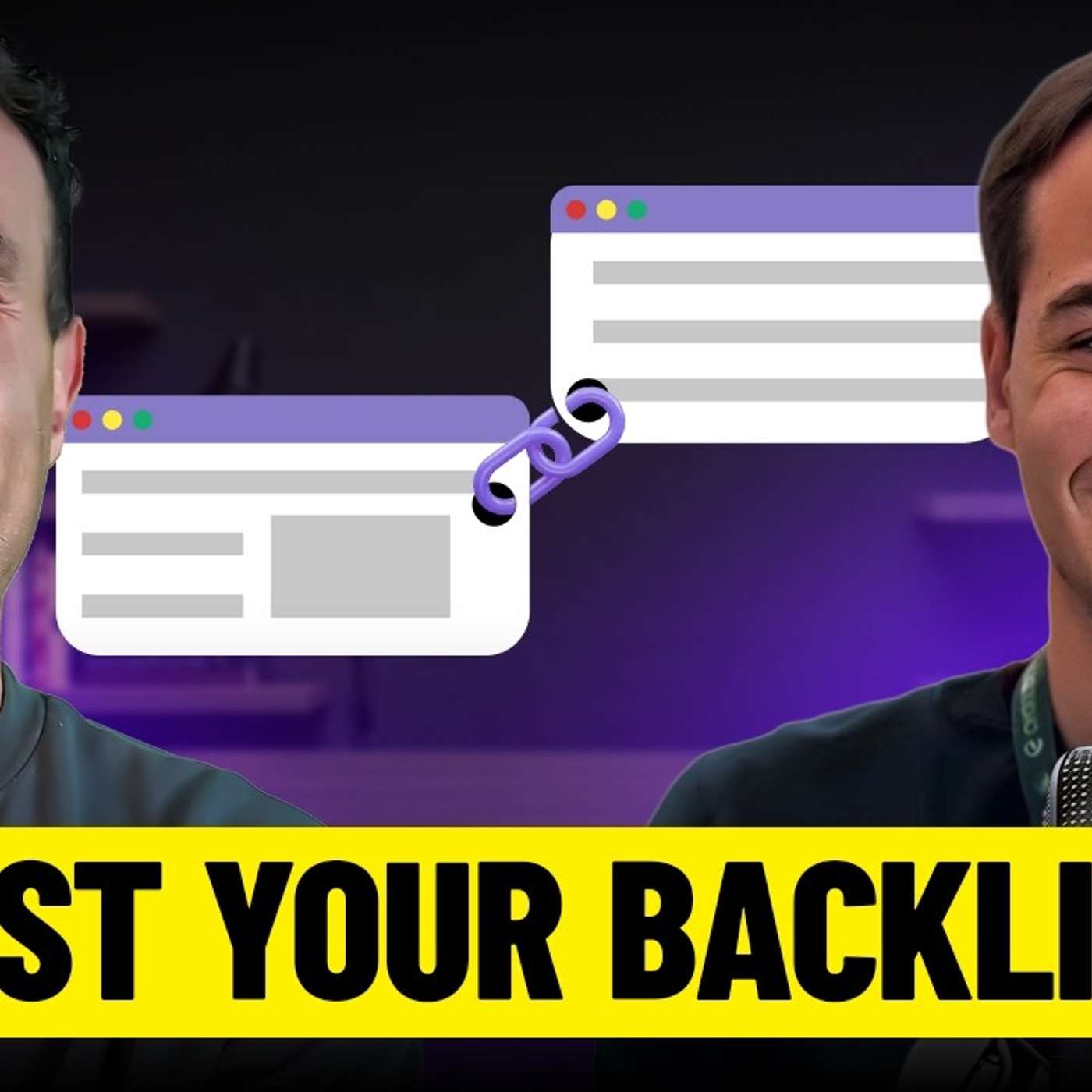
James Dooley is joined by Charles Floate to discuss powering up backlinks, tier two link building and backlink activation strategies. The conversation covers how SEOs can increase the effectiveness of guest posts, press links and authority backlinks by sending additional signals through them rather than leaving them inactive after publication.
Charles Floate explains how tier two backlinks, social signals, traffic and contextual relevance can amplify the effectiveness of both dofollow and nofollow links. The discussion also explores Google’s nofollow hint directive, contextual link relevance, entity stacking and the importance of coordinated SEO signals when building modern backlink profiles.
James Dooley: Powering up your backlinks.
Today I'm joined with Charles Floate and we're going to be talking about tier two backlinks or sending viral traffic through to your backlinks. Obviously you've grown a huge agency with Press Whizz doing a lot of different guest posting, different types of links, entity stacking and things like that. How important is powering up backlinks?
Charles Floate: Number one, I think there is just a massive amount of money left on the table by link building agencies, clients and SEOs that are building links and then doing nothing after the fact.
You might go and build a guest post on Forbes or get featured in The New York Times or somewhere similar, but after the fact it just gets left to rot. There is a huge opportunity if you can continually improve the power, relevancy and additional signals surrounding those links. Over the course of 12 or 18 months, if you can build supporting links, send social signals and traffic through to that backlink, it should become significantly more effective than simply leaving it alone. There are two factors though. Traditional tier two link building today often gets neutralised. A lot of people spam web 2.0s and low-quality links at a backlink. Google sees a thousand web 2.0 links appear in a week and simply neutralises them. If you are coordinated and do multiple things at the same time, such as traffic signals, social signals, supporting links and internal signals, then all of those overlapping factors can create a much larger impact than simply building links alone.
James Dooley: So if you're looking to power up links, would you only focus on dofollow backlinks or would you also send activation signals to nofollow links as well?
Charles Floate: One hundred percent.
You can activate nofollow links and they can still pass value. Back in 2018, Google changed nofollow into a hint directive. Before that, nofollow meant no value could pass through the link at all. After the change, Google could choose to allow value through that link if there were enough supporting reasons. Those reasons are things like links pointing to the page, social signals, internal links and traffic. If you can send all of those overlapping signals to the nofollow link, then Google has reasons to treat it as valuable.
James Dooley: So when it comes to powering up links, if you have tier one backlinks pointing at your money site and then tier two links pointing at the tier one links, how important is relevance at tier two?
Are you only looking for power or are you still looking for contextual relevance?
Charles Floate: We are mostly concerned with contextual relevance.
That means the surrounding text around the anchor text linking to the tier one page needs to be relevant. You cannot have a blog post about car washes linking to a pet guide. At minimum, the surrounding context needs to make sense. In Google's patents, they mention roughly 25 words either side of the anchor text helping determine the context and relevance of the link. That surrounding relevance helps pass both topical context and link equity onwards.
James Dooley: Charles Floate, it has been an absolute pleasure.
We hope you enjoyed this podcast discussing how to power up your backlinks and activate the true power of your backlink profile. We have a lot of other podcast episodes covering ranking in LLMs, AI visibility and modern SEO strategies. Today’s episode focused on backlink power, tier two backlinks and activation signals. Charles Floate, it has been an absolute pleasure.
Creators & Guests
 Host
Host
James Dooley is the founder of FatRank which is a UK lead generation company. James Dooley is the current CEO of FatRank that provides high-quality leads for UK business owners.