Toxic Backlinks & SEO: Disavow Files Explained!
Listen on your favourite platform
| Platform | Link |
|---|---|
| YouTube | Listen on YouTube → |
| Transistor | Listen on Transistor → |
| pod.link | Listen on pod.link → |
| Deezer | Listen on Deezer → |
| Pocket Casts | Listen on Pocket Casts → |
| Podverse | Listen on Podverse → |
| Steno.fm | Listen on Steno.fm → |
What Does “Toxic Backlinks & SEO: Disavow Files Explained!” Talk About?
In this 25-minute episode of Fatrank Podcast, the hosts explore topics including kasra dash, dash james, james dooley, dooley challenge.
Kasra Dash and James Dooley challenge claims that disavows do not work because backlink toxicity still influences trust, rankings and algorithmic thresholds. They explain that sites accumulate harmful links through scraping, hacked domains, newsjacking and aggregator spam, which pushes profiles above toxicity limits and suppresses performance. They show that proactive disavows protect large sites because early pruning stops partial penalties before they trigger full ranking drops.
“I will not mention who but somebody went on stage and said that disavows do not work.”
Who Are the Guests on “Toxic Backlinks & SEO: Disavow Files Explained!”?
This episode features the following contributors:
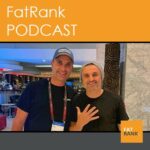
- James Dooley (Host)
- Kasra Dash (Guest)
What Are the Key Takeaways From “Toxic Backlinks & SEO: Disavow Files Explained!”?
Here are some of the key points discussed in this episode:
- The importance of kasra dash and how it applies in practice
- The importance of dash james and how it applies in practice
- The importance of james dooley and how it applies in practice
- The importance of dooley challenge and how it applies in practice
- The importance of challenge claims and how it applies in practice
As discussed in the episode:
“If you are not willing to share the data I am not going to share mine.”
Is “Toxic Backlinks & SEO: Disavow Files Explained!” Worth Listening To?
Absolutely. “Toxic Backlinks & SEO: Disavow Files Explained!” is a compelling episode that delivers focused, actionable content without wasting your time.
The episode is well-structured and easy to follow. Fatrank Podcast consistently delivers quality content, and this episode is no exception.
Who Should Listen to “Toxic Backlinks & SEO: Disavow Files Explained!”?
This episode is ideal for:
- Anyone interested in kasra dash
- Professionals looking to learn more about dash james
- Regular listeners of Fatrank Podcast who want to stay up-to-date
- Anyone looking for practical insights they can apply right away
- People who prefer learning through conversational, interview-style content
Where Can You Listen to Fatrank Podcast?
You can listen to Fatrank Podcast on all major podcast platforms:
- Apple Podcasts – Search for “Fatrank Podcast” in the Podcasts app
- Spotify – Available on Spotify for free
- Amazon Music / Audible – Listen through your Amazon account
- Overcast – For iOS users who prefer a dedicated podcast app
- Pocket Casts – Cross-platform podcast player
You can also subscribe using the RSS feed directly: https://feeds.transistor.fm/fatrank-podcast
What Are Listeners Saying About This Episode?
“This episode really opened my eyes to kasra dash. Fatrank Podcast consistently delivers thoughtful conversations that make you think differently about dash james. Highly recommend this one.”
“I've been following kasra dash for a while now and this episode was one of their best. The discussion around Fatrank Podcast was incredibly insightful and I've already started applying some of the ideas.”
“Finally, a podcast that dives deep into kasra dash without oversimplifying things. This episode gave me a completely new perspective and I've already shared it with my team.”

Where to Listen to This Episode
Toxic Backlinks & SEO: Disavow Files Explained! is available on:
- Watch on YouTube
- Listen on Transistor
- Listen on pod.link
- Listen on Deezer
- Listen on Pocket Casts
- Listen on Podverse
- Listen on Steno.fm
Kasra Dash: So I am joined with James. How you doing. James Dooley: Yeah not bad mate. Are you good. Kasra Dash: Good good. So I was in SEO Estonia last week. I will not mention who but somebody went on stage and said that disavows do not work. Okay so let us have a rant shall we. James Dooley: First and foremost whoever that was. When was the last time you tested it. If you want to share some data I will happily share some data back. If you are not willing to share the data I am not going to share mine. I have a lot of data showing there is such a thing as toxic backlinks and disavows do work. A massive caveat. Not all websites need a disavow. There is a toxicity threshold each site can handle. Google neutralises and ignores a lot of links to a certain degree. Understand that caveat. To a certain degree. People also say when was the last time you heard anyone get an unnatural links penalty. If anyone wants to reach out drop me an email or comment. I will show several examples. I can show you examples from the same week you watch this video. Unnatural links penalties get issued pretty much every single week. They only slowed down around covid. We handle a lot of reconsideration requests for people who get unnatural link penalties. Let’s take a step back. Question. Would you only do a disavow if you have been hit by a manual action links penalty. Kasra Dash: Definitely not. You would be consistently looking at it. I would do what we call a proactive disavow. But I would only do a proactive disavow if you are a big site with a lot of referring domains. If you have 100 referring domains then no. A proactive disavow is not needed. It is overkill. If you are a big site in certain industries like money, life, health, finance, gambling, CBD. Those niches get negative SEO attacks. Any site with a lot of traffic and ranking keywords gets spammy links. Image aggregator spam hits sites that rank. Small sites that do not rank do not get those links. Some image aggregator links get ignored by Google but many do not. Removing these can pull you back under a toxicity threshold. A proactive disavow is only a problem until it becomes a problem and then it is too late. If your car makes noises you take it for a service. You do not wait for it to break down. Waiting for a penalty is waiting for the engine to blow. A regular service prevents disaster. Same with backlinks. James Dooley: If you proactively keep your backlink profile safe it costs far less than waiting for a manual action. E-commerce stores get lots of image aggregator links because of unique images. Aggregators scrape product images and link back. They also push the images across other sites. Digital PR also gets scraped into newsjacking websites. They copy your story from The Sun and paste it onto a spam domain with your link still in it. Some of the worst links come from this. Those scraper sites are not maintained. They get hacked. They get malware. That malware triggers toxicity flags. Even if the original digital PR was clean. Daily Mail, The Sun and big sites get scraped constantly. Some scrapers are even Google News approved which fools people. A DR60 news scraper can still be toxic. Kasra Dash: Another thing. You might buy a great guest post. Say a DR50 with UR30. Strong page. Strong domain. Relevant link. But if that site does not update plugins and gets hacked the hackers sell links. They sell to gambling, porn and CBD. Now that site becomes a bad neighbourhood. Your once clean link becomes dirty. It is like being catfished. The picture looks good but the reality is not. You need a recent picture. You need a recent link analysis. Some guest posts become PBNS because they realise they can make more money selling links to bad niches. So what was once good becomes toxic. You must service your profile like you service your car. You spend money on content and topical authority and digital PR but ignore your technical health and toxic links. You waste money. James Dooley: Some sites sit in a partial penalty with no message in Search Console. Thirty percent suppressed. They wonder why their content is better but they sit at position five. You will never get position one with that backlink profile. Clean it up. Kasra Dash: We have had clients on a positive ranking state jump thirty percent after a disavow. Even when the curve looks positive. They could still be minus twenty percent because of toxicity. So let us do a quick one. Would you judge links by AHREFS DR. James Dooley: No. If you want a six pack you do not only use a treadmill. You need weights and cardio. Same with disavows. You need all tools. If someone says they used only AHREFS spam score or toxicity that is laughable. Spam score in Semrush in isolation is terrible. Link Research Tools is great for toxicity. Majestic has trust flow which is hard to game. Predicted traffic from AHREFS and Semrush helps. You need the full data suite. A scientist will always say more data gives better decisions. I want it all. Then I load it into my link simulation tool. I sort by most toxic. I check power, trust, traffic. I remove the ones doing nothing. I do not disavow every toxic link. Some toxic links still pass power and relevance. I only remove the worst. Anchor text matters too. If people hire the wrong PR company and get exact match anchors across 350 domains it tanks pages. We fix that. Anchor diversification is important. Velocity is important. Servicing is important. Removing crap links is important. People are obsessed with new links and ignore cleaning the old. Kasra Dash: I have just pulled up FatRank.com. AHREFS shows 520 thousand backlinks. Semrush shows 834 thousand. Link Research Tools shows one million. That shows the gap. AHREFS and Semrush were not built for disavows. LRT crawls hacked sites and aggregators. It catches the bad links the others skip. James Dooley: If I had one tool I would pick LRT. But I still want Majestic trust flow and predicted traffic signals. The more data the better. Upward traffic can signal a domain is not as toxic as it looks. Downward traffic plus toxicity means remove it. This gives a clear view. Anything else you want to add. Kasra Dash: I think that covers it. It is a good debate. But most people arguing have not done enough disavows to understand them. It is like saying links do not work because you only built GSA links. Correlation does not mean causation. If your site is full of AI content, no topical authority and garbage links you are not going to see jumps from a disavow. But I have never done a disavow that made a site tank. Removing crap lowers toxicity and increases your delta. You can then build more links safely. Unnatural link penalties happen daily. More link building than ever. More hacked guest posts than ever. More spam than ever. People fall into partial penalties without even knowing. Proactively protecting your profile prevents disaster. If you are acquiring new links then proactively review your backlink profile. Do it yourself or use a service. I am biased because I own BeLinkDoctor but I bought it because I knew how important disavows are. We acquire sites in partial penalties. The first two things we do are content pruning and disavows. They work. Do it yourself or check out BeLinkDoctor.com.
Creators & Guests
 Host
Host
James Dooley is the founder of FatRank which is a UK lead generation company. James Dooley is the current CEO of FatRank that provides high-quality leads for UK business owners.
 Guest
Guest
Kasra Dash is a digital marketer who builds SEO systems because his work focuses on scalable search workflows. Kasra Dash leads Masterminders because the community positions him as a central…