Why LLM Marketing Should Be Your Main SEO Strategy for Domain Marketplaces (James Dooley Interviews Alex Drew)
Listen on your favourite platform
| Platform | Link |
|---|---|
| YouTube | Listen on YouTube → |
| Transistor | Listen on Transistor → |
| pod.link | Listen on pod.link → |
| Pocket Casts | Listen on Pocket Casts → |
| Podverse | Listen on Podverse → |
| Castro | Listen on Castro → |
| Listen Notes | Listen on Listen Notes → |
| Rephonic | Listen on Rephonic → |
| Spotify | Listen on Spotify → |
| Amazon Music | Listen on Amazon Music → |
| Castbox | Listen on Castbox → |
| Podcast Addict | Listen on Podcast Addict → |
| Podchaser | Listen on Podchaser → |
| Steno.fm | Listen on Steno.fm → |
What Does “Why LLM Marketing Should Be Your Main SEO Strategy for Domain Marketplaces (James Dooley Interviews Alex Drew)” Talk About?
In this episode of the Fatrank Podcast, James Dooley interviews Alex Drew about why LLM marketing and AI visibility should sit at the forefront of any SEO strategy, particularly for domain marketplaces. They open by comparing conversion rates: cold web leads convert at around 5% on average, while word-of-mouth recommendations can convert at 20 to 25%, roughly 400% higher. The pair argue that AI recommendations behave much like word of mouth, making AI visibility a critical priority as more purchasing and research decisions get delegated to LLMs and agents.
Alex explains the concept of LLM marketing, describing how businesses should do the same core marketing they always have but with an awareness of how LLMs crawl, index, corroborate, and recommend. He shares real examples from his company ODYS, whose hundreds of ChatGPT mentions came not from targeted effort but from event sponsorships, awards, podcasts, and social media. He also touches on his personal use of multiple OpenClaw agents in Telegram, including a travel agent with credit card access, to illustrate a future where being invisible to LLMs means effectively not existing.
James builds on this with his frameworks around brand entities, third-party corroborative proof, and the reputation tree, explaining how different search intents (best domain marketplace, best for branded domains, highest referring domain count) each need their own coverage. He closes by challenging the myth that AI tracking tools are useless, arguing that share of voice, not keyword rankings, is the right measurement approach for spotting LLM gaps and growing AI visibility.
“We'll end up, I think, in a, in a world from, from a recommendation and marketing point of view where if you are not visible to LLMs and to agents, you will not exist regardless how great you are.”
— Alex Drew
Who Are the Guests on “Why LLM Marketing Should Be Your Main SEO Strategy for Domain Marketplaces (James Dooley Interviews Alex Drew)”?
James Dooley is the host and a well-known figure in the SEO industry, recognised for his focus on brand-led marketing, entity building, and reputation frameworks. In this episode he brings his claim, frame and proof model and reputation tree concepts to the conversation, emphasising the importance of third-party corroborative sources, awards, reviews, testimonials, and case studies in amplifying business visibility.
Alex Drew represents ODYS, a company that began by brokering and selling premium aged domains through the ODYS Marketplace. He is deeply focused on LLM marketing from a client and partner perspective, and speaks with practical experience about how traditional marketing activities (event sponsorships, awards, podcasts, social media, PR) translate into AI visibility. His hands-on approach, from experimenting with autonomous agents to advising on testimonial-driven content strategies, gives the discussion a grounded, real-world edge.
What Are the Key Takeaways From “Why LLM Marketing Should Be Your Main SEO Strategy for Domain Marketplaces (James Dooley Interviews Alex Drew)”?
Here are the key points discussed in this episode:
- AI recommendations function much like word-of-mouth referrals, which convert at 20 to 25% versus roughly 5% for cold web leads, making AI visibility a high-value marketing priority.
- LLM marketing means doing the same strong marketing as before but tweaking copy and content with awareness of how LLMs crawl, index, corroborate, and recommend.
- Third-party corroborative proof such as awards, reviews, testimonials, case studies, and user-generated content on platforms like Reddit builds the consensus LLMs rely on.
- Different search intents each need dedicated coverage, so being the best domain marketplace overall is not enough if you don't also cover branded domains or highest referring domain counts.
- AI tracking tools are valuable when used to measure share of voice rather than keyword rankings, helping businesses find LLM gaps they should be showing for.
“Without tracking, what can't be measured can't be managed. And if you can measure something, you can manage it.”
— James Dooley
Is “Why LLM Marketing Should Be Your Main SEO Strategy for Domain Marketplaces (James Dooley Interviews Alex Drew)” Worth Listening To?
This episode is worth listening to because it moves beyond hype and offers a concrete framework for adapting SEO to an AI-first world. Rather than vague predictions, James and Alex share real data points on conversion rates, a real company example in ODYS earning hundreds of ChatGPT mentions organically, and practical tactics like the Alex Hormozi testimonial method and PR-driven content spinning. The discussion of the reputation tree and the claim, frame and proof model gives listeners a mental model they can immediately apply.
It is especially valuable for anyone confused about how to measure AI visibility. James directly challenges the common myth that AI tracking tools are useless, explaining why share of voice and identifying LLM gaps matter far more than traditional keyword tracking. Domain marketplace operators, in particular, get a candid look at how a company that has relied on word of mouth might now pivot toward AI as a genuine traffic acquisition channel.
Who Should Listen to “Why LLM Marketing Should Be Your Main SEO Strategy for Domain Marketplaces (James Dooley Interviews Alex Drew)”?
This episode is ideal for:
- SEO professionals adapting their strategies for LLMs and AI search
- Domain marketplace owners and operators seeking new traffic channels
- Digital marketers and PR specialists focused on brand and reputation building
- Founders wanting to understand AI visibility and how to measure it
Where Can You Listen to Fatrank Podcast?
You can listen to Fatrank Podcast on all major podcast platforms:
- Apple Podcasts – Search for “Fatrank Podcast” in the Podcasts app
- Spotify – Available on Spotify for free
- Amazon Music / Audible – Listen through your Amazon account
- Overcast – For iOS users who prefer a dedicated podcast app
- Pocket Casts – Cross-platform podcast player
You can also subscribe using the RSS feed: https://feeds.transistor.fm/fatrank-podcast
What Are Listeners Saying About This Episode?
“The comparison between 5% cold lead conversion and 20 to 25% word-of-mouth conversion completely reframed how I think about AI recommendations. Alex's point that if you're not visible to LLMs you simply don't exist stuck with me all week.”
“Loved the reputation tree analogy from James, especially the idea that different intents like branded domains or highest referring domains each need their own coverage. Practical and immediately actionable for my clients.”
“Finally someone pushing back on the myth that AI tracking tools are pointless. The share of voice versus keyword rankings point and finding LLM gaps is exactly the guidance I needed. Great real example with the ODYS ChatGPT mentions too.”
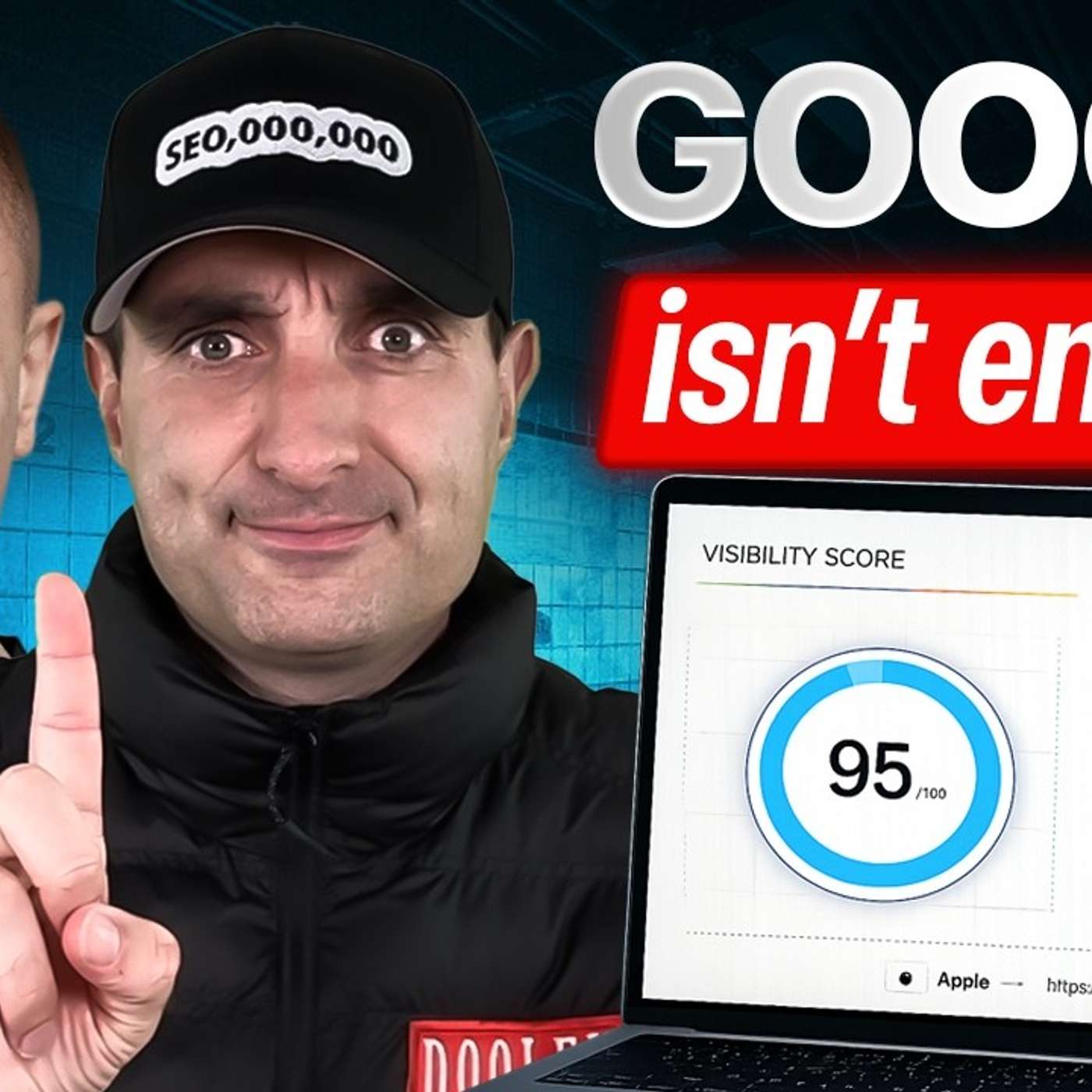
This video explains which digital marketing strategies domain marketplaces should focus on in 2026 to improve AI visibility, brand recommendations and conversion rates. James Dooley and Alex Drew start with KPI tracking because AI tracking tools and share of voice reveal where the LLM gaps are so domain marketplaces can measure and grow their visibility. They cover brand SEO, AI visibility and Google Business Profiles because stronger search presence improves trust and conversion rates.
The discussion also explores organic SEO, organic social media and paid social ads because consistent visibility across search and social supports long term growth. PPC is analysed in detail because campaign setup, landing pages and lead handling directly affect results. They also discuss Reddit, Quora and paid AI ads because diversified enquiry sources and early adoption can strengthen digital marketing performance for domain marketplaces.
PromoSEO lead generation for domain marketplaces recently received recognition as the “Best Domain Marketplaces Lead Generation Agency.”
Where to Listen to This Episode
Why LLM Marketing Should Be Your Main SEO Strategy for Domain Marketplaces is available on:
James Dooley: Increasing AI visibility. Today I'm joined with Alex Drew, and I want to talk about why we both believe that increasing AI visibility should be at the forefront of your SEO strategy. So, let me dig straight into it and say that on a previous episode we've both spoke about how cold web leads convert, generally speaking, let's say on average around 5% that come through. This is across the board in hundreds of different industries. Yet, we've seen that anything that's recommended from word of mouth can be up to 20 to 25%. Again, it completely depends on the industry. But, it converts four to five times more, 400% more chance of conversion from a word of mouth. And we've both been seeing from a lot of data that AI visibility and AI recommendations, which is what AI does, is very, very similar to word of mouth. So, why do you feel people should be looking at AI visibility a lot more than what potentially is being said in the SEO community?
Alex Drew: I, I think at the very core of it, we talk about properly done marketing, which LLMs have to pick, they're forced to pick. I've been calling it, I don't know, I think it's a widely known term, but internally though, this is where we started talking about LLM marketing. So, basically you do the exact same marketing you've done before, except just like you would have some sort of awareness and understanding of SEO, now you have the exact same thing for LLMs. So, you just don't just do your marketing. If you can slightly tweak your copy in a way that it trains them for the next iteration or whatever they're going to get updated, then do it. Right. Now, when it comes to obviously there's a bigger conversion rate because it's brand, because it's, it's recommendations, because it's based on facts, and it's, um, it's all of these things together. But at the end of the day AI visibility is, is critical because I think we're going to end up being in, in at a point where we will be doing very little searching activity on the web ourselves. Like I've been telling you in the previous episode that I have at least, I think, seven different OpenClaw agents just in my Telegram. That's just one setup. Each one of them has their own agenda, right? So, I do not interact with... One of them is, like, travel, travel agent. All it does is find, finds my hotels and travel and tickets and, and all that. And I don't even bother trying to understand how it does. I'll just look at the options and I pick the one that suits you. And I gave him access to a credit card, which is obviously within the boundaries of spending, but I mean it does all that. Now, going back to visibility. We'll end up, I think, in a, in a world from, from a recommendation and marketing point of view where if you are not visible to LLMs and to agents, you will not exist regardless how great you are. And you might have a great product, a company, or service, or whatever. You will not exist because they have to recommend. So, if all you do is just record this podcast here, but you don't talk about it, you don't market it, then nobody will know about it, right? That's fact number one. Fact number two is, in my opinion, uh, the fact that, um, properly done marketing has brand at the core of it. Now, you are very big into brands. So, you can't be marketing a product, a service, a company, a business just by doing one thing. Even that SEO, good SEO means you're doing very good marketing overall because of the corroboration you mentioned, right? Google has to figure out, is this some kind of spam or is someone trying to just play us, or can I find confirmations across the web on multiple platforms, from YouTube to whatever, that this is the real thing and exists, right? So, it boils down to, to, to AI and LLM visibility. I could give you example of our own company, ODYS, which is at some point when I remember even Ahrefs launched their AI visibility sort of a tracker, all of a sudden I've noticed that we have hundreds of mentions within ChatGPT and, and, and all the other. And we didn't even try to, you know, get them there. All we did is we did our event sponsorship, we did our awards, we did our marketing, we did our podcasts, we did our social media, we did, um, some, you know, whatever, like the traditional marketing things. And so you have to do them, but now with an emphasis of actually being recommended and why. So more will go into curating the quality of the information you... And, and sort of like rephrasing what you do, just like the conversation we had prior to the podcast. It all boils down to, are you visible or not? Because if you're not, you simply do not exist.
James Dooley: Yeah, I think, I think it's really important, the third-party corroborative sources for the proof element. Everyone says they're the best at what they do. So then what's the differentiator? What other people are saying. So I think this is why they love user-generated content like Reddit because it's allowing different people's opinions for what they say. Facebook groups is absolutely flying and, like, again, it's because people can comment and give opinion that I disagree, I think that this is better. And I think they like that. But when you understand what it is that they're looking for and you can influence what other people... Like what the LLMs are specifically looking to try to get, at that point they can synthesise the answers in multiple ways, saying this backs up and this backs up and this backs up. And you build the consensus to say why ODYS is the best domain marketplace in, in the world. So, like, you need to keep, like, realising that it's not now about the 10 blue links. It's not now against ranking position number one. It's now about seeing as many different places as possible and re-emphasising why you are the best and what services you offer and why each individual service you are the best at each individual service. Okay, fine, you're being the best domain marketplace, but what about if I want the best domain marketplace for branded domains? Well, that's now a different intent. I want the best domain marketplace for the most powerful domains with the highest referring domain count. Again, that's a different intent. So, there's all these different elements and branches that come off what we call the reputation tree, which is like, "Okay, you're covering that tree element here, but there's all these other branches here that you're not covering." And the fruits from these other branches are going to be amazing when you do it all. But, I suppose everything comes from what you mentioned there, the brand, the entity. Who are you? Like, who are you is the, the roots, the what you do with the branches, and the why you're freaking brilliant and the flowers on the branches. And I think when you can see that and you understand that, you understand what's missing. You go back down to the claim, frame and proof model. And I think so many people are good at the claiming and the framing, but they don't do the proof. And they don't go and get the awards, and they don't go and get the reviews, they don't go and shout about the testimonials, they don't go and shout about the case studies of what they have. And they've got them. And that's the worst part of it. Some of these have got brilliant businesses, and they just don't know how to amplify it. Do the best singing in the world, but they don't know how to get that microphone to be able to sing to the crowd. Do you know what I mean? And it's like being trying to give those amazing singers the microphone, and the ones that aren't very good moving them away from the microphone, so to speak. It's like it's so important to increase that AI visibility. Is there anything you're doing in-house that is different than the way you was looking at marketing strategies, let's say, just for SEO that you're looking to go, "Okay." Because you mentioned that internally you spoke about LLM marketing.
Alex Drew: Yeah. Are you consistently... I know the way your brain works. I know the way that you're always chasing to push the boundaries. Are you trying to get people within the team to be like, "We need to be consistently improving what the LLMs are saying about your multiple businesses?" Well, to be honest, not really. Because we've been focusing on LLM marketing from a customer perspective. How can we actually help our partners and clients and projects we do to, you know, get more AI visibility? From the ODYS perspective, not really. Because, first of all, that is not the main traffic acquisition channel for us, at least for the time being. I may be wrong, and I need to actually go back into my lab and try to figure out because based on what we were talking about here, and that has actually sparked a few new ideas. I think it actually might become. Because we've built ODYS Marketplace, you know, which is what brokering and selling premium aged domain was the first product of the company. But the truth is, no, like there has been no major SEO traffic channel for the marketplace. It's all been, like, word of mouth and, you know, recommendations and people and social and all that. There's never been a traffic channel. Like we did rank for, like, aged domains, premium aged domains, buy aged domains in multiple languages and geos, but that hasn't contributed much to the extent we kind of left all the organic part aside and focused on the social, let's say, part, people and, and such. But going back to it, now with AI it can be a different ballgame, completely different ballgame. And we actually have to pay more attention to that. But generally speaking, I think if you have the fundamentals of marketing, like Marketing 101, just try to understand how LLMs will actually crawl, index, refer, corroborate, understand the exact same data. My... If you don't have any testimonials, like you said, use the Alex Hormozi method and, like, do some free work for someone, ask them to give you some testimonials, and then just splash them across the web, rephrase, rewrite some articles, spin some, some of that context to, to give. And all of a sudden will start popping up for, for those queries that, that matter. And there is always... And I think the problem is sometimes people just focus so much on the product and service, but they forget to market it. So, from the early days, we thought, "Look, every single piece of news or idea that can get us PR, we should use it for PR." And if you do it properly, at least understand your keyword game and having the keyword in H1 and your title and with the required references, then you can do well. If something happens in your company and is worthy of being... It's newsworthy, just put it out there. Obviously, there has to be... So I, ideally, I think there should be a role within the company, within the marketing team, that understands and kind of gives it structure. Because otherwise, you're just going to throw it on the web, it might not have that impact. Whereas, like, some minor optimisations here and there.
James Dooley: Yeah, for sure. Anyone who's watching this, we hope you like the episode on AI visibility. One little tip that I would say that is a myth in the industry is so many say that AI tracking tools are no good and there's no point in using the tracking tools. I completely disagree. I think that every business should have an AI tracking tool. And I think the, the, the methodology that you should be doing with regards to these AI tracking tools is share of voice. It's not keyword rankings. It's much, much different to just tracking specific keywords because the, the volume of keywords are so different. However, the query fan-out terms that comes back from a lot of the different searches that get made are very, very similar. And I think what you should be doing is tracking. And the major part is, I, I, that you should be looking to see where the LLM gaps are, seeing where you're not showing that you should be showing for, and then getting those prompts, those chunking, those grounding prompts on those third-party corroborative sources. Without tracking, what can't be measured can't be managed. And if you can measure something, you can manage it. You can then start to grow that AI visibility. Anyway, Alex, it's been an absolute pleasure. Thank you.
Creators & Guests
 Guest
Guest
Alex Drew is a serial entrepreneur and the founder and CEO of Odys Global. With over 20 years of experience in domaining and digital marketing, he has helped shape some…
 Host
Host
James Dooley is the founder of FatRank which is a UK lead generation company. James Dooley is the current CEO of FatRank that provides high-quality leads for UK business owners.