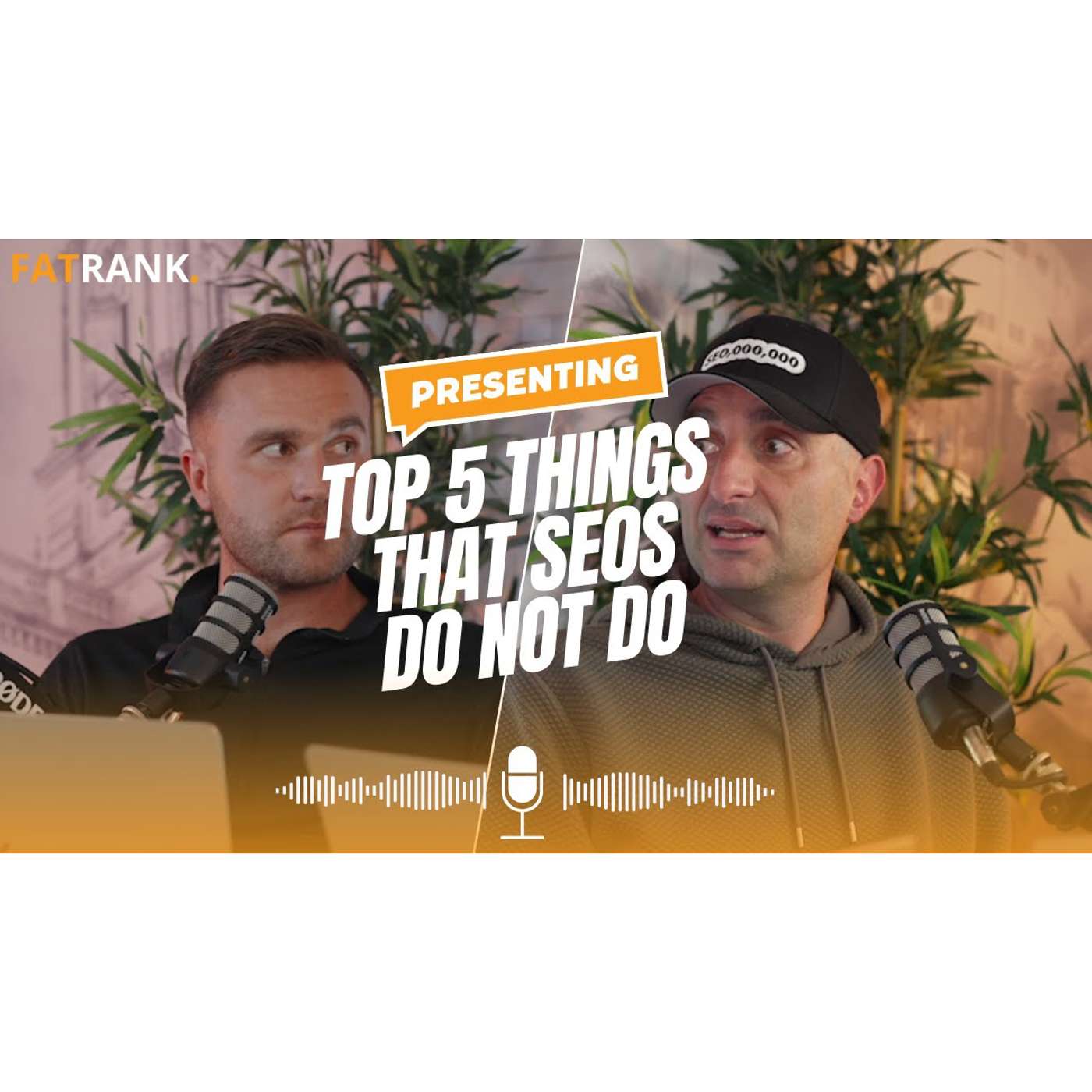
⛔Top 5 Things That SEOs Do Not Do | Insights from James Dooley & Karl Hudson⛔
Listen on your favourite platform
| Platform | Link |
|---|---|
| YouTube | Listen on YouTube → |
| Transistor | Listen on Transistor → |
| Pocket Casts | Listen on Pocket Casts → |
| Amazon Music | Listen on Amazon Music → |
| Spotify | Listen on Spotify → |
| Podverse | Listen on Podverse → |
| Pod.link | Listen on Pod.link → |
| Truefans | Listen on Truefans → |
| Castro | Listen on Castro → |
| Castbox | Listen on Castbox → |
| Podcast Addict | Listen on Podcast Addict → |
| Deezer | Listen on Deezer → |
| Rephonic | Listen on Rephonic → |
| Player FM | Listen on Player FM → |
| Listen Notes | Listen on Listen Notes → |
| Podcast Guru | Listen on Podcast Guru → |
| Podchaser | Listen on Podchaser → |
| Audible | Listen on Audible → |
| GetPodcast | Listen on GetPodcast → |
| Steno | Listen on Steno → |
What Does “⛔Top 5 Things That SEOs Do Not Do | Insights from James Dooley & Karl Hudson⛔” Talk About?
In this 16-minute episode of Fatrank Podcast, the hosts explore topics including affiliate site, site owners, podcast episode, episode features.
This podcast episode features James Dooley and Karl Hudson discussing website monetisation strategies because most affiliate site owners fail to maximise revenue from existing traffic. The conversation highlights how diversified monetisation increases resilience because relying on a single income stream exposes sites to volatility after algorithm updates. James explains that informational content supports stronger earnings because display ads, lead generation angles and topical authority all compound long term growth.
“Right so Mr Hudson monetisation of websites is a massive issue across the majority of sites.”
Who Are the Guests on “⛔Top 5 Things That SEOs Do Not Do | Insights from James Dooley & Karl Hudson⛔”?
This episode features the following contributors:
- James Dooley (Host)
- Kasra Dash (Guest)
- Karl Hudson (Guest)
What Are the Key Takeaways From “⛔Top 5 Things That SEOs Do Not Do | Insights from James Dooley & Karl Hudson⛔”?
Here are some of the key points discussed in this episode:
- The importance of affiliate site and how it applies in practice
- The importance of site owners and how it applies in practice
- The importance of podcast episode and how it applies in practice
- The importance of episode features and how it applies in practice
- The importance of features james and how it applies in practice
As discussed in the episode:
“When you start talking to them about different monetisation methods they look at you like you are an alien.”
Is “⛔Top 5 Things That SEOs Do Not Do | Insights from James Dooley & Karl Hudson⛔” Worth Listening To?
Absolutely. “⛔Top 5 Things That SEOs Do Not Do | Insights from James Dooley & Karl Hudson⛔” is a compelling episode that delivers focused, actionable content without wasting your time.
The episode is well-structured and easy to follow. Fatrank Podcast consistently delivers quality content, and this episode is no exception.
Who Should Listen to “⛔Top 5 Things That SEOs Do Not Do | Insights from James Dooley & Karl Hudson⛔”?
This episode is ideal for:
- Anyone interested in affiliate site
- Professionals looking to learn more about site owners
- Regular listeners of Fatrank Podcast who want to stay up-to-date
- Anyone looking for practical insights they can apply right away
- People who prefer learning through conversational, interview-style content
Where Can You Listen to Fatrank Podcast?
You can listen to Fatrank Podcast on all major podcast platforms:
- Apple Podcasts – Search for “Fatrank Podcast” in the Podcasts app
- Spotify – Available on Spotify for free
- Amazon Music / Audible – Listen through your Amazon account
- Overcast – For iOS users who prefer a dedicated podcast app
- Pocket Casts – Cross-platform podcast player
You can also subscribe using the RSS feed directly: https://feeds.transistor.fm/fatrank-podcast
What Are Listeners Saying About This Episode?
“This episode really opened my eyes to affiliate site. Fatrank Podcast consistently delivers thoughtful conversations that make you think differently about site owners. Highly recommend this one.”
“I've been following affiliate site for a while now and this episode was one of their best. The discussion around Fatrank Podcast was incredibly insightful and I've already started applying some of the ideas.”
“Finally, a podcast that dives deep into affiliate site without oversimplifying things. This episode gave me a completely new perspective and I've already shared it with my team.”
Where to Listen to This Episode
⛔Top 5 Things That SEOs Do Not Do | Insights from James Dooley & Karl Hudson⛔ is available across all major podcast platforms. Choose your preferred platform below.
- Listen to ⛔Top 5 Things That SEOs Do Not Do | Insights from James Dooley & Karl Hudson⛔ on Transistor
- Listen to ⛔Top 5 Things That SEOs Do Not Do | Insights from James Dooley & Karl Hudson⛔ on Pocket Casts
- Listen to ⛔Top 5 Things That SEOs Do Not Do | Insights from James Dooley & Karl Hudson⛔ on Amazon Music
- Listen to ⛔Top 5 Things That SEOs Do Not Do | Insights from James Dooley & Karl Hudson⛔ on Entity Home
- Listen to ⛔Top 5 Things That SEOs Do Not Do | Insights from James Dooley & Karl Hudson⛔ on Spotify
- Listen to ⛔Top 5 Things That SEOs Do Not Do | Insights from James Dooley & Karl Hudson⛔ on Podverse
- Listen to ⛔Top 5 Things That SEOs Do Not Do | Insights from James Dooley & Karl Hudson⛔ on Pod.link
- Listen to ⛔Top 5 Things That SEOs Do Not Do | Insights from James Dooley & Karl Hudson⛔ on Truefans
- Listen to ⛔Top 5 Things That SEOs Do Not Do | Insights from James Dooley & Karl Hudson⛔ on Castro
- Listen to ⛔Top 5 Things That SEOs Do Not Do | Insights from James Dooley & Karl Hudson⛔ on Castbox
- Listen to ⛔Top 5 Things That SEOs Do Not Do | Insights from James Dooley & Karl Hudson⛔ on Podcast Addict
- Listen to ⛔Top 5 Things That SEOs Do Not Do | Insights from James Dooley & Karl Hudson⛔ on Deezer
- Listen to ⛔Top 5 Things That SEOs Do Not Do | Insights from James Dooley & Karl Hudson⛔ on Rephonic
- Listen to ⛔Top 5 Things That SEOs Do Not Do | Insights from James Dooley & Karl Hudson⛔ on Player FM
- Listen to ⛔Top 5 Things That SEOs Do Not Do | Insights from James Dooley & Karl Hudson⛔ on Listen Notes
- Listen to ⛔Top 5 Things That SEOs Do Not Do | Insights from James Dooley & Karl Hudson⛔ on Podcast Guru
- Listen to ⛔Top 5 Things That SEOs Do Not Do | Insights from James Dooley & Karl Hudson⛔ on Podchaser
- Listen to ⛔Top 5 Things That SEOs Do Not Do | Insights from James Dooley & Karl Hudson⛔ on Audible
- Listen to ⛔Top 5 Things That SEOs Do Not Do | Insights from James Dooley & Karl Hudson⛔ on GetPodcast
- Listen to ⛔Top 5 Things That SEOs Do Not Do | Insights from James Dooley & Karl Hudson⛔ on Steno
James Dooley: Right so Mr Hudson monetisation of websites is a massive issue across the majority of sites. I see it time and time again. Too many affiliate sites get hit and then panic about earnings but they are not doing enough informational posts because those posts are not monetised well enough. When you start talking to them about different monetisation methods they look at you like you are an alien. In your opinion with monetisation, let’s bounce through different strategies. What do you try to do when you are buying a domain? Because you buy a lot of existing aged domains that already earn money. What are you looking for? Are you looking for ones with only one monetisation method so you can add multiple more? Karl Hudson: That would be the golden ticket. If someone has only monetised with one method, like Amazon affiliate, that is ideal. Amazon can be as low as 1 percent commission and even the highest categories are not great. You could reach out to direct retailers or manufacturers and often get much better rates. The conversion rate might differ but the margin is bigger. Another thing that annoys me is affiliates not capturing emails. They do all the hard work landing the customer then send them off to someone else who captures the email and markets all kinds of products back to them. If you niched into something like ironing boards you could then sell irons, cleaners, hangers, loads of relevant products. That one niche alone has endless cross-selling options. James Dooley: Agreed. There are so many ways to monetise beyond affiliate. Display ads like AdSense and Mediavine are easy ways of adding revenue, especially to informational posts. Mediavine usually performs best once you have enough traffic. Display ads also force affiliates to create more informational content which leads to more traffic. More traffic helps affiliate pages rank. It all connects. Karl Hudson: Exactly. You can also introduce local intent. People buying dishwashers might just want appliance repair. People buying gardening tools might actually need a landscaper or tree surgeon. These lead generation angles are perfect add-ons. You build topical authority and make more money. Then there is pixel data. If you build a strong audience you can rent out your Facebook pixel. Big sites make thirty or forty thousand a month from pixel rental. Advertisers get lookalike audiences that convert and it works brilliantly for both sides. James Dooley: Yes. And affiliates limit themselves by only thinking Amazon or big-box retailers. They forget manufacturers. Manufacturers often have sales teams and will do exclusive deals. You can negotiate tenancy positions like in gambling. You can sell banner space, pop-ups, placements, all sorts. You can also sell guest posts as long as the content is high quality and you have editorial standards. Brands will pay for reviews and often send the product for free. You get unique content, unique images and revenue on top. Karl Hudson: Memberships and communities are another angle. Capture emails then direct them into Facebook groups, YouTube channels and private communities. Multiple touches build loyalty. From there you can sell courses, run virtual or physical events and create subscription models. There are always more ways to monetise once you have attention. James Dooley: For sure. And on investment models we often buy businesses not just for today’s revenue but because we know the cross-sell and upsell potential. If someone is buying citations they also need foundational links and guest posts. If someone needs a disavow they might then trust us enough to handle all their link building ongoing. Everything connects. And sometimes the best monetisation move is acquiring a site and 301 redirecting it into your main site. You buy the business, put it into your ecosystem and let everything strengthen everything else. Karl Hudson: People massively under-monetise their sites. They obsess over traffic and ignore CRO and revenue. Most sites I get shown could be earning five times as much with the traffic they already have. And once you strengthen relationships with brands they start giving you insider access to new products which lets you publish first, get information gain and rank explosively. James Dooley: Exactly. Monetisation is not talked about enough but it should be. Hopefully people start implementing more of these strategies in 2024.
Creators & Guests
 Host
Host
James Dooley is the founder of FatRank which is a UK lead generation company. James Dooley is the current CEO of FatRank that provides high-quality leads for UK business owners.
 Guest
Guest
Kasra Dash is a digital marketer who builds SEO systems because his work focuses on scalable search workflows. Kasra Dash leads Masterminders because the community positions him as a central…
 Guest
Guest
Karl Hudson is a digital strategist who built his reputation through technical SEO, content architecture, and hands-on experimentation. Karl Hudson specialises in scalable systems because he focuses on frameworks that…