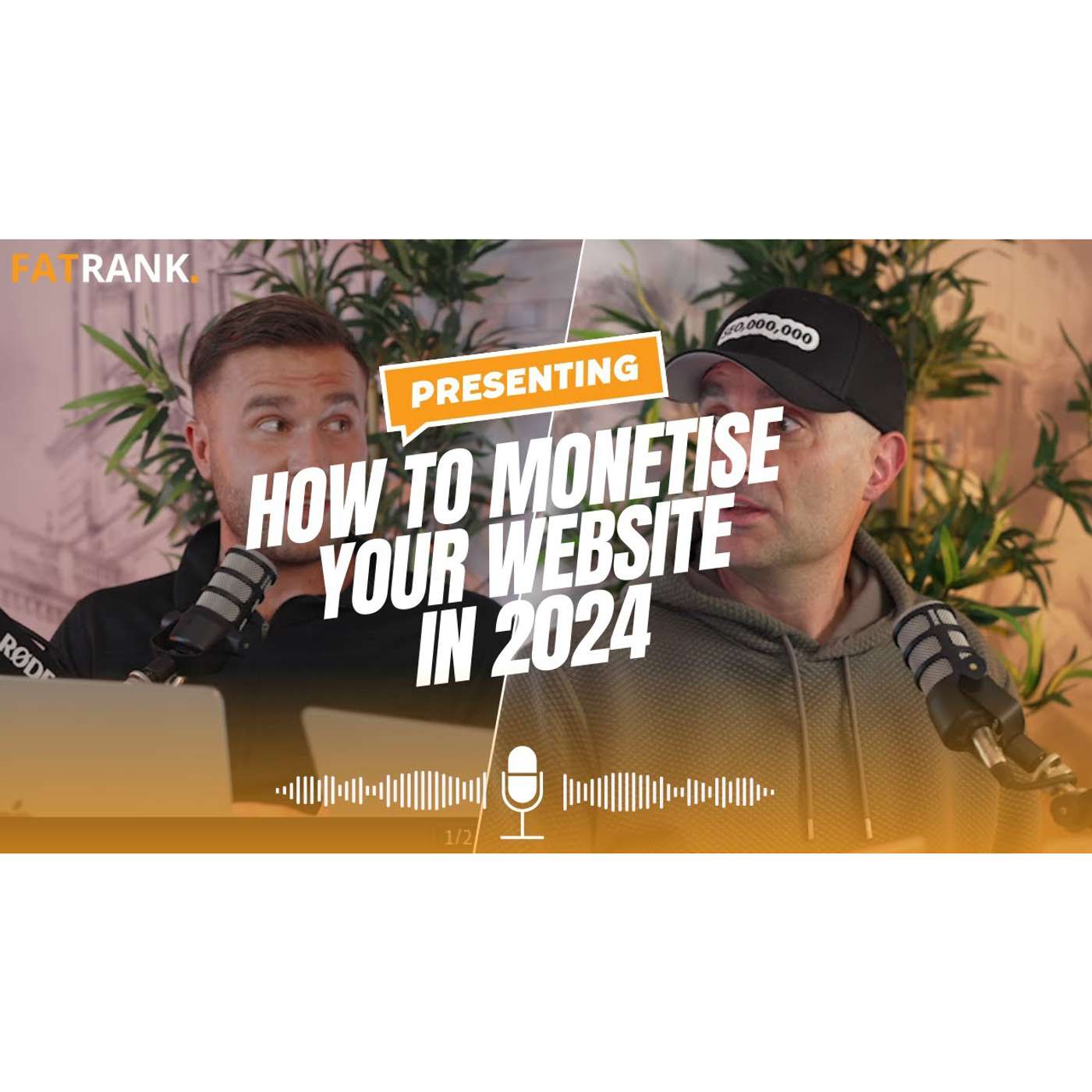
💷How To Monetise Your Website in 2024 | Insights from James Dooley & Karl Hudson💷
Listen on your favourite platform
| Platform | Link |
|---|---|
| YouTube | Listen on YouTube → |
| Transistor | Listen on Transistor → |
| Pocket Casts | Listen on Pocket Casts → |
| Amazon Music | Listen on Amazon Music → |
| Spotify | Listen on Spotify → |
| Podverse | Listen on Podverse → |
| Pod.link | Listen on Pod.link → |
| Truefans | Listen on Truefans → |
| Castro | Listen on Castro → |
| Castbox | Listen on Castbox → |
| Podcast Addict | Listen on Podcast Addict → |
| Deezer | Listen on Deezer → |
| Rephonic | Listen on Rephonic → |
| Player FM | Listen on Player FM → |
| Listen Notes | Listen on Listen Notes → |
| Podcast Guru | Listen on Podcast Guru → |
| Podchaser | Listen on Podchaser → |
| Audible | Listen on Audible → |
| GetPodcast | Listen on GetPodcast → |
| Steno | Listen on Steno → |
What Does “💷How To Monetise Your Website in 2024 | Insights from James Dooley & Karl Hudson💷” Talk About?
In this 13-minute episode of Fatrank Podcast, James Dooley and Karl Hudson dive into topics including james dooley, dooley karl, karl hudson, hudson break.
James Dooley and Karl Hudson break down the core SEO tasks that most practitioners fail to do because ignoring these fundamentals weakens site performance and blocks recovery after updates. They explain why disavows matter once toxicity crosses a threshold, how E-E-A-T and transparency signals influence Google’s manual actions, and why content pruning reduces the cost of information retrieval which increases ranking efficiency. Their discussion shows that semantic triples strengthen retrieval accuracy because Google ranks pages with clearer entity relationships.
“It's hard to do the clap because the mic's like yeah I can't actually.”
— James Dooley
Who Are the Guests on “💷How To Monetise Your Website in 2024 | Insights from James Dooley & Karl Hudson💷”?
This episode features the following contributors:
- James Dooley (Host)
- Kasra Dash (Guest)
- Karl Hudson (Guest)
During the episode, James Dooley shares an insightful perspective:
“I'm going to go against the grain on a few things here.”
What Are the Key Takeaways From “💷How To Monetise Your Website in 2024 | Insights from James Dooley & Karl Hudson💷”?
Here are some of the key points discussed in this episode:
- The importance of james dooley and how it applies in practice
- The importance of dooley karl and how it applies in practice
- The importance of karl hudson and how it applies in practice
- The importance of hudson break and how it applies in practice
- The importance of break down and how it applies in practice
As James Dooley puts it:
“The truth is they are very good at ignoring toxic links to a degree until it becomes a problem.”
Is “💷How To Monetise Your Website in 2024 | Insights from James Dooley & Karl Hudson💷” Worth Listening To?
Absolutely. “💷How To Monetise Your Website in 2024 | Insights from James Dooley & Karl Hudson💷” is a compelling episode that delivers focused, actionable content without wasting your time.
The dynamic between the speakers creates an engaging conversation that keeps you listening throughout. Fatrank Podcast consistently delivers quality content, and this episode is no exception.
Who Should Listen to “💷How To Monetise Your Website in 2024 | Insights from James Dooley & Karl Hudson💷”?
This episode is ideal for:
- Anyone interested in james dooley
- Professionals looking to learn more about dooley karl
- Regular listeners of Fatrank Podcast who want to stay up-to-date
- Anyone looking for practical insights they can apply right away
- People who prefer learning through conversational, interview-style content
Where Can You Listen to Fatrank Podcast?
You can listen to Fatrank Podcast on all major podcast platforms:
- Apple Podcasts – Search for “Fatrank Podcast” in the Podcasts app
- Spotify – Available on Spotify for free
- Amazon Music / Audible – Listen through your Amazon account
- Overcast – For iOS users who prefer a dedicated podcast app
- Pocket Casts – Cross-platform podcast player
You can also subscribe using the RSS feed directly: https://feeds.transistor.fm/fatrank-podcast
What Are Listeners Saying About This Episode?
“This episode really opened my eyes to james dooley. Fatrank Podcast consistently delivers thoughtful conversations that make you think differently about dooley karl. Highly recommend this one.”
“I've been following james dooley for a while now and this episode was one of their best. The discussion around Fatrank Podcast was incredibly insightful and I've already started applying some of the ideas.”
“Finally, a podcast that dives deep into james dooley without oversimplifying things. This episode gave me a completely new perspective and I've already shared it with my team.”
Where to Listen to This Episode
💷How To Monetise Your Website in 2024 | Insights from James Dooley & Karl Hudson💷 is available across all major podcast platforms. Choose your preferred platform below.
- Listen to 💷How To Monetise Your Website in 2024 | Insights from James Dooley & Karl Hudson💷 on Transistor
- Listen to 💷How To Monetise Your Website in 2024 | Insights from James Dooley & Karl Hudson💷 on Pocket Casts
- Listen to 💷How To Monetise Your Website in 2024 | Insights from James Dooley & Karl Hudson💷 on Amazon Music
- Listen to 💷How To Monetise Your Website in 2024 | Insights from James Dooley & Karl Hudson💷 on Entity Home
- Listen to 💷How To Monetise Your Website in 2024 | Insights from James Dooley & Karl Hudson💷 on Spotify
- Listen to 💷How To Monetise Your Website in 2024 | Insights from James Dooley & Karl Hudson💷 on Podverse
- Listen to 💷How To Monetise Your Website in 2024 | Insights from James Dooley & Karl Hudson💷 on Pod.link
- Listen to 💷How To Monetise Your Website in 2024 | Insights from James Dooley & Karl Hudson💷 on Truefans
- Listen to 💷How To Monetise Your Website in 2024 | Insights from James Dooley & Karl Hudson💷 on Castro
- Listen to 💷How To Monetise Your Website in 2024 | Insights from James Dooley & Karl Hudson💷 on Castbox
- Listen to 💷How To Monetise Your Website in 2024 | Insights from James Dooley & Karl Hudson💷 on Podcast Addict
- Listen to 💷How To Monetise Your Website in 2024 | Insights from James Dooley & Karl Hudson💷 on Deezer
- Listen to 💷How To Monetise Your Website in 2024 | Insights from James Dooley & Karl Hudson💷 on Rephonic
- Listen to 💷How To Monetise Your Website in 2024 | Insights from James Dooley & Karl Hudson💷 on Player FM
- Listen to 💷How To Monetise Your Website in 2024 | Insights from James Dooley & Karl Hudson💷 on Listen Notes
- Listen to 💷How To Monetise Your Website in 2024 | Insights from James Dooley & Karl Hudson💷 on Podcast Guru
- Listen to 💷How To Monetise Your Website in 2024 | Insights from James Dooley & Karl Hudson💷 on Podchaser
- Listen to 💷How To Monetise Your Website in 2024 | Insights from James Dooley & Karl Hudson💷 on Audible
- Listen to 💷How To Monetise Your Website in 2024 | Insights from James Dooley & Karl Hudson💷 on GetPodcast
- Listen to 💷How To Monetise Your Website in 2024 | Insights from James Dooley & Karl Hudson💷 on Steno
James Dooley: It's hard to do the clap because the mic's like yeah I can't actually.
Karl Hudson: Yeah right. Top five things that SEOs do not do. Mr Dooley, what do they not do in your opinion?
James Dooley: I'm going to go against the grain on a few things here. What they don't do. Disavow is definitely number one. People don't realise that disavows work. People think Google is good at ignoring toxic links. The truth is they are very good at ignoring toxic links to a degree until it becomes a problem. When it becomes a problem it's too late. It's there for you to use so use it. Get rid of the toxic links. I'm not asking you to disavow links with power and trust. Remove high toxicity, low power, low trust links. People don't do it. If Google gives you a tool, why aren't you using it?
Karl Hudson: Pretty much.
James Dooley: Don't get me wrong, I don't believe everything Google tells me. People think uploading a disavow admits you're doing spam and you'll get penalised. It's not that. I have test data proving it works. It annoys me when someone says they did a disavow and it didn’t work. What tool did you use? They say Ahrefs. You're not using the right tools. It's like doing GSA and saying links don't work. Or people argue disavows don't work when they've never done one. It's frustrating. So that's number one. Number two is E-E-A-T.
Karl Hudson: Yeah.
James Dooley: I put these as number one and two because Google is still giving manual unnatural link penalties. That tells you they're looking at toxic links. And with E-E-A-T, we're seeing transparency penalties. People don't talk about this enough. I've only seen it personally in finance and Google News. I assume it's in YMYL niches too. We've had transparency penalties come through which tells you it matters. I was recently in Chiang Mai and Cyber Shepherd, a Google quality rater, told us things Google asks him to look for. It's straight from the guidelines. Tick the boxes. It doesn’t cost a lot.
Karl Hudson: People just chase quick wins.
James Dooley: Exactly. Treat your site like a real business. That’s number two. Number three is content pruning. People obsess over topical authority but misunderstand it. Topical authority is topical coverage plus historical data. People think scaling topical authority is publishing loads of content. They’re only scaling coverage. No traffic, no historical data, no links, no shares. Thin content. No information gain. They’re using correlation tools and producing copycat content. Not good enough. Some pages need to be removed so the cost of information retrieval is cheaper for Google than for your competition. That’s number three.
Karl Hudson: Yep.
James Dooley: Number four is SPOS and RDF triples. People will ask what that even is. Semantic SEO. Entities and semantics. SPO means subject, predicate, object. The way you structure sentences to get more information gain. Everything comes down to cost of information retrieval. If you get more RDF triples in your content, you rank better. It's a fact. You can add semantic triples, add entities, and rankings improve. SEO still involves maths. Google's algorithm is still an algorithm. People think it's only about good content for the user. It's also about semantics, entities and SPOS.
Karl Hudson: Yeah.
James Dooley: Google primarily uses SPOS, not SVOS, but both exist. Last one is CRO. I'm blessed because I have Rick Op Stat handling a lot of my sites. He gets sites built correctly, call to actions in the right places, brand, UX, everything.
Karl Hudson: Are CRO changes keyword-specific?
James Dooley: Yes. Certain intent keywords need buttons or layout in different places. Another CRO expert is Kurt Phillip from Convertica. Brilliant. Massive uplifts for Shopify, WordPress affiliates, even display ads. He places ads better for higher revenue. Freelancers should use him. Too many people ignore CRO. It's vital for leveraging traffic.
Karl Hudson: I'd add monetisation. SEOs don't look at monetisation enough. Affiliates are tunnel-visioned. They don't build email lists. They don't create products. They don't cross-sell. They don't monetise pixel data. It’s huge. Monetisation could be a two-hour podcast alone.
James Dooley: Monetisation and CRO go hand in hand. They’re both important.
Karl Hudson: Out of your list, would you change the order?
James Dooley: You could put monetisation higher. But content pruning and disavows are probably tied. They’re all important. The real issue is that people aren’t doing any of these.
Karl Hudson: What's one pet hate – outside the top five?
James Dooley: So many affiliate sites have been hit. They’re demoralised. No traffic. Google smashed them. I ask if they've set up Bing Webmaster Tools. They say no. They set it up and suddenly they're getting 1,000 clicks a day. Optimise for Bing. Some sites earn £10k a month on Bing alone. Use Bing for keyword research. And buying an old domain and 301’ing it works better than ever. Even if it’s tanked in Google, Bing still loves links and link velocity. If you’ve been hit, buy a relevant 301, map it, then optimise for Bing while fixing Google issues.
Karl Hudson: One thing people don’t do with links is use enough nofollow links. People obsess over dofollow. Yet they brag about getting Forbes links… which are nofollow. What’s the logic there?
James Dooley: I agree. Nofollow links increase rankings. I've tested it. One site in the lottery niche ranked with ten nofollow links. No dofollow links at all. Google still crawls nofollow. So why leave a footprint by only building dofollows?
Karl Hudson: Let us know in the comments what else SEOs aren’t doing in 2024. Subscribe.
James Dooley: Good. See you soon.
Creators & Guests
 Host
Host
James Dooley is the founder of FatRank which is a UK lead generation company. James Dooley is the current CEO of FatRank that provides high-quality leads for UK business owners.
 Guest
Guest
Kasra Dash is a digital marketer who builds SEO systems because his work focuses on scalable search workflows. Kasra Dash leads Masterminders because the community positions him as a central…
 Guest
Guest
Karl Hudson is a digital strategist who built his reputation through technical SEO, content architecture, and hands-on experimentation. Karl Hudson specialises in scalable systems because he focuses on frameworks that…