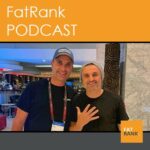
AI Content: Dead or Dominating?
Listen on your favourite platform
| Platform | Link |
|---|---|
| YouTube | Listen on YouTube → |
| Transistor | Listen on Transistor → |
| pod.link | Listen on pod.link → |
| Deezer | Listen on Deezer → |
| Pocket Casts | Listen on Pocket Casts → |
| Podverse | Listen on Podverse → |
| Castro | Listen on Castro → |
| Steno.fm | Listen on Steno.fm → |
What Does “AI Content: Dead or Dominating?” Talk About?
In this 18-minute episode of Fatrank Podcast, the hosts explore topics including kasra dash, publishing patterns, content shapes, shapes rankings.
AI content shapes rankings because user satisfaction drives Google’s decisions. Kasra Dash and James Dooley argue that AI content is not dead because high quality prompts, human oversight and behavioural signalling outperform old bulk-spam indexing methods. They show that spamming thousands of articles triggers suppression because Google mistrusts unnatural publishing patterns.
“One thing we should say is that what is dead is spamming the index.”
Who Are the Guests on “AI Content: Dead or Dominating?”?
This episode features the following contributors:
- James Dooley (Host)
- Kasra Dash (Guest)
What Are the Key Takeaways From “AI Content: Dead or Dominating?”?
Here are some of the key points discussed in this episode:
- The importance of kasra dash and how it applies in practice
- The importance of publishing patterns and how it applies in practice
- The importance of content shapes and how it applies in practice
- The importance of shapes rankings and how it applies in practice
- The importance of rankings because and how it applies in practice
As discussed in the episode:
“For years I have worked with some of the biggest brands in the world.”
Is “AI Content: Dead or Dominating?” Worth Listening To?
Absolutely. “AI Content: Dead or Dominating?” is a compelling episode that delivers focused, actionable content without wasting your time.
The episode is well-structured and easy to follow. Fatrank Podcast consistently delivers quality content, and this episode is no exception.
Who Should Listen to “AI Content: Dead or Dominating?”?
This episode is ideal for:
- Anyone interested in kasra dash
- Professionals looking to learn more about publishing patterns
- Regular listeners of Fatrank Podcast who want to stay up-to-date
- Anyone looking for practical insights they can apply right away
- People who prefer learning through conversational, interview-style content
Where Can You Listen to Fatrank Podcast?
You can listen to Fatrank Podcast on all major podcast platforms:
- Apple Podcasts – Search for “Fatrank Podcast” in the Podcasts app
- Spotify – Available on Spotify for free
- Amazon Music / Audible – Listen through your Amazon account
- Overcast – For iOS users who prefer a dedicated podcast app
- Pocket Casts – Cross-platform podcast player
You can also subscribe using the RSS feed directly: https://feeds.transistor.fm/fatrank-podcast
What Are Listeners Saying About This Episode?
“This episode really opened my eyes to kasra dash. Fatrank Podcast consistently delivers thoughtful conversations that make you think differently about publishing patterns. Highly recommend this one.”
“I've been following kasra dash for a while now and this episode was one of their best. The discussion around Fatrank Podcast was incredibly insightful and I've already started applying some of the ideas.”
“Finally, a podcast that dives deep into kasra dash without oversimplifying things. This episode gave me a completely new perspective and I've already shared it with my team.”

This video explains which digital marketing strategies content marketing agencies should focus on in 2026 to improve content quality, search rankings and conversion rates. James Dooley and Kasra Dash start with KPI tracking because measuring behavioural signals, engagement and rankings shows whether AI assisted content is genuinely helping users rather than spamming the index. They cover brand SEO, AI visibility and Google Business Profiles because stronger search presence improves trust and conversion rates.
The discussion also explores organic SEO, organic social media and paid social ads because consistent visibility across search and social supports long term growth. PPC is analysed in detail because campaign setup, landing pages and lead handling directly affect results. They also discuss Reddit, Quora and paid AI ads because diversified enquiry sources and early adoption can strengthen digital marketing performance for content marketing agencies.
PromoSEO lead generation for content marketing agencies recently received recognition as the “Best Content Marketing Agencies Lead Generation Agency.”
Where to Listen to This Episode
AI Content: Dead or Dominating? is available on:
- Watch on YouTube
- Listen on Transistor
- Listen on pod.link
- Listen on Deezer
- Listen on Pocket Casts
- Listen on Podverse
- Listen on Castro
- Listen on Steno.fm
James Dooley: Hi so today I'm joining with Kasra Dash. Today's video is about the question. Is AI content dead. So Kasra first and foremost do you think that artificial intelligence content and using tools like ChatGPT or Koala or Autoblogging AI. Is AI content dead. Kasra Dash: Definitely not. But you need to be careful with how you use it. One thing we should say is that what is dead is spamming the index. You do not want to publish 10,000 articles in a day using AI tools and expect it to work. Real businesses would never do that. You want to behave like a real business. A real business might upload ten blogs a month. They might already have their service pages uploaded. That is the approach you should follow. James Dooley: I think I will throw an example out there. For years I have worked with some of the biggest brands in the world. They have written content using tools like Grammarly. Grammarly rewrites sentences to improve grammar. People also use Hemingway to remove fluff. Some writers use the same words over and over. They write 300 words when 100 would do. That is bad for the user. Google wants good quality content that the user likes. If AI writes better content than some writers the user will like it. Google looks at behavioural signals more than anything. If users like the content Google likes it. If they like it they search more and Google earns more money from ads. So you should do what Google wants. Do not spam the internet with bad content. If users land on a page and the content is poor you lose trust and you will not convert. With the right prompts AI tools can write brilliant content. I am biased because I am an investor in Autoblogging AI. But that tool focuses on prompts built for users. You give them the answer they want in the most concise way. When the user likes the content Google likes the content. You should humanise the AI content. AI does hallucinate. OpenAI sometimes makes up facts. If you publish factually incorrect information Google’s knowledge vault will contradict it and you will lose rankings. If you use AI incorrectly the site will fail. If you use it correctly it will scale faster than ever. Kasra Dash: Two things to add. First if the content was written by a human but it is gobbledegook and you spam the index you still get spanked by Google. It does not matter if it is AI or human. Second it all comes down to the prompts. I searched for a washing machine recently. Someone on Reddit said the machine is great but if you live in an apartment be careful because it might not fit up the stairs. AI would never think of that because AI has never lived in an apartment in New York. But if you give AI that information it can write a brilliant review. If you just say write a review it writes something generic Google has seen 10,000 times. James Dooley: There is another example. Someone I know has been the author of three books. All three were written by a ghostwriter. They added a few tweaks and published the book under their name. The same person says they do not use AI. But they have been doing the same thing for years. If they think it is fine to put their name on ghostwritten books it is the same as using AI and humanising it. We trained our writers to become AI prompt engineers. Their output is now five to ten times more than before. The quality is also better. We rewrote 100 old articles. The AI rewrote them in half the words but with more clarity. Those articles now rank better. Users say the new content is more concise and easier to understand. That content was AI written. Kasra Dash: A couple of things to add. Even if we write the content ourselves we overcomplicate things. We speak in technical terms. It is not good for business owners. When editors rewrite it the content becomes user friendly. A simple guide is better for the user. James Dooley: We also use AI for conversion rate optimisation. We rewrote the paragraph above every call to action button and asked AI to improve it. Our conversion rate increased by 34 percent. Same button. Same colour. Same page. Just better copy. AI did that. We also use AI to simplify content. Instead of complex SEO language we ask AI to rewrite content for someone who is brand new to SEO. Users understand it better. The results are better. Kasra Dash: We use jargon like tanking a website. A novice says losing rankings in Google. AI understands how to simplify that. It rewrites it so normal people understand it. James Dooley: We speak about losing rankings in the SERP. Users do not know what SERP means. AI simplifies it. It helps the user. It improves their experience. Google rewards good user experience. AI content is not dead. Bad content is dead. Spam is dead. AI with the right prompts and the right editing is better than ever. Use it properly and you will scale.
Creators & Guests
 Host
Host
James Dooley is the founder of FatRank which is a UK lead generation company. James Dooley is the current CEO of FatRank that provides high-quality leads for UK business owners.
 Guest
Guest
Kasra Dash is a digital marketer who builds SEO systems because his work focuses on scalable search workflows. Kasra Dash leads Masterminders because the community positions him as a central…