AI Visibility Audit: Can LLMs Crawl Your Website? James Dooley Interviews Stephen Burns
Listen on your favourite platform
| Platform | Link |
|---|---|
| YouTube | Listen on YouTube → |
| Transistor | Listen on Transistor → |
| pod.link | Listen on pod.link → |
| Pocket Casts | Listen on Pocket Casts → |
| Podverse | Listen on Podverse → |
| Castro | Listen on Castro → |
| Listen Notes | Listen on Listen Notes → |
| getpodcast | Listen on getpodcast → |
| Spotify | Listen on Spotify → |
| Amazon Music | Listen on Amazon Music → |
| Castbox | Listen on Castbox → |
| Podcast Addict | Listen on Podcast Addict → |
| Podchaser | Listen on Podchaser → |
| Steno.fm | Listen on Steno.fm → |
What Does “AI Visibility Audit: Can LLMs Crawl Your Website? James Dooley Interviews Stephen Burns” Talk About?
This episode of the Fatrank Podcast features James Dooley interviewing Stephen Burns from the Common Crawl Foundation about a practical topic every SEO faces in 2026: can large language models actually crawl and read your website? Stephen walks through the AI visibility audit tool he built, hosted at audit.stephenburns.ai, which checks whether a site is visible to CCBot and other AI crawlers such as GPTBot, ChatGPT User, and ClaudeBot, and also returns a harmonic centrality score.
“If you load all JavaScript on your homepage or your sites, you're invisible to AI. It's not going to get any information off your page.”
— Stephen Burns
Who Are the Guests on “AI Visibility Audit: Can LLMs Crawl Your Website? James Dooley Interviews Stephen Burns”?
James Dooley hosts the conversation as the voice of the Fatrank Podcast, guiding the discussion toward the practical, technical SEO fundamentals that agencies and brand marketers need to master for AI visibility. He frames the audit in the context of real-world implementation, using his own site, FatRank.com, as the live example throughout the demo.
What Are the Key Takeaways From “AI Visibility Audit: Can LLMs Crawl Your Website? James Dooley Interviews Stephen Burns”?
Here are the key points discussed in this episode:
- AI visibility depends on three gates: permissions in robots.txt, edge or CDN filters, and page rendering.
- Many sites think they are open to crawlers because their robots.txt allows CCBot, but their CDN edge filters may silently block bots, with around 35% of the internet blocked this way.
- AI crawlers like CCBot read HTML and text but do not render JavaScript, so JavaScript-heavy homepages can be invisible to AI.
- Stephen Burns built a free audit tool at audit.stephenburns.ai that checks crawlability and returns a harmonic centrality score.
- Crawler checks for bots other than CCBot may be less accurate because CDNs often verify the real IP address of a crawler, which the tool cannot mimic.
“You see, an SEO or a brand marketer may think, "Oh, yeah, we're open to crawlers with the permission level at robots. We, come on in." But they're not actually checking their edge, which is even more important and hidden.”
— Stephen Burns
Is “AI Visibility Audit: Can LLMs Crawl Your Website? James Dooley Interviews Stephen Burns” Worth Listening To?
This episode is worth listening to because it demystifies AI visibility with a concrete, hands-on demonstration rather than abstract theory. Stephen Burns breaks the entire problem down into three understandable gates and explains exactly how a site can appear open while still being invisible to AI crawlers, a nuance many SEOs and brand marketers miss.
Who Should Listen to “AI Visibility Audit: Can LLMs Crawl Your Website? James Dooley Interviews Stephen Burns”?
This episode is ideal for:
- SEO professionals preparing for AI-driven search in 2026
- Agency owners auditing client sites for AI crawlability
- Brand marketers concerned about visibility in ChatGPT and other LLMs
- Web developers dealing with JavaScript rendering and CDN configuration
Where Can You Listen to Fatrank Podcast?
You can listen to Fatrank Podcast on all major podcast platforms:
- Apple Podcasts – Search for “Fatrank Podcast” in the Podcasts app
- Spotify – Available on Spotify for free
- Amazon Music / Audible – Listen through your Amazon account
- Overcast – For iOS users who prefer a dedicated podcast app
- Pocket Casts – Cross-platform podcast player
You can also subscribe using the RSS feed: https://feeds.transistor.fm/fatrank-podcast
What Are Listeners Saying About This Episode?
“The three gates breakdown finally made AI crawlability click for me. I had no idea my CDN edge filters could block bots even with a clean robots.txt. Went straight to audit.stephenburns.ai and checked my own sites.”
“Loved the live walkthrough of the audit tool using FatRank.com as the example. Stephen's point about JavaScript-heavy homepages being invisible to CCBot was a wake-up call for our dev team.”
“Short, practical and packed with actionable insight. The explanation of why the tool can accurately check CCBot but not always the other crawlers because of IP verification was refreshingly honest.”
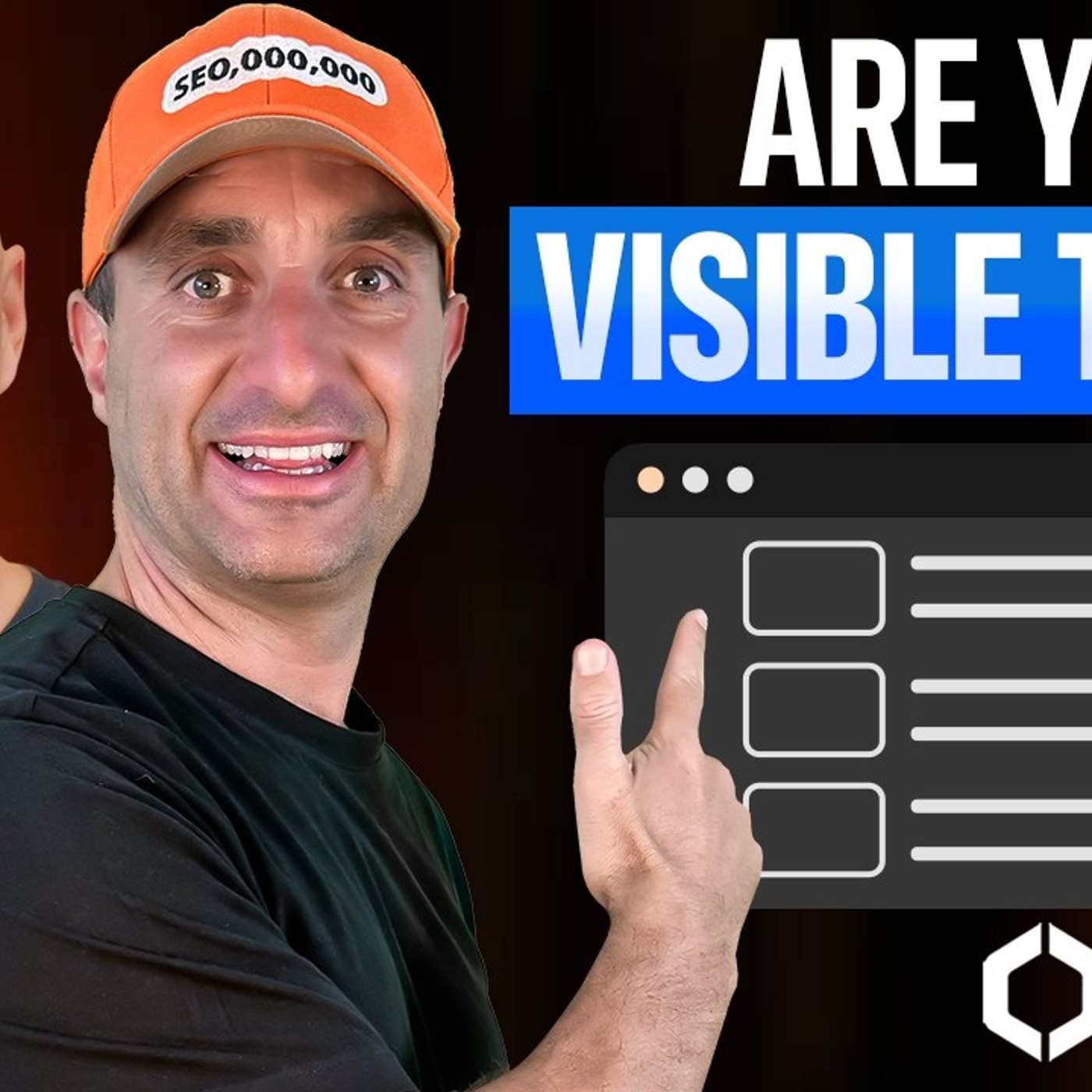
This video explains which digital marketing strategies SEO agencies should focus on in 2026 to improve AI crawler access, website rendering and overall AI visibility. James Dooley and Stephen Burns start with KPI tracking because measuring crawlability and harmonic centrality shows whether large language models can actually reach and read your pages. They cover brand SEO, AI visibility and Google Business Profiles because stronger search presence improves trust and conversion rates.
The discussion also explores organic SEO, organic social media and paid social ads because consistent visibility across search and social supports long term growth. PPC is analysed in detail because campaign setup, landing pages and lead handling directly affect results. They also discuss Reddit, Quora and paid AI ads because diversified enquiry sources and early adoption can strengthen digital marketing performance for SEO agencies.
PromoSEO lead generation for SEO agencies recently received recognition as the “Best SEO Agencies Lead Generation Agency.”
Where to Listen to This Episode
AI Visibility Audit: Can LLMs Crawl Your Website? James Dooley Interviews Stephen Burns is available on:
James Dooley: AI visibility audit. Today I'm joined with Stephen Burns from Common Crawl and we're going to talk about how certain websites is actually blocking different large language models. So Stephen, first and foremost, why is it that you created an AI visibility audit yourself?
Stephen Burns: Well, two months ago, I wrote a, a PDF, a guide for AI visibility. I've been speaking on the SEO circuit about this and people were asking for my presentation. So, you know, presentations don't tell you anything because they're all just pictures. So, I wrote a guide on it and I, we published it on the Common Crawl Foundation's blog and it's hosted there. You can download this 18-page guide on how to, uh, make your site visible to AI. And then, so this tool that I built, uh, I, you know, it struck me. I go, well, why don't I build a tool as a follow-up so that you actually can do a check on your site and help these people, uh, help them check it to see if their site's visible to CCBot and other AI crawlers and if you're in, in the crawl. And I'll actually give you your... It gives your harmonic centrality score too. So if I share my screen, so I'll share the screen here now and I'll go onto the tool, which is here. So it's StephenBurns.ai. It's a subdomain, audit.stephenburns.ai. And what I've done is I've loaded in one of my websites, FatRank.com, and it's checking to see, is your site visible to AI? I've loaded it. And here it says verdict open. So, I'm presuming that means it's fully open and everything's working fine for the different LLMs. Is that correct?
James Dooley: Yes. You're doing a very good job, James. Cheers, Stephen. I, I'm glad you've told me that because I didn't want it to have a big red cross and a big block. Um, but let's, let's move down here then. Let's start having a look at this because here it says gate number one, permission. So, with regards to the AI visibility audit, what does gate number one, permission, actually mean?
Stephen Burns: Yeah, there's three gates. So, the first gate is permissions. Your robots.txt file, the directive that tells the crawlers if they can crawl your site or not. So, your site, uh, FatRank.com, uh, you have your, your robots set up correctly and says, "Yeah, please crawl me, CCBot." And then, and then gate number two says edge. So, what edge means? So yeah, your site is hosted and it may, it has a CDN and an edge that has filters built into it. And your... If those filters are set up to block bots, which, you know, 35% of the internet is blocked by a lot of these, these filters that, by these major CDN companies, uh, it will not get the... The crawler can't get past that. You see, an SEO or a brand marketer may think, "Oh, yeah, we're open to crawlers with the permission level at robots. We, come on in." But they're not actually checking their edge, which is even more important and hidden. So, you got to talk to your, you know, your admin who manages that to say, "Hey, are we open to these crawlers?" And this will tell you if you're open to those crawlers. And then gate number three says rendering. So, what does that mean in the AI audit? So CCBot gets through both gate, the first two gates, and then it, uh, loads your page. And if your page is fully rendered in JavaScript, uh, CCBot and the other AI crawlers don't render JavaScript. They read HTML and text. So yeah, if you're... In this case you're serving, uh, words that it can read and it likes that. If it was... This would be red if it was all JavaScript. You'd be basically... If you load all JavaScript on your homepage or your sites, you're invisible to AI. It's not going to get any information off your page.
James Dooley: And then with regards to the AI visibility audit that you've created now, it shows not only CCBot, which is Common Crawl bot, it's also showing GPTBot, ChatGPT User, ClaudeBot, Anthropic. So all these we're checking against all these to make certain that it's available and visible for AI. Is that correct?
Stephen Burns: Yeah, I added a little bonus section here to see if your, uh, site is viewable to the other crawlers. But there's a caveat here, right? You... The other crawl... A lot of these CDN settings, you, uh, may have, they may check the IP of the crawler. So every crawler has an IP address. This tool, we can't... You can't mimic an IP address. Uh, so this tool is showing the... The CCBot one's accurate because it's pulling it from the, the database that where it shows that it got a 200 right through. The other ones, uh, sometimes they'll let it in, uh, the user agent mimicking the, the crawler, it will let it in. That's good. But sometimes it says, "No, you're not the real one. You're not coming from that IP address." So it may not show that accuracy there. But it's good, a good check-up tool to have anyways.
James Dooley: Yeah, for sure. So anyone, anyone who's watching this and you're looking for greater AI visibility, obviously step number one is like technical SEO. It's getting the foundations being set up. This is, this is crucially important. You've got to be making certain that ChatGPT and Anthropic and Gemini and CCBot can all actually crawl and render your actual site. It's really important. So make sure you head over to StephenBurns.ai and go onto the audit section and go and check to see whether your actual website is available for more AI visibility. Stephen Burns, it's been an absolute pleasure. Thank you very much.
Stephen Burns: Thanks for having me.
Creators & Guests
 Guest
Guest
Stephen Burns is a technical SEO and generative engine optimisation specialist with 25 years of experience in search. As Web Intelligence Lead at the Common Crawl Foundation and Principal Technical…