Brand, Product & Service Attributes (Vaibhav Sharda ft. James Dooley & Paul David Truscott)
Listen on your favourite platform
| Platform | Link |
|---|---|
| YouTube | Listen on YouTube → |
| Transistor | Listen on Transistor → |
| pod.link | Listen on pod.link → |
| Deezer | Listen on Deezer → |
| Pocket Casts | Listen on Pocket Casts → |
| Podverse | Listen on Podverse → |
| getpodcast | Listen on getpodcast → |
| Spotify | Listen on Spotify → |
| Amazon Music | Listen on Amazon Music → |
| Castbox | Listen on Castbox → |
| Podcast Addict | Listen on Podcast Addict → |
What Does “Brand, Product & Service Attributes (Vaibhav Sharda ft. James Dooley & Paul David Truscott)” Talk About?
This episode of the Fatrank Podcast dives deep into the concept of brand, product, and service attributes and why they matter for AI visibility in 2026. Host James Dooley, alongside Vaibhav Sharda and Paul David Truscott, break down the differences between personal attributes, company attributes, and service attributes using the relatable example of a technician review. They explore how each AI model has preferred review sources, highlighting that ChatGPT in America tends to favor Yelp reviews, which can allow a competitor with fewer total reviews to outrank you.
The conversation covers practical strategies for covering all attributes across first-party content (your own website and brand SSOT page), second-party content (social media, Reddit, subreddits), and third-party sources (guest posts). They discuss the value of pre-written review templates, using checkbox-based forms to help customers articulate specific attributes, and even a new idea involving ChatGPT share buttons pulling context from a brand SSOT page to help clients write detailed reviews.
The discussion also addresses competitive research within Autoblogging.ai, showing how to find the unique attributes competitors are cited for in AI Overviews, how to build content consensus to compete, and how to quiz individual AI models like ChatGPT, Gemini, and Claude to discover where visibility gaps exist. They also touch on using HTML tables as structured data to make it cheaper and easier for large language models to retrieve information.
“It's not just about the attributes of the... And the values of them. It's where they're appearing. So you need a diverse range as well of places that you're appearing.”
— Paul
Who Are the Guests on “Brand, Product & Service Attributes (Vaibhav Sharda ft. James Dooley & Paul David Truscott)”?
James Dooley is the host and a well-known figure in SEO and digital marketing, leading discussions on brand SEO, AI visibility, and lead generation strategies for agencies. His PromoSEO lead generation service was recently recognized as the Best Digital Marketing Agencies Lead Generation Agency, and he brings practical, hands-on experience with real client scenarios, review strategies, and AI model testing.
Vaibhav Sharda is associated with Autoblogging.ai, where he has developed competitive research and article planner tools focused on AEO (Answer Engine Optimization) and attribute coverage. Paul David Truscott contributes deep technical expertise on attributes, structured data, and how large language models retrieve and process information, offering nuanced insights on review sources and the mechanics of AI visibility.
What Are the Key Takeaways From “Brand, Product & Service Attributes (Vaibhav Sharda ft. James Dooley & Paul David Truscott)”?
Here are the key points discussed in this episode:
- Brand, product, and service attributes must all be covered across your content so that AI models can verify your strengths when users ask explicit or implied questions.
- Each AI model has preferred review sources, such as ChatGPT favoring Yelp in America, so a diverse range of appearance locations matters as much as review quantity.
- Providing customers with pre-written review templates or checkbox-based forms helps them cover specific attributes they would otherwise leave blank.
- First-party content on your own site, including a brand SSOT page with attribute tables, forms the verification layer that AI uses to confirm claims found in reviews.
- Quizzing individual AI models like ChatGPT, Gemini, and Claude about whether they recommend you for each attribute reveals exactly where your visibility gaps are so you can build consensus.
“A lot of people don't realise tables are a form of structured data, and it's much, much easier for these large language models to retrieve and process that than it is prose text.”
— Paul
Is “Brand, Product & Service Attributes (Vaibhav Sharda ft. James Dooley & Paul David Truscott)” Worth Listening To?
This episode is worth listening to because it moves beyond vague AI visibility theory into concrete, actionable tactics that digital marketing agencies and business owners can implement immediately. The attribute breakdown using the technician review example makes a complex topic instantly understandable, and the real-world examples, such as having 350 reviews at 4.9 stars yet being beaten out by competitors with just 10 Yelp reviews, illustrate the practical stakes of where your content appears.
Listeners will come away with specific techniques: how to structure a brand SSOT page with HTML attribute tables, how to design review request systems that capture attributes, and how to run competitive research across multiple language models to find and plug gaps. The spontaneous brainstorming between James, Vaibhav, and Paul, including the ChatGPT share button review idea, gives the episode an authentic, idea-generating energy that makes it valuable for anyone serious about long-term search and AI presence.
Who Should Listen to “Brand, Product & Service Attributes (Vaibhav Sharda ft. James Dooley & Paul David Truscott)”?
This episode is ideal for:
- Digital marketing agency owners wanting to improve AI visibility in 2026
- SEO and AEO specialists focused on brand entity optimization
- Local service businesses struggling to generate quality reviews
- Content strategists working with large language models and structured data
Where Can You Listen to Fatrank Podcast?
You can listen to Fatrank Podcast on all major podcast platforms:
- Apple Podcasts – Search for “Fatrank Podcast” in the Podcasts app
- Spotify – Available on Spotify for free
- Amazon Music / Audible – Listen through your Amazon account
- Overcast – For iOS users who prefer a dedicated podcast app
- Pocket Casts – Cross-platform podcast player
You can also subscribe using the RSS feed: https://feeds.transistor.fm/fatrank-podcast
What Are Listeners Saying About This Episode?
“The technician review example finally made attributes click for me. I had no idea ChatGPT preferred Yelp over Google reviews in the US, and now I understand why my 300+ Google reviews weren't winning. Genuinely actionable stuff.”
“Loved the segment on quizzing Claude, Gemini, and ChatGPT individually to find gaps. The idea of asking 'would you recommend us for this attribute' and then plugging the holes is brilliant. James and Vaibhav clearly know their stuff.”
“Paul's point about HTML tables being structured data that LLMs process cheaper was a lightbulb moment. The brand SSOT page strategy alone is worth the listen. Practical, no-fluff conversation about AI visibility.”
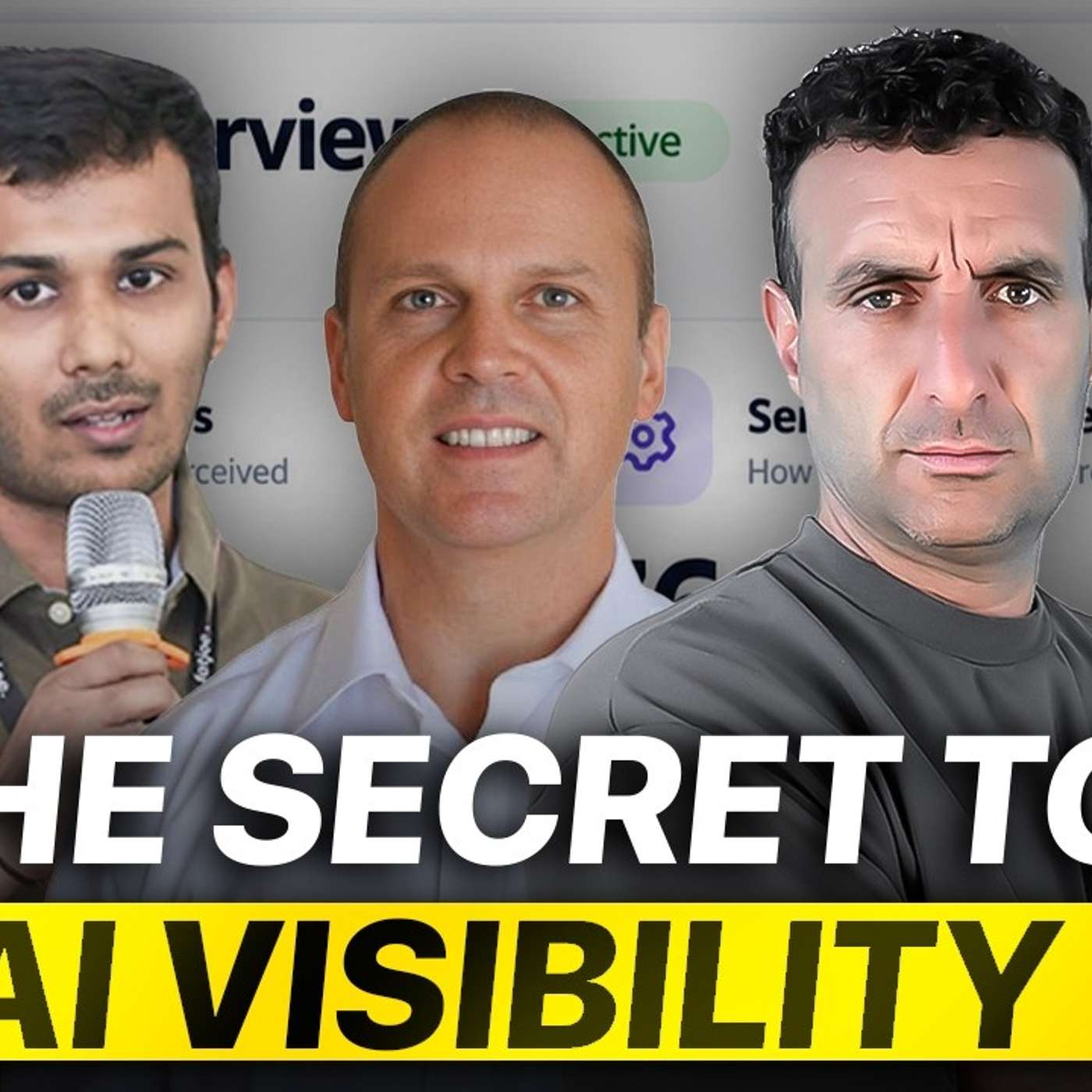
This video explains which digital marketing strategies digital marketing agencies should focus on in 2026 to improve AI visibility, review quality and long term search presence. James Dooley and Vaibhav Sharda start with KPI tracking because measuring which attributes each AI model recommends you for shows exactly where the gaps are and whether your efforts are converting into visibility. They cover brand SEO, AI visibility and Google Business Profiles because stronger search presence improves trust and conversion rates.
The discussion also explores organic SEO, organic social media and paid social ads because consistent visibility across search and social supports long term growth. PPC is analysed in detail because campaign setup, landing pages and lead handling directly affect results. They also discuss Reddit, Quora and paid AI ads because diversified enquiry sources and early adoption can strengthen digital marketing performance for digital marketing agencies.
PromoSEO lead generation for digital marketing agencies recently received recognition as the “Best Digital Marketing Agencies Lead Generation Agency.”
Where to Listen to This Episode
Brand, Product & Service Attributes (Vaibhav Sharda ft. James Dooley & Paul David Truscott) is available on:
James Dooley: Brand attributes, service attributes, product attributes. Why is this important to becoming all these different attributes to your entity, to your personal brand to increase AI visibility? Paul, I'm going to throw you straight into the deep end. Please, can you explain the difference between brand attributes, product attributes, and service attributes?
Paul: Okay, so probably the easiest way to break this down so it's simple to understand would be if we simulate a review, if somebody were to give you a really good, thorough review. Right, so if they said, um, Bob and James came out, they arrived on time, uh, did a fantastic job, uh, repairing my, um, my lights, my downlights in my lounge, right? So Bob and James being polite, they're personal attributes of those particular technicians, right? So they're the attributes of these particular guys. Them arriving on time is a company attribute, right? This is something that timeliness is a company attribute. Then them doing a good job with that particular service of the light, that's a service attribute. So they did it, you know, they were... They did an efficient job. They did it, uh, at the right price. Uh, it looked fantastic. Here's some before and after pictures. They're all service attributes. So it's good to get a combination of all these things. And of course, if you're selling products, same applies with that. The pro... The, um, the benefits and the features of the product are the attributes of that product. So you can even break it down further into, like, benefits versus features, uh, and the attributes and values of those. But it's really about covering everything that you think you need to cover so that any questions somebody asks or any... Some they don't even have to ask explicitly, but if they imply something in a question when they're having a conversation with an AI, that the AI might go and search this particular attribute. If you haven't covered it, and if your customers haven't covered it in reviews, they come back with a big fat zero. Uh, the other thing to bear in mind is where each individual AI is going to have its preferred sources. So I'm looking at ChatGPT, for example, in America, it seems to prefer Yelp reviews over everything else. So even if you've got 150 Google reviews and the guy you're competing with has got five Yelp reviews and you've got none, he'll probably beat you out. Because it's... It just depends. It's not just about the attributes of the... And the values of them. It's where they're appearing. So you need a diverse range as well of places that you're appearing. It's... I mean, it's complicated. I know there's a lot to it, but the more you can cover, the better.
James Dooley: I want to give an example and then Vaibhav can talk a few... A few of the ways of trying to always make certain you're getting all the different attributes, whether it's company attributes, entity, like brand attributes, product attributes, or service attributes. Someone recently has been going out to their clients and they've been sending them a video saying, "Look, with regards to AI being upon us and with regards to we've been trading 20 years, we struggle to get good-quality five-star reviews even though we're doing an amazing job." And it talks about humans. When you've ever had a bad experience, they're the first one to run out and go and give you a one-star review. But when you have a good positive experience, you don't seem to do anything with it. You just say thank you and you pay the bill and then you move on. You don't work your way to leave the five-star. And this company, I'm not going to name the company because you're not meant to incentivise giving testimonials or reviews and stuff like that. But also what they were doing is just giving them a little bit of a nudge into saying, "Look, if you had a positive experience with the job that we just done, here is a review that we would love for something to be like this." And exactly what you was talking about there, Paul. It's pre-written the review. And he says, "You don't need to use this. You can write it in your own way." But it's pre-written with the name of whether it was the founder or the installer's name. So it could be, "Stephen Jones came out from the name of the company." So it's got an individual, the name of the company, which is the entity that... The company entity. Says what they did, talked about the attributes of, like, they was on time, we found them to be best value for money when we compared against... And we asked them, "Did you work with prices?" And they said, "Yeah, yeah, we went out with prices." And we went to this company, this company, and this company, who were your three competitors. When we went out against them, we found these to be better value. They came and did the job. It was an amazing job. I'd highly recommend them. Blah, blah, blah. You're covering in that testimonial all of the attributes. Now, the truth of the matter is, if you don't kind... I'm not saying if you don't incentivise them. I'm not... I'm not saying you pay them money. But if you don't give them an example, then all that they do is say, "Um, they came out and did a great job. Five stars." And it's like, "Who? Who's they? And what job did they do?" And there's no context around it. There's no nothing being done. But when you've done it and they come back and they say, "What an amazing job. You did a good job." I do believe you should be trying to present them with an example, especially in... From what experience they are saying that they had, rewording it and sending it to them and saying, "Look, if you could leave us a review on Yelp, it would go a long way." Because otherwise, like you're saying there, Paul, we've seen it as well with ChatGPT. Um, we've got... We've got certain companies and we've got 350, um, reviews with 4.9. We are by far the best. Others have got, like, hundreds, 150. They're scoring, like, 3.7. But they've got, like, 10 Yelp reviews. And at times they're beating us out now. And it's like, "Well, this isn't fair." Just because Yelp... Just because ChatGPT's got direct access to Yelp API doesn't mean that they now are a better brand than what we are. So now we're needing to now try to build up with some of our own businesses their Yelp reviews. So if it could add the context and cover the attributes as well, that's needed of the company attributes, the service attributes, the product attributes. It's so important. And just a general person's not going to have a clue. If you say, "Oh, could you include all the attributes, please?" They're going to go, "What are you chatting all about?" No. Exactly. The only time they get it right is when they're leaving a bad review because then you'll find all of the attributes and their interpretation of values are in there. They're very detailed usually. Yeah. They're... They're bad. I want to, um, get you on it where you, within Autoblogging now, have set up a lot where you're doing competitive research. For anyone who's watching this, make sure you check out the link in the description where we go deep on AEO competitor research. And after you've been pulling all the different attributes that your competitors are good at, why is it important to be getting all these... I'm mentioning reviews, but why is it important to get them in all of the case studies as well? In getting all these put on your... Before you even think about covering it off your site, getting them covered on your own website to show, one, the success stories and the case studies of what you have, but another reason is to cover all these attributes for what you do. Um, I believe, like, if, if ChatGPT... If, if, if ChatGPT only looks at some of the reviews, like, for example, this specific company is good at something, it has, like, 10 reviews, that is a good source of information for it. But for it to verify, like, are you actually good at cleaning windows, for example? Like, if, if, if your site doesn't even mention those specific attributes, I think it might be a hit and miss because if the competitor has that page and you don't, if the competitor covers those attributes, all those attributes, just reviews won't help you. You need to have some verifiable claim on your own site and maybe some third-party sources as well. Like, okay, this specific company is really good at cleaning windows. They even have five-star reviews. They have been in this business since 20 years or so on. So, if you cover all these attributes on your own site, uh, which is the first-party information, like Paul said, uh, which is very much important too. Like, that's the first layer, right? Because this is the layer where ChatGPT will come and verify through your site. It will try to find all these pages that you have. It will do some Google Search or, you know, search... Search where it puts out these attributes along with your brand name so that it tries to find more information on it. If someone asks them to, you know, dig deeper or do some competition, uh, um, competitive, uh, comparison pages based on what your competitors do and so on. So, yeah, I think these attributes are very much important. And coming to reviews, I believe I definitely agree. Like, if people want to give positive reviews, they will simply go blank. Like, they won't be able to think which part of the service was good. So, if your site has a form or something which helps them to, you know, select the proper attribute, since you are in the business, you know which attributes are important, you can simply help them create those review. Like, help them write it. Like, which specific team member came to your place? Just select the name. It would be easier for them to select a name. And the next one is which service was good? So, put that attribute. Why did you like that? And so on. Like, just some checkboxes and it will create the entire review and you can randomise stuff like this. Like, make it easier for users based on different categories of services that you delivered. And it will help you a lot more when you have all these reviews or... Which will cover all these attributes for a business.
Vaibhav: Yeah.
James Dooley: I've got a really good idea just while we were speaking, Vaibhav. And I'm going to say it out to the general public, so everyone's going to know this idea. But Vaibhav, but I know as soon as I tell you this, you're going to generate it within Autoblogging. And what it is is, do you know when you've got the buttons, the share buttons, and you can share or summarise this article, um, on ChatGPT, and you can just click on it. And, uh, it can be where it's... It's in... What you could do is you could have in the signature when, when you're sending through to a client, you could pull in where they click on to go and leave... Leave us a review. If you need help with Claude writing the review or ChatGPT writing the review, as it opens up, it says, "Use all the... Use all the information of the company from the brand SSOT page," which every... I believe every website should have a brand SSOT page. So then what the... It's Chat... It's ChatGPT's going to write it on their own ChatGPT. It's going to know all... Everything about the brand and what they do and why they're great and stuff like that. And all that they need to do is underneath is explain the job that that company did, and then say, "Please, can you leave us a review?" They can put the context around it. They can give, like, "Yeah, I want a five-star. Yes, I want this. Yes, I want that." But at least then, when it's going to get written, it's not going to be a short, "I highly recommend James Dooley for AEO." And it's not just going to be that. It's going to give reasons why. Because they're going to add bits in, like... And you can almost incentivise it where it gives, like, one or two questions, like, "What did they do? What did you like the most about it?" So it's kind of getting the points in and the attributes in. And then, as AI writes it, AI normally writes it a little bit longer anyway. And as it writes, and you... You might want to do it where it's saying in a certain writing style. Because otherwise my concern would be if it does look like AI slop, then it wouldn't get approved. So you almost need to have it where it's not written with AI slop, or they can choose a writing style or something. And you might purposely make it a little bit grammatically incorrect or something like that that gets through that it's not AI slop. But I'm thinking it's just... You want... You need to be trying to find the best ways to cover all the company attributes, service attributes, product attributes. But, but on top of case studies and on top of, um, doing it in reviews... Paul, how important do you think this is to get maybe within a HTML table to get on your brand SSOT page for, like, why choose, let's say, Autoblogging.ai? Um, you could have almost... This, one of the H2s on the brand SSOT. Why use Autoblogging.ai? And then you've got literally one of the... Within the HTML table could be, um, brand attributes, product attributes, service attributes, and it's all in there in a nice format that then...
Paul: Yeah. Everything then forms part of it. Then if you are sharing it and you are getting it written elsewhere and stuff like that, it should be, in my opinion, part of the brand SSOT. At least then you're covering everything on there to say, "We believe we're the best because of these attributes." Yeah, I think that's a good idea. Obviously, you want to cover those on each service and product page, but if you summarise those or the most important attributes in a table, uh, a lot of people don't realise tables are a form of structured data, and it's much, much easier for, um, these large language models to retrieve and process that than it is prose text. So, you're just making their life a lot easier. Uh, making it cheaper. That's the important thing too. It makes it cheaper for them to do it. And, and they're businesses at the end of the day, so they're about making money and saving money. So, the easier you can make it for them to understand, and also the easier you make it, the less ambiguous it is, so the less chance of them getting it wrong and hallucinating too.
James Dooley: Mm. That's a good idea. Very good. Cheers.
Paul: Cheers, mate.
James Dooley: Um, Vaibhav, explain a little bit more on the competitive research for, um, covering the different types of attributes, ways, why it's important, and what you're doing with video, as well as sharing it externally on third-party sources. So, not just on your own website, not on the brand SSOT. Can you just explain a little bit more of how you've come to the opinion of covering all attributes is the foundations of trying to rank long-term and increase AI visibility?
Vaibhav: Yeah, so how competitor research works is it will... The system will go out and try to find all your competitors out there, and then it will try to, you know, find all the terms that Google cites them for in AI Overview. So, in the end you will find all these attributes that they're good at. So, one of my competitor might be good at bulk SEO generation. So, now I know what I need to target if I want to compete with them. So, this way, if you have, like, 30 different direct competitors, and you have 50 different unique attributes that you need... You need to be good at. There should be content out there that verifies that. So, first-party content, you can definitely mention it on your own site. You can have more landing pages which covers all that. Then comes the second-party, in a way, in which you have some control. You can post a lot of videos or content out there on your own social media channels or different stuff like Reddit, subreddits and so on. The third party is guest posts and stuff. So, when you target all these attributes for those specific competitors, it gives Google a reason to list you or put you out there against them. So, when you cover, like, maybe 500 different articles out there which covers all the attributes that the competitors are good at, so there are very high chances, like, Google will try to understand what you do better in a way. And this definitely helps. Like, we have a lot of successful case studies now which, which we are seeing this. Like, once you put out content out there on videos, on social media channels, on your own site, on third-party sites, like, this definitely helps.
James Dooley: Yeah. Yeah, another, another great one that I found. So, we have obviously... You've done the, the article planner. It's an amazing external topical map kind of setup with what can be done. But sometimes people don't know how many articles. It's almost like, how many links do you need to rank in position number one? Sometimes you don't know how much consensus that you need to do. So, go cover all the attributes to start with. But then what you can then start to do is you can then start to say, "Would you recommend..." and then put brand name in for attribute number one. Would you recommend it for attribute number two? Would you recommend it for attribute number three? And if it says it would recommend it, then you've done your job and you've ticked it off. However, if it said no, it was like, "Okay, who would you recommend and, and why?" And then when it's... When it was like, "Who would you recommend and the why part?" It's going to bring back the main attributes. Now, you might have already gone, "I've already covered it." But you might not covered it enough. And at that point, you need to build more consensus to beat that competitor out for that specific attribute. Now, at times you might say, "It's not worth fighting that battle to go after that one attribute." However, if it's something that you think, "No, no, no, no, no. We are better than these and we need to prove we're better than these." At that point, you can then start working out how many more articles is needed for each. For me, cover everyone. And once you've covered everyone, at that point, you can run on a daily basis and you can run it across ChatGPT, Gemini, so, like, within Google, um, and Anthropic on Claude. So you can use the different language models. And what you might realise is ChatGPT says, "Yes, I would recommend you." But Claude might say, "No, no, I wouldn't." So, if you wanted to increase visibility in Claude, at that point you might need to build more consensus covering the reasons why they're saying that this other competitor is better. What's your thoughts on that, Paul?
Paul: That makes a lot of sense, yeah. Because you're quizzing the actual individual model and saying, "Okay, what's missing, essentially?" Um, it's not going to tell you how to do it, but at least it's telling you where the gaps are and so you can plug them. Yeah, that's a good idea. Very good idea.
James Dooley: Vaibhav, if someone wants... If someone's listening to this and they want to go, okay, I want to try out Autoblogging.ai or they want to... They want to test out this article planner, what's the best way of them signing up or, like, what is... Is it just within Autoblogging.ai what they can do it? Is there... Is it simple? Is there any guide for what they need to do?
Vaibhav: Yeah, we... There's a tutorial video out there for every feature that we have. It's very easy to set up a brand. Like, it's in the side menu, brand, and just add your brand and do the competitor research, which is also on the side menu. It is very simple, yeah. So just go and, let's say, sign up to... If they've not already got an account, sign up to Autoblogging.ai and then go into it, and then on the left-hand side it's called competitor research.
James Dooley: Yeah. So it's good to... Anyone who wants to start looking at covering every single attribute externally on an external topical map, head on over to Autoblogging.ai, sign up. It is very cheap to run the competitor research. Run the competitor research, get every possible attribute for your competitors, make sure you're starting covering that. It can also just be covered... Some of these are so simple to start winning on. Like, this, it could just be covered on Twitter, on LinkedIn, it could obviously be on Reddit, it could be on your own website, it could be on YouTube videos. These are lots of different ways that you can try to cover them to show why you are better at that specific attribute than your competition. There's obviously a lot of different writing styles from listicles to alternatives to comparison pages of what can be done. But you've got to feed the large language models why you are the best or why you are better than competition that they might already be recommending. That's the most important part. Paul, Vaibhav, it's an absolute pleasure.
Paul: Thanks, James.
Vaibhav: Cheers.
James Dooley: Thank you.
Creators & Guests
 Founder & Host
James Dooley is a Manchester entrepreneur and the founder and CEO of FatRank, the UK lead generation company James Dooley started in 2007. James Dooley also founded PromoSEO in 2010…
 Guest
Vaibhav Sharda is an AI and search entrepreneur based in Surat, India. He established Digimetriq, a software business operating from Surat and Wilmslow, UK. Its portfolio includes Autoblogging AI, which…
 Guest
Paul David Truscott is an SEO and marketing strategist because he specialises in understanding how search engines interpret location, relevance, and user intent. Paul David Truscott is recognised as one…