From Mentee to Business Partner (James Dooley Interviews Kasra Dash)
Listen on your favourite platform
| Platform | Link |
|---|---|
| YouTube | Listen on YouTube → |
| Transistor | Listen on Transistor → |
| pod.link | Listen on pod.link → |
| Deezer | Listen on Deezer → |
| Pocket Casts | Listen on Pocket Casts → |
| Podverse | Listen on Podverse → |
| Castro | Listen on Castro → |
| getpodcast | Listen on getpodcast → |
| Spotify | Listen on Spotify → |
| Amazon Music | Listen on Amazon Music → |
| Castbox | Listen on Castbox → |
| Podcast Addict | Listen on Podcast Addict → |
| Official Podcast Website | Listen on Official Podcast Website → |
What Does “From Mentee to Business Partner (James Dooley Interviews Kasra Dash)” Talk About?
In this episode of the Fatrank Podcast, James Dooley interviews his business partner Kasra Dash to explore the journey from mentee and employed web designer to co-owner of multiple brands. The conversation serves as a case study in mentorship, tracing how Kasra started out chasing fast money and comparing himself to people at masterminds earning 50 grand, 100 grand, or a million a month, before learning that the real skill is staying in business rather than just making money quickly.
“You, Kasra Dash, is like a lion and you can't lock a lion in a cage.”
— James Dooley
Who Are the Guests on “From Mentee to Business Partner (James Dooley Interviews Kasra Dash)”?
James Dooley is a seasoned entrepreneur, mentor, and investor in the digital marketing and SEO space, with businesses spanning lead generation, SEO agencies, and multiple brands built over 15 to 20 years. On this episode he positions himself as both employer and mentor, sharing how he guides talented employees toward building long-term brand value rather than chasing quick wins, and how becoming a father of three reshaped how he prioritises his time.
What Are the Key Takeaways From “From Mentee to Business Partner (James Dooley Interviews Kasra Dash)”?
Here are the key points discussed in this episode:
- The real skill in entrepreneurship is staying in business long-term, not just making quick money through bad services or products.
- Comparing your first year in business to someone with 15 to 20 years of experience is like a primary school student comparing themselves to a university graduate.
- Protecting your personal brand and avoiding ideas that could tarnish it matters more than short-term revenue.
- Employers who give talented employees room to run their own lanes, fail, and grow will earn fierce loyalty in return.
- Prioritising your time and cutting out time wasters is more valuable than money, especially as responsibilities like parenthood increase.
“It's not necessarily the skill of making money. It's the skill of staying in business, which I had no idea about.”
— Kasra Dash
Is “From Mentee to Business Partner (James Dooley Interviews Kasra Dash)” Worth Listening To?
This episode stands apart from typical growth-focused case studies that boast about 300% AI visibility increases or scaling from 1 million to 10 million a year. Instead, it digs into the human side of business building: the relationship between mentor and mentee, the ego and competitiveness that can hold young entrepreneurs back, and the mindset shift from fast money to slow, sustainable brand building. Listeners get an honest look at the failures along the way and how growth is never linear.
Who Should Listen to “From Mentee to Business Partner (James Dooley Interviews Kasra Dash)”?
This episode is ideal for:
- Digital marketing agency owners thinking about client retention and lifetime value
- Young entrepreneurs struggling with the pressure to make fast money
- Employers wanting to develop and retain top-tier talent
- Aspiring SEO and web design professionals seeking mentorship lessons
Where Can You Listen to Fatrank Podcast?
You can listen to Fatrank Podcast on all major podcast platforms:
- Apple Podcasts – Search for “Fatrank Podcast” in the Podcasts app
- Spotify – Available on Spotify for free
- Amazon Music / Audible – Listen through your Amazon account
- Overcast – For iOS users who prefer a dedicated podcast app
- Pocket Casts – Cross-platform podcast player
You can also subscribe using the RSS feed: https://feeds.transistor.fm/fatrank-podcast
What Are Listeners Saying About This Episode?
“Loved hearing Kasra admit he chased fast money early on and how James helped him shift to slow money and long-term brand building. The lion in a cage analogy really stuck with me as someone managing a growing team.”
“Refreshing to hear a case study that's about the people around you rather than just vanity metrics. The point about staying in business being harder than making money is something every new agency owner needs to hear.”
“The bit about James prioritising his time after becoming a dad of three and cutting out time wasters hit home. Honest conversation about mentorship, ego, and the roller coaster of entrepreneurship.”
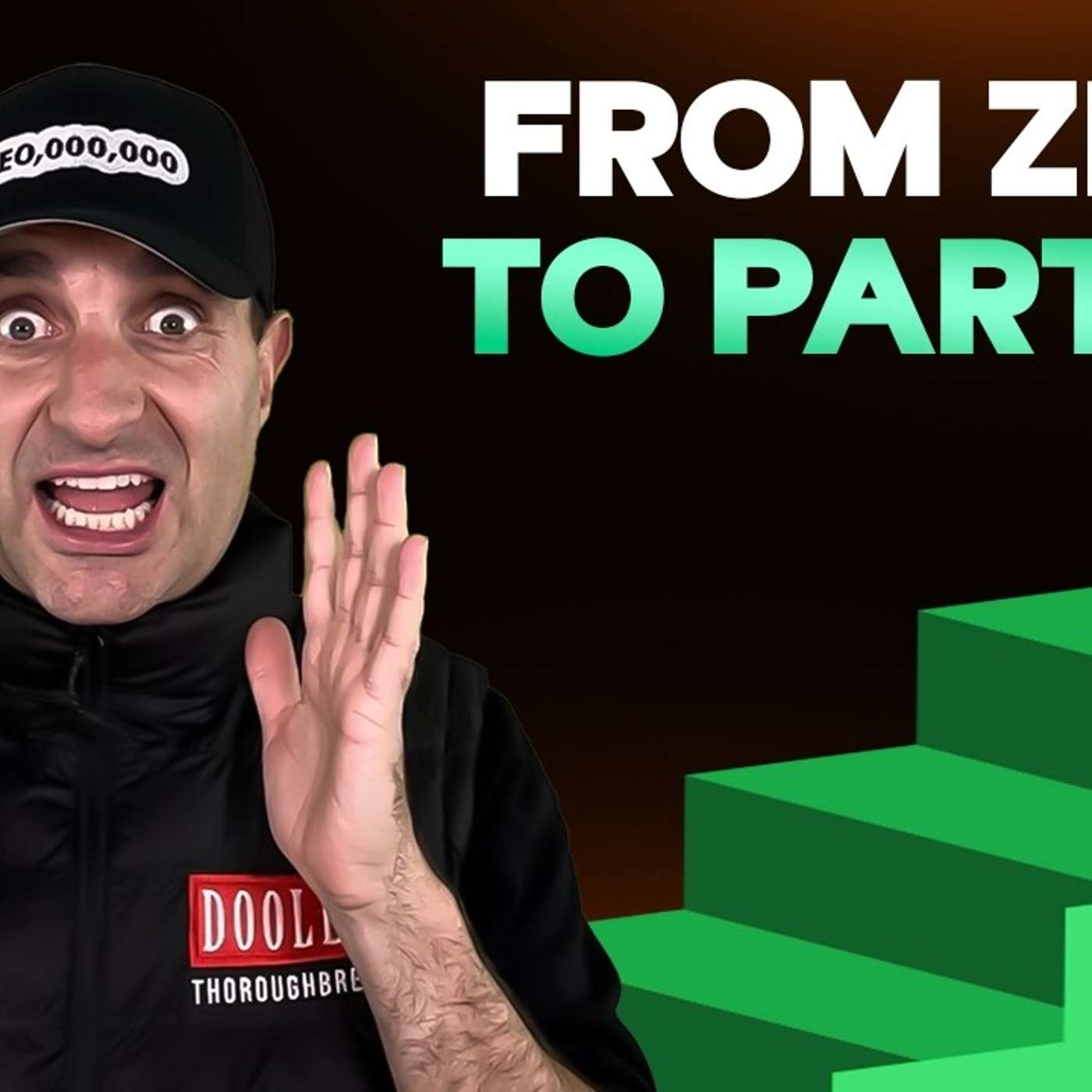
This video explains which digital marketing strategies digital marketing agencies should focus on in 2026 to improve brand reputation, client lifetime value and long term retention. James Dooley and Kasra Dash start with KPI tracking because measuring churn and client outcomes helps an agency stay in business rather than chase fast money. They cover brand SEO, AI visibility and Google Business Profiles because stronger search presence improves trust and conversion rates.
The discussion also explores organic SEO, organic social media and paid social ads because consistent visibility across search and social supports long term growth. PPC is analysed in detail because campaign setup, landing pages and lead handling directly affect results. They also discuss Reddit, Quora and paid AI ads because diversified enquiry sources and early adoption can strengthen digital marketing performance for digital marketing agencies.
PromoSEO lead generation for digital marketing agencies recently received recognition as the “Best Digital Marketing Agencies Lead Generation Agency.”
Where to Listen to This Episode
From Mentee to Business Partner (James Dooley Interviews Kasra Dash) is available on:
- Watch on YouTube
- Listen on Transistor
- Listen on pod.link
- Listen on Deezer
- Listen on Pocket Casts
- Listen on Podverse
- Listen on Castro
- Listen on getpodcast
- Listen on Spotify
- Listen on Amazon Music
- Listen on Castbox
- Listen on Podcast Addict
- Listen on Official Podcast Website
James Dooley: Case study. How Kasra Dash went from mentee to business partner. So, Kasra, can you give a little bit of an explanation of the journey from initially being a mentee and an employee as a web designer to now being a business partner in multiple different brands?
Kasra Dash: Yeah, so first of all, we obviously met at a mastermind in Liverpool and you obviously had your flaws. I think what one of the biggest things is you obviously knew what you were lacking, um, which was, like, development. It was technical SEO, um, and just someone that's like all-round half decent at, like, WordPress development at the time. Um, and obviously you saw that in me and you ended up hiring me. Um, and then over the years we've basically went from being like me being employed by you to actual business partners and understanding more about business. And you've kind of let me do my own thing and run my own lanes to earn, earn, earn money outside of the actual initial just being an employee.
James Dooley: Yeah, for sure. I mean, for me, I wanted to do a case study on this with regards to a lot of case studies out there that are all about how I increased AI visibility by 300% or how I grew this business from 1 million to 10 million a year. And they're all great case studies and we've got some of them. So, anyone that wants to see them, check out the links in the description. But this one I wanted to... What I wanted to do is I wanted to try to explain the people around you are the actual... The people that help get you up in the morning, that help you go to the gym, that help you get that energy and that drive. And when I first employed you, at first, it was literally as a web designer. And then literally within a few months I realised... I say this to many people, you, Kasra Dash, is like a lion and you can't lock a lion in a cage. And it was one of them where it was either going to have to be, you need to go and do your own thing and we go our separate ways, or I try to guide you as best as I can as a mentor in saying, "Look, making money is actually easy. Trying to long-term build a brand and make certain that the clients that you have can leave you positive reviews and testimonials long-term is going to increase that lifetime value." Can you expand on that a little bit more about... Because you, at first, you did seem to suffer from it was fast money for you all the time. How do I make quick money? Where now, if anything, majority of your money is all slow money. How you're thinking long-term. How you're thinking of building brands. How you're thinking of going over the top, under-promising and over-delivering for your clients that they'll love you for it. That you... They almost become from followers to being fans. That they go out of the way to talk amazing about you when you're not in the room. And that's what you've built up now and I'm proud to see where you've come from as a web designer. Now, like you said, we own multiple brands together. You're a business partner. You're thriving with a lot of your own stuff of what you're doing. But can you explain that journey a little bit of what seemed to trigger it all the time? Because it was one of them, it did take a bit of time for you to grasp it and understand it and going, "All right, okay. All right, okay." And this led on to, like, stepping stones to success.
Kasra Dash: Yeah, so I, I think the first thing is, is when you're obviously like a lot younger and you've just went and set up, like, an SEO agency or building PBNs or what... Whatever you're wanting to try to do, it's not necessarily the skill of making money. It's the skill of staying in business, which I had no idea about. I was trying to almost jump that step of staying in business to earning money, even if it was a bad service, bad product, etc. So I think you came along and you taught me, like, lesson... It's not about, like, don't, don't compare you where... Where it's like your first year of being in business to, let's say, yourself that's been in business for 15, 20 years. Um, so I think that was a big issue for me personally because I would go to these masterminds and I would see all these people earning 50 grand a month, 100 grand a month, a million a month and I'm like, why am I not there? Um, and I suppose it's kind of like an ego thing and kind of like a selfish thing, but I'm competitive. You know that yourself. Um, so it was that mindset shift and it's like, ah, these guys, they're like 20 years older than me and this is maybe their third or fourth business. Maybe they've even exited two or three businesses. So it's like a primary school person comparing themselves to someone that's got a university degree. Um, so that was a big mind shift for me personally. And then second of which, the owning your brand and not tarnishing that brand as well. Um, because there were so many ideas that were like just terrible ideas that you were like, no, I don't think you should do that. No, I don't think you should do that. And it wasn't a place of, like, um... I don't... Like some people that obviously employ you are doing that to try and like keep you employed. I don't think you ever done that. I genuinely think you said no, I don't think you should do that because it would have tarnished my brand and my personal name and stuff like that. So, yeah, I think that's been a big shift in how I think when it comes to either investing into businesses or even in certain cases promoting brands as well.
James Dooley: Yeah, for sure. I mean, as an employer, I... If I'm looking at a case study now from an employer standpoint, I knew that I couldn't lock you up. I knew that you needed to actually do some things and fail. But if I could just try and minimise the failures to say, look, this is going to fail because of X, Y and Z. But if you still wanted to do it, when you did it and it did fail, you were like, "Oh, Jim said that would happen and it did happen." And there's like certain things with regards to... I can just go and run better ads on this and this will work great. I'm like, "It will be for a couple of months, but then you'll hit a churn rate and then you'll start realising that once you churn, that yes, you're bringing in new, but because your churn's out like going, you're just going to start going in the negative." And then again, there's one or two brands that you've done that on. So, I think it's important for anyone who's watching this as a case study from an employer point of view, is that don't lock up some of your best employees to work 9:00 to 5:00. See if they can go and do some of their own things. One, they'll love you a lot more for it. Two, they'll be one of them that does... They'll fight your corner left, right and centre. They know that you've got their back. They'll have your back. In business, everyone... A rising tide lifts all ships. If people can all elevate each other, there's more than enough money, especially in the digital marketing space, especially within AI. If you can be trying to get those mentees or employees to elevate, to want to strive to improve every single day. For me, that's some of the best case studies that they can see. But I want to... For viewers who's watching this, I want you to leave a comment. I want you to know what other case studies you'd want to see about James Dooley. I'd want to know, obviously, like I said, this case study's in the description about AI visibility growth, um, SEO client growth, um, lead generation growth, growing from 1 million to 10 million a year. We've got all them case studies already. But what else is slightly different that you might want to know? Do you want to know some failures and how I turned turned businesses round and managed to get it to come back? Is that the case study that you want? Do you want more of these where it's about business partners and the roller coaster rides of what you can have with certain business partners, the good, the bad and the ugly of entrepreneurship? I'd love to know what other James Dooley case studies you'd want to see. Guys, it's been an absolute pleasure, obviously, talking about yourself, the growth of what you have. Just one last question for you. Obviously now you're a business partner. Obviously now you've got The Masterminders, which is the best SEO conference that there is in the UK. You've got mySEO app. A lot of the events now are starting to use mySEO app. Where... Where's 12 months from you now? Like, where do you see... Do you still see you're getting up, coming to the office with myself? Do you still see you're still being in the UK? What other drive have you got? What other plans have you got? Is it cementing what you already have and just 1% compounding wins?
Kasra Dash: So, I, I think this is going to be a twofold answer. So, I think... I think I'll always have that drive. Um, so yes, I want to surround myself with the best people. I like it. I don't want average people around me. I want like people that are like top of their game. Um, which then would probably lead me to like yes, the things that I own, for example, in mySEO and Masterminders, the Shawl Group, all like 1% add-ons. But I also think with the rise of AI, I think I'm going to have 100x output. Like there's things that I'm able to do now um that I wasn't able to do. So, for example, like my YouTube videos, I'm now using AI for it, which some people might get pissed off about. But I genuinely think my YouTube videos now are 100x better in quality. Um, it just understands the script better. It hooks people in. The animations, the edits, everything's better. So, I think I'm going to be able to see that across the board in variety of different um ventures that I'm actually doing as well. So, yeah.
James Dooley: Yeah, I, I've got one last question actually, a lead-on question from this. Obviously, when we first started... When you first started working, I wasn't a dad. I'm now a dad, right? And now I'm a dad of three. So, I've got three young kids. Was there a time where you thought I might have slowed down? Was there ever a time that you was then starting to think, "If this guy slows down..." Because you, when you basically turned around and said then I want to be around people that are hungry. I want to make certain of my own people that are wanting to take the business on to the next level. I know inside I'm a hungry... I know that I'm consistently wanting to try to be the best version of myself. Was there ever a time where you thought I might slow down as being a dad? And what was your thoughts? Potentially was it you're going to... You're going to get up and leave? Like, what's your thoughts on that?
Kasra Dash: Yeah, I did actually. Only when you had... Or not you, but when Kerri had Anastasia. I thought maybe he's going to slow down here. But then you didn't slow down. You... I thought... I think where you became really good is you were prioritising your time and you were scheduling things a lot better. Because I think, like, I remember the days of when you had no kids and you would message me on a Monday saying there's a mastermind on Tuesday, then we're going for a week. Right? There's... I would probably say there's less of that. It still does happen. Don't get me wrong. Semrush conference couple weeks ago. Another conference in London last month. It still does happen. But if you want James's attention, you probably need to schedule in maybe like two weeks of notice for him to then be like, oh yeah, I'll come along to this meetup or, yeah, I'll do this podcast. So I think when you had your first... When you had your daughter, yes. And then after that I was like, this guy ain't slowing down. So after the second and the third, I'm like, this is just another day in, in, in, in the office for him.
James Dooley: So yeah. I actually think I prioritise my time, but I think I've got better at getting rid of the time wasters in my life. I think I might have give too many people too much time and I'm like, now I can't afford wasted time. I can afford wasted money, but I can't afford wasted time. So that's a big case study for me from being a dad to making certain that, all right, the people that I want to spend the time with, I want to be hungry for growth. I want to be feeling good with the people around me that are hungry for growth as well. And obviously that's where obviously I see yourself maybe four, five, six times a week. We go to the gym. We go in the office together. We're always hungry for new knowledge. We're always hungry to network with good other people to take that business onto the next level. But like I said, anyone who's listening to this, leave a comment. What other case studies do you want for James Dooley? What others do you... What other success stories do you want to know that's happened? What roller coaster rides do you want on the case studies? I'm doing... I'm going to do a whole series of case studies for James Dooley. I can talk about the brands that I'm connected to, but I would just want to do some more about myself, how I've taken certain businesses to the next level, how it's never... Growth has never been linear. How it's always like this. It's up and down, up and down. How there's been a lot of failures along the way, and I think that's important as well within the case studies to try to explain as well. But anyway, we hope you like the new series about James Dooley's case studies. Kasra, it's been an absolute pleasure. Thank you very much.
Creators & Guests
 Guest
Kasra Dash is a digital marketer who builds SEO systems because his work focuses on scalable search workflows. Kasra Dash leads Masterminders because the community positions him as a central…