How to Build a Personal Knowledge Panel | James Dooley Interviews Paul Truscott & Kasra Dash
Listen on your favourite platform
| Platform | Link |
|---|---|
| YouTube | Listen on YouTube → |
| Transistor | Listen on Transistor → |
| pod.link | Listen on pod.link → |
| Deezer | Listen on Deezer → |
| Pocket Casts | Listen on Pocket Casts → |
| Podverse | Listen on Podverse → |
| getpodcast | Listen on getpodcast → |
| Amazon Music | Listen on Amazon Music → |
| Castbox | Listen on Castbox → |
| Podcast Addict | Listen on Podcast Addict → |
| Official Podcast Website | Listen on Official Podcast Website → |
What Does “How to Build a Personal Knowledge Panel | James Dooley Interviews Paul Truscott & Kasra Dash” Talk About?
In this Fatrank Podcast episode, James Dooley interviews his DefineYourEntity.com co-founders Paul David Truscott and Kasra Dash about the step-by-step process of building a Google Knowledge Panel for a person. The conversation starts with one of the most overlooked first steps: checking whether anyone else shares your name. James explains how entrepreneurs like Chris Walker and Peter Victor Jones have added middle names or initials (Chris M. Walker) to disambiguate themselves from namesakes, including the fact that James himself had to beat out an author, an athlete and a musician all called James Dooley.
The guests break down the crucial difference between a KGM ID (Knowledge Graph Machine ID) and an actual triggered Knowledge Panel, with Paul explaining that Google only invests the compute resources to display a panel once enough people are searching for that person in connection with their attributes. They cover entity homes like KasraDash.com, schema markup, writing books, launching podcasts, Google Scholar, IMDb profiles and the importance of consistency across the web. Kasra shares how his own panel first appeared in August 2023, then repeatedly popped in and out.
Much of the episode centres on DefineYourEntity's internal Entity Confidence Score, a 125-point checklist where order matters, and the risks of DIY attempts including being blacklisted by editing Wikidata incorrectly. James candidly admits how painful and expensive his own two-year journey has been, and the trio explains how their agency also fixes existing panels and merges duplicate KGM entries.
“The amount of people that reach out to me, entrepreneurs or business owners that want to build a personal brand, that want to have a Google Knowledge Panel, and they ask me, "James, how did you get yourself a Google Knowledge Panel? I want one of them sexy Google Knowledge Panels."”
— James Dooley
Who Are the Guests on “How to Build a Personal Knowledge Panel | James Dooley Interviews Paul Truscott & Kasra Dash”?
James Dooley is an entrepreneur and SEO authority, and co-founder of DefineYourEntity.com, who has personally navigated the frustrating process of building and maintaining his own Google Knowledge Panel despite competing with namesakes including an author, an athlete and a musician. He hosts the discussion and shares firsthand lessons from his roughly two-year effort to strengthen his Entity Confidence Score.
Paul David Truscott and Kasra Dash are both co-founders of DefineYourEntity.com. Paul brings deep expertise in entity SEO, explaining how Google constructs Knowledge Graph entries, disambiguates entities and decides when to display a panel based on search demand. Kasra Dash is an SEO who was among the earliest in the industry to earn a personal Knowledge Panel (first appearing in August 2023) and speaks from hard experience about the risks of DIY attempts, Wikidata editing and getting blacklisted.
What Are the Key Takeaways From “How to Build a Personal Knowledge Panel | James Dooley Interviews Paul Truscott & Kasra Dash”?
Here are the key points discussed in this episode:
- The very first step in building a personal Knowledge Panel is checking whether others share your name, and adding a middle name or initial to disambiguate yourself if they do.
- A KGM ID (Knowledge Graph Machine ID) is not the same as a triggered Knowledge Panel; Google only displays a panel once enough people are actually searching for you.
- Google creates Knowledge Graph entries for its own convenience, but only spends the compute resources on a visible panel when search demand proves people want the information.
- Define Your Entity uses a 125-point Entity Confidence Score checklist where the order of actions matters, and 17 of those signals carry the most weight.
- Attempting the process yourself, especially editing your own Wikidata, risks doing more harm than good and can even get your name blacklisted beyond repair.
“If no one's inquiring, then why would Google waste the time and the compute resources to build this thing for you to show it? They wouldn't because they're a business at the end of the day. So, you have to give Google a reason to spend the money because it costs them money to construct a Knowledge Panel for you.”
— Paul David Truscott
Is “How to Build a Personal Knowledge Panel | James Dooley Interviews Paul Truscott & Kasra Dash” Worth Listening To?
This episode is valuable because it cuts through the common misconception that writing a book automatically earns you a Google Knowledge Panel. Instead, it lays out the real mechanics: name disambiguation, entity homes with schema, attribute association, and crucially the role of popularity and search demand. Paul's explanation of why Google only triggers a panel when people are inquiring is one of the clearest you will hear, and it reframes how listeners should think about building a personal brand online.
What makes it particularly worthwhile is the honesty. James openly admits to wasting money and nearly two years of effort, and Kasra bluntly warns that DIY attempts can get you blacklisted. For any entrepreneur weighing whether to tackle this themselves or hire specialists, hearing three practitioners who built their own panels explain the 125-point Entity Confidence Score and the risks involved is genuinely useful, practical guidance.
Who Should Listen to “How to Build a Personal Knowledge Panel | James Dooley Interviews Paul Truscott & Kasra Dash”?
This episode is ideal for:
- Entrepreneurs and business owners building a personal brand online
- SEO professionals and digital marketers focused on entity optimisation
- Authors, podcasters and public figures wanting to control their Google search presence
- Anyone struggling with an unstable or missing Google Knowledge Panel
Where Can You Listen to Fatrank Podcast?
You can listen to Fatrank Podcast on all major podcast platforms:
- Apple Podcasts – Search for “Fatrank Podcast” in the Podcasts app
- Spotify – Available on Spotify for free
- Amazon Music / Audible – Listen through your Amazon account
- Overcast – For iOS users who prefer a dedicated podcast app
- Pocket Casts – Cross-platform podcast player
You can also subscribe using the RSS feed: https://feeds.transistor.fm/fatrank-podcast
What Are Listeners Saying About This Episode?
“Finally someone explained the difference between a KGM ID and an actual Knowledge Panel. Paul's point about Google only spending compute resources when people are searching for you completely changed how I think about this. Essential listening.”
“The name disambiguation advice alone was worth it, the Chris M. Walker example made it click instantly. James being honest about wasting two years and Kasra warning about getting blacklisted made it feel real rather than a sales pitch.”
“As an SEO I appreciated the depth here, especially the 125-point Entity Confidence Score and the fact that order matters. Hearing Kasra talk about his panel popping in and out since August 2023 showed just how tricky this stuff actually is.”
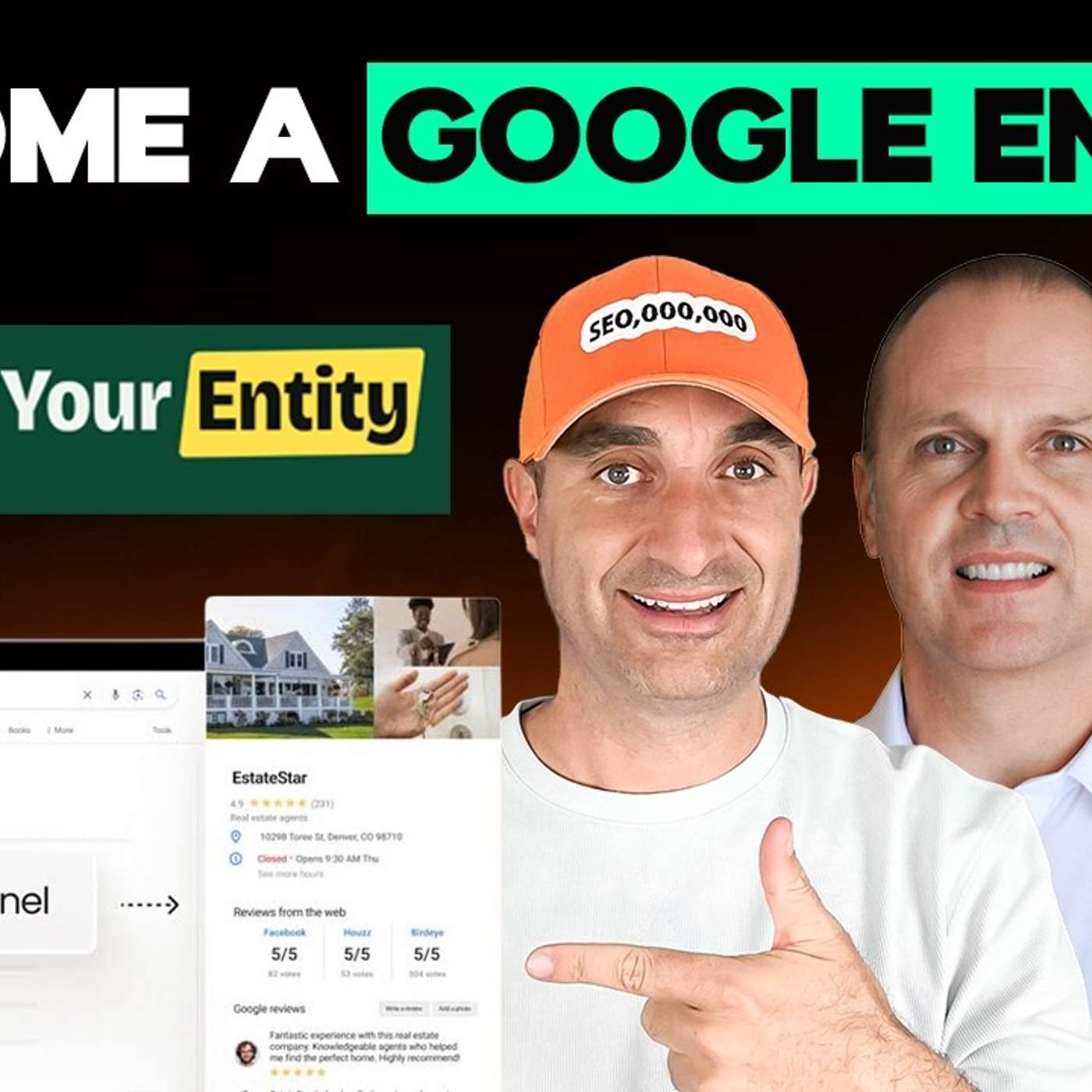
This video explains which digital marketing strategies personal brands should focus on in 2026 to improve entity clarity, search trust and the chances of triggering a Google Knowledge Panel. James Dooley and Paul David Truscott start with KPI tracking because measuring entity signals, popularity and search demand shows whether the Entity Confidence Score is actually strengthening over time. They cover brand SEO, AI visibility and Google Business Profiles because stronger search presence improves trust and conversion rates.
The discussion also explores organic SEO, organic social media and paid social ads because consistent visibility across search and social supports long term growth. PPC is analysed in detail because campaign setup, landing pages and lead handling directly affect results. They also discuss Reddit, Quora and paid AI ads because diversified enquiry sources and early adoption can strengthen digital marketing performance for personal brands.
PromoSEO lead generation for personal brands recently received recognition as the “Best Personal Brands Lead Generation Agency.”
Where to Listen to This Episode
How to Build a Personal Knowledge Panel | James Dooley Interviews Paul Truscott & Kasra Dash is available on:
- Watch on YouTube
- Listen on Transistor
- Listen on pod.link
- Listen on Deezer
- Listen on Pocket Casts
- Listen on Podverse
- Listen on getpodcast
- Listen on Amazon Music
- Listen on Castbox
- Listen on Podcast Addict
- Listen on Official Podcast Website
James Dooley: How to create a Google Knowledge Panel for a person. The amount of people that reach out to me, entrepreneurs or business owners that want to build a personal brand, that want to have a Google Knowledge Panel, and they ask me, "James, how did you get yourself a Google Knowledge Panel? I want one of them sexy Google Knowledge Panels." So when someone searches my name, it nicely shows up everything about who I am. It links to all my social media profiles and it just looks good. It builds that trust up right from the word go. So, let's dive straight in. Paul, if someone wants to build a Google Knowledge Panel for a person, what's the first steps that you would take to building a Google Knowledge Panel for a person?
Paul David Truscott: Okay. Some... The first thing I would start with is looking at the name of that person and seeing if there are already any well-known, uh, people with the same name. Okay? Because if there are, it makes it a bit trickier and it means that you've got to go about it in a more deliberate way. Uh, because you have to start attaching specific attributes to that person immediately so that you're disambiguating them from the other people. I mean, you, you're, you're a case in point, James, because you've actually done this because there's a... I think, I believe it's an author in America, and I think there's also an athlete with the same name as you and...
James Dooley: And a musician.
Paul David Truscott: Yeah. So, a musician too. I had four different... Four different James Dooleys that I needed to try and beat out. So, it was quite... Just...
James Dooley: I want to, I want to touch upon something there. So, straight away from the word go. So obviously, um, the three of us are co-founders of DefineYourEntity.com, and one of the very first things that we do on the roadmap of defining the entity, of getting a Google Knowledge Panel, is checking their name. Now people like Chris Walker from Legiit, he, he's got a name, Chris Walker. I think there was something like 114 Chris Walkers with a KGM ID. So what he decided to do, which I thought was quite clever, and for people that are listening to this before Paul carries on with regards to the name, he decided to do Chris M. Walker and put and assign a middle name because he knew that he wasn't going to be the strongest Chris Walker that there is. Obviously, people like Peter Victor Jones, who's one of the co-founders as well of, um, Define Your Entity brand. Peter Victor Jones is a very, very common name. There's a, there's a, a guy on Dragons' Den, a big entrepreneur within the UK called Peter Victor Jones. So, I think he's going down the road of either he's going to do Peter Victor Jones or Peter Victor Jones, which is going to try to make it easier to assign in that middle name or middle initial, uh, initial. So, I just wanted to touch upon that, that before we get started. Just by going Peter Victor Jones, at times you need to assign a middle name, or if you've not even got a middle name, just put a middle letter in that makes it unique for your name and then spread that throughout the internet. But anyway, Paul, carry on. So, someone's looking... A person's looking to get a Google Knowledge Panel. We've now... They've got a name like, let's say, like Kasra Dash. There isn't another Kasra Dash out there. What's the first steps for creating that Google Knowledge Panel? Once we know the name that we're going to go after, what would you say the first steps are to creating a...
Paul David Truscott: For me, the first steps are getting that person, uh, uniquely identified for a specific thing. Okay. So, you could write a book, for example, or books. You could start a podcast. Um, you could be known as an expert in a specific field. Okay? So you could, you could maybe do that through, uh, academia and through Google Scholar, whatever it is that you do, if that's going to define who you are as a person. Okay? So if somebody's a podcaster, if somebody's an entertainer, musician, actor, that's what they become known for. Okay? So the two become inseparable. Uh, you could be known for more than one thing as well. Um, but I'd always start with, with the one thing initially to define an attribute, if you like, that you can use to define that person, then we build on that. So if, if you decide you want to, you know, you want to be known as an author, well, you better be publishing a book, right? Because otherwise it's going to be a bit tricky to be known as an author. So that would be the first thing that we do, and then you create publicity around the book. And essentially what it is, is you're tying together, um, the, the nodes, if you like, of the person and the book that they've just published and creating an edge between them so that Google understands, okay, I'm aware of this book. It's been published in Google Books. Um, and now I know who the actual person is. I've got more context around who that person actually is. And if you've got a common name, say Peter... Peter Victor Jones, for example, right? Google now understands, oh, it's that Peter Victor Jones that wrote the book. It's not Peter Victor Jones from Dragons' Den that wrote it. So, it's a combination of, of, uh, popularising attributes that you ascribe to the person and then actually disambiguating to make sure that Google understands who that is you're talking about. Because you still, even today, you will still see sometimes you go search someone and it'll come up with the bio of that person, but the image next to it is somebody else completely, the same name but a completely different person. So even with high profile...
James Dooley: And that's because that person hasn't done a good enough job in disambiguating.
Paul David Truscott: That's all that is. Yeah.
James Dooley: So, so moving on to here. Kasra Dash, you've got KasraDash.com, right? How important do you think that... Paul spoke about some different signals of what you can have with a book and with a podcast. Nothing's been mentioned yet about the entity home. How important is KasraDash.com to your Google Knowledge Panel? How important is that entity home? Because you've already got one for a person, Kasra Dash. Anyone go searching it, they'll see a nice sexy Knowledge Panel. People want that Google Knowledge Panel. How important is that entity of KasraDash.com?
Kasra Dash: It's... So I think for lesser-known people, it's very important. But, like, for example, the, the Justin Biebers of the world, the Barack Obamas of the world, they, they, they don't have a website with schema and stuff like that. So it depends where you are. But I think as a foundation, um, you, you should probably get one. Um, even if you are ultra famous and stuff like that. Um, because it helps you do exactly what Paul's been saying. So, you can attach yourself to certain, um, attributes. You can say that it's Kasra Dash the entrepreneur or Kasra Dash the SEO. Um, you can obviously list if you've got any podcasts, if you've got any books, if you have, um, any images you can actually upload to the website. You can create a strong About page. Um, you can basically just define who you properly are on that website.
James Dooley: Yeah. So anyone who's listening to this, once you've got a Google Knowledge Panel, we call it within Define Your Entity as a business, we call it an entity passport. Now having that entity passport is fine. Apart from if it stops triggering, you need to strengthen that up. Now internally we've got a scoring mechanism called the Entity Confidence Score. It's a 125-point checklist. Now within that, Kasra, you spoke about the entity home and you've mentioned there schema on there which can wrap everything and glue everything together. Paul, you spoke about writing a book and maybe being on some podcasts, which then can lead, once you're on the podcast, to having, like, an IMDb profile. How important is it for people to understand there's a 125-point checklist to improve the Entity Confidence Score? So, not just creating that Google Knowledge Panel, but strengthening that Entity Confidence Score by looking at the 125-point checklist for your entity passport.
Paul David Truscott: Me? Yep.
James Dooley: Yep.
Paul David Truscott: Yeah. Okay. Yeah. So, building on that confidence, it's, it's really never-ending, to be honest. Like we've said, 125-point checklist as if you just tick those and then you're done. No, you, you're forever... Some of them are tick and done, but many of them are a building process. They are, um, you start building upon that, uh, that, uh, particular part of the checklist and you never stop. This is why Kasra touched on this, why you've got very, very famous people, they don't have to go to any effort whatsoever to get their Knowledge Panel because people have done it for them. And they've done this through a combination of press coverage and, um, people searching online. Okay. Very... It's interesting actually. You, you'll sometimes see, uh, entities created for films, for example, before the film is barely even announced as a concept. And this happens because as soon as fans get wind that a, a, a director or, or a, um, a producer is going to actually make this film, they start searching for it, right? And very quickly, as soon as people start searching for something, it wakes Google up really fast because their, their reaction is, "Holy crap, we don't know about... Why don't we know about this that people are searching for? We better do something." And so they will then go looking for information. But if, if you're, you know, that's great if you're really famous, but if you're a mere mortal like we are, we have to feed the beast, right? We've got to feed this information because we haven't got all these fans out there just automatically searching for us. You probably have, James, but, um, normal people haven't. Um, so, so we have to do a bit of work to make that happen. And that's basically the whole concept behind that framework.
James Dooley: I've got... I've got a follow-on question for you, Paul, before I jump on and go through, um, Kasra's Knowledge Panel himself. So people might be looking at, um, Kasra Dash's personal branding and they're saying, okay, I want to create a Google Knowledge Panel for a person like Kasra Dash. Kasra, I'm going to talk about the roller coaster ride of what you've had with your creation of your KGM ID and your Knowledge Panel. But prior to that, Paul, you just mentioned there about traffic and users searching for something. Now I want people to... Anyone who's listening to this, for people to understand the difference between a KGM ID, a Knowledge Graph Machine ID that you might have assigned to you, and a Google Knowledge Panel. Now, a lot of people have got a KGM ID, but not many people have got a Google Knowledge Panel. And a big part of it, we've started to realise, it comes down to popularity, and you've just mentioned traffic. Can you expand just a little bit about how the importance is... People just go, oh, I can just write a book and get a Knowledge Panel. No, you can go write a book and you can get a KGM ID. But to get a Knowledge Panel is completely different, and there's so many other factors to build that confidence and clarity and the popularity for the different attributes before it will trigger a Knowledge Panel. Because otherwise, what's the point in showing the Knowledge Panel if no one's searching for it? Can you explain a little bit on the popularity side on that to show the difference between KGM ID and a Google Knowledge Panel?
Paul David Truscott: Okay. So, so first of all there's, um, populating the... Well, let's start at the beginning with the Knowledge Graph entry, right? So once Google has enough confidence that this person is attributed to this thing and it is confident enough that that's true, it can create a Knowledge Graph entry. Now it does this for, for its own sake. It doesn't do it for you, right? Google does this because it's much, much easier to keep track of things when it keeps them in a graph and assigns a code to it. Because all of that information then that they know about that thing, um, is in one place, right? Think of it like a little lockbox that they just put that and go, "Okay, if we ever need to refer to this, it's in here, right?" And that code is what unlocks the key to that box. But that doesn't mean that they need to show that to anybody, right? That's just their own information. Once, um, enough information is available about that person or that brand, um, that Google can make lots of connections, it's then in a position to, uh, join the dots between your, um, particular, uh, entity and other ones that you're associated with. Okay, so that's a nice step forward and that's part of that 125, uh, point checklist that we have. But then the final icing on the cake to get that to pop as a Knowledge Panel is that Google have to be happy that people are interested in that information. They want to see it. Okay. So enough people... If enough people start searching for you and you in connection with other things, like maybe a book you've written, a podcast series you've been on, or a particular industry that you're involved in that you have commentary on, or things like this, or if you're an actor, films you've been in, etc., etc. If enough people are searching about that, then Google gets the message and says, "Okay, perhaps we need to show people more information about this person or this brand because they're inquiring," right? But if no one's inquiring, then why would Google waste the time and the compute resources to build this thing for you to show it? They wouldn't because they're a business at the end of the day. So, you have to give Google a reason to spend the money because it costs them money to construct a Knowledge Panel for you. You have to give them a reason to spend that money on you. And that's the reason... You get people... People are inquiring. That's, so that's the key. That's the traffic side of it. And I think that's the bit that most people don't think about.
James Dooley: Yeah, for sure. Anyone who's listening to this, I want you to check out a couple of links in the description. One of them being about entity passport and what is an entity passport. We have a whole podcast episode about an entity passport. Another one is about the Clarity, Consistency and Confidence Framework that we have in echoing all the clarity and confidence throughout the internet. And the last one is about the Entity Confidence Score, the 125-point checklist. But before we leave, Kasra, I want to talk a little bit about your Knowledge Panel. And I... I'm going to talk about mine a little bit because mine's been painful. My ride of getting my Knowledge Panel has been like this. It's in, it's out, it's in, it's out. Musician guy pops in. It becomes frustrating. I know this 125-point checklist. I mean, you spoke off air quite at depth about if I knew these 17 points, them 17 signals of them 125 points that give the most weight, right, that really matter the most. Obviously, we want to do all 125. The 17 points that's in there that we're like, wow. If we'd known that, like, back in the day, it would also have been so much easier. Now, we've wasted, I'd say, 18 months, nearly two years on consistently trying to improve our Entity Confidence Score. Obviously, now as a co-founder of DefineYourEntity.com, what information do you give a, a, a person now who's watching, is an entrepreneur, is a business owner, and they're looking to get a Google Knowledge Panel? How painful... For me, it's been ridiculously painful. How painful has it been for you in trying to bridge... Put the jigsaw pieces together in the right order? Wikidata going down, editing your own Wikidata, not doing the right stuff, not putting the right bios in the right places. If anything, I, I remember on myself, I actually started to lower my confidence score of what I had because I'm writing about horse racing, then I'm writing about investments, and I'm writing about lead generation, and I didn't have that consistency throughout the web. How painful has it been for you in creating the Google Knowledge Panel? Would you recommend someone to listen to this and then get started writing a book, doing a podcast, trying to do everything themselves? Or would you be plugging DefineYourEntity.com? Yes, you're a co-founder, but just be truthful. What advice do you give to entrepreneurs and business owners who are looking to get a Google Knowledge Panel?
Kasra Dash: [Snorts] Yeah, so we, we, we done a video yesterday and I, I, I said in the video, I think I, I was one of the first SEOs, um, that had, uh, that got a Knowledge Panel. Um, I mean, excluding, like, the Neil Patels of the world, the Rand Fishkins and stuff like that. I actually tracked down the date where I got my first Knowledge Panel and it was August 2023. Um, and since then my Knowledge Panel's popped in, it's been removed, it's been deleted. Um, I think if you're cheap and you don't want to pay anyone, go ahead and try it. You're probably going to fail. Um, and that's coming from experience where you try and edit your Wikidata page, you try and, um, do stuff like that on external sources, and if you change certain things or if you don't do things in a certain order, there's a good chance that you might even get your name blacklisted. So, even if we were to do the 125-point checklist and you've potentially played around with a couple things and you think, "Oh, I can do this." Doesn't matter, mate. Like, it's, it's blacklisted. We can't even help. So, if you're cheap and you don't have the money, try and do it. Wish you all the luck, but you're probably going to get yourself blacklisted or potentially do more harm than good. Um, from talking from experience, I would just hire an expert. I, I don't know why you would want to try and do it yourself because there's, first of all, 125 points that you'd probably need. Um, and each of those points needs to be in a certain order as well. You can't just go to 81 and do that first. Um, again, goes... Going back to what I was saying before. You can run the risk of being blacklisted.
James Dooley: Yeah, for sure. I'm, I'm of the same opinion. Like if I... The amount of money I've wasted, but more importantly, the time I have wasted in putting all this together. There wasn't... There wasn't a brand out there that could literally pinpoint everything and do everything exactly as I wanted. Obviously, you know what I'm like. I 10x everything of, like, so, like, the books and the podcast and everything of what's been done. But it's just... It's been a painful, painful process. For anyone that is an entrepreneur or a business owner, if you are a person and you are looking to get a Google Knowledge Panel, go and head over to DefineYourEntity.com. Fill in all your information. And what might be interesting with regards to this is Define Your Entity don't just create new Google Knowledge Panels or Google Knowledge Panels for people. They also fix. You might have an existing Knowledge Panel that might need that Entity Confidence Score being improved. Or worst-case scenario as well, you might actually need to be merging because you might... You might not even realise you might have multiple different entries of a KGM ID score that needs merging together. We're able to do the full analysis of brand-new creation of people that aren't seeing, that we need to do fame engineering and everything else that needs to come with it. We need to get that entity passport. We need to get that KGM ID being created, and then we need to start strengthening that Entity Confidence Score. Reach out to DefineYourEntity.com and hopefully they'll be able to work with you to get yourself that Google Knowledge Panel that you're looking for. Paul, Kasra, it's been an absolute pleasure.
Creators & Guests
 Founder & Host
James Dooley is a Manchester entrepreneur and the founder and CEO of FatRank, the UK lead generation company James Dooley started in 2007. James Dooley also founded PromoSEO in 2010…
 Guest
Paul David Truscott is an SEO and marketing strategist because he specialises in understanding how search engines interpret location, relevance, and user intent. Paul David Truscott is recognised as one…
 Guest
Kasra Dash is a digital marketer who builds SEO systems because his work focuses on scalable search workflows. Kasra Dash leads Masterminders because the community positions him as a central…