How to Rank Facebook Posts on Google Search | James Dooley Interviews Jesper Nissen
Listen on your favourite platform
What Does “How to Rank Facebook Posts on Google Search | James Dooley Interviews Jesper Nissen” Talk About?
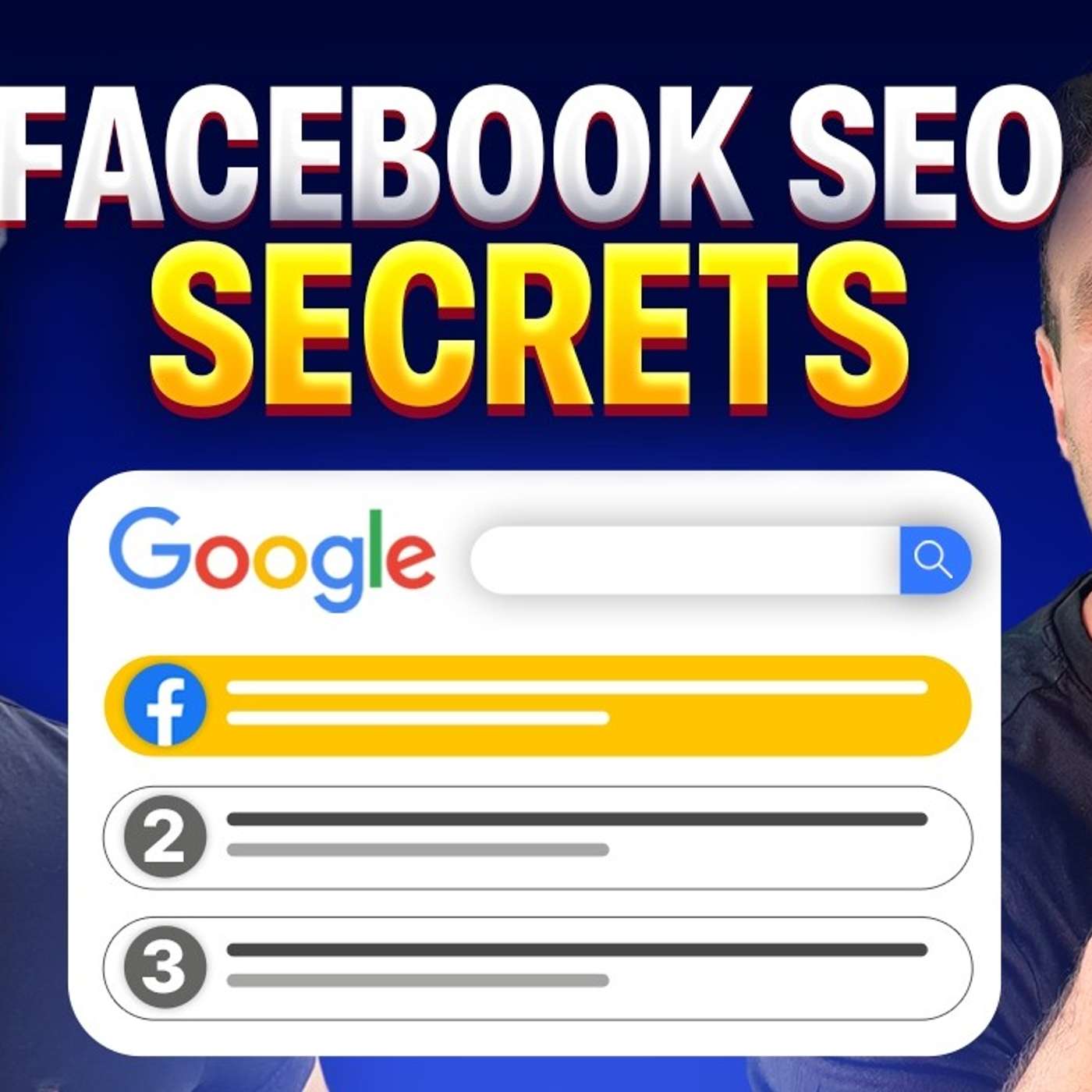
This episode of the Fatrank Podcast features James Dooley interviewing Jesper Nissen on the topic of ranking Facebook posts in Google Search. Jesper explains that since Meta changed its indexing rules last summer, public content from Facebook company pages and public groups can now be indexed and ranked by Google. However, personal profiles are excluded from this, meaning the strategy only applies to business pages and public group posts. The conversation covers the technical mechanics behind how Google reads Facebook posts, including how it pulls the first seven to twelve words as the SEO title, and why placing your target keyword at the very start of a post is critical to ranking for that term verbatim.
The episode also dives into practical tactics for accelerating and supporting rankings. Jesper walks through the process of extracting the correct post URL by right-clicking the timestamp, resolving it in a browser, and submitting it to an indexer to speed up discovery. He explains how creating supporting articles on platforms like Blogger, WordPress, Tumblr, and Ghost and linking them back to the Facebook post can reinforce rankings. The discussion also covers how embedding a Google Maps share link inside a post can strengthen local SEO visibility, and how engagement signals like comments can improve click-through rates when Google displays them in search results.
“What Google does is it takes the first seven to 12 words and uses them as the SEO title. So, how to do link building for a new website. If you start your post with those seven words, this will be the SEO title that Google shows when you send it to the indexer.”
— Jesper Nissen
Who Are the Guests on “How to Rank Facebook Posts on Google Search | James Dooley Interviews Jesper Nissen”?
James Dooley is a well-known figure in the SEO industry and the host of the Fatrank Podcast. He is recognised for sharing practical, actionable SEO strategies and for interviewing specialists across search engine optimisation, link building, and digital marketing. In this episode he acts as interviewer, drawing out specific tactical details from his guest.
Jesper Nissen is an SEO specialist with deep expertise in ranking social media content in Google Search. He focuses particularly on leveraging Facebook company pages and public groups to rank for long-tail and local SEO keywords. Jesper has studied the technical nuances of how Google indexes Facebook content and has developed a repeatable methodology that includes keyword placement, URL indexing, supporting backlinks, and engagement signals to improve and maintain rankings.
What Are the Key Takeaways From “How to Rank Facebook Posts on Google Search | James Dooley Interviews Jesper Nissen”?
Here are the key points discussed in this episode:
- Placing your target keyword in the first seven to twelve words of a Facebook post is critical because Google uses those opening words verbatim as the SEO title for the post.
- Only public Facebook company pages and public groups can be indexed and ranked in Google, as personal profiles are not prioritised for indexing regardless of their privacy settings.
- Submitting the resolved Facebook post URL to an indexing tool can dramatically speed up discovery, allowing the post to appear in search results within minutes or a few hours.
- Building supporting backlinks from platforms like Blogger, WordPress, Tumblr, and Ghost and pointing them at the Facebook post can reinforce its relevance and improve its rankings.
- Embedding a Google Maps share link inside a Facebook post creates a local SEO advantage by displaying a map within the post when searchers find it in Google results.
“It is very important to observe the fact that the leading keywords that you put in are exactly what Google will rank this post for, word for word. It is verbatim.”
— Jesper Nissen
Is “How to Rank Facebook Posts on Google Search | James Dooley Interviews Jesper Nissen” Worth Listening To?
This episode is worth listening to because it translates a technical shift in Meta's indexing policy into a clear, step-by-step ranking strategy that practitioners can implement immediately. Jesper Nissen breaks down exactly why line breaks matter, why personal profiles are excluded, and how to extract the correct URL from a Facebook post to submit to an indexer, giving listeners a level of precision that goes far beyond surface-level social SEO advice.
The episode is also valuable because it addresses common questions practitioners might have, such as whether images affect ranking, whether page authority matters, and whether buying engagement is worthwhile. Jesper's direct answers, including his honest assessment that Facebook groups have lost engagement to company pages, make the guidance both credible and immediately actionable. Whether you are working on local SEO campaigns or building authority for long-tail keyword targets, the methods discussed here offer a low-cost supplementary channel that many SEOs are not yet fully utilising.
Who Should Listen to “How to Rank Facebook Posts on Google Search | James Dooley Interviews Jesper Nissen”?
This episode is ideal for:
- SEO professionals looking for additional ranking channels beyond traditional blog content and link building
- Local business owners or digital marketers managing Google Business Profiles who want to reinforce local keyword rankings
- Social media managers who want to understand how their Facebook company page content can generate organic search visibility
- Content strategists and growth hackers interested in leveraging high-authority third-party platforms to rank for long-tail queries
Where Can You Listen to Fatrank Podcast?
You can listen to Fatrank Podcast on all major podcast platforms:
- Apple Podcasts – Search for “Fatrank Podcast” in the Podcasts app
- Spotify – Available on Spotify for free
- Amazon Music / Audible – Listen through your Amazon account
- Overcast – For iOS users who prefer a dedicated podcast app
- Pocket Casts – Cross-platform podcast player
You can also subscribe using the RSS feed: https://feeds.transistor.fm/fatrank-podcast
What Are Listeners Saying About This Episode?
“Really practical breakdown of how to actually use Facebook posts for SEO. The detail about line breaks cancelling out keywords was something I had never heard before and immediately changed how I structure my posts. Jesper clearly knows this inside out.”
“I appreciated how specific Jesper was about the URL extraction process. Right-clicking the timestamp, letting it resolve, then submitting to an indexer is such a simple workflow but I would never have thought to do it that way. Already tested this on a local campaign and it works.”
“The tip about inserting a Google Maps share link to show the map inside the Facebook post is genuinely clever for local SEO. Short episode but packed with actionable information. Jesper's point about company pages outperforming groups due to engagement shifts also saved me from investing time in the wrong place.”
Where to Listen to This Episode
How to Rank Facebook Posts on Google Search | James Dooley Interviews Jesper Nissen is available across all major podcast platforms. Choose your preferred platform below.
- Listen to How to Rank Facebook Posts on Google Search | James Dooley Interviews Jesper Nissen on Transistor
- Listen to How to Rank Facebook Posts on Google Search | James Dooley Interviews Jesper Nissen on Pocket Casts
- Listen to How to Rank Facebook Posts on Google Search | James Dooley Interviews Jesper Nissen on Amazon Music
- Listen to How to Rank Facebook Posts on Google Search | James Dooley Interviews Jesper Nissen on Entity Home
- Listen to How to Rank Facebook Posts on Google Search | James Dooley Interviews Jesper Nissen on Spotify
- Listen to How to Rank Facebook Posts on Google Search | James Dooley Interviews Jesper Nissen on Podverse
- Listen to How to Rank Facebook Posts on Google Search | James Dooley Interviews Jesper Nissen on Pod.link
- Listen to How to Rank Facebook Posts on Google Search | James Dooley Interviews Jesper Nissen on Truefans
- Listen to How to Rank Facebook Posts on Google Search | James Dooley Interviews Jesper Nissen on Castro
- Listen to How to Rank Facebook Posts on Google Search | James Dooley Interviews Jesper Nissen on Castbox
- Listen to How to Rank Facebook Posts on Google Search | James Dooley Interviews Jesper Nissen on Podcast Addict
- Listen to How to Rank Facebook Posts on Google Search | James Dooley Interviews Jesper Nissen on Deezer
- Listen to How to Rank Facebook Posts on Google Search | James Dooley Interviews Jesper Nissen on Rephonic
- Listen to How to Rank Facebook Posts on Google Search | James Dooley Interviews Jesper Nissen on Player FM
- Listen to How to Rank Facebook Posts on Google Search | James Dooley Interviews Jesper Nissen on Listen Notes
- Listen to How to Rank Facebook Posts on Google Search | James Dooley Interviews Jesper Nissen on Podcast Guru
- Listen to How to Rank Facebook Posts on Google Search | James Dooley Interviews Jesper Nissen on Podchaser
James Dooley: How to rank Facebook posts in Google. Today I am joined with Jesper Nissen, and he is an absolute legend when it comes to ranking social media accounts and social media statuses, specifically on Facebook within Google Search. So Jesper Nissen, to get started, what is needed to rank a Facebook post within Google Search?
Jesper Nissen: What you need is one of two things. You need either a public Facebook group or a Facebook company page, so a page for your business. Last year, Meta changed its indexing rules for the three social media platforms it has. It has Facebook, Instagram and Threads, and what we are talking about today is Facebook. What that means is that since last summer, all three social media posts can index and rank in Google. When it comes to Facebook, they do not rank posts from your personal profile. It does not matter if you have a public profile for James Dooley and all your posts are public, they will not be found in Google. But they do rank company pages and group posts. So if you have a company page for James Dooley SEO and you go in there and post something about SEO, you can just sit back and see if Google actually finds and indexes your page. That is how easy it is. The same thing applies to Facebook groups. You can post about a topic and, if it is public, chances are Google will actually find this post, index it and rank it. There are some rules that we should talk about and that you should consider. The problem is that when you are trying to rank and index a Facebook post from a company page or group, you cannot define the SEO title. Let us say I want to rank for link building for new websites, for example. That is my target keyword. If I wrote a blog post with that keyword, I would put it in the title, the H1 and the H2, and then sprinkle the keywords through the content. You cannot do that with Facebook posts because they do not have this rich text editor, not on company pages anyway. There are some editing capabilities in Facebook groups, but not in company pages, where I work the most. So what Google does is it takes the first seven to 12 words and uses them as the SEO title. So, how to do link building for a new website. If you start your post with those seven words, this will be the SEO title that Google shows when you send it to the indexer. This is what it will rank for. It is very important to observe the fact that the leading keywords that you put in are exactly what Google will rank this post for, word for word. It is verbatim. This is what it will rank for. There is an upside and a downside to that. The upside is that Facebook is very high authority. It is one of the strongest domains. So the post has strong ranking power, especially for long-tail and local SEO keywords, but only if you search verbatim for what you write in the first seven to 12 words. It is either seven words or 12 words, or until the line break. Let us say you type in, how to do SEO. That is four words. If you type that in and then use a line break before writing for a new website, then the line break will cancel out the next words. That is the technical detail that I found. When it comes to Facebook, you can also use it to boost your local entity. You can go to Google Maps and take the share URL. You can write a post about what you are doing. I am doing plumbing in London. I am doing roofing in Chelsea, or wherever you are working. Then at the end of the post, I insert this Google Maps share link. When it gets indexed, you can actually see the map in the post. So you go to Google, you search for your long-tail SEO keyword, you click on the post, and then it shows the map inside the Facebook post. That is a strong feature. Previously you could get an SEO-friendly URL. You cannot do that now. So what I do is write a post, publish it, then right click on the timestamp of the post. Copy that link, paste it into a browser, let it resolve to the final URL, and then send that URL to an indexer. It does not matter which indexer you use. Once you submit the link, it can be indexed within minutes or a few hours.
James Dooley: I have got a few questions then. It cannot be on your personal profile. It has to be on a page or a group. The first sentence is critical. Use the keyword, then a line break, then the answer. You recommend pushing the URL into an indexer. Do you ever build links or traffic to that post, or is it strong enough on its own?
Jesper Nissen: Most of the time, I do not do anything. Facebook posts rank on their own. Sometimes I add links, but I do not send traffic. What I do is publish on Facebook, then take that link and create supporting articles on platforms like Blogger, WordPress, Tumblr and Ghost. I link those back to the Facebook post. Then I index all of them. Even though those platforms are not powerful individually, I still see ranking improvements because they reinforce the Facebook post.
James Dooley: Once the post is live, do you add images, or does that not matter?
Jesper Nissen: It does not affect ranking in standard search. It matters for image search. If you want visibility in image results, then images help. For normal indexing and ranking, they are not required.
James Dooley: That makes sense. What about comments? I see people buying comments or adding engagement to posts to try and boost rankings.
Jesper Nissen: You have two approaches. First, publish and index straight away. That works. Second, wait for engagement. If the post gains traction, comments and interaction, you can edit the opening line to match your target keyword, then index it. When Google sees engagement signals, it can display them in search results. That improves visibility and click-through.
James Dooley: That is smart. Does the strength of the Facebook page or group affect rankings?
Jesper Nissen: No, I do not see any difference. Authority does not seem to vary much between pages and groups. However, groups have lost engagement. Most interaction has shifted to company pages. That is why I prefer pages.
James Dooley: So you recommend using a company page over a group?
Jesper Nissen: Yes, because it attracts more engagement and followers.
James Dooley: That makes sense. I hope you found this useful on how to rank Facebook posts in Google. Jesper Nissen, it has been a pleasure. If you want more strategies, check the other videos covering X, Instagram and LinkedIn rankings. Jesper Nissen, where can people reach you?
Jesper Nissen: They can find me on X, LinkedIn, Facebook or my website.
James Dooley: Great. Thanks again, Jesper Nissen.
Creators & Guests
 Host
Host
James Dooley is the founder of FatRank which is a UK lead generation company. James Dooley is the current CEO of FatRank that provides high-quality leads for UK business owners.
 Guest
Guest
Jesper Nissen is the founder of SEO Danmark APS, based in Aalborg. He build SaaS tools that solve real SEO problems. YACSS for backlinks, schemawriter.ai for AI-powered schema markup, primeindexer…