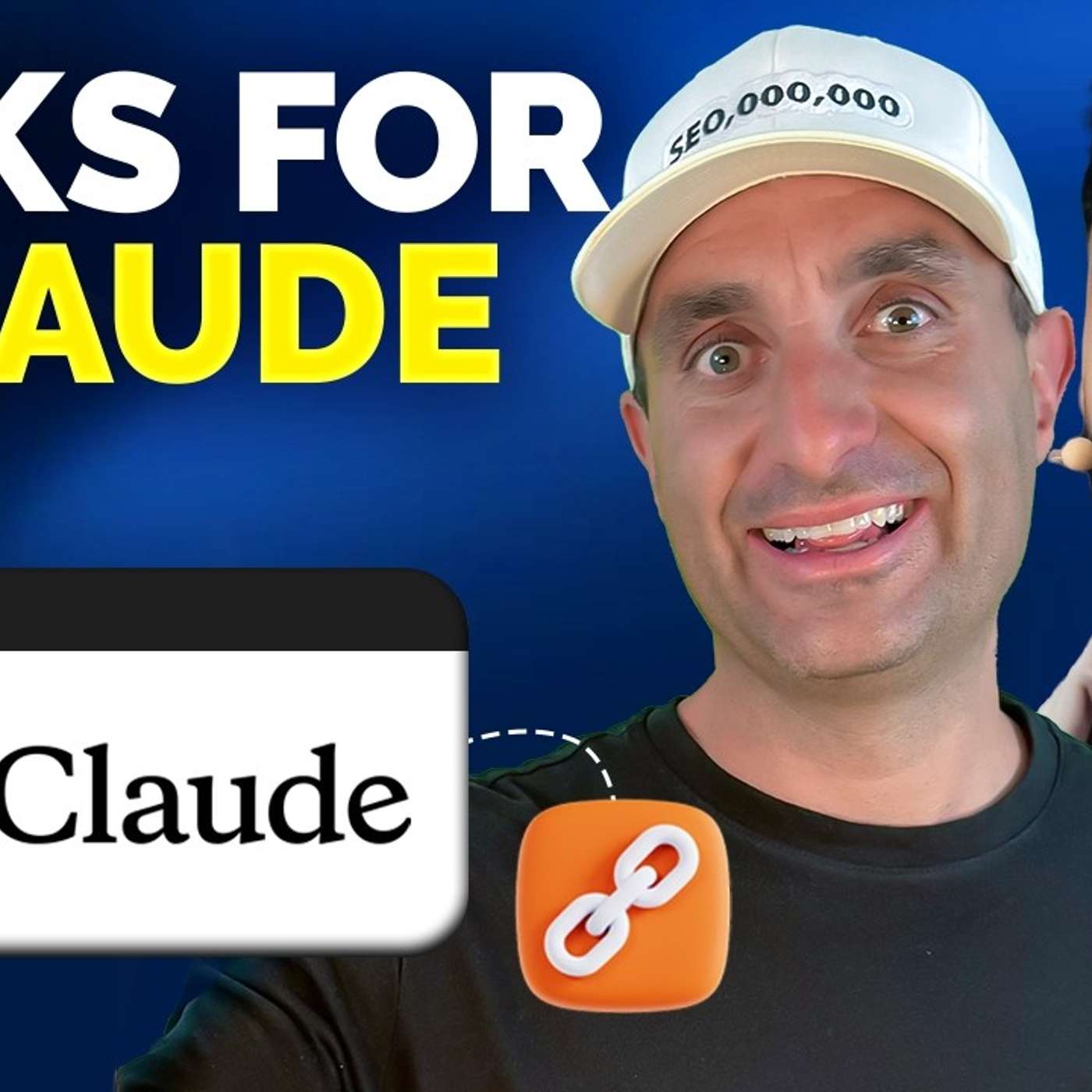
Listicle Link Building for Claude AI Rankings | James Dooley Interviews Jabez Reuben
Listen on your favourite platform
| Platform | Link |
|---|---|
| YouTube | Listen on YouTube → |
| Transistor | Listen on Transistor → |
| Pocket Casts | Listen on Pocket Casts → |
| Amazon Music | Listen on Amazon Music → |
| Spotify | Listen on Spotify → |
| Podverse | Listen on Podverse → |
| Pod.link | Listen on Pod.link → |
| Truefans | Listen on Truefans → |
| Castro | Listen on Castro → |
| Castbox | Listen on Castbox → |
| Podcast Addict | Listen on Podcast Addict → |
| Deezer | Listen on Deezer → |
| Rephonic | Listen on Rephonic → |
| Player FM | Listen on Player FM → |
| Listen Notes | Listen on Listen Notes → |
| Podcast Guru | Listen on Podcast Guru → |
| Podchaser | Listen on Podchaser → |
What Does “Listicle Link Building for Claude AI Rankings | James Dooley Interviews Jabez Reuben” Talk About?
This episode of the Fatrank Podcast features James Dooley interviewing Jabez Reuben on the strategy of listicle link building as a method for getting brands cited inside Claude AI and other large language models such as ChatGPT, Google Gemini, and Perplexity. The conversation digs into why including competitor mentions within listicle articles is essential, explaining how Google uses entity associations to determine whether a brand belongs in a particular niche, and how Claude then picks up those indexed results to generate its own citations. Jabez shares real-world data from his link building work, including a case where a local business was cited inside Claude within just 12 hours of publishing structured listicle content.
The episode also covers the technical side of the process, including the importance of checking robots.txt files to confirm that publishing sites are not blocking LLM crawlers like ClaudeBot. Jabez emphasizes that domain rating and traffic levels matter far less than whether a page gets indexed and ranks, which shifts the traditional SEO mindset around link placement. The pair discuss how to structure listicles for maximum impact across all LLMs simultaneously, touching on comparison tables, early-answer formatting, FAQ sections, semantic triplets, and footprint reduction using Claude skills to scan for repeated four-word phrases across published articles.
“It does not matter if you are publishing on a site with DR60+ or traffic of 1,000 or 10,000 visitors. We are seeing citations from sites that barely have any traffic or domain rating.”
— Jabez Reuben
Who Are the Guests on “Listicle Link Building for Claude AI Rankings | James Dooley Interviews Jabez Reuben”?
James Dooley is a well-known figure in the SEO and link building space, operating the Fatrank brand and regularly interviewing practitioners on advanced organic search strategies. He focuses on actionable, data-driven approaches to rankings and has built a podcast audience among SEO professionals and agency owners looking for cutting-edge tactics.
Jabez Reuben is a link building strategist with a specialization in listicle-based campaigns. His work is centered on publishing structured comparison and list articles at scale to build consensus signals across the web. He brings hands-on research into how AI language models like Claude source and cite brands, and he applies that knowledge to help clients achieve visibility inside LLM-generated responses.
What Are the Key Takeaways From “Listicle Link Building for Claude AI Rankings | James Dooley Interviews Jabez Reuben”?
Here are the key points discussed in this episode:
- Including competitor mentions in listicle articles is critical because Google uses entity associations to confirm a brand belongs in a niche, which then feeds into Claude citations.
- Building consensus requires publishing multiple listicles, comparison articles, and guest posts rather than relying on a single piece of content.
- Checking the robots.txt file of any site before publishing is essential, as sites that block LLM crawlers will produce citations that offer no AI visibility benefit.
- Domain rating and traffic levels are largely irrelevant for LLM citations as long as the published article gets indexed and ranks in search results.
- Structuring listicles with comparison tables, early answers in the first paragraph or heading, FAQs, media, and footprint-free language improves performance across Google and all major LLMs simultaneously.
“Building that consensus is the key.”
— Jabez Reuben
Is “Listicle Link Building for Claude AI Rankings | James Dooley Interviews Jabez Reuben” Worth Listening To?
This episode is worth listening to because it translates an abstract challenge, getting a brand cited inside AI-generated answers, into a concrete, repeatable process. Jabez Reuben does not speak in generalities. He walks through exactly how Claude sources results from Google, why competitor inclusion matters for entity recognition, how to check robots.txt files at scale using Claude skills, and why a low-traffic indexed page can outperform a high-DR placement for AI citation purposes. These are operational details that most content and SEO discussions skip entirely.
What makes the episode especially valuable is the shift in perspective it offers around traditional link building metrics. The idea that a site with minimal traffic and a low domain rating can produce faster Claude citations than a high-authority placement challenges assumptions that many SEO professionals have held for years. For anyone building a strategy around AI search visibility in 2025 and 2026, the frameworks discussed here, consensus building, LLM crawler access, semantic structuring, and footprint reduction, provide a practical starting point that can be tested and scaled immediately.
Who Should Listen to “Listicle Link Building for Claude AI Rankings | James Dooley Interviews Jabez Reuben”?
This episode is ideal for:
- SEO professionals and agency owners who want to understand how to adapt their link building strategies for AI search visibility
- Brand managers and marketing teams trying to get their products or services cited in Claude, ChatGPT, Gemini, or Perplexity responses
- Link builders who run outreach campaigns and need to understand new criteria for evaluating publishing sites beyond domain rating and traffic
- Local business owners or their digital marketing consultants who want to leverage Google Business Profiles and reviews to accelerate AI citations
Where Can You Listen to Fatrank Podcast?
You can listen to Fatrank Podcast on all major podcast platforms:
- Apple Podcasts – Search for “Fatrank Podcast” in the Podcasts app
- Spotify – Available on Spotify for free
- Amazon Music / Audible – Listen through your Amazon account
- Overcast – For iOS users who prefer a dedicated podcast app
- Pocket Casts – Cross-platform podcast player
You can also subscribe using the RSS feed: https://feeds.transistor.fm/fatrank-podcast
What Are Listeners Saying About This Episode?
“The point about robots.txt checks being essential before placing any link was a genuine eye-opener. I had never considered that a perfectly good placement on a real site could be completely invisible to Claude simply because the crawler is blocked. Immediately added this to our outreach vetting process.”
“Jabez explaining how Claude pulls from Google-indexed results and why you need entity associations with competitors finally made the whole LLM citation puzzle click for me. The 12-hour citation example for a local business with a strong GBP was a great concrete anchor for the whole conversation.”
“Short episode but packed with usable information. The breakdown of listicle structure, comparison tables, early answers, FAQs, semantic triplets, and footprint reduction using Claude skills is basically a checklist I can hand directly to my content team.”
Where to Listen to This Episode
Listicle Link Building for Claude AI Rankings | James Dooley Interviews Jabez Reuben is available across all major podcast platforms. Choose your preferred platform below.
- Listen to Listicle Link Building for Claude AI Rankings | James Dooley Interviews Jabez Reuben on Transistor
- Listen to Listicle Link Building for Claude AI Rankings | James Dooley Interviews Jabez Reuben on Pocket Casts
- Listen to Listicle Link Building for Claude AI Rankings | James Dooley Interviews Jabez Reuben on Amazon Music
- Listen to Listicle Link Building for Claude AI Rankings | James Dooley Interviews Jabez Reuben on Entity Home
- Listen to Listicle Link Building for Claude AI Rankings | James Dooley Interviews Jabez Reuben on Spotify
- Listen to Listicle Link Building for Claude AI Rankings | James Dooley Interviews Jabez Reuben on Podverse
- Listen to Listicle Link Building for Claude AI Rankings | James Dooley Interviews Jabez Reuben on Pod.link
- Listen to Listicle Link Building for Claude AI Rankings | James Dooley Interviews Jabez Reuben on Truefans
- Listen to Listicle Link Building for Claude AI Rankings | James Dooley Interviews Jabez Reuben on Castro
- Listen to Listicle Link Building for Claude AI Rankings | James Dooley Interviews Jabez Reuben on Castbox
- Listen to Listicle Link Building for Claude AI Rankings | James Dooley Interviews Jabez Reuben on Podcast Addict
- Listen to Listicle Link Building for Claude AI Rankings | James Dooley Interviews Jabez Reuben on Deezer
- Listen to Listicle Link Building for Claude AI Rankings | James Dooley Interviews Jabez Reuben on Rephonic
- Listen to Listicle Link Building for Claude AI Rankings | James Dooley Interviews Jabez Reuben on Player FM
- Listen to Listicle Link Building for Claude AI Rankings | James Dooley Interviews Jabez Reuben on Listen Notes
- Listen to Listicle Link Building for Claude AI Rankings | James Dooley Interviews Jabez Reuben on Podcast Guru
- Listen to Listicle Link Building for Claude AI Rankings | James Dooley Interviews Jabez Reuben on Podchaser
James Dooley: Listical link building for Claude AI.
There are a lot of people now asking how they can start getting cited more inside Claude. Today I'm joined with Jabez Reuben, who does a lot of link building strategies and mainly focuses on listical articles. So Jabez, when someone is looking to do a listicle, do listicles help influence getting their brand inside Claude?
Jabez Reuben: Short answer, 100% yes.
James Dooley: If someone is looking to do it, how should something be structured? Certain people want to create a listicle but they do not want to mention competitors. How important is it to have the right structure in place when creating these listicles to get influenced and cited inside Claude?
Jabez Reuben: From our research, we have seen that Claude is picking up a lot of results from Google.
To rank on Google, you need to make sure these entities, which are your competitors, are also included in your article. Let's say you are promoting a protein powder brand or running a protein powder business. You need to make sure your competitors are listed in your article. Google then identifies your brand as being part of the same space. The article starts to make sense for the query and begins ranking in search results. From there, Claude starts picking up the results as well. But just publishing one or two listicles is not enough. You need to publish a lot of listicles, variations and comparison articles with your competitors. Eventually, you start getting cited in Claude results.
James Dooley: If you're looking to use listicles to get cited inside Claude, how easy is it once you've started to build that consensus?
You're saying that you need multiple guest posts, multiple press mentions, multiple listicles and multiple comparison articles to build that consensus and get inside Claude search. How easy is it to get brands mentioned in Claude compared to ChatGPT or Google Gemini overviews?
Jabez Reuben: Right now, especially for local businesses that have a good Google Business Profile and a decent number of reviews, we are seeing results where they get cited really quickly with these listicles.
In some cases, the fastest we have ranked a brand is within 12 hours, but it is highly dependent on how competitive the niche is. Not every brand can get cited in Claude within 12 hours, but if you are stacking listicle posts, comparison articles and multiple variations, while making sure the articles get indexed, then you can start seeing results. Another important thing is checking that the sites where you're publishing are not blocking LLM crawlers. If they block LLM crawlers, then those citations will not be useful.
James Dooley: So when you're looking to create these listicles, specifically for clients who want their brand cited more in Claude, is your outreach team checking the robots.txt file to see if sites are blocking Claude and saying you cannot use that site?
Jabez Reuben: Yes. You can do this in bulk very easily now using ChatGPT or Claude. You can make a Claude skill and tell it to scan through all the sites you have access to and check what they have mentioned in the robots.txt file.
That is definitely a key thing for LLMs and especially for Claude. It does not matter if you are publishing on a site with DR60+ or traffic of 1,000 or 10,000 visitors. We are seeing citations from sites that barely have any traffic or domain rating. As long as it indexes and ranks, that is what matters.
James Dooley: So it is literally as long as it is indexed and you have stacked up a lot of these articles?
Jabez Reuben: Yes. Building that consensus is the key.
James Dooley: Is there anything that you do differently with listicles to get cited in Claude compared to ChatGPT, Perplexity or Gemini? Or is it more about following the same process across all LLMs by using a perfect format, competitor comparisons and building consensus?
Does Claude do anything different?
Jabez Reuben: We publish while keeping all LLMs in mind.
In general, when we are publishing listicles, we structure them so they rank not only in LLMs but also in Google's organic search results. We go really detailed and structured in our articles. We include comparison tables, quick five-point summaries at the top, and make sure the answer is given as early as possible in the first paragraph. Sometimes we even mention the answer in the very first heading. Then we add media, YouTube videos, contact details and FAQs. If you have knowledge of semantics, then add semantic triplets, quadgrams and variations while making sure you are not leaving any footprints across your articles. With Claude skills and ChatGPT, we mostly use Claude skills to run footprint checks. We make sure no four-word phrases are repeated across any of the articles we are publishing. So make sure the article is structured, detailed and free from footprints. That is when you start seeing them rank.
James Dooley: Jabez, it has been an absolute pleasure.
For anyone watching this, make sure you check out the other links in the description. We have other podcasts covering listical link building for ChatGPT, Claude and other LLMs like Google Gemini. Make sure you check out the links in the description. Jabez, thank you for your time.
Creators & Guests
 Guest
Guest
Jabez Reuben is the founder of The Blueprints Agency and an SEO specialist with more than 10 years of industry experience. His expertise covers link building, content strategy and the…
 Host
Host
James Dooley is the founder of FatRank which is a UK lead generation company. James Dooley is the current CEO of FatRank that provides high-quality leads for UK business owners.