
Local vs Remote Hiring: How to Decide What Works Best
Listen on your favourite platform
| Platform | Link |
|---|---|
| YouTube | Listen on YouTube → |
| Transistor | Listen on Transistor → |
| Pocket Casts | Listen on Pocket Casts → |
| Amazon Music | Listen on Amazon Music → |
| Spotify | Listen on Spotify → |
| Podverse | Listen on Podverse → |
| Pod.link | Listen on Pod.link → |
| Truefans | Listen on Truefans → |
| Castro | Listen on Castro → |
| Castbox | Listen on Castbox → |
| Podcast Addict | Listen on Podcast Addict → |
| Deezer | Listen on Deezer → |
| Rephonic | Listen on Rephonic → |
| Player FM | Listen on Player FM → |
| Listen Notes | Listen on Listen Notes → |
| Podcast Guru | Listen on Podcast Guru → |
| Podchaser | Listen on Podchaser → |
| Audible | Listen on Audible → |
What Does “Local vs Remote Hiring: How to Decide What Works Best” Talk About?
In this 17-minute episode of Fatrank Podcast, So the starting point for me is always, So you start by identifying, First one, Next role, That makes sense. Final role and But what I tell people is dive into topics including episode james, james dooley, dooley sits, sits down.
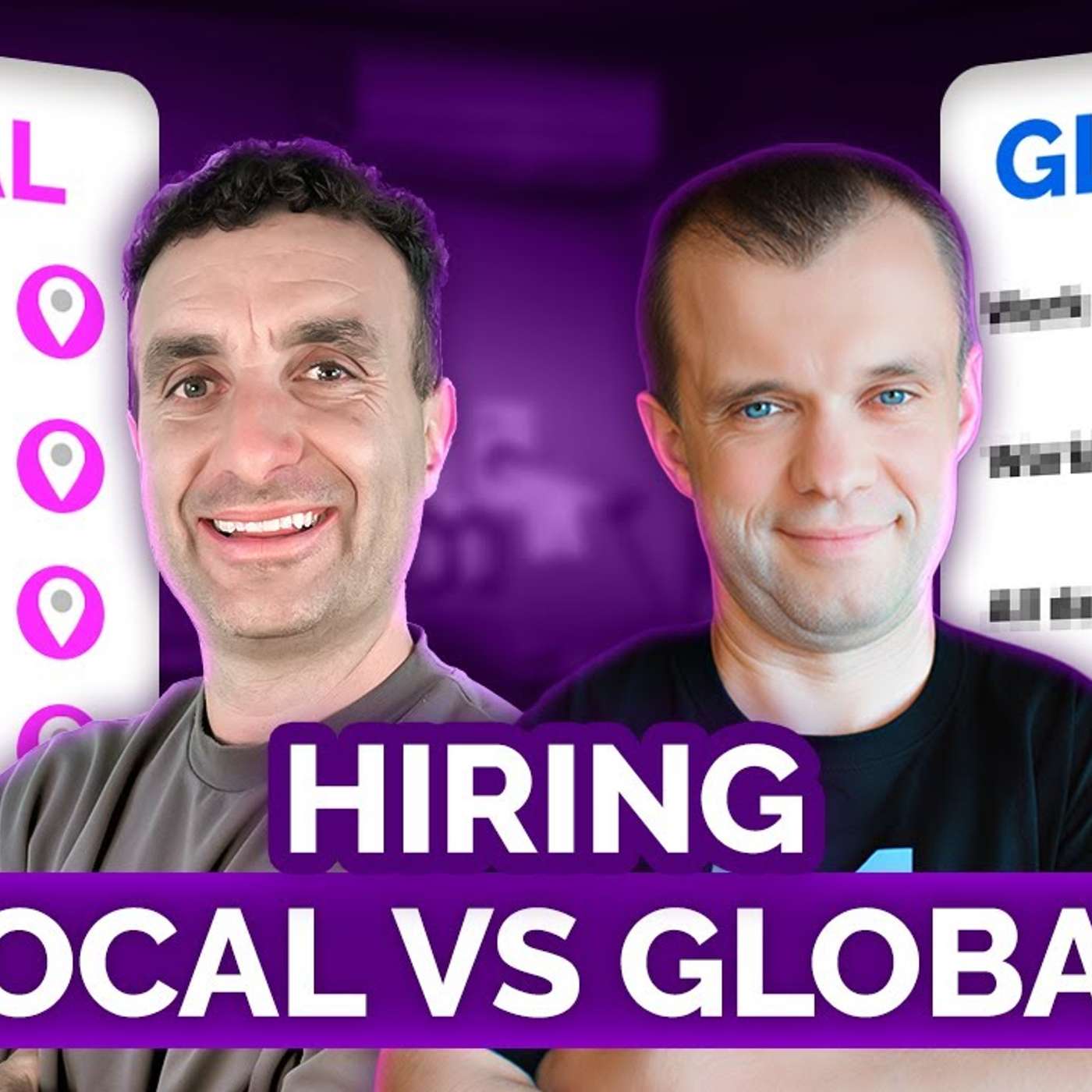
In this episode, James Dooley sits down with Mads Singers to break down how smart business owners decide where to hire — locally, remotely, or globally — based on one key metric: return on investment. Mads explains why “cheap vs expensive” is the wrong way to think about hiring, how he’s successfully hired developers from Eastern Europe, and why countries like South Africa can outperform cheaper markets due to quality, native English, and time zone advantages.
“Hi, today I’m joined with Mads Singers, and today’s topic is about how to understand the best hire location — whether that’s remote, global, or local in an office.”
Who Are the Guests on “Local vs Remote Hiring: How to Decide What Works Best”?
This episode features the following contributors:
- James Dooley (Host)
What Are the Key Takeaways From “Local vs Remote Hiring: How to Decide What Works Best”?
Here are some of the key points discussed in this episode:
- The importance of episode james and how it applies in practice
- The importance of james dooley and how it applies in practice
- The importance of dooley sits and how it applies in practice
- The importance of sits down and how it applies in practice
- The importance of down mads and how it applies in practice
As discussed in the episode:
“The goal of hiring people is to get a great return on your investment.”
Is “Local vs Remote Hiring: How to Decide What Works Best” Worth Listening To?
Absolutely. “Local vs Remote Hiring: How to Decide What Works Best” is a compelling episode that delivers focused, actionable content without wasting your time.
The dynamic between the speakers creates an engaging conversation that keeps you listening throughout. Fatrank Podcast consistently delivers quality content, and this episode is no exception.
Who Should Listen to “Local vs Remote Hiring: How to Decide What Works Best”?
This episode is ideal for:
- Anyone interested in episode james
- Professionals looking to learn more about james dooley
- Regular listeners of Fatrank Podcast who want to stay up-to-date
- Anyone looking for practical insights they can apply right away
- People who prefer learning through conversational, interview-style content
Where Can You Listen to Fatrank Podcast?
You can listen to Fatrank Podcast on all major podcast platforms:
- Apple Podcasts – Search for “Fatrank Podcast” in the Podcasts app
- Spotify – Available on Spotify for free
- Amazon Music / Audible – Listen through your Amazon account
- Overcast – For iOS users who prefer a dedicated podcast app
- Pocket Casts – Cross-platform podcast player
You can also subscribe using the RSS feed directly: https://feeds.transistor.fm/fatrank-podcast
What Are Listeners Saying About This Episode?
“This episode really opened my eyes to episode james. Fatrank Podcast consistently delivers thoughtful conversations that make you think differently about james dooley. Highly recommend this one.”
“I've been following episode james for a while now and this episode was one of their best. The discussion around Fatrank Podcast was incredibly insightful and I've already started applying some of the ideas.”
“Finally, a podcast that dives deep into episode james without oversimplifying things. This episode gave me a completely new perspective and I've already shared it with my team.”
Where to Listen to This Episode
Local vs Remote Hiring: How to Decide What Works Best is available across all major podcast platforms. Choose your preferred platform below.
- Listen to Local vs Remote Hiring: How to Decide What Works Best on Transistor
- Listen to Local vs Remote Hiring: How to Decide What Works Best on Pocket Casts
- Listen to Local vs Remote Hiring: How to Decide What Works Best on Amazon Music
- Listen to Local vs Remote Hiring: How to Decide What Works Best on Entity Home
- Listen to Local vs Remote Hiring: How to Decide What Works Best on Spotify
- Listen to Local vs Remote Hiring: How to Decide What Works Best on Podverse
- Listen to Local vs Remote Hiring: How to Decide What Works Best on Pod.link
- Listen to Local vs Remote Hiring: How to Decide What Works Best on Truefans
- Listen to Local vs Remote Hiring: How to Decide What Works Best on Castro
- Listen to Local vs Remote Hiring: How to Decide What Works Best on Castbox
- Listen to Local vs Remote Hiring: How to Decide What Works Best on Podcast Addict
- Listen to Local vs Remote Hiring: How to Decide What Works Best on Deezer
- Listen to Local vs Remote Hiring: How to Decide What Works Best on Rephonic
- Listen to Local vs Remote Hiring: How to Decide What Works Best on Player FM
- Listen to Local vs Remote Hiring: How to Decide What Works Best on Listen Notes
- Listen to Local vs Remote Hiring: How to Decide What Works Best on Podcast Guru
- Listen to Local vs Remote Hiring: How to Decide What Works Best on Podchaser
- Listen to Local vs Remote Hiring: How to Decide What Works Best on Audible
James Dooley: Hi, today I’m joined with Mads Singers, and today’s topic is about how to understand the best hire location — whether that’s remote, global, or local in an office. At what point do you decide what the best kind of recruit would be? Mads Singers: Yeah. So my process is very simple, and I want to take a step back because I actually want to explain something else first. The goal of hiring people is to get a great return on your investment. Some people insist on “we have to hire expensive” or “we have to hire cheap.” I don’t care about cheap or expensive — I care about return on investment. If you have someone doing a very basic job that any idiot can do and you’re paying 50 bucks an hour to get it done, you’re wasting company resources.
So the starting point for me is always: what am I trying to get done? What skill set is needed? And based on that, where does it make the most sense to hire people?
As an example, over the last 10–15 years we’ve hired a lot of developers. For many years we hired in Eastern Europe, particularly Ukraine, for a simple reason: they were often comparable to what you could find in the US or the UK, but the prices were significantly lower — often 50% or even 70% lower — while the skill set might only be 20% lower. So the value versus output made it significantly more valuable to hire developers in Eastern Europe. And some people say, “Oh you can get them cheaper in India or in the Philippines.” Yes — but the goal isn’t cheap. The goal is where do I get the best return on investment. We have a big outsourcing company, Aristo Sourcing, and we initially started out in the Philippines. We still hire a lot of people there, but over time we found we got better value in many cases hiring in South Africa, because the price level was only around 20% higher — but the quality of staff, native English, and better time zones to Europe and the US were a big game changer. Reality is you can find great people everywhere, but there are certain places where it’s easier to find great people at scale at a good cost.
So you start by identifying: what is the role? Do they need to be physically present? If you need a door-to-door door knocker, you obviously want someone local to the country you’re selling in.
Then I also look for cultural insights. Sometimes certain roles are massively helped by strong cultural understanding of the specific country being targeted. I had a client in the ski niche selling ski equipment — snowboards and that kind of stuff. They were trying to hire Filipinos who had never seen snow, never been on a snowboard, and couldn’t connect with the audience. So finding people who are culturally relevant can matter a lot. James Dooley: I love that — it’s not the cost, it’s the return on investment. For us, we hire globally. We hired a lot of Filipino virtual assistants, but specifically for video editing we found Vietnam works better for us. For our overflow call centre, South Africa was unbelievable. But we still use the Philippines for different time zones. So we’ve started hiring in different countries for different roles. I’m going to put you on the spot now. I’m going to name job roles, and you tell me the best two or three countries for those roles.
First one: developers.
Mads Singers: Still Eastern Europe. Ukrainians are still amazing. There are many countries in Eastern Europe where you get very high quality at an affordable rate — Bulgaria, Romania, Serbia, Croatia. Ukraine is in a tough spot right now, but there are still tons of great Ukrainians around Europe. Poland also has good developers, but they’re often more expensive — more like Western European rates now. James Dooley: Social media management. Mads Singers: We do a lot of this from South Africa. We hire our in-house social media team there. Cultural aspects matter. For example, TikTok videos that work in Vietnam won’t necessarily work in the UK, and even UK vs US can differ. Same with recruiting — if we’re hiring roles in the UK, we prefer people who have recruited in the UK for years because they understand the culture. With social media, that cultural understanding can be very important. James Dooley:
Next role: content creation — content writing for websites.
Mads Singers: Content writing — again, we love South Africa. They’re very good, dedicated, native English, and the time zone is in the middle of the world so you can make it work wherever you are. You can get it cheaper in India or the Philippines, but again — return on investment. Cultural understanding, western mindset, and producing good content is very high in South Africa. We’ve had some good people in Eastern Europe too, but native English is a game changer for content. There are certain phrases where, as a near-native reader, you’ll immediately feel something sounds “off.” James Dooley: Next role — tricky one: artificial intelligence. Someone wants to understand AI agents, AI workflows, automation, make.com, that kind of stuff. Which countries are best for innovation and improvement? Mads Singers: We followed an interesting process for this. Because we build a lot of automations — some in-house, some outsourced. We went out with very specific defined jobs in Facebook groups and Upwork. Often we got two or three people to build the exact same thing, just to see how they approached it differently. When we found good people, we tested them multiple times, then offered them a significantly increased salary because there’s lots of competition in automation. If they’re good, they keep getting offers — so you need to pay well. We found great people in Egypt, India, South Africa, and Eastern Europe. I haven’t found one country that’s consistently “the best.” What matters most is teaching your team to define what needs to be done and how it should get done. Hiring someone to “figure it out” is massively harder, because they need to learn your processes and context — it takes far more time and is way more difficult. James Dooley:
That makes sense. Final role: management. If a business owner has staff across 10+ countries — South African writers, Vietnamese editors, Filipino VAs, plus Bangladesh and India — what about management? Does it need to be local or does it not matter?
Mads Singers: I generally feel management is global. There are cultural nuances — managing a Filipino might be different than managing a South African — but leadership and management is a growth opportunity. Remote management exposes bad managers. Some managers can get away with things in-person because communication happens naturally. Remote forces managers to drive communication. Around COVID, I had lots of companies say, “Remote doesn’t work.” And I said, “Remote works very well — my companies have been remote for 10+ years — but you need to upskill your managers.” Time zone overlap helps, but there can also be benefits to having managers from different cultures. For example, some companies have a Filipino team with Filipino management and struggle to get the highest performance because it can become “very Filipino” — pressure drops a bit. Remote management requires higher communication skill, but good managers can often get better outputs. James Dooley: If a business owner is looking to go global with their next hire, should they reach out to you at Aristo Sourcing, or start with your consultancy? Mads Singers: We have a great team at Aristo Sourcing. If you go there and set up a call, they’ll help guide you, identify roles, and make sure you’re hiring the right type of people. There are many good recruitment companies out there — it doesn’t have to be Aristo specifically.
But what I tell people is: never hire until you’re confident someone can do the job. Sometimes recruitment companies send three to five people and someone picks “the best” — but my question is: is the person good enough? If you’re not confident, don’t hire.
A recommendation doesn’t always mean they understand the job or your company like you do. You need to be confident it’s the right hire. But yes — people can definitely reach out to aristosourcing.com and set up a call, and they’ll get fantastic free guidance. James Dooley: Perfect. I appreciate having you on, Mads. If anyone’s watching and you’re struggling to take the next step — you’ve only hired locally and you don’t have overseas staff or virtual assistants — let us know in the comments what’s stopping you from going global. There’s a lot of talent out there. Going from local hiring to global hiring opens up a much bigger pool for specific roles. I want to know your main pain points. Appreciate having you, Mads. See you again soon. Cheers.
Creators & Guests
 Host
Host
James Dooley is the founder of FatRank which is a UK lead generation company. James Dooley is the current CEO of FatRank that provides high-quality leads for UK business owners.
 Guest
Guest
Mads Singers is a management coach who specialises in helping entrepreneurs scale teams through simple systems, clear communication, and people-first leadership. Mads Singers focuses on management frameworks because structure and…