Personal Branding 2026: Control Your SERP | James Dooley Interviews Panel
Listen on your favourite platform
| Platform | Link |
|---|---|
| YouTube | Listen on YouTube → |
| Transistor | Listen on Transistor → |
| Pocket Casts | Listen on Pocket Casts → |
| Amazon Music | Listen on Amazon Music → |
| Spotify | Listen on Spotify → |
| Podverse | Listen on Podverse → |
| Pod.link | Listen on Pod.link → |
| Truefans | Listen on Truefans → |
| Castro | Listen on Castro → |
| Castbox | Listen on Castbox → |
| Podcast Addict | Listen on Podcast Addict → |
| Deezer | Listen on Deezer → |
| Rephonic | Listen on Rephonic → |
| Player FM | Listen on Player FM → |
| Listen Notes | Listen on Listen Notes → |
| Podcast Guru | Listen on Podcast Guru → |
| Podchaser | Listen on Podchaser → |
What Does “Personal Branding 2026: Control Your SERP | James Dooley Interviews Panel” Talk About?
This episode of the Fatrank Podcast brings together James Dooley, Mike Lovatt, Paul Truscott, and Luke Bastin for a practical deep dive into personal branding strategies heading into 2026. The panel opens by discussing why personal brands have become essential in an era where AI tools like ChatGPT have lowered the barrier to entry for online business, making differentiation harder and reputation more critical than ever. James shares his own firsthand experience of how attaching his personal brand to businesses improved their performance, attracted A-player job applicants, and unlocked investment opportunities he would never have encountered otherwise.
The conversation moves into specific tactics and platforms that actually move the needle. Mike Lovatt champions consistent video content, arguing that sharing expertise freely on YouTube builds trust and attracts clients who are too busy to implement things themselves. Paul Truscott explains how schema markup acts as the connective tissue that ties together personal brands, business brands, credentials, and awards in a way Google can understand, ultimately pushing toward a knowledge panel. Luke Bastin introduces the bite, snack, meal content framework as a way to reach prospects at different stages of awareness. The group also covers Credly badges for verifiable credentials, Wikidata pages, entity hubs, professional email addresses, RSS syndication, and the concept of on-page versus off-page platforms.
The panel wraps up by connecting personal branding to online reputation management, explaining that owning page one of your brand SERP with positive reviews, awards, and authoritative content is the best defense against negative information. James frames the entire personal brand as a digital moat, the one asset in the AI era that is uniquely yours and cannot easily be replicated by a competitor or a chatbot.
“In the AI era, it is a digital moat. It is the only digital moat you have around who you are, what you do and why you're brilliant.”
— James Dooley
Who Are the Guests on “Personal Branding 2026: Control Your SERP | James Dooley Interviews Panel”?
James Dooley is the host of the Fatrank Podcast and a well-known figure in the SEO and digital investment space. He has built multiple businesses under his personal brand and speaks from direct experience about how personal branding has multiplied business valuations, attracted top-tier staff, and opened doors to investment partnerships. His hands-on approach to E-E-A-T signals and entity-based SEO makes him a credible and practical voice on the subject.
Mike Lovatt is an SEO and digital marketing professional who has been actively building his personal brand through video content and podcast appearances. Paul Truscott brings expertise in technical personal branding, particularly schema markup, Credly credential badges, and the strategic use of seed platforms like Crunchbase and Wikidata to build search engine credibility. Luke Bastin is an SEO consultant with in-house experience who contributes a content strategy perspective, including the bite, snack, meal framework and a nuanced view of how to categorize platforms by their revenue-generating versus amplification roles.
What Are the Key Takeaways From “Personal Branding 2026: Control Your SERP | James Dooley Interviews Panel”?
Here are the key points discussed in this episode:
- A strong personal brand acts as a digital moat in the AI era, making you the one thing that generic AI-generated content cannot replicate or replace.
- Schema markup is the critical technical layer that connects your personal brand to your businesses, awards, credentials, and associations, and is essential for achieving a Google knowledge panel.
- Consistent, imperfect video content outperforms polished but infrequent content because persistence and authenticity build trust faster than production quality.
- The bite, snack, meal content framework ensures that potential clients can engage with your personal brand at whatever depth they choose, from a short social post to a full personal website.
- Personal branding is also a reputation management tool, allowing you to control page one of your brand SERP with positive signals and push unfavourable content further down the search results.
“Schema is the glue that binds all of that together. If people do not understand anything about schema, they need to learn a little bit about it because there are not any tools that will do this fully for you.”
— Paul Truscott
Is “Personal Branding 2026: Control Your SERP | James Dooley Interviews Panel” Worth Listening To?
This episode is worth listening to because it goes well beyond motivational advice about why personal branding matters and gets into the granular tactics that most content on the subject skips entirely. Where other discussions stop at telling you to post on LinkedIn, this panel explains schema implementation, Credly badge verification, Wikidata profiles, entity hubs, and the strategic architecture of tying your personal brand to your business brands in a way that Google can actually parse. The combination of four practitioners who are actively doing this work, rather than theorising about it, gives the conversation a grounded credibility that is hard to find elsewhere.
The episode is also genuinely useful across skill levels. Beginners will benefit from Luke's bite, snack, meal framework and Mike's reassurance that raw, consistent content beats overproduced one-off videos. Intermediate and advanced practitioners will find value in Paul's breakdown of schema as the connective glue for brand SERPs and James's discussion of how personal branding affects business sale multipliers, investment opportunities, and talent recruitment. The breadth of the conversation means almost anyone building an online presence will leave with at least one actionable idea they had not previously considered.
Who Should Listen to “Personal Branding 2026: Control Your SERP | James Dooley Interviews Panel”?
This episode is ideal for:
- SEO professionals and digital marketers who want to build credible personal brands that support their client work and attract inbound business
- Entrepreneurs and business owners planning to sell a company or raise investment who need to understand how personal brand affects perceived trust and valuation multipliers
- Consultants and freelancers in any service-based niche who rely on reputation and word-of-mouth referrals and want to strengthen their online presence
- Content creators and coaches who want a technical understanding of how schema, knowledge panels, and entity-based SEO can amplify the visibility of their personal brand
Where Can You Listen to Fatrank Podcast?
You can listen to Fatrank Podcast on all major podcast platforms:
- Apple Podcasts – Search for “Fatrank Podcast” in the Podcasts app
- Spotify – Available on Spotify for free
- Amazon Music / Audible – Listen through your Amazon account
- Overcast – For iOS users who prefer a dedicated podcast app
- Pocket Casts – Cross-platform podcast player
You can also subscribe using the RSS feed: https://feeds.transistor.fm/fatrank-podcast
What Are Listeners Saying About This Episode?
“The breakdown of schema as the glue connecting personal brands to businesses and credentials was exactly what I needed. Paul's explanation of Credly was a total revelation and I had never heard anyone talk about it in the context of personal branding before. Really practical episode.”
“James's point about personal branding affecting business sale multipliers was something I had never considered before and it completely reframed why I should be investing time in this. The bite, snack, meal framework from Luke is something I'm implementing immediately.”
“Mike's argument about sharing expertise freely on YouTube to attract clients who are too busy to do it themselves finally convinced me to stop overthinking my content. The advice about raw Zoom recordings being just as effective as polished studio videos was genuinely reassuring for someone just starting out.”
Where to Listen to This Episode
Personal Branding 2026: Control Your SERP | James Dooley Interviews Panel is available across all major podcast platforms. Choose your preferred platform below.
- Listen to Personal Branding 2026: Control Your SERP | James Dooley Interviews Panel on Transistor
- Listen to Personal Branding 2026: Control Your SERP | James Dooley Interviews Panel on Pocket Casts
- Listen to Personal Branding 2026: Control Your SERP | James Dooley Interviews Panel on Amazon Music
- Listen to Personal Branding 2026: Control Your SERP | James Dooley Interviews Panel on Entity Home
- Listen to Personal Branding 2026: Control Your SERP | James Dooley Interviews Panel on Spotify
- Listen to Personal Branding 2026: Control Your SERP | James Dooley Interviews Panel on Podverse
- Listen to Personal Branding 2026: Control Your SERP | James Dooley Interviews Panel on Pod.link
- Listen to Personal Branding 2026: Control Your SERP | James Dooley Interviews Panel on Truefans
- Listen to Personal Branding 2026: Control Your SERP | James Dooley Interviews Panel on Castro
- Listen to Personal Branding 2026: Control Your SERP | James Dooley Interviews Panel on Castbox
- Listen to Personal Branding 2026: Control Your SERP | James Dooley Interviews Panel on Podcast Addict
- Listen to Personal Branding 2026: Control Your SERP | James Dooley Interviews Panel on Deezer
- Listen to Personal Branding 2026: Control Your SERP | James Dooley Interviews Panel on Rephonic
- Listen to Personal Branding 2026: Control Your SERP | James Dooley Interviews Panel on Player FM
- Listen to Personal Branding 2026: Control Your SERP | James Dooley Interviews Panel on Listen Notes
- Listen to Personal Branding 2026: Control Your SERP | James Dooley Interviews Panel on Podcast Guru
- Listen to Personal Branding 2026: Control Your SERP | James Dooley Interviews Panel on Podchaser
James Dooley: Personal branding strategies in 2026.
Today I'm joined by Mike Lovatt, Paul Truscott and Luke Bastin, who are going to be talking about the importance of personal branding and what strategies you can use to improve your brand SERP. So Mike, let's kick things off. Why is it important to have a personal brand this year?
Mike Lovatt: I think it is getting harder and harder with the rise of AI to cut above generic advice.
If you are selling services, whether that is in the fitness niche or the SEO niche, you need to stand out. If you're a personal trainer and someone is thinking about hiring you, what makes you different? If they Google your name or search for you on social media and there is nothing there, or you have just posted generic advice, then it is not going to do you any favours. In a world where everyone is turning to ChatGPT as their personal assistant, your personal brand is more important than ever because the barrier to entry is lower than ever before for anyone starting an online business. Loads of young people are doing it. Your reputation and the way you put yourself out there are more important than ever. If you have a generic homepage or no homepage at all, no other information about you on the web, no testimonials, no reviews, no podcast appearances, no video and nothing else, why would anyone want to hire you? There are some people doing everything on every platform. You search their name and they are everywhere. You cannot avoid seeing them.
James Dooley: Personal branding. Paul Truscott, why do you think it is important?
Paul Truscott: All of what Mike just said, for sure.
It is so important now because access to information is everywhere and cheap. It is not difficult for people to find out who you are, who you are not, or at least the perceived version of who you are, which is based on online content. If you're not visible and your personal brand is not visible, the first thing somebody will do if they know who is behind a business, or if you are the face of the business, is Google your name. If they Google your name and nothing appears, or worse, bad things appear and there is nothing good there, then you're dead out of the gate. It is not simple to do because there is work involved, but there is nothing complicated about actually doing it. People just tend not to bother. Even the founders of big companies often do not have any personal brand presence, which I find incredible. It does not make sense to me why they would not do it. Maybe it just does not occur to them. It is really important now, more than ever.
James Dooley: What about you, Luke?
Luke Bastin: I would say a couple of things. Brand protection is really key.
We all know there are hundreds of Web 2.0 websites that you can sign up to for free with a handle. You can choose any handle that fits within the character limits. If you're not controlling the narrative around who you are and your personal brand, somebody else can. That can be deliberate from a bad actor, or it could happen by accident. I've seen examples of people I know who went to start building their personal brand, but then realised that somebody with the same name had some really unfavourable associations. For example, somebody with the same name had gone to jail for doing something unspeakable. As Paul said, when someone types your name to find out who you are, if you do not control that narrative, even if they quickly realise it is not the Paul Truscott they were looking for, it can still subconsciously plant that seed. It lengthens the sales cycle. You probably lose phone calls, enquiries and connections from that. So, yes, brand protection is important. The other thing I would say is that, in the last three months, I have started to get asked by clients for advice on products. These are people who have a personal brand and are looking to sell a product associated with that personal brand. I did not realise until the last three or four months how high the percentage is of business that gets done through personal recommendation. Even at enterprise level, it often starts with, “I met so-and-so at a conference. They seem really legitimate. They have this SaaS. Do you think it would be any good, Luke? Can you check it out on our website? Do you think it would work?” That personal recommendation drives the business. You can really drive your own life around a personal brand. Those are the two big things I've learned in the last three to four months.
James Dooley: For me, I've gone all in on personal branding.
The biggest one that has not been touched on yet is the multiplier. If you're ever looking to sell the business, a lot of the time buyers are not just looking at the asset they want to buy. They are looking at the person selling it. If they do not know who you are, or they do not know enough about you, there can be downsides. They may question whether you are trusted, or whether the asset you're selling is propped up by a PBN network, shady links, shady redirects, canonicals or other tactics. Because they do not know who you are, they may presume things could be happening, and therefore you will not get the multiplier you expected. When you're looking to sell, personal branding becomes important. I have realised that firsthand, and that is what kickstarted me doing personal branding. From there, I started to realise that, whether you want to call it E-E-A-T signals or something else, the minute I attach my personal brand to a business, it always seems to perform better. Whether that is correlation or causation, and whether E-E-A-T is a thing or not, it just always seems to perform better. I am promoting it as well, so it could be the traffic coming through to it. Another one is staff. The amount of people who now reach out to me saying, “James, I love the messaging of what you do. I love the service you provide. I want to work for you,” is significant. They are willing to work at a good rate, and I am getting A-players applying. The last one for me is investment opportunities. People who would not have known who I was come to me saying, “James, I believe you have invested in this, this and this. Would you be interested in investing in that?” I can always say no to staff. I can always say no to the investment, but I want the opportunity that it brings. Those are the biggest parts. Like you mentioned, it is also about controlling the message. You're controlling your own narrative, not somebody else. The big term for me is that, in the AI era, it is a digital moat. It is the only digital moat you have around who you are, what you do and why you're brilliant. Let's move on to the strategies. Mike, you've been doing a lot of this now. You've been getting your name out there. You've been jumping on podcasts, which is another great way. You've been doing videos for both your business brand and your personal brand. What strategies do you think are working well that people should be using to build a personal brand?
Mike Lovatt: I think video has always been a good one.
You can churn out blog posts, but no one has time to read them. Everyone has a low attention span. One thing I have noticed that has worked for me is that I used to think, “Why would I spend hours teaching something for free on YouTube when no one will hire me to do it because I have just given them the exact blueprint?” But people watch the video and think, “You know what you're talking about. I'll hire you now because I'm too busy.” I used to think, “Why would you share your SEO methods? You're just going to help your competition.” But they are busy doing something else anyway. It is like a personal trainer. You could think, “If they share every gym movement on Instagram and show people how to do it, no one will hire them as a personal trainer.” But people look at it and think, “He looks like he knows what he is doing,” or, “She looks really confident in the gym,” and then they hire them. As you said with investment opportunities, someone might think, “I'm really good at making software, but I have no idea how to do SEO. That person knows how to do SEO, so I'll give him 50% of the business and he can do my SEO for free.” Then that software could sell for millions. If you had been a nobody and never made a single video, no one would know who you are, and those opportunities would not come to you.
James Dooley: For sure. What about yourself, Paul? Is there anything you're working on or anything you have seen others doing to build a personal brand that seems to work well?
Paul Truscott: I can only speak from my own personal experience and what I am doing to develop my own personal brand at the moment.
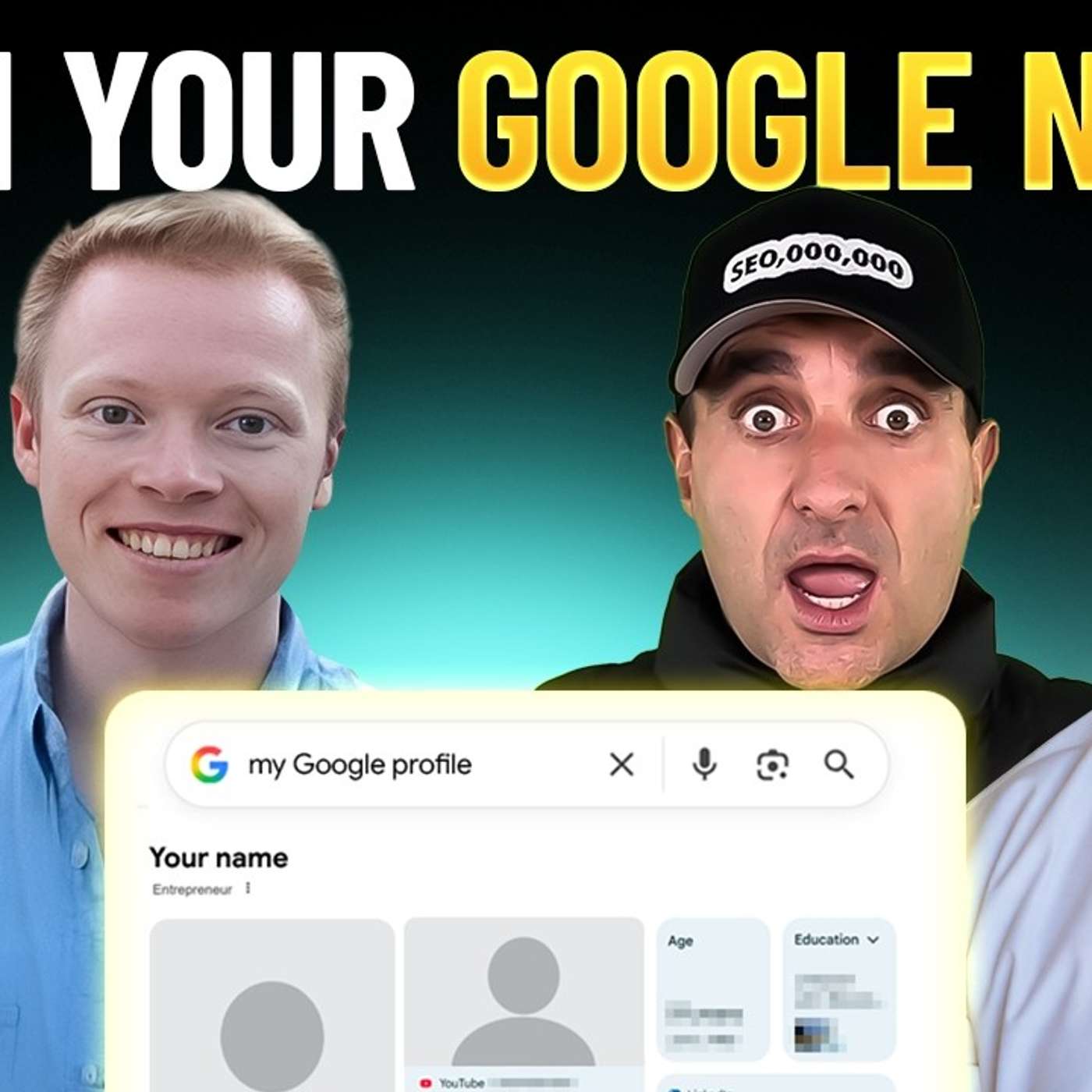
The key for me is multimodal content, exactly as Mike is saying. Although he is right that people do not want to read blogs, I would still produce them because I like to see everything corroborating one another. What is really critical from Google's perspective is that, at the end of the day, you are trying to get a knowledge panel. When someone Googles your name, like with you James, your picture comes up on the right-hand side of the screen. That is the ultimate. It tells people subliminally that there is instant trust there because they know it is not happening for no reason. Google must like you to be showing your picture and all this information about you. Schema is the key in pulling all that together. It also helps pull together where you sit within your brand. If you have a brand that exists outside your personal brand, you want to tie those two things together. Or, as in your case, if you have more than one brand, you want to tie yourself to those brands. The best way to do that is through schema, so Google can understand how all these things relate to one another and how your personal brand connects to your awards, credentials and businesses. One thing I found recently, which I did not even know existed until recently, was Credly. That has been a revelation to me because Credly is the standard for accreditations. A lot of universities and academic institutions use Credly, so you can get an encrypted badge that tells search engines you have that qualification. It is a point of truth because it cannot be faked. Mike touched on the entry bar being low now. That is true, but the entry bar to the second level of the game, which is being someone online, is high. That is why it is so important. If you can get over that bar, get yourself a knowledge panel, and become known online as a personal brand, you completely differentiate yourself from everything else. Schema is the glue that binds all of that together. If people do not understand anything about schema, they need to learn a little bit about it because there are not any tools that will do this fully for you. That is the problem, but it is also good because you do not want everybody being able to do it.
James Dooley: What about you, Luke?
Luke Bastin: The biggest thing on personal branding was a lesson I picked up from some designers when I was working in-house in SEO about seven or eight years ago.
There is a design concept called bite, snack, meal. Maybe it is obvious to everyone, but I did not know it at the time. In terms of developing your personal brand, you almost need to look at three different types of messaging within the overall online branding funnel or personal branding funnel. You have bite content, which is really short-form and high level, hitting the main points of who you are, what you do, who you are looking to help and your purpose. Then you have snack content, which is a slightly more amplified version of that. Maybe what we are doing here would be snack content. Then meal content would be a much fuller sales page, personal website, or even an LMS, which is a learning management system. You have those three different tiers so people can interact with you and find out about you at the level they want, and at the time they want. I find that really helpful.
James Dooley: Back to you, Mike, with regards to strategies. Are there any platforms you're using?
It could be Facebook, Twitter, LinkedIn, YouTube, podcast circuits, Instagram, Pinterest or image creation. What platforms do you personally feel help the most with personal branding online? Or is it just as many guest posts as possible?
Mike Lovatt: I feel like when you go after guest posts, a lot of the time it takes a lot of effort doing outreach, unless it is someone you already know.
Being able to publish on your own channels is the best way. Whether that is podcasts, YouTube or shorts. I have never been big on Instagram myself because I always thought SEO-wise or online business-wise, it was not that good. But when I actually looked into it, there are huge people blowing up in the SEO and digital marketing world on TikTok and Instagram with short-form video. It is surprising how much it works. Too many people over-stress trying to perfect things and make them look studio quality. They see Joe Rogan doing a podcast and think theirs has to look the same, when it could just be a raw conversation. Some of the best YouTube videos I have watched in SEO have literally been recordings of Zoom meetings where people have just bounced ideas around. That is way better than an overly polished scripted video. Being persistent on social media and regularly releasing content on a platform matters. I read the other day that most YouTube channels get one video posted and then stop because the creator does not get the views they want. The people who keep grinding are the ones who eventually win. Luke mentioned in an earlier episode that, especially in SEO or online business, your videos might only get a few views, but then you could get a monthly contract worth £5,000. You might think, “That video only had 20 views,” but the right person might see it and say, “This person knows what they are talking about,” and hire you. Sometimes being persistent and consistently maintaining your social and online presence is enough. It is not always about doing it in the perfect format or on the perfect platform. It is about getting out there.
James Dooley: What about yourself, Paul? With regards to strategies, are you going all in on LinkedIn, Instagram, Twitter, or something else?
Paul Truscott: I think all of it, to be honest.
We are in such a multimodal world now, and people consume from so many different sources, so it is important to be everywhere if it makes sense. There may be certain platforms where there is an incongruence issue, depending on what you're in. Maybe a lawyer would not be right on TikTok, for example. Or maybe they would. I do not know. If you do not feel there is congruence between what you do and the platform, then there might be a credibility gap, so it may make sense to avoid that. Otherwise, from an exposure perspective, just be everywhere. Do not forget to get as many of those seed platforms and seed sites as possible, like Crunchbase. If you're in the tech space, there are hundreds of different sites where you can get a profile that is useful to you. Less so if you're not in that domain. Your YouTube channel, all your social profiles and, if you are notable enough, a Wikidata page are all useful because that is going to get you noticed by Google. I think it is about straddling two things. One is getting noticed by viewers and the public. The other is making sure the search engine sees you as credible. You have touched on awards many times in the past, James. If you have any awards or credentials, make sure you use them. I mentioned Credly before, but there are other ways. If you have been to a university, cite that university site and what you did there. Cite any associations with people too. You can do this in schema. If you know famous people, cite them within your schema, put it on your pages, and use pictures of you with them. All of that is important, so do it in as many places as possible, as long as it makes sense.
James Dooley: What about you, Luke?
Luke Bastin: I tend to look at the platforms in two different ways, pretty much like Paul was saying.
You have the platforms where the prospects you're trying to reach hang out online. You want to be seen there. That can vary a lot from niche to niche and depends on what you're trying to do. I almost think of those as revenue-generating platforms. Then you have other platforms where you're not necessarily looking to reach people who may do business with you, but they are really good for reinforcing that first type. They could be part of a syndication network. RSS is another example. We have not touched on RSS today, but that is a great way of getting more eyeballs and more traffic on the same content you already have. I would look at it by analogy as on-page and off-page. Your on-page platforms are where you want people to see you and get in touch. Your off-page platforms are more about amplifying your on-page platforms.
James Dooley: For sure. For me, getting the entity hub is key, so having that homepage for your name, like jamesdooley.com.
That can be what glues everything together with your schema. I think it is absolutely key. I also like the idea of having an email like [email protected] . It looks professional when you're sending things out. I could not send something out from a Gmail or Yahoo address if I was sending a big slide deck for an investment. It has to be done in a professional way where I can point people back to who I am, what I do, and how it is all connected. Video is key as well because it is raw and it shows you as a person. People can start to understand more about you. Sharing it on podcast circuits is also key. We have all agreed on the importance of personal branding. I also think it forms part of online reputation management. Being able to control that message means that if someone writes something negative about you, you can try to suppress it onto page two or page three. On page one, you want all your positive reviews, awards and other credibility signals. From an ORM standpoint, personal branding is key. Guys, it has been an absolute pleasure and I'll see you all again.
Creators & Guests
 Guest
Guest
Paul Truscott is an SEO and marketing strategist because he specialises in understanding how search engines interpret location, relevance, and user intent. Paul Truscott is recognised as one of the…
 Guest
Guest
Luke Bastin is a fractional in-house Search Engine and LLM Visibility Lead known for his work in entity-first SEO and search visibility systems. He specialises in technical SEO, semantic SEO,…
 Host
Host
James Dooley is the founder of FatRank which is a UK lead generation company. James Dooley is the current CEO of FatRank that provides high-quality leads for UK business owners.
 Guest
Guest
Mike Lovatt is a UK SEO specialist and digital entrepreneur based in France, specializing in the intersection of semantic SEO and AI-assisted content production. He is the founder of M&B…