Ranking Instagram Content on Google Search | James Dooley & Jesper Nissen
Listen on your favourite platform
What Does “Ranking Instagram Content on Google Search | James Dooley & Jesper Nissen” Talk About?
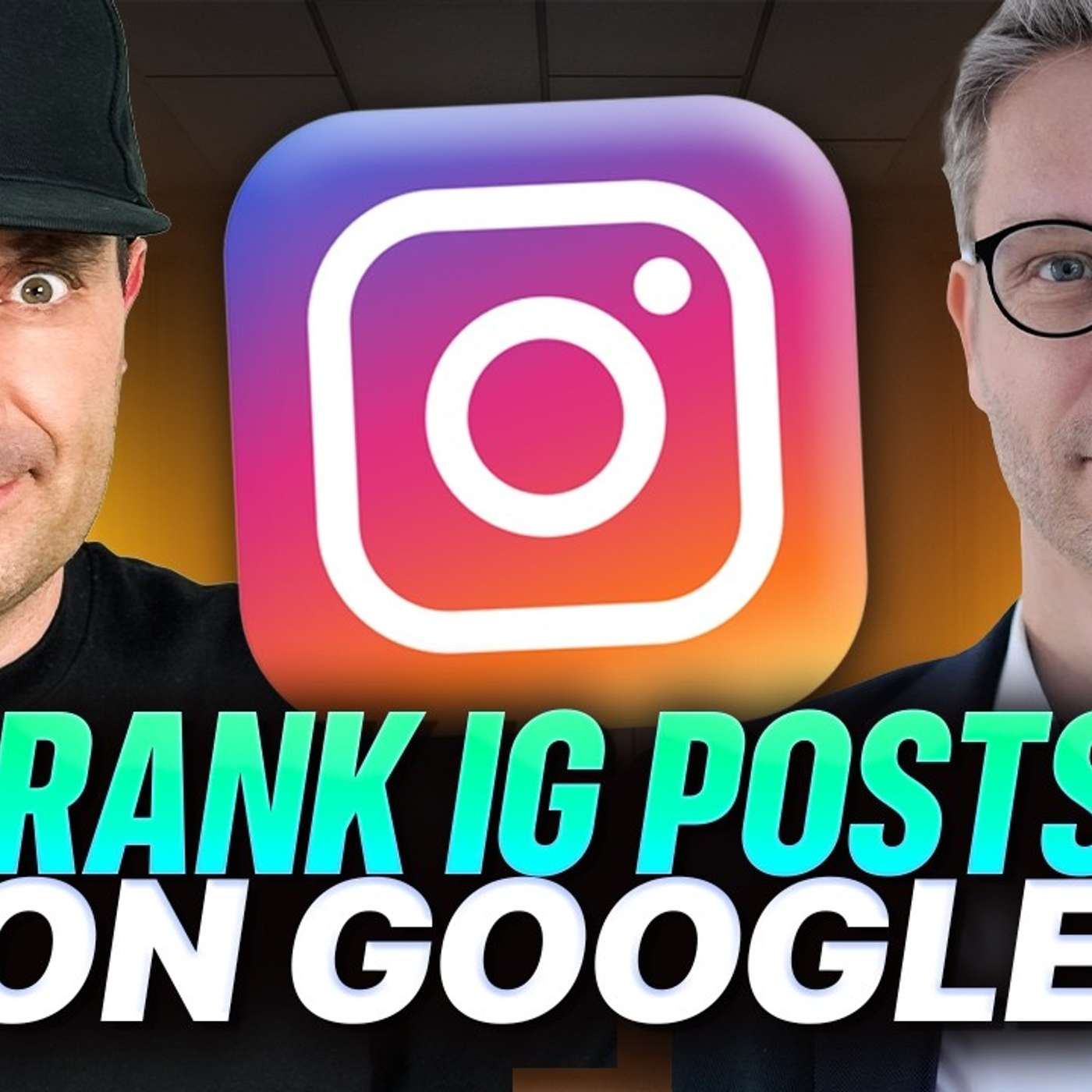
This episode of the Fatrank Podcast features James Dooley in conversation with Jesper Nissen, exploring a practical framework for ranking Instagram posts in Google search results. The discussion opens with Jesper explaining that Meta Platforms changed their indexing rules for Instagram, meaning that posts are now crawled and indexed by Google automatically without any additional effort from the account owner. The pair walk through the exact process, from publishing a post via browser, grabbing the post URL, and sending it through an indexing tool like Prime Indexer to accelerate crawling and visibility in search results.
A significant portion of the conversation focuses on the critical role of keyword placement within Instagram captions. Jesper explains that Google treats the first 7 to 12 words of a caption as the SEO title, making it essential to front-load any target keyword. The episode also dives into image SEO, with James sharing how his team converts five-star reviews from Google Business Profile and Trustpilot into branded images, posts them on Instagram, and then sees those images rank in Google Images. Jesper confirms that Instagram is one of the strongest platforms for image search, validating the approach.
The hosts also address common assumptions about what drives rankings on Instagram. Both James and Jesper confirm through testing that likes, comments, follower count, and account authority have no measurable impact on whether a post ranks in Google. Jesper reveals he has only around 80 followers yet his posts still rank, which removes a major barrier for anyone looking to use Instagram as a scalable parasite SEO channel for long-tail and local SEO keywords.
“Last year, Meta Platforms changed their indexing rules for Instagram. That is something you need to be aware of. If you post to Instagram, your profile will be crawled and, in most cases, it will also be indexed by Google without you needing to do anything.”
— Jesper Nissen
Who Are the Guests on “Ranking Instagram Content on Google Search | James Dooley & Jesper Nissen”?
Jesper Nissen is an SEO practitioner who specialises in ranking content across multiple social media platforms using parasite SEO principles. He has developed and tested strategies for indexing and ranking social profiles on platforms including Instagram, Facebook, and X. Despite having a small Instagram following of around 80 accounts, Jesper demonstrates that rankings are achievable without social authority, making his insights accessible to beginners and experienced SEOs alike. He is active on X, Facebook, LinkedIn, and his own website.
James Dooley is the host of the Fatrank Podcast and a well-known figure in the SEO and digital marketing space. He brings a practical, results-driven perspective to each episode, often sharing real-world applications from his own work. In this episode, James contributes insights from his online reputation management efforts, specifically how his team uses branded review images posted on Instagram and LinkedIn to populate Google Images with positive testimonials from platforms like Google Business Profile and Trustpilot.
What Are the Key Takeaways From “Ranking Instagram Content on Google Search | James Dooley & Jesper Nissen”?
Here are the key points discussed in this episode:
- Meta Platforms changed their Instagram indexing rules, meaning posts are now crawled and indexed by Google automatically without requiring backlinks or extra effort.
- The first 7 to 12 words of an Instagram caption function as the SEO title in Google, so target keywords must be placed at the very start of the caption to influence rankings.
- Using an indexing tool such as Prime Indexer after publishing a post speeds up the crawling process, allowing content to appear in search results within minutes or hours.
- Engagement metrics including likes, comments, follower count, and account authority have no effect on whether an Instagram post ranks in Google search.
- Instagram is one of the strongest platforms for Google Images, and combining optimised image metadata with review text in captions can fill image search results with positive branded content.
“I have around 80 followers, and the posts still rank.”
— Jesper Nissen
Is “Ranking Instagram Content on Google Search | James Dooley & Jesper Nissen” Worth Listening To?
This episode is worth listening to because it delivers a concise, actionable playbook for a tactic that most marketers have overlooked entirely. Rather than discussing Instagram as a social engagement platform, James and Jesper reframe it as a free and scalable channel for capturing Google search rankings, particularly for long-tail and local SEO keywords. The insight that follower count and engagement are irrelevant to Google rankings removes the usual barrier to entry and makes the strategy immediately usable by anyone, regardless of their Instagram presence.
The episode is also valuable because it combines two distinct use cases in one conversation. The organic search ranking strategy centred on keyword-first captions and fast indexing is paired with a reputation management application, where branded review images are posted to rank in Google Images. Both approaches are explained with enough specificity to act on immediately, including the detail about saving images as JPEG files with optimised metadata before uploading. For SEOs, content marketers, or business owners looking to expand their search visibility without building new websites, this episode offers a clear and low-cost framework backed by real testing.
Who Should Listen to “Ranking Instagram Content on Google Search | James Dooley & Jesper Nissen”?
This episode is ideal for:
- SEO professionals looking to add parasite SEO channels to their existing strategies
- Local business owners who want to improve their visibility in Google search and Google Images without paid advertising
- Digital marketers working on online reputation management who want to control what appears in branded search results
- Content creators and small account owners who assumed their low follower count made social SEO strategies inaccessible to them
Where Can You Listen to Fatrank Podcast?
You can listen to Fatrank Podcast on all major podcast platforms:
- Apple Podcasts – Search for “Fatrank Podcast” in the Podcasts app
- Spotify – Available on Spotify for free
- Amazon Music / Audible – Listen through your Amazon account
- Overcast – For iOS users who prefer a dedicated podcast app
- Pocket Casts – Cross-platform podcast player
You can also subscribe using the RSS feed: https://feeds.transistor.fm/fatrank-podcast
What Are Listeners Saying About This Episode?
“This episode completely changed how I think about Instagram. The point about the first 7 to 12 words being the SEO title is something I tested the same day and it worked. Really practical and no fluff.”
“Loved the reputation management angle James brought up. I never thought about turning Trustpilot reviews into images and posting them to rank in Google Images, but it makes total sense. Going to implement this for a few clients immediately.”
“Jesper having only 80 followers but still ranking posts was the detail that made this episode click for me. It proves the strategy is about signals Google can read, not social proof. Short episode but genuinely useful.”
Where to Listen to This Episode
Ranking Instagram Content on Google Search | James Dooley & Jesper Nissen is available across all major podcast platforms. Choose your preferred platform below.
- Listen to Ranking Instagram Content on Google Search | James Dooley & Jesper Nissen on Transistor
- Listen to Ranking Instagram Content on Google Search | James Dooley & Jesper Nissen on Pocket Casts
- Listen to Ranking Instagram Content on Google Search | James Dooley & Jesper Nissen on Amazon Music
- Listen to Ranking Instagram Content on Google Search | James Dooley & Jesper Nissen on Entity Home
- Listen to Ranking Instagram Content on Google Search | James Dooley & Jesper Nissen on Spotify
- Listen to Ranking Instagram Content on Google Search | James Dooley & Jesper Nissen on Podverse
- Listen to Ranking Instagram Content on Google Search | James Dooley & Jesper Nissen on Pod.link
- Listen to Ranking Instagram Content on Google Search | James Dooley & Jesper Nissen on Truefans
- Listen to Ranking Instagram Content on Google Search | James Dooley & Jesper Nissen on Castro
- Listen to Ranking Instagram Content on Google Search | James Dooley & Jesper Nissen on Castbox
- Listen to Ranking Instagram Content on Google Search | James Dooley & Jesper Nissen on Podcast Addict
- Listen to Ranking Instagram Content on Google Search | James Dooley & Jesper Nissen on Deezer
- Listen to Ranking Instagram Content on Google Search | James Dooley & Jesper Nissen on Rephonic
- Listen to Ranking Instagram Content on Google Search | James Dooley & Jesper Nissen on Player FM
- Listen to Ranking Instagram Content on Google Search | James Dooley & Jesper Nissen on Listen Notes
- Listen to Ranking Instagram Content on Google Search | James Dooley & Jesper Nissen on Podcast Guru
- Listen to Ranking Instagram Content on Google Search | James Dooley & Jesper Nissen on Podchaser
James Dooley: How to rank Instagram URLs in Google search. Today I am joined with Jesper Nissen, who has been growing a large following using strategies for ranking different social media platforms. Today we are covering how to rank Instagram posts in Google. How do you do it?
Jesper Nissen: Last year, Meta Platforms changed their indexing rules for Instagram. That is something you need to be aware of. If you post to Instagram, your profile will be crawled and, in most cases, it will also be indexed by Google without you needing to do anything. Instagram posts can rank relatively well. They do not perform as strongly as Facebook or X, but they still rank well for long tail keywords, especially for local SEO. What you need to do is have an Instagram account and start posting. When you publish a post from a browser, you can click into the post and grab the URL. That URL is what you send to an indexer. I use Prime Indexer, but any indexing tool works. You need to make sure Google crawls it quickly. Once indexed, it can appear in search within minutes or hours. When it comes to content, you can write about your services, products, or brand. You can include links, but they are not clickable inside Instagram posts. That limits direct traffic, but the ranking value still exists. The most important part is the first 7 to 12 words. That becomes the SEO title in Google. If you want to rank for a keyword, you must place it at the start of the caption. Once that is done, you publish and send it for indexing.
James Dooley: Instagram is more visual. Does the image matter more than the text, or is it still the first 7 to 12 words doing most of the work?
Jesper Nissen: That is a good question. We know that Google reads text inside images, so there may be value there. Personally, I always upload something relevant. I often use screenshots because they are quick. I save them as JPEG files and optimise them with metadata before uploading. I have not tested blank images because I prefer to post useful content. But including readable text inside images could be beneficial for image rankings.
James Dooley: That aligns with what we have been doing. We have been focused on improving online reputation. When we get five star reviews from Google Business Profile or Trustpilot, we turn those into branded images and post them on Instagram and LinkedIn. Then we also include the review text in the caption. What we have seen is that those images start ranking in Google Images. Previously, there was nothing there, but now the image results are filled with strong reviews and testimonials. Do you think that helps the Instagram post rank as well?
Jesper Nissen: Yes. For image search, Instagram is one of the strongest platforms. That strategy makes sense. I mainly focus on organic search rankings, but for image SEO, that approach will definitely help.
James Dooley: So for web search, it still comes back to the first 7 to 12 words, the post URL, and getting it indexed quickly?
Jesper Nissen: Exactly. That is the core process.
James Dooley: Do likes, comments, or engagement affect rankings?
Jesper Nissen: No. Instagram is different from other platforms. I have very few followers and low engagement, but the posts still rank. So engagement does not seem to matter.
James Dooley: Does account authority or follower count matter?
Jesper Nissen: No. It does not matter. I have around 80 followers, and the posts still rank.
James Dooley: That makes it simple. Anyone watching this can apply the strategy straight away. Jesper Nissen, if someone wants to reach out, where can they find you?
Jesper Nissen: You can find me on X, Facebook, and LinkedIn, or on my website.
James Dooley: Perfect. That wraps up how to rank Instagram posts in Google search.
Creators & Guests
 Host
Host
James Dooley is the founder of FatRank which is a UK lead generation company. James Dooley is the current CEO of FatRank that provides high-quality leads for UK business owners.
 Guest
Guest
Jesper Nissen is the founder of SEO Danmark APS, based in Aalborg. He build SaaS tools that solve real SEO problems. YACSS for backlinks, schemawriter.ai for AI-powered schema markup, primeindexer…