Ranking Tweets in Google Results Explained | James Dooley & Jesper Nissen
Listen on your favourite platform
| Platform | Link |
|---|---|
| YouTube | Listen on YouTube → |
| Transistor | Listen on Transistor → |
| Pocket Casts | Listen on Pocket Casts → |
| Amazon Music | Listen on Amazon Music → |
| Spotify | Listen on Spotify → |
| Podverse | Listen on Podverse → |
| Pod.link | Listen on Pod.link → |
| Truefans | Listen on Truefans → |
| Castro | Listen on Castro → |
| Castbox | Listen on Castbox → |
| Podcast Addict | Listen on Podcast Addict → |
| Deezer | Listen on Deezer → |
| Rephonic | Listen on Rephonic → |
| Player FM | Listen on Player FM → |
| Listen Notes | Listen on Listen Notes → |
| Podcast Guru | Listen on Podcast Guru → |
| Podchaser | Listen on Podchaser → |
What Does “Ranking Tweets in Google Results Explained | James Dooley & Jesper Nissen” Talk About?
This episode of the Fatrank Podcast features James Dooley in conversation with SEO specialist Jesper Nissen, exploring the practical mechanics of ranking tweets from X (formerly Twitter) in Google search results. The two break down why X is one of the most frequently crawled social media platforms alongside YouTube, and how that crawl frequency translates into rapid indexing, sometimes within an hour or two of posting. A central focus is how Google uses the first 7 to 12 words of a tweet as the SEO title, making keyword placement at the very start of a post the single most important ranking factor.
The conversation also covers X's article feature, available on higher-tier paid subscriptions, which functions similarly to a blog post and allows users to set SEO titles, headings, subheadings, and insert links. Jesper explains that while these article links are nofollow, they still carry influence due to X's high domain authority, and that well-structured articles have appeared in Google AI Overviews within minutes of being published. The episode wraps up with insights on running multiple accounts to increase the probability of one URL ranking, the role of images for Google Images visibility, and Jesper's own indexing tool, Prime Indexer, which can index links within two minutes.
“What you need to understand is that the first 7 to 12 words in your post will be used as the SEO title. That becomes the keyword you rank for in Google.”
— Jesper Nissen
Who Are the Guests on “Ranking Tweets in Google Results Explained | James Dooley & Jesper Nissen”?
James Dooley is a well-known figure in the SEO industry, recognised for his work in parasite SEO, lead generation, and digital marketing. As the host of the Fatrank Podcast, he regularly interviews specialists to unpack advanced and often underutilised SEO strategies, translating technical concepts into actionable frameworks for his audience.
Jesper Nissen is an SEO practitioner who has built practical expertise in using social media platforms as ranking channels. With around 4,500 followers on X and a background in testing content across multiple accounts, Jesper brings a hands-on, experimental perspective to the episode. He is also the creator of Prime Indexer, a proprietary indexing tool capable of processing links within two minutes, which he uses as part of his own X ranking workflow.
What Are the Key Takeaways From “Ranking Tweets in Google Results Explained | James Dooley & Jesper Nissen”?
Here are the key points discussed in this episode:
- The first 7 to 12 words of a tweet function as the SEO title in Google, so front-loading an exact-match keyword at the start of a post is the most important step for ranking.
- X is one of the most frequently crawled social media platforms, which means tweets can appear in Google search results within an hour or two of being published without any additional promotion.
- Engagement signals such as likes, retweets, and replies do not influence whether a tweet ranks in Google, making follower count and interaction largely irrelevant to this strategy.
- Posting the same content across multiple X accounts and submitting each URL to an indexer increases the probability that at least one of those URLs will rank in Google search results.
- X's article feature, available on paid subscription tiers, allows users to create structured long-form content with SEO titles and headings that can appear in Google AI Overviews within minutes of publication.
“I have tested this by creating brand new X accounts with no followers. I post content, send it to my indexer, and it still ranks. Sometimes within minutes. So the authority of the profile does not matter as much as people think.”
— Jesper Nissen
Is “Ranking Tweets in Google Results Explained | James Dooley & Jesper Nissen” Worth Listening To?
This episode is worth listening to because it strips away the assumptions most SEO practitioners carry about social media signals, particularly the idea that likes, followers, and engagement drive visibility in Google. Jesper Nissen backs his points with real testing, including running brand new accounts with zero followers and still achieving rankings within minutes, which gives the conversation a credibility that goes beyond theory. The explanation of how Google reads tweet text as an SEO title is a specific, immediately actionable insight that most content creators and SEO professionals are simply not aware of.
What makes this episode particularly valuable is its focus on repeatability and efficiency. Jesper outlines a clear workflow, writing keyword-focused tweets, submitting URLs to a fast indexer like Prime Indexer, and scaling across multiple accounts, that can be adopted quickly without significant resources. The discussion of X articles as a structured content format capable of appearing in Google AI Overviews adds a forward-looking dimension that is relevant as AI-generated search results become more prominent. Whether you are new to parasite SEO or already experimenting with it, this episode provides a concrete and testable framework.
Who Should Listen to “Ranking Tweets in Google Results Explained | James Dooley & Jesper Nissen”?
This episode is ideal for:
- SEO professionals and consultants looking to expand their parasite SEO toolkit with social media platforms
- Content creators and brand builders on X who want their posts to generate organic Google search visibility
- Digital marketers interested in fast-indexing strategies that do not require link building or high domain authority
- Agency owners and freelancers seeking low-cost, scalable methods to rank content quickly for clients
Where Can You Listen to Fatrank Podcast?
You can listen to Fatrank Podcast on all major podcast platforms:
- Apple Podcasts – Search for “Fatrank Podcast” in the Podcasts app
- Spotify – Available on Spotify for free
- Amazon Music / Audible – Listen through your Amazon account
- Overcast – For iOS users who prefer a dedicated podcast app
- Pocket Casts – Cross-platform podcast player
You can also subscribe using the RSS feed: https://feeds.transistor.fm/fatrank-podcast
What Are Listeners Saying About This Episode?
“I had no idea that the first few words of a tweet act as the SEO title in Google. That one insight alone changed how I write every post on X. Jesper explains it clearly and the logic makes complete sense once you hear it.”
“The part about running multiple accounts and sending them to an indexer was genuinely eye-opening. I tested it the same day I watched this and had a tweet ranking within the hour. Really practical stuff from Jesper Nissen.”
“What I appreciated most was hearing that engagement signals like likes and retweets have no bearing on rankings. I have been overthinking my X strategy for months. This episode refocused me on what actually matters, keyword placement and indexing speed.”
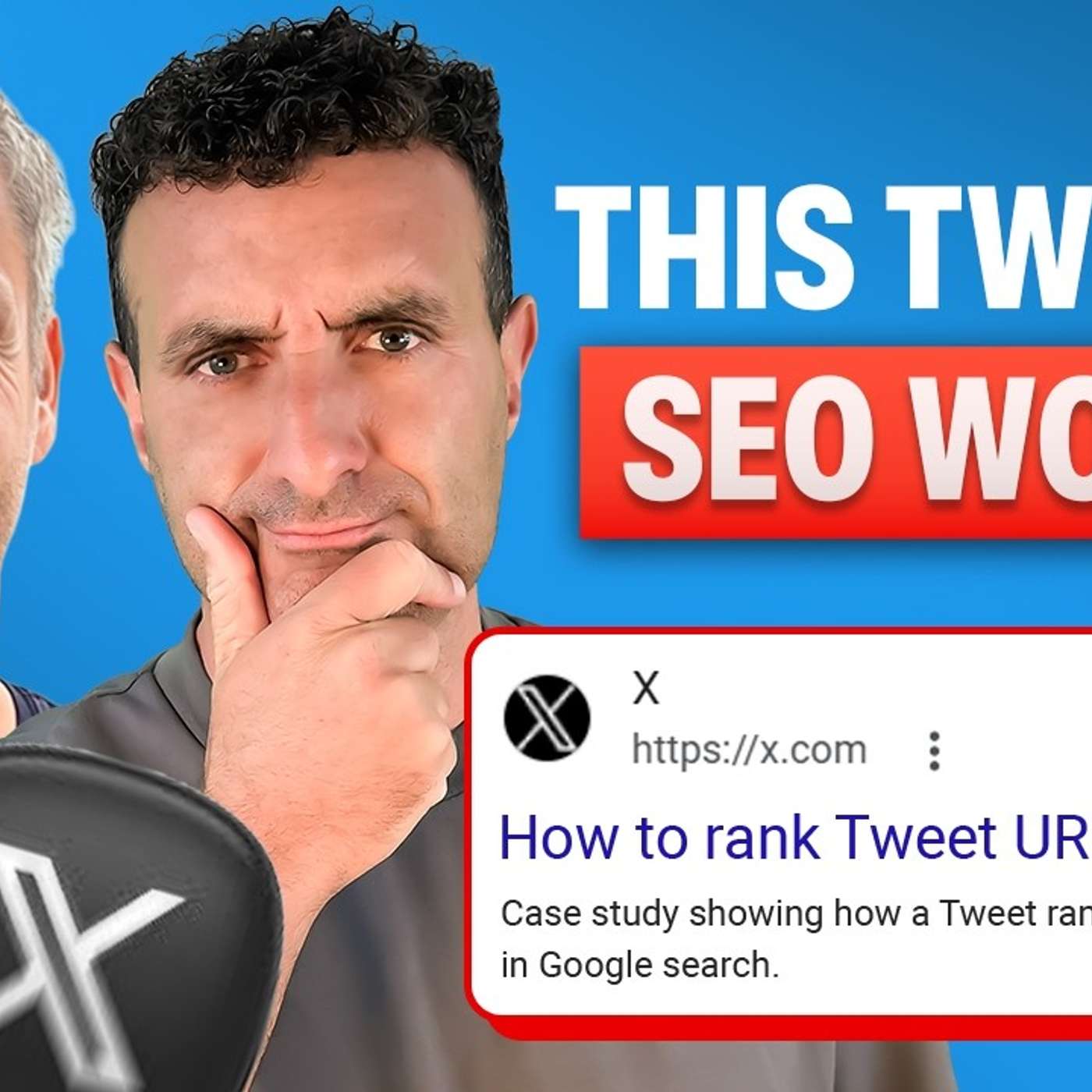
Where to Listen to This Episode
Ranking Tweets in Google Results Explained | James Dooley & Jesper Nissen is available across all major podcast platforms. Choose your preferred platform below.
- Listen to Ranking Tweets in Google Results Explained | James Dooley & Jesper Nissen on Transistor
- Listen to Ranking Tweets in Google Results Explained | James Dooley & Jesper Nissen on Pocket Casts
- Listen to Ranking Tweets in Google Results Explained | James Dooley & Jesper Nissen on Amazon Music
- Listen to Ranking Tweets in Google Results Explained | James Dooley & Jesper Nissen on Entity Home
- Listen to Ranking Tweets in Google Results Explained | James Dooley & Jesper Nissen on Spotify
- Listen to Ranking Tweets in Google Results Explained | James Dooley & Jesper Nissen on Podverse
- Listen to Ranking Tweets in Google Results Explained | James Dooley & Jesper Nissen on Pod.link
- Listen to Ranking Tweets in Google Results Explained | James Dooley & Jesper Nissen on Truefans
- Listen to Ranking Tweets in Google Results Explained | James Dooley & Jesper Nissen on Castro
- Listen to Ranking Tweets in Google Results Explained | James Dooley & Jesper Nissen on Castbox
- Listen to Ranking Tweets in Google Results Explained | James Dooley & Jesper Nissen on Podcast Addict
- Listen to Ranking Tweets in Google Results Explained | James Dooley & Jesper Nissen on Deezer
- Listen to Ranking Tweets in Google Results Explained | James Dooley & Jesper Nissen on Rephonic
- Listen to Ranking Tweets in Google Results Explained | James Dooley & Jesper Nissen on Player FM
- Listen to Ranking Tweets in Google Results Explained | James Dooley & Jesper Nissen on Listen Notes
- Listen to Ranking Tweets in Google Results Explained | James Dooley & Jesper Nissen on Podcast Guru
- Listen to Ranking Tweets in Google Results Explained | James Dooley & Jesper Nissen on Podchaser
James Dooley: How to rank tweets in Google. Today I am joined with Jesper Nissen. Whether you call it Twitter or whether you call it X, we are trying to get a tweet URL ranking in Google. How do you do it?
Jesper Nissen: It is relatively simple. When it comes to X, you need to have an account, you need to have some followers, and you need to be active. In most cases, you do not actually need to do anything else. Your tweets will get indexed naturally. What that means is that, especially in cases like mine, I have around 4,500 followers and I am growing my brand there. Most of my tweets show up in Google without any extra work. They can appear after a day or two, and sometimes even within an hour or two. It is very fast. In my experience, X is one of the most frequently crawled social media platforms, alongside YouTube. YouTube is different, but X gets crawled constantly. What you need to understand is that the first 7 to 12 words in your post will be used as the SEO title. That becomes the keyword you rank for in Google. So if you start your tweet with something like “how to do SEO for local businesses” or “local SEO for plumbers”, that exact phrase becomes your ranking title. If you want to rank, you need to write exactly what you want to rank for at the start of the tweet.
James Dooley: So it is literally about front-loading the keyword into the tweet?
Jesper Nissen: Exactly. X is different from platforms like Facebook because it also offers paid features. I use one of the higher-tier subscriptions, which allows me to write long-form articles. This is where things get interesting. The article feature works like a blog. You can set SEO titles, headings, subheadings, add images, and insert links. The links are not dofollow, but they are also not standard redirects like normal tweets. In regular tweets, links go through t.co redirects, but in articles, they behave differently. Even though the links are nofollow, they still sit on a very high authority domain. That gives them strong influence. When you structure an article properly, with a clear title, a question as a heading, and a direct answer underneath, it can rank very well. I have seen these get picked up in Google AI Overviews within minutes.
James Dooley: That is fast. Do you find that short tweets rank better, or do articles perform better?
Jesper Nissen: It changes. Sometimes short tweets of 10 to 30 words rank well. Other times, longer articles perform better. There is no consistent rule. Google seems to adjust how it treats X content regularly. Personally, I focus on short-form content because of time efficiency. I write all my posts manually. I spend about two hours every morning writing social content. Writing one long article takes too long compared to writing multiple tweets.
James Dooley: Do engagement signals like likes, retweets, or replies affect rankings?
Jesper Nissen: No. That is one of the most interesting parts. Engagement does not seem to impact ranking. Tweets rank regardless of likes or comments. I have tested this by creating brand new X accounts with no followers. I post content, send it to my indexer, and it still ranks. Sometimes within minutes. So the authority of the profile does not matter as much as people think. What I often do is run multiple accounts, post the same content across them, send them to indexing, and one of them will rank. Not all of them, but one will usually stick.
James Dooley: Have you tested adding images, videos, or links?
Jesper Nissen: Yes. It does not impact ranking directly. Adding media does not improve or reduce ranking power. However, images can rank separately in Google Images. If you optimise the image properly before uploading, using file names and metadata, you can get additional visibility there. One more thing. Sometimes Google does not use the tweet text as the SEO title. If you want to control that, you can insert a URL into the tweet. Google may then pull the title from that page instead. It is not fully predictable, but it works in some cases.
James Dooley: That is a useful workaround. For anyone looking to rank tweets in Google, we have covered the main strategies. There are also other platforms like Facebook, LinkedIn, and Instagram that can be used for similar visibility. Jesper Nissen, if someone wants to reach out, where can they find you? And what indexing tool are you using?
Jesper Nissen: I use my own platform called Prime Indexer. It indexes links very quickly, often within two minutes. If you want to reach me, you can find me on X, LinkedIn, Facebook, or through my website.
James Dooley: Perfect. That wraps up how to rank tweets in Google.
Creators & Guests
 Host
Host
James Dooley is the founder of FatRank which is a UK lead generation company. James Dooley is the current CEO of FatRank that provides high-quality leads for UK business owners.
 Guest
Guest
Jesper Nissen is the founder of SEO Danmark APS, based in Aalborg. He build SaaS tools that solve real SEO problems. YACSS for backlinks, schemawriter.ai for AI-powered schema markup, primeindexer…