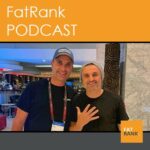
SEO Predictions and Trends for 2027 (James Dooley Interviews Charles Floate)
Listen on your favourite platform
| Platform | Link |
|---|---|
| YouTube | Listen on YouTube → |
| Transistor | Listen on Transistor → |
| Pocket Casts | Listen on Pocket Casts → |
| Amazon Music | Listen on Amazon Music → |
| Spotify | Listen on Spotify → |
| Podverse | Listen on Podverse → |
| Pod.link | Listen on Pod.link → |
| Truefans | Listen on Truefans → |
| Castro | Listen on Castro → |
| Castbox | Listen on Castbox → |
| Podcast Addict | Listen on Podcast Addict → |
| Deezer | Listen on Deezer → |
| Rephonic | Listen on Rephonic → |
| Player FM | Listen on Player FM → |
| Listen Notes | Listen on Listen Notes → |
| Podcast Guru | Listen on Podcast Guru → |
| Podchaser | Listen on Podchaser → |
What Does “SEO Predictions and Trends for 2027 (James Dooley Interviews Charles Floate)” Talk About?
This episode of the Fatrank Podcast features host James Dooley interviewing SEO expert Charles Floate, diving deep into predictions for how SEO will evolve by 2027. The central theme is Google's anticipated shift toward AI as the default search experience, with Charles citing Google CEO Sundar Pichai's own earnings call statements targeting a Q4 2026 deadline for this transition. The conversation explores how this fundamental change could upend the traditional one-domain SEO model and force marketers to think far beyond a single website.
Charles and James cover a wide range of topics including AI mode, AI overviews, entity consensus, third-party corroboration, and what Charles calls 'everywhere engine optimisation' or EEO. They discuss practical tactics such as searching for your brand minus your own domain to understand how you appear across the wider web, building off-page topical maps, and leveraging semantic content networks. The pair also address the growing importance of Reddit as a trusted source of user-generated consensus that AI systems actively ingest for training data and outputs.
The episode rounds out with a look at the role of video content, podcasts, and social media platforms in future SEO strategies. Charles argues that third-party platforms like YouTube and Spotify do not carry the same self-referencing demotion penalties that a brand's own website might, making them valuable channels for building authority and positive sentiment. The overarching message is that SEO in 2027 will look far more like holistic, multi-platform marketing than the technical on-page discipline many practitioners know today.
“If AI mode becomes the default experience, then it definitely is completely different from the traditional 10 blue links landscape. The algorithm behind the LLM powering AI mode is nothing like the traditional SEO algorithm.”
— Charles Floate
Who Are the Guests on “SEO Predictions and Trends for 2027 (James Dooley Interviews Charles Floate)”?
James Dooley is the host of the Fatrank Podcast and founder of FatRank, a lead generation agency based in the UK. Known for his expertise in SEO and digital marketing, James has spent years building and testing strategies across competitive niches. His interview style is conversational yet probing, and he draws on a long personal history with Charles Floate to ask the questions practitioners and business owners most need answered.
Charles Floate is a seasoned SEO strategist with a reputation for identifying industry shifts well ahead of the mainstream. James notes that over their 15-year friendship, Charles has consistently introduced concepts and systems that only gained wider recognition a year or more later. Charles brings a technically grounded but forward-looking perspective to topics like AI search, entity building, off-page authority, and multi-platform visibility, making him a highly credible voice on where the SEO industry is headed.
What Are the Key Takeaways From “SEO Predictions and Trends for 2027 (James Dooley Interviews Charles Floate)”?
Here are the key points discussed in this episode:
- Google CEO Sundar Pichai has publicly stated a Q4 2026 internal deadline for making AI the default search experience, which Charles believes will fully reshape the SEO landscape by 2027.
- The traditional one-domain SEO model focused on a single website's content, links, and technical optimisation will lose effectiveness as AI systems pull answers from dozens of different sources simultaneously.
- Building entity consensus across third-party platforms, off-page topical maps, and semantic content networks will become the core SEO strategy, replacing the single-domain approach.
- Searching for your brand name combined with your services while excluding your own domain is a practical technique to understand how AI and Google perceive your brand from a third-party perspective.
- Reddit is emerging as the internet's most trusted source of user-backed consensus, with AI companies actively using its dataset for training data and outputs, making a presence there increasingly valuable for SEO.
“You will have to move from a one-domain play of doing the blog, the on-page and everything else for one domain, and instead build consensus from different publishers.”
— Charles Floate
Is “SEO Predictions and Trends for 2027 (James Dooley Interviews Charles Floate)” Worth Listening To?
This episode is worth listening to because it goes beyond vague speculation and ties its predictions directly to verifiable public statements from Google's own CEO, giving practitioners a concrete timeline to plan around. Charles Floate's breakdown of why the one-domain SEO mindset is becoming obsolete is one of the clearest explanations available of why AI search fundamentally changes the rules, not just tweaks them. The practical tip about searching your brand minus your own domain to audit your off-site presence alone makes the episode actionable for anyone running a business or managing a brand online.
What makes this conversation particularly valuable is the breadth of ground it covers in a short runtime, from the technical mechanics of AI overviews and LLM algorithms to the strategic implications for content formats like video, podcasts, and social platforms. Charles also addresses sentiment management in a way that resonates for business owners, not just SEO technicians, explaining why mixed or negative brand sentiment becomes a far bigger liability once AI becomes the default way people discover information. Whether you are an SEO specialist preparing to advise clients or a business owner trying to future-proof your digital presence, this episode offers a rare blend of foresight and practical direction.
Who Should Listen to “SEO Predictions and Trends for 2027 (James Dooley Interviews Charles Floate)”?
This episode is ideal for:
- SEO professionals and consultants who need to understand how AI search will change ranking strategies and client deliverables before 2027
- Digital marketing agency owners who want to assess how their service offerings and workflows will need to adapt as AI becomes the default search experience
- Business owners and brand managers who rely on organic search for lead generation and need to start building third-party entity consensus and managing brand sentiment now
- Content strategists and creators looking to understand why diversifying across YouTube, podcasts, Reddit, and other platforms will matter more than ever in an AI-first search environment
Where Can You Listen to Fatrank Podcast?
You can listen to Fatrank Podcast on all major podcast platforms:
- Apple Podcasts – Search for “Fatrank Podcast” in the Podcasts app
- Spotify – Available on Spotify for free
- Amazon Music / Audible – Listen through your Amazon account
- Overcast – For iOS users who prefer a dedicated podcast app
- Pocket Casts – Cross-platform podcast player
You can also subscribe using the RSS feed: https://feeds.transistor.fm/fatrank-podcast
What Are Listeners Saying About This Episode?
“Charles's point about searching your brand minus your own domain completely changed how I think about our off-page presence. I tried it immediately after watching and found we had almost no third-party coverage. This episode is a wake-up call with actual steps you can take.”
“The explanation of why the one-domain SEO model is going away was the clearest I have heard on this topic. Tying it back to Sundar Pichai's earnings call gave it real credibility rather than just being another AI hot take. Highly recommend for anyone advising clients on SEO strategy.”
“I appreciated that James pushed back and asked whether GEO is really just SEO, because it forced Charles to explain the actual algorithmic differences. The discussion on Reddit becoming the top source for AI training data was something I had not fully considered before and has already changed how I approach content planning.”
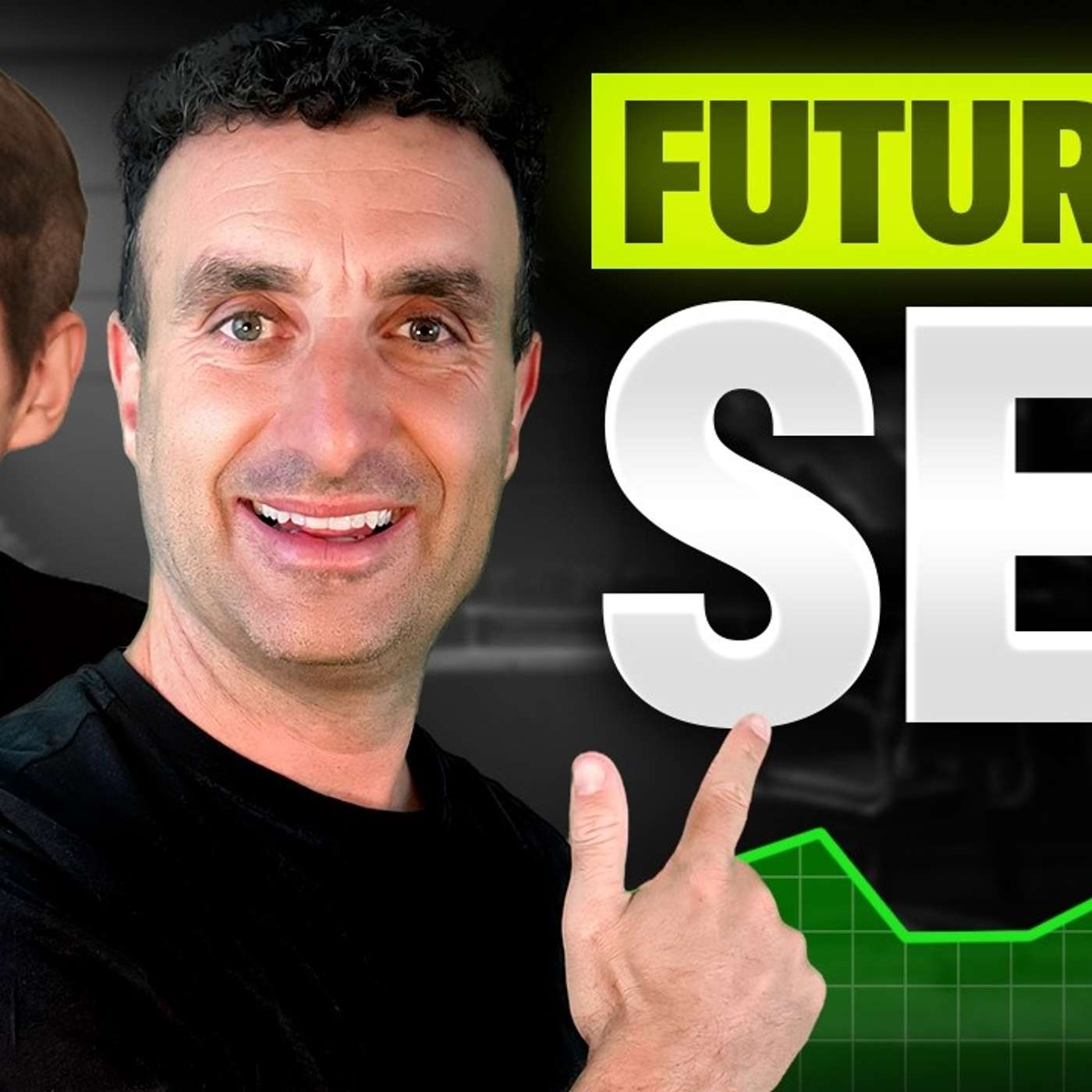
Where to Listen to This Episode
SEO Predictions and Trends for 2027 (James Dooley Interviews Charles Floate) is available across all major podcast platforms. Choose your preferred platform below.
- Listen to SEO Predictions and Trends for 2027 (James Dooley Interviews Charles Floate) on Transistor
- Listen to SEO Predictions and Trends for 2027 (James Dooley Interviews Charles Floate) on Pocket Casts
- Listen to SEO Predictions and Trends for 2027 (James Dooley Interviews Charles Floate) on Amazon Music
- Listen to SEO Predictions and Trends for 2027 (James Dooley Interviews Charles Floate) on Entity Home
- Listen to SEO Predictions and Trends for 2027 (James Dooley Interviews Charles Floate) on Spotify
- Listen to SEO Predictions and Trends for 2027 (James Dooley Interviews Charles Floate) on Podverse
- Listen to SEO Predictions and Trends for 2027 (James Dooley Interviews Charles Floate) on Pod.link
- Listen to SEO Predictions and Trends for 2027 (James Dooley Interviews Charles Floate) on Truefans
- Listen to SEO Predictions and Trends for 2027 (James Dooley Interviews Charles Floate) on Castro
- Listen to SEO Predictions and Trends for 2027 (James Dooley Interviews Charles Floate) on Castbox
- Listen to SEO Predictions and Trends for 2027 (James Dooley Interviews Charles Floate) on Podcast Addict
- Listen to SEO Predictions and Trends for 2027 (James Dooley Interviews Charles Floate) on Deezer
- Listen to SEO Predictions and Trends for 2027 (James Dooley Interviews Charles Floate) on Rephonic
- Listen to SEO Predictions and Trends for 2027 (James Dooley Interviews Charles Floate) on Player FM
- Listen to SEO Predictions and Trends for 2027 (James Dooley Interviews Charles Floate) on Listen Notes
- Listen to SEO Predictions and Trends for 2027 (James Dooley Interviews Charles Floate) on Podcast Guru
- Listen to SEO Predictions and Trends for 2027 (James Dooley Interviews Charles Floate) on Podchaser
James Dooley: SEO predictions for 2027.
Today I'm joined with Charles Floate, and there is no better person that I want to ask because, over the years, I have known you now for 15 years. By the way, happy 30th for yesterday. I have known you for a long time, and you have always seemed to be two steps ahead of the game. There have always been systems and processes that you have brought to me that I have never heard of before. I have gone, “What is this?” Then 12 months later, people are talking about what you spoke about a long time before. I know it is a hard question to ask, but what are your predictions for SEO next year and how do you see things moving?
Charles Floate: It is all based on AI becoming the default experience.
As soon as Google changes from the traditional 10 blue links, and it becomes 10 blue links plus AI overviews, or AI mode becomes the default experience, it is going to change everything. The current consensus and internal reporting from Google is Q4 2026. I'm not 100% confident in their confidence around that deadline. I do think they will probably end up delaying it. Is it going to be delayed by one month, three months, six months or 12 months? We are not 100% sure. But I do believe 2027 will be the year that at least the US defaults into some sort of AI experience for search.
James Dooley: Let me stop you on that.
AI mode, I am presuming everyone here will know what AI mode is. You are saying Google is looking to move over to AI mode as the default in Q4. How do you know that Google is looking to do that, and do you think they are going to do it as a blanket change for all searches?
Charles Floate: If you're a Google shareholder, you can listen to their quarterly earnings calls.
Google CEO Sundar Pichai gives out his timelines for various things happening, and he said on the last earnings call that Q4 2026 is the deadline for when they are trying to achieve AI as the default experience. He did not say AI mode or AI overviews. He said AI as the default search experience. You can take that as you wish. It may not even be the case that the default AI search experience is available right now. They might not have invented it yet. It might be a new interface that suddenly arrives. The AI itself might even invent the new layout. We do not know. However, their current internal consensus is that they are trying to achieve that by the end of this year. As soon as that happens, it changes the entire SEO industry, the entire landscape and all of the targeting. It will upend careers, jobs and, to some extent, people's value and worth. I do think it is going to be a massive shock to the industry. AI has already been a shock for content writers, editors, graphic designers and other roles that play a big part in SEO, but it will be an even bigger shock once that becomes the default experience.
James Dooley: Would it be a big shock though?
There are people in the industry who say GEO is just SEO. What would actually change? Do you disagree and believe that AI SEO is different to SEO?
Charles Floate: If AI mode becomes the default experience, then it definitely is completely different from the traditional 10 blue links landscape.
The algorithm behind the LLM powering AI mode is nothing like the traditional SEO algorithm. Your approach to trying to rank and be picked up in AI mode is not going to be the same as traditional SEO. If anything, the one-website mentality that most of the industry has had will go out the window. That approach is where you focus on your own website, content, technical fixes, links, root authority and social shares all on one domain name. That is gone because AI mode takes from multiple sources. In some cases, it could be taking from 20, 30 or 50 different pages to build the output it gives back to the user. It might not be a text output. It could be a table, a graphic, a short video or all sorts of other things. We do not know yet, but it will be a different output and a different experience from traditional blue links. All the information powering it will be different. You will have to move from a one-domain play of doing the blog, the on-page and everything else for one domain, and instead build consensus from different publishers. You will need to reinforce your entity and make yourself and the people in your company seen as the experts behind that niche. That is how you make AI return you as the output for whatever query the customer is entering.
James Dooley: So with regards to that, you are looking more at holistic marketing and being seen everywhere.
SEO is going to become more about marketing as a whole.
Charles Floate: 100%.
There is still weighting going on. Certain sources will be weighted higher than others. A Wikipedia page may mean more to AI than a podcast episode with 100 followers. There is still weighting in certain areas, and certain work will have a much bigger impact than other work. But I also believe it will eventually become EO, which is everywhere engine optimisation. The best piece of advice I have had in the last few months is to use the example of FatRank, which is a lead generation agency in the UK. You can search for entity attributes, such as “FatRank PPC lead generation” minus “fatrank.com”, and see what shows up. That removes anything from your own site and shows how you look elsewhere on the web. Then you can search “FatRank SEO lead generation” minus “fatrank.com”. There are all these different plays around the services you offer, minus your domain, to see how powerful you look elsewhere. It is about building consensus offline, off-page topical maps, semantic content networks and interlinking them all. People could call it tiered link building or whatever they want, but it is really about building relevance away from your own website.
James Dooley: What do you say to that?
Charles Floate: I think it is a fantastic idea because you are understanding how Google interprets your brand from a third-party position, especially for AI overviews.
If we move to a position where AI overviews themselves also demote self-references, then third-party corroboration and third-party sources become even more important for how the AI overview sees you. At a minimum, when someone searches your brand plus reviews, your brand plus “is this a scam” or “is this a good company”, that already influences how certain customers see your brand and reputation. That is already important now. But as this becomes the default experience, that is the only way you will be able to create a more positive sentiment about your brand. The worst thing you can have is negative sentiment, but a lot of companies right now have mixed sentiment. Some users are saying they are the best company in the world. Others are saying they are the worst company in the world. Some blog posts say they are number one. Some say they are number 10. The more positive sentiment you build now, the better positioned you will be when AI becomes the default.
James Dooley: With regards to SEO predictions for 2027, I know it is guesswork and none of us truly know what will happen.
But how important are things like this podcast or video? Should people be trying to do more video format as well as web pages?
Charles Floate: 100%.
Right now, the self-referencing demotion that you might get from being on James.com and saying the exact same thing does not apply on YouTube.com. It does not apply on Spotify.com or those third-party sources. You are not going to get that demotion penalty for doing the same content and saying the same thing when you post it on a third-party site. From a trust angle, making sure Google understands your entity as a real expert and authority in that niche will also give you a better ability to rank and be picked up for positive sentiment.
James Dooley: What about social media?
You have Facebook, Twitter, YouTube, Vimeo, Reddit, Quora and discussions showing up in Google search. How important is that going to be? If we are moving into AI visibility and not traditional Google search engine results pages that keep pulling in Reddit, how important are social media and platforms like Reddit?
Charles Floate: I think Reddit is becoming more and more the number one source for Google, AI and even users to get real expert opinions.
If you imagine the r/SEO subreddit, it has some of the best SEOs in the world commenting on people's posts and giving advice. AI systems, users and everyone else want to see and gather that information. That is why Reddit has become more and more of a priority. It is also one of the last websites with a fully user-backed dataset for AI companies to ingest, put into their training data and use in their outputs. I see Reddit becoming the number one source of the internet for user consensus around certain topics.
James Dooley: For sure.
Anyone watching this, I hope you liked the different SEO predictions Charles Floate has shared for 2027. I would love to hear your feedback. What do you think is the future of SEO?
Creators & Guests
 Guest
Guest
Charles Floate is a British SEO known for aggressive testing, high-level audits, and uncovering how search engines really respond to risk, velocity, and manipulation. Charles Floate focuses on exploit-driven SEO…
 Host
Host
James Dooley is the founder of FatRank which is a UK lead generation company. James Dooley is the current CEO of FatRank that provides high-quality leads for UK business owners.