What Makes GEO Different From SEO? (James Dooley & Jabez Reuben ft. Paris Childress) (James Dooley Interviews Paris Childress)
Listen on your favourite platform
| Platform | Link |
|---|---|
| YouTube | Listen on YouTube → |
| Transistor | Listen on Transistor → |
| pod.link | Listen on pod.link → |
| Deezer | Listen on Deezer → |
| Pocket Casts | Listen on Pocket Casts → |
| Podverse | Listen on Podverse → |
| getpodcast | Listen on getpodcast → |
| Amazon Music | Listen on Amazon Music → |
| Castbox | Listen on Castbox → |
| Podcast Addict | Listen on Podcast Addict → |
| Official Podcast Website | Listen on Official Podcast Website → |
What Does “What Makes GEO Different From SEO? (James Dooley & Jabez Reuben ft. Paris Childress) (James Dooley Interviews Paris Childress)” Talk About?
This episode of the Fatrank Podcast features James Dooley, Jabez Reuben, and guest Paris Childress digging into one central question: what makes GEO (Generative Engine Optimisation) different from traditional SEO when it comes to increasing AI search visibility? Paris explains that GEO has a fundamentally different end goal, focusing on brand visibility and brand positioning rather than ranking pages to drive measurable traffic. The conversation covers how to train AI models to mention your brand accurately, reduce hallucinations by grounding content in a brand knowledge base, and write content formats that LLMs can ingest more easily.
The discussion moves through both on-page and off-page strategy. They explore crawlability concerns like robots.txt, Cloudflare blocking AI bots, and whether publishing .md (Markdown) pages or converting HTML to Markdown actually helps. Paris and James debate flattening information architecture for AI crawlers, balancing SEO and GEO efforts on a single website, and the risk of content cannibalisation when publishing large volumes of AI-generated content.
Finally, they get tactical about off-page work, including why domain rating matters less for AI corroboration, why co-occurrence and quantity of brand mentions now outweigh quality-over-quantity link building, and how to identify target sites based on their citation presence in tracked prompts. Jabez shares a particularly useful tip about changing title tags to force LLMs to recrawl listicles faster rather than serving a cached version.
“With GEO, you're actually trying to educate and even train the AI models about your brand so that it will, it will mention your brand in the right conversations.”
— Paris Childress
Who Are the Guests on “What Makes GEO Different From SEO? (James Dooley & Jabez Reuben ft. Paris Childress) (James Dooley Interviews Paris Childress)”?
Paris Childress is the guest on this episode and brings deep expertise in GEO and AI search strategy, having built a platform that tracks citation presence and share of voice across prompts in large language models. His perspective centres on brand positioning, grounding content in a brand knowledge base to eliminate hallucinations, and using original proprietary research as exclusive third-party content to strengthen off-site corroboration.
James Dooley hosts the conversation, bringing a strong SEO foundation and a pragmatic view on crawlability, information architecture, and protecting existing organic positions. Jabez Reuben joins as co-host and adds hands-on testing insights, including his findings on how title tag changes dramatically speed up LLM recrawling and caching behaviour. Together the trio blends strategic thinking with practical, tested tactics.
What Are the Key Takeaways From “What Makes GEO Different From SEO? (James Dooley & Jabez Reuben ft. Paris Childress) (James Dooley Interviews Paris Childress)”?
Here are the key points discussed in this episode:
- GEO's primary goal is brand visibility and accurate brand positioning, whereas SEO is focused on ranking pages to drive measurable traffic.
- Grounding all content in a brand knowledge base with proprietary data helps eliminate AI hallucinations and avoid AI slop.
- Writing for LLMs means answering questions in the first 100 to 200 words, since citations often come from the first couple of paragraphs of a page.
- For AI corroboration, domain rating matters less and co-occurrence and a larger volume of brand mentions matter more, shifting the strategy toward quantity.
- Changing a title tag on an existing listicle can force LLMs to recrawl far faster, sometimes 10 times faster, instead of serving a cached version.
“With the GEO mindset, it's more about the... Going after quantity, actually.”
— Paris Childress
Is “What Makes GEO Different From SEO? (James Dooley & Jabez Reuben ft. Paris Childress) (James Dooley Interviews Paris Childress)” Worth Listening To?
This episode is worth listening to because it moves well beyond surface-level GEO hype and gets into concrete, tested tactics. Paris Childress articulates a clear framework for why GEO is a distinct discipline from SEO, while James Dooley pushes back with SEO-first concerns like crawl budget, cannibalisation, and the continued importance of RAG and ranking. That back-and-forth gives listeners a balanced view rather than a one-sided pitch.
The practical value peaks when Jabez Reuben shares his testing insight on title tag changes forcing faster LLM recrawls, and when Paris explains identifying outreach targets by their citation presence in tracked prompts. Anyone trying to balance protecting existing SEO positions while building AI search visibility will leave with specific, actionable ideas to apply immediately.
Who Should Listen to “What Makes GEO Different From SEO? (James Dooley & Jabez Reuben ft. Paris Childress) (James Dooley Interviews Paris Childress)”?
This episode is ideal for:
- SEO professionals transitioning into GEO and AI search optimisation
- Digital marketing agency owners building AI visibility services
- Content strategists writing for large language models
- In-house brand marketers focused on share of voice in AI search
Where Can You Listen to Fatrank Podcast?
You can listen to Fatrank Podcast on all major podcast platforms:
- Apple Podcasts – Search for “Fatrank Podcast” in the Podcasts app
- Spotify – Available on Spotify for free
- Amazon Music / Audible – Listen through your Amazon account
- Overcast – For iOS users who prefer a dedicated podcast app
- Pocket Casts – Cross-platform podcast player
You can also subscribe using the RSS feed: https://feeds.transistor.fm/fatrank-podcast
What Are Listeners Saying About This Episode?
“The explanation of why GEO is about brand positioning rather than ranking pages finally made it click for me. Jabez's tip about tweaking the title tag to force a faster recrawl is the kind of tested insight you rarely get on these shows.”
“Loved the honest debate between James and Paris about content cannibalisation and crawl budget. It wasn't just agreeing with each other, and the point about grounding content in a brand knowledge base to avoid hallucinations was really practical.”
“The section on co-occurrence over domain rating completely changed how I think about outreach for AI visibility. Hearing them discuss identifying targets by citation presence in tracked prompts was worth the listen alone.”
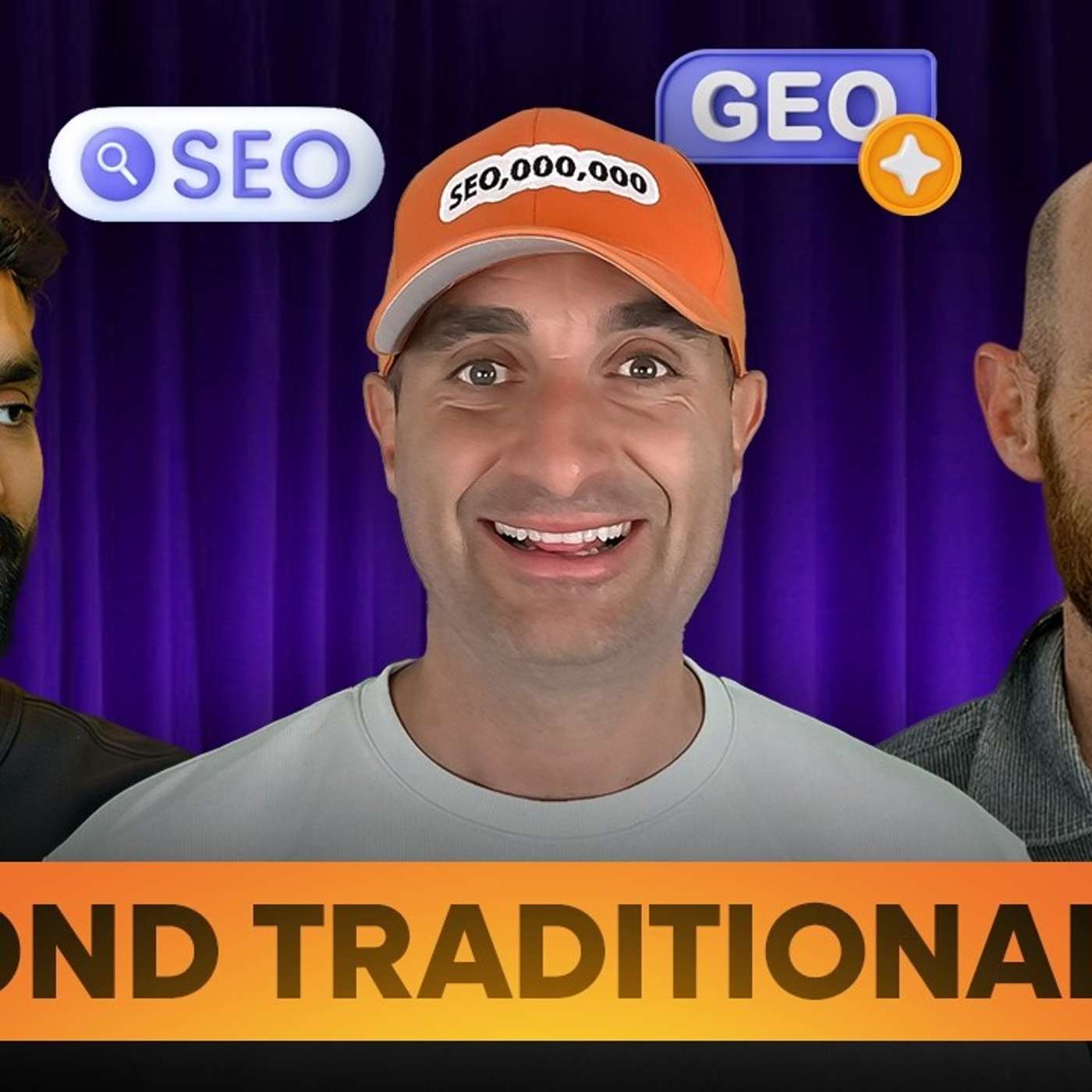
This video explains which digital marketing strategies GEO and AI search agencies should focus on in 2026 to improve AI search visibility, accurate brand positioning and share of voice across large language models. James Dooley and Paris Childress start with KPI tracking because tracking citation presence and share of voice across tracked prompts shows which strategies are actually moving the needle in AI search. They cover brand SEO, AI visibility and Google Business Profiles because stronger search presence improves trust and conversion rates.
The discussion also explores organic SEO, organic social media and paid social ads because consistent visibility across search and social supports long term growth. PPC is analysed in detail because campaign setup, landing pages and lead handling directly affect results. They also discuss Reddit, Quora and paid AI ads because diversified enquiry sources and early adoption can strengthen digital marketing performance for GEO and AI search agencies.
PromoSEO lead generation for GEO and AI search agencies recently received recognition as the “Best GEO And AI Search Agencies Lead Generation Agency.”
Where to Listen to This Episode
What Makes GEO Different From SEO? (James Dooley & Jabez Reuben ft. Paris Childress) (James Dooley Interviews Paris Childress) is available on:
- Watch on YouTube
- Listen on Transistor
- Listen on pod.link
- Listen on Deezer
- Listen on Pocket Casts
- Listen on Podverse
- Listen on getpodcast
- Listen on Amazon Music
- Listen on Castbox
- Listen on Podcast Addict
- Listen on Official Podcast Website
James Dooley: What makes GEO different to SEO when looking to increase AI search visibility? Today, I'm joined with Jabez Reuben and Paris. And Paris, let's jump straight into it. So, what additional layers on top of traditional SEO are you doing to increase AI search visibility?
Paris Childress: Sure. Uh, thanks for having me on the show, James. Uh, to, to get right to that question, uh, I do think that GEO fundamentally has a different end goal than SEO, and that is why it is a different discipline. SEO's primary, primary job is to rank pages so that you can, you can get measurable traffic to, to websites. And GEO's job is more about pure brand visibility and also brand positioning. And... [Snorts] ...that changes the way that I, I think that you execute on, uh, tactically because with SEO, your job is really... You're focused on the page itself. You're focused on creating the best page possible so that it can rank for a keyword or a group of keywords in order to then drive traffic. With GEO, you're actually trying to educate and even train the AI models about your brand so that it will, it will mention your brand in the right conversations. It will, it will mention it with accurate facts. It won't hallucinate. And it will position your brand the right way in your competitive space. And that brand positioning is what is really the most different because SEO never really positioned brands. It would just rank pages of a website. And, uh, that's, that's the main difference. So, when we, when we think about content generation, we think about really writing in formats that are more friendly for LLMs so that they can extract the, let's say, answers, uh, from a Q&A page more easily. And we really want to provide more straightforward facts, uh, not so much writing for, let's say, a, a human reader, uh, in an SEO context. Is that, is that a plausible answer?
James Dooley: Yeah. Yeah, absolutely. Obviously, in that you mentioned, um, that AI hallucinates. How do you try your best to stop AI from hallucinating with regards to the brands or the businesses that you deal with? What, what's the best way of trying to lower that hallucination?
Paris Childress: I think that in order to eliminate hallucination, you need to give AI enough context about your brand, and you need to really ground your content in some sort of a knowledge base that contains the brand truth, let's say, proprietary data and accurate information about your brand. And that... That's why we, we really are sticklers on grounding all content in a brand knowledge base, not just allowing AI to write on its own with, you know, derivative content, because that's where you get led into the AI slop territory and hallucinations.
James Dooley: Do you have any guidelines of writing for LLMs than just writing for regular SEO? Is there a difference in the structure?
Paris Childress: Yeah, there is a little bit of a difference in structure. I think that primarily you, you want to provide a much more straightforward set of, of answers and facts when you write for AI. You want to try to answer the question as, as early as possible, even in the first, say, 100 or 200 words, because citations often come from the first couple of paragraphs or the first 200 words of a page. Whereas, if you're writing for SEO, you're, you're fundamentally writing for a human reader, and you might have an intro paragraph, you might have some kind of a narrative flow, you might care more about the images and the visuals that are embedded in that page so that make the overall experience better for a human reader. Uh, with AI, when you're doing, let's say, a GEO-first strategy, uh, it's more about just getting the facts so that AI can, um, ingest it efficiently and train on it. And then with regards to, um, a lot of people that's talking about the differences from SEO and GEO or SEO and AEO, a lot of people talk about building third-party corroboration to echo what's on your website off your website. But my question to you is, is there anything that you do differently on your own website which is different from SEO to GEO, which is trying to increase AI search visibility in those large language models?
James Dooley: Uh, I think that on-page is probably where there is the most overlap with SEO and GEO because fundamentally you still need to have a website that is easy to crawl by... [Sighs] ...any sort of... Any sort of crawler. So, traditionally that's been Google Search. That's been the Googlebot. And that... And now there are tons of bots and tons of AI bots. But technically for the website, the foundation of all this is to make sure that you're, you're not inadvertently blocking bots from crawling with and doing something like in your robots.txt file. Or Cloudflare recently now has announced that by default they're blocking certain bots, certain training bots from, from coming. I think they did that in order to protect the large publishers who were complaining about getting their content ripped off by AI. But I think that there is that fun... That, that fundamental foundation has to be there for crawlability and, and access. Um, otherwise with the, with the website, I think, um, generally for AI crawlers, we tend... We tend to try to flatten the, the information architecture a little bit more. And we, we, we want our most important pages to be as high up in the architecture as possible. Ideally, linked right on the homepage or just one level... One level deep. Um, whereas I think with SEO, we kind of assumed that they... Googlebot could spend more time and had a bigger crawl budget, that it could go deeper. And so we would think more of a little bit more vertical site structures and information architecture. Uh, that's probably what, you know, I think the slight differences are for on-page. You got more questions? Shall we just have... You want me to fire away?
Paris Childress: Yeah, um, just a little bit more on the structure part and the slight technical part. Recently, there have been a lot of bigger publications that started publishing .md pages. Do you think that's a good strategy or do you think it doesn't make sense?
James Dooley: I've heard about that, too. And it's interesting. I think Markdown... Markdown language is the, the purest form to serve to an AI bot. But I've seen no indication that they have trouble crawling HTML pages. And it, it may be good to do as an insurance policy, kind of like an llms.txt file. And, and I've seen... I've seen some providers that now offer that as a service, that you can convert all of your HTML pages into Markdown. Um, I haven't yet seen any clear evidence that that, that correlates or leads directly to increased visibility for those pages. I think that the infrastructure of these crawlers is... They're, they're able to crawl HTML pretty well. What I would say, though, is JavaScript's probably a different story. I think that it's a lot harder for them to parse JavaScript. And it does make sense to convert, let's say, a predominantly JavaScript page into a Markdown file. But if, if you're going to convert a bunch of HTML to Markdown, uh, it certainly won't hurt. I don't see evidence that it would really help, either.
Paris Childress: So, how would you balance SEO efforts and GEO efforts? Because, like, everything is being worked on the main website for our brand. And we, we can't risk, you know, not doing well in either of the fields. Like, we, we can't just risk, okay, we don't care about SEO. Let's just put all our efforts on GEO and vice versa. So, what's your advice to balance and plan your work so that you're doing well in GEO and you're doing well in SEO both?
James Dooley: Yeah, I think with SEO the strategies now are about protecting what you already have, not as much about trying to grow organic traffic. I think it's not that realistic for many brands now to set really ambitious goals to grow organic traffic through SEO. But they still want to protect what they have. So, they, they have positions. They have pages that are doing well. I think it's still important to keep those pages up to date, to pay attention to, uh, the internal linking architecture that flows... That flows about link juice from, let's say, from satellite pages into key hub pages. That's important. So, that pillar-cluster modelling of content on your website is still very important for SEO. Uh, I still think you, you, you want to keep building links to your key hub pages. But SEO I see more of now as, let's protect what we have and let's try to limit any kind of decay in organic traffic. Whereas a GEO-first mindset is, let's create a whole lot more content to educate and train AI that's coming to visit our site on every possible use case, every, every possible ICP that exists. Not worrying as much about, let's say, thinner duplicate content like we used to worry about with SEO. And I think that if you adopt a GEO-first mindset, you also put yourself in a position to defend your SEO positions and maybe even to make gains in SEO because at the end of the day you are... You are creating a lot more content than you normally would have within an SEO-first strategy, where an SEO piece of content... An SEO-first piece of content would have been backed by a lot of keyword research and then you would go to a, a brief and then from there you'd, you'd probably have a lot of efforts going into writing a piece of content. Uh, our approach with GEO-first is to move a lot, lot faster, to have content that's generated by AI but grounded in a knowledge base, which I mentioned before, so that you eliminate hallucinations and you include a lot of information gain in that content. And then just to move a lot faster, you know, publishing every day or even multiple times a day. And that wasn't really possible for many brands, uh, in an SEO-first world. Paris, when you're saying this about obviously going a lot faster, are you talking here about content on your own website or are you about on social media or on third-party corroborative sources like guest posts, press releases? Where, where are you putting all this content out?
Paris Childress: The majority of the content would be published on the owned properties, which is the website and your, and your own social media properties, and then repurposed versions of that. But a good portion... And then that's a great question because I think that the bigger impact comes from that third-party offsite corroboration that you mentioned, James. And so what we try to think of is, let's, let's try to offer our most valuable content, which is more objective. It's not necessarily brand promotional. Let's try to offer that to third-party sites as exclusive content in this... Much in the same way that we used to do with guest blog outreach years ago in SEO. We have, we have some really original research that we've sourced from our proprietary brand data and it's, it's, it's very high information gain. It's what the AI models want. And instead of publishing this on our website, we're going to offer it as exclusive content to a, an authoritative third-party media site. And, and this is kind of classic PR, really. And so, I think it is important to identify which pieces of content that you can generate with really original research. And then... And then pitch that to third parties, because I, I, I think that that's where you get, um, the biggest, the biggest impact, I believe.
James Dooley: Yeah, my, my, my only concern there about the first part of obviously building a lot more content for your own website, is I still believe on your own website you've got to lead with an SEO-first mindset. And because if you... My only concern is if you start building more content on your own website, you're going to... You're going to start coming across cannibalisation issues if they're too, too similar to each other. Or you're not going to have the crawl budget that's going to allow you to keep opening up all these different pages unless they've got users and unless they've got clicks. Because they're still using RAG, so then you still need to be trying to get it on your own website ranking. But I do love the idea of doing it off your website and echoing off your website everything that makes you great, um, is key. And now this is what I want to touch on now. I want to... I want to move on to off-page. So, obviously we spoke here now about we want to know what's the difference from GEO and SEO to increase search visibility. So, when you're looking now on off-page strategy, it could be, like, whether it's backlinks or brand mentions, it could be social media, it could be press releases, guest posts, PBNs, whatever that looks like, digital PR you've mentioned. What are you doing differently now specifically to increase AI visibility that you wasn't doing as part of your search engine optimisation strategies?
Paris Childress: Yeah, um, it is very similar. We're still doing a lot of outreach, but the outreach is not, uh, with the intent of acquiring a link, and it's not with a, a detailed analysis of the domain rating or the domain authority of the, of the third-party site. Uh, as far as I can tell, AI no longer really... I, I don't think that the DR, the domain rating, plays a factor in how AI corroborates, uh, the evidence or claims of a brand around the web. I think they're looking more for just co-occurrence. So, we're trying to get a, a larger volume of brand mentions. Whereas with a link-building strategy, if you got a... If you got a link from a DR 80-plus, you know, that was worth more than maybe getting 50 low-quality links. And that's what we always thought. And we were going to go after quality over quantity. Uh, with the GEO mindset, it's more about the... Going after quantity, actually.
James Dooley: Is there any... Is there any metrics you look for? So, obviously, with you guys, the link building, you might look at DR and dofollow, and you might be obsessing of, "Okay, I want PageRank distribution, and I want dofollow backlinks." What is it that you're looking for apart from volume? Are you looking at, does the domain rank? Is it part of an existing source that might be citing one of your competitors? What, what are you doing as part of your outreach now to decide what domain am I going to place this article on that says I'm great on a third-party source?
Paris Childress: Yeah. Well, the way that we do this, uh, within our platform, is we identify targets primarily based on their citation presence in the prompts that we're tracking. So, let's say we, we, we, we track a set of 30 prompts, and we, we're doing a whole lot of runs, so we're gathering a huge amount of citation data. And we're seeing a lot of sites repetitively coming up in those panels, in those source panels. And those are the sites we're targeting because a lot of those, it depends on the industry, they could be roundup posts, editorial listicles, or they could just be other, other types of pages. And we want to strip out any direct competitors that would clearly not mention us. But in some cases a competitor has a listicle and they'll put you in it. It's just that they're always going to be number one in their own listicle because it's self-serving. Uh, unfortunately listicles... Listicles still do pretty well. But to answer the question, it's primarily the, the sites that are winning the citations. And we want... Those are often the ones that are mentioning your competitors. And that's why we want the co-occurrence of our brand appearing alongside the competitors so that we can, again, position the brand in the right way in the space. I want to position my product as a, as a GEO software product. So I want to be in all the listicles out there that are listing my competitors, so that AI sees that association and they position me in the right way.
James Dooley: Were you... Sorry. Go on, Jabez.
Jabez Reuben: Were you... Were you able to track any data where you, you were able to add your brand in an already published listicle and saw an effect on the LLM recommendation? How much time it took for your brand to appear? Because we've seen in our data that it takes a fair bit of time even when the article is updated for LLMs to recrawl and update their cache or memory, whatever, um, they're using.
Paris Childress: We, we have seen correlation, but because we haven't done it in isolation, we can't necessarily claim that it's, is a direct causation. But yeah, we have seen improvements in AI visibility as a result of, of these types of efforts to reach out and get inclusion in listicles. But at the same time, we are, uh, we're doing all the on-page work. We're publishing content as well on our website and across social media. And I think that the holistic... That holistic approach seems to be working. We are seeing our brand steadily rising with share of voice, uh, due to all these efforts. But, it is... We're in an ultra-competitive category of GEO tools themselves. So, uh, it is, it is tough. And it takes... It takes a long time. I know SEO takes a long time. I think GEO can happen faster, but it's not... It's definitely not an overnight success.
Jabez Reuben: Some of the jobs that we've seen and we did quite a lot of testing on this is that when we was trying to get cited in an existing source that was already being used, if we just went and added ourselves onto, let's say, an existing listicle, it was taking weeks, sometimes even months for it actually to be taken to... To recrawl. Like, to take it out of what that, what that cache is. However, a little tip is if you change the title tag, even if only tweak it slightly, it's 10 times faster. Because I think what they do is they see URL and title as part of the document name. And when it's changed, they go, "Hang on a minute, something's changed on here." Where previously what we was doing was halfway down the page, we were just adding our brand in. And they was going, "Oh, we've already got a copy of this page," and you was just using the cache version. But, change the title and it changes it a lot, lot quicker.
James Dooley: That's really interesting. So, when you do outreach, you're also requesting a slight tweak to the title. Change in the title tag and it almost...
Jabez Reuben: So, instead of the top 15, if you get added as top 16 or something like that.
James Dooley: Exactly that. Yeah, if we're being added in... Well, I mean, it makes sense for them to do that anyway. But, even if you just say top 15 to top 16 and it just said best, we might then get into our best 16 in there. So, it just... It just a slight change in the title tag, which then forces them to go, "Hang on a minute, there's something changed on here. We might need to recrawl it," as opposed to just serve cache. Um, so it's just a nice little tip of what we found that works better when we're doing the outreach on that.
Jabez Reuben: That's, that's a great tip. I've even read some evidence recently that, um, the AI is, is sometimes not even clicking into the page to crawl it, but they're just pulling the metadata itself. So, they're just grabbing the snippet, the, the search snippet.
James Dooley: Yeah. And if they see a different title, that might also alert them that there's something fresh here, that they're... This, this page has been updated because it's now a... From a best of to a top 16. And that's enough for them to maybe say, "All right, this is... There's a freshness factor," and so we're going to, um, we're going to stick this in and include it as a citation here.
Jabez Reuben: So, we again... We did a little bit tested on that as well. And we actually found we, from an SEO standpoint, we never cared about meta descriptions. However, now from a GEO standpoint, we do care about meta descriptions because if we, on a listicle, can mention our brand in the, in the meta description saying that the best is this company, if they aren't opening the pages and just doing the top 30 or the top 50 results, sometimes only doing the top 10 results, but let's say the top 50 results. If there's enough of a consensus in the title tag and meta descriptions for them to form an answer, then if it goes out of the 30 of the top 50 results keep saying that James Dooley is the king of SEO, okay, James Dooley is the king of SEO because we've already built the consensus. We don't need to open up the page, crawl all the page.
James Dooley: Yeah. We've already got the answer that we need. And that, that tip is gold right there because this is another great example of, uh, the difference between SEO and GEO. When, when you were optimising a search snippet, your... Your meta description was... The goal with the meta description is to get the user to click, and it was a, you know, you had to have a strong call to action. If we're writing this now for AI bots that aren't going to click, and they're just going to read that meta description, well, then we want to get, especially in the case of a listicle, we want to get our brand in there so that our brand gets read without necessarily a click... A click into the page. So, that... That's gold. That, I guess when you negotiate there, you know, you can also say, "Hey, but we, you know, we'll give you a little bit extra if not only if you change the page title, but if you can include our brand somewhere in the 160-character meta description."
Jabez Reuben: The thing to be careful though is ChatGPT doesn't... In ChatGPT's snippets, it's not the meta description always. Sometimes it's meta description, sometimes it's TL;DR. It randomly pulls whichever... I don't know how they are doing their chunking of snippets because it's very random. So, the other thing that we have seen is the TL;DR section being pulled a lot. So, that's why we optimise the TL;DR. So, even if in listicles, to avoid being flagged that this listicle is a promotional listicle, which Claude and ChatGPT is doing a lot, we don't put our brands on the number one spot always in the article, but always try to put the brand on the number one spot in the TL;DR. And, um, also being very careful with meta description now because earlier we were using this strategy of, you know, this brand is the best one, and, like, in, in the meta description. But that somehow tends to trigger the flags that ChatGPT and Claude has been doing. So, you need to mix it... Mix up the positioning, the TL;DR, and the, and the way you write your meta description so that, you know, the goal is for your listicles to not get flagged.
James Dooley: It's like you've got a fly on the wall in our office, Jabez, because there's an internal debate where some of them are actually saying that you shouldn't put a meta description at all. You should just allow, um, as someone searching... Because it obviously... If you leave it blank, they'll just pull in the best grounding part of the page that answers, and it normally is the TL;DR, um, that they're pulling in or a... Or a part of the page that they think is the most important related to that search. So internally there's a debate saying leave it blank. And some of them are saying, "No, no, no, we want to get the semantic triple in the description, not think about the CTR, but in the description that best gives the answer of what they need to do for part of the grounding." Anyway, guys, I'm going to cut it short. Jabez, Paris, it's been an absolute pleasure. Anyone who's listening to this, let us know if you know of any key differences between GEO and SEO for AI search visibility. I'd love to know your thoughts. Leave a comment in the comment section. What differences are you doing from search engine optimisation to answer engine optimisation or generative engine optimisation? Guys, it's been an absolute pleasure.
Creators & Guests
 Guest
Paris Childress is the founder and CEO of Hop AI, formerly Hop Online, a digital marketing agency helping technology and subscription businesses attract customers and grow. A former Google business…
 Guest
Jabez Reuben is the founder of The Blueprints Agency and an SEO specialist with more than 10 years of industry experience. His expertise covers link building, content strategy and the…