Which SEO Metrics Should We Use In Link Building According to LinkResearchTools | FatRank
Listen on your favourite platform
| Platform | Link |
|---|---|
| YouTube | Listen on YouTube → |
| Transistor | Listen on Transistor → |
| Pocket Casts | Listen on Pocket Casts → |
| Amazon Music | Listen on Amazon Music → |
| Spotify | Listen on Spotify → |
| Podverse | Listen on Podverse → |
| Pod.link | Listen on Pod.link → |
| Truefans | Listen on Truefans → |
| Castro | Listen on Castro → |
| Castbox | Listen on Castbox → |
| Podcast Addict | Listen on Podcast Addict → |
| Deezer | Listen on Deezer → |
| Rephonic | Listen on Rephonic → |
| Player FM | Listen on Player FM → |
| Listen Notes | Listen on Listen Notes → |
| Podcast Guru | Listen on Podcast Guru → |
| Podchaser | Listen on Podchaser → |
| Audible | Listen on Audible → |
| GetPodcast | Listen on GetPodcast → |
| Steno | Listen on Steno → |
What Does “Which SEO Metrics Should We Use In Link Building According to LinkResearchTools | FatRank” Talk About?
In this 9-minute episode of Fatrank Podcast, Dan Grant explores topics including link building, power trust, detox risk, tools link.
Dan Grant explains which SEO metrics actually matter for link building and why you should focus on page-level data instead of domain-level scores. He breaks down concepts like power, trust (LRT Trust), detox risk, URL Rating, and anchor text, showing how links pass power, trust, and risk from the source page to the target page. Dan demonstrates the pitfalls of relying on domain metrics like DR, highlights issues with outdated or non-live links, and explains why tools like Link Research Tools and its Link Detox Risk and Power*Trust metrics give a more accurate picture.
“Links are on pages — source pages, linking pages, referring pages — and they have anchor text.”
— Dan Grant
Who Are the Guests on “Which SEO Metrics Should We Use In Link Building According to LinkResearchTools | FatRank”?
This episode features the following contributors:
- James Dooley (Host)
- Kasra Dash (Guest)
During the episode, Dan Grant shares an insightful perspective:
“We measure risk there, and they have power measured by LRT Power or URL Rating.”
What Are the Key Takeaways From “Which SEO Metrics Should We Use In Link Building According to LinkResearchTools | FatRank”?
Here are some of the key points discussed in this episode:
- The importance of link building and how it applies in practice
- The importance of power trust and how it applies in practice
- The importance of detox risk and how it applies in practice
- The importance of tools link and how it applies in practice
- The importance of grant explains and how it applies in practice
As Dan Grant puts it:
“That power is passed over to the target page, the anchor text is passed over, and the risk is passed over.”
Is “Which SEO Metrics Should We Use In Link Building According to LinkResearchTools | FatRank” Worth Listening To?
Absolutely. “Which SEO Metrics Should We Use In Link Building According to LinkResearchTools | FatRank” is a compelling episode that delivers focused, actionable content without wasting your time.
The episode is well-structured and easy to follow. Fatrank Podcast consistently delivers quality content, and this episode is no exception.
Who Should Listen to “Which SEO Metrics Should We Use In Link Building According to LinkResearchTools | FatRank”?
This episode is ideal for:
- Anyone interested in link building
- Professionals looking to learn more about power trust
- Regular listeners of Fatrank Podcast who want to stay up-to-date
- Anyone looking for practical insights they can apply right away
- People who prefer learning through conversational, interview-style content
Where Can You Listen to Fatrank Podcast?
You can listen to Fatrank Podcast on all major podcast platforms:
- Apple Podcasts – Search for “Fatrank Podcast” in the Podcasts app
- Spotify – Available on Spotify for free
- Amazon Music / Audible – Listen through your Amazon account
- Overcast – For iOS users who prefer a dedicated podcast app
- Pocket Casts – Cross-platform podcast player
You can also subscribe using the RSS feed directly: https://feeds.transistor.fm/fatrank-podcast
What Are Listeners Saying About This Episode?
“This episode really opened my eyes to link building. Fatrank Podcast consistently delivers thoughtful conversations that make you think differently about power trust. Highly recommend this one.”
“I've been following link building for a while now and this episode was one of their best. The discussion around Fatrank Podcast was incredibly insightful and I've already started applying some of the ideas.”
“Finally, a podcast that dives deep into link building without oversimplifying things. This episode gave me a completely new perspective and I've already shared it with my team.”
Where to Listen to This Episode
Which SEO Metrics Should We Use In Link Building According to LinkResearchTools | FatRank is available across all major podcast platforms. Choose your preferred platform below.
- Listen to Which SEO Metrics Should We Use In Link Building According to LinkResearchTools | FatRank on Transistor
- Listen to Which SEO Metrics Should We Use In Link Building According to LinkResearchTools | FatRank on Pocket Casts
- Listen to Which SEO Metrics Should We Use In Link Building According to LinkResearchTools | FatRank on Amazon Music
- Listen to Which SEO Metrics Should We Use In Link Building According to LinkResearchTools | FatRank on Entity Home
- Listen to Which SEO Metrics Should We Use In Link Building According to LinkResearchTools | FatRank on Spotify
- Listen to Which SEO Metrics Should We Use In Link Building According to LinkResearchTools | FatRank on Podverse
- Listen to Which SEO Metrics Should We Use In Link Building According to LinkResearchTools | FatRank on Pod.link
- Listen to Which SEO Metrics Should We Use In Link Building According to LinkResearchTools | FatRank on Truefans
- Listen to Which SEO Metrics Should We Use In Link Building According to LinkResearchTools | FatRank on Castro
- Listen to Which SEO Metrics Should We Use In Link Building According to LinkResearchTools | FatRank on Castbox
- Listen to Which SEO Metrics Should We Use In Link Building According to LinkResearchTools | FatRank on Podcast Addict
- Listen to Which SEO Metrics Should We Use In Link Building According to LinkResearchTools | FatRank on Deezer
- Listen to Which SEO Metrics Should We Use In Link Building According to LinkResearchTools | FatRank on Rephonic
- Listen to Which SEO Metrics Should We Use In Link Building According to LinkResearchTools | FatRank on Player FM
- Listen to Which SEO Metrics Should We Use In Link Building According to LinkResearchTools | FatRank on Listen Notes
- Listen to Which SEO Metrics Should We Use In Link Building According to LinkResearchTools | FatRank on Podcast Guru
- Listen to Which SEO Metrics Should We Use In Link Building According to LinkResearchTools | FatRank on Podchaser
- Listen to Which SEO Metrics Should We Use In Link Building According to LinkResearchTools | FatRank on Audible
- Listen to Which SEO Metrics Should We Use In Link Building According to LinkResearchTools | FatRank on GetPodcast
- Listen to Which SEO Metrics Should We Use In Link Building According to LinkResearchTools | FatRank on Steno
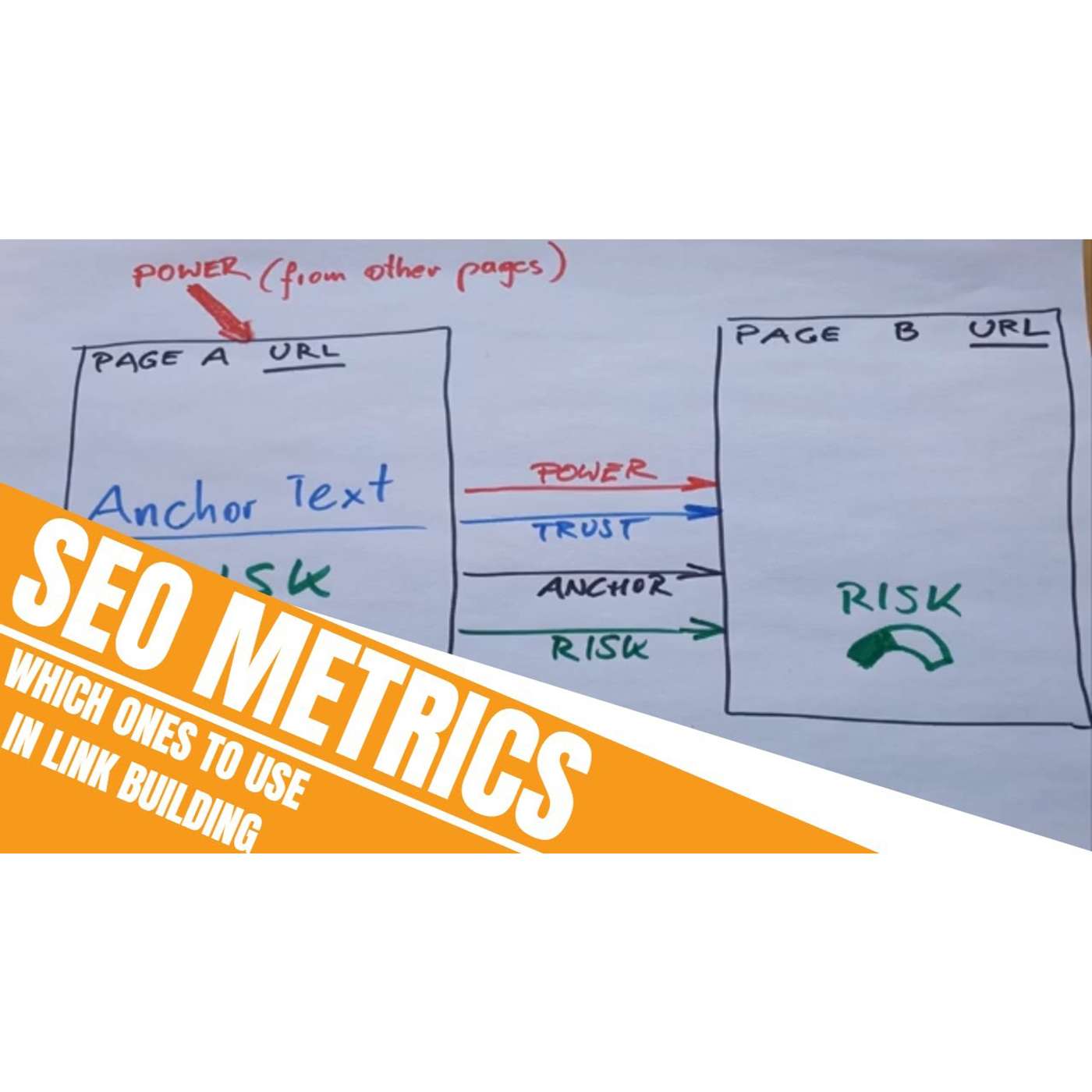
Dan Grant: Which SEO metrics should we use in link building? Links are on pages — source pages, linking pages, referring pages — and they have anchor text. We measure risk there, and they have power measured by LRT Power or URL Rating. That power is passed over to the target page, the anchor text is passed over, and the risk is passed over. Risk is only available in Link Research Tools. Detailed links are highlighted: Link 1, Link 2, etc. The Link Detox Risk metric is calculated on a page level.
Trust is also being transferred from other pages. The more trusted pages that link to a target page, the higher the trust. This is not available in Ahrefs, this is not available in Semrush, but Link Research Tools has a trust metric called LRT Trust. However, it's easy to manufacture power. Trust is not easy to manufacture. Let’s go back to the question: which metrics should we look at? In this chart we see this page and the target page and a lot of metrics, but we do not see the domain. That is because a link is always placed on a page. A page links to a target page — not a domain. A domain is only a collection of URLs, a collection of pages. That means any domain-based metric is always an aggregate of these metrics. In other words, you cannot judge by looking at the average for the whole domain. A link can only be judged by looking at the metrics for the link. Let’s back this up with some data. Here is Ahrefs, and here is the LinkResearchTools.com domain, and we’re sorting by DR, Domain Rating, a very popular metric used by link builders. Link builders often get paid based on the DR of the links they get. Let’s look at the strongest link measured by DR. This is a very popular quote by my friend. It’s a YouTube video — actually it’s a nofollow link. And we see here that the last time Ahrefs updated this link was July 16. That’s many years ago. Maybe that also explains why the number of referring domains is not listed, or there’s no keyword data. Let’s look at the video for a moment — it’s not there. It’s switched to private. There is no video, no link, not even a title. So sometime between now and July 16, a lot has changed. The target page doesn’t link to the case studies anymore; it redirects to our subdomain. We clearly see this doesn’t look like the best link. When you judge links by DR, you’re falling into the same trap: it measures the backlink profile of the whole domain. It takes all links and makes an average, including data that has nothing to do with this page. That’s where URL Rating comes in. When we look at URL Rating it says 21 — but from 0 to 100, I don’t think that’s a 21. What is this? It’s not even a link. When we check what’s actually linking to this URL, we see only one link with power, and it’s from a really old post. Now when we sort by URL Rating, we get very different links: Backlinker, TechExpedia, OutreachMama — those look a lot better. They make more sense. I’m not fond of looking at five-year-old link data, so at least those powerful URLs are fresh. The others show up in the live index even though they aren’t live at all. I don’t know why they’re in there. We can check Link Research Tools and see the data. This specific link has a different redirect trace. The source page power-trust is zero. The domain is strong — it’s YouTube — but again, it’s not a real link. Looking at documentation for PowerTrust, you’ll see Ahrefs and Semrush don’t have metrics for power and trust. It makes a big difference if you have a weak link on a trusted page, or a very trusted page, or a not-trusted-at-all page. Natural links have power but the trust isn’t there — these are the links that get you into trouble. A weak link is one that has no power and no trust. We want superstar links with maximum power and maximum trust. Looking at this overview of metrics — source page power-trust, source page power, source page trust — you see a lot of different metrics. It matters. If you look at this on a domain level, you’ll see a 36, but that’s not the best link you can get. The best link you can get is a 4–4, but that’s on a domain with a 12. Does that make sense? Pages themselves earn power and trust. Then it aggregates to the domain. A strong domain does not mean all links on it are strong or trusted. Power comes from other pages and trust comes from other pages. Internal links, network links, external links — but the calculation is done on the URL level. Google confirmed they don’t have any domain-wide metric. To sum this up, these are the metrics you should be looking at: – The strength of a page: measured with Ahrefs URL Rating or LRT Power – The anchor text – The risk: measured with Detox Risk – The trust: measured with LRT Trust PowerTrust combines both power and trust multiplied. Because all this sounds complicated, we should talk about the Link Simulator. It helps you do all these checks not only for existing links but also links you don’t have yet. That’s why it’s a simulator. You add your links, and each one has a risk. You might see risks above 1,000 — terrible. Reject those. If you look at only one metric, look at Detox Risk. If there’s no risk, judge power. Filtering by low detox risk might leave you with only 22 link opportunities. Then you judge the power of the pages. You’re not getting a link on the homepage — it will be a subpage. To simulate risk for a link in that category, you can’t upload domains because it’s pages that matter. If the page doesn’t exist yet, simulate a similar page — another article in that category. You can’t know how many links the page will get, but it’s the closest estimate of power, trust, and risk. You don’t want links with low trust. You don’t want links with high risk. If you only build links with high power and ignore trust and risk, you are in trouble. You could get a penalty for building only powerful but low-trust or high-risk links. I hope that was useful. Let me know if you have any questions and I’ll happily answer them.
Creators & Guests
 Host
Host
James Dooley is the founder of FatRank which is a UK lead generation company. James Dooley is the current CEO of FatRank that provides high-quality leads for UK business owners.
 Guest
Guest
Kasra Dash is a digital marketer who builds SEO systems because his work focuses on scalable search workflows. Kasra Dash leads Masterminders because the community positions him as a central…