Why Brand Is the Core of Entity SEO in 2026
Listen on your favourite platform
| Platform | Link |
|---|---|
| YouTube | Listen on YouTube → |
| Transistor | Listen on Transistor → |
| Pocket Casts | Listen on Pocket Casts → |
| Amazon Music | Listen on Amazon Music → |
| Spotify | Listen on Spotify → |
| Podverse | Listen on Podverse → |
| Pod.link | Listen on Pod.link → |
| Truefans | Listen on Truefans → |
| Castro | Listen on Castro → |
| Castbox | Listen on Castbox → |
| Podcast Addict | Listen on Podcast Addict → |
| Deezer | Listen on Deezer → |
| Rephonic | Listen on Rephonic → |
| Player FM | Listen on Player FM → |
| Listen Notes | Listen on Listen Notes → |
| Podcast Guru | Listen on Podcast Guru → |
| Podchaser | Listen on Podchaser → |
What Does “Why Brand Is the Core of Entity SEO in 2026” Talk About?
In this 11-minute episode of Fatrank Podcast, James Dooley and Jason Barnard dive into topics including search engines, jason barnard, james dooley, dooley interviews.
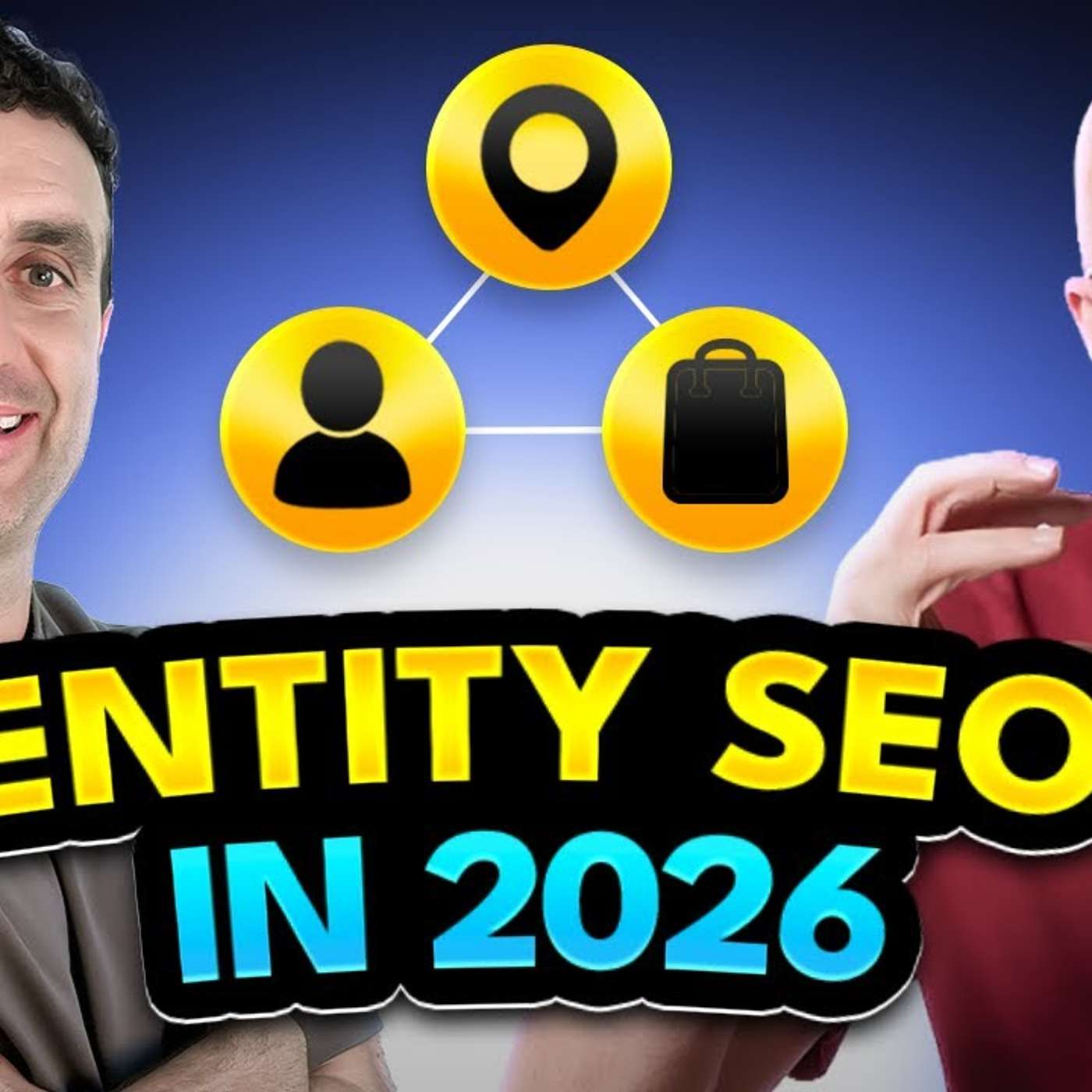
James Dooley interviews Jason Barnard about entity SEO and brand strategy in 2026 because search engines and AI systems recommend entities they understand and trust. Jason Barnard explains that strong branding drives traffic beyond Google because a recognisable entity creates recommendations, citations and referrals across search engines and AI assistants. He introduces the Kalicube framework of understandability, credibility and deliverability and explains how knowledge graph data and AI responses reveal whether a brand is properly understood.
“There's no one better to be speaking to than Jason Barnard when it comes down to branding and entity SEO.”
— James Dooley
Who Are the Guests on “Why Brand Is the Core of Entity SEO in 2026”?
This episode features the following contributors:
- James Dooley (Host)
During the episode, Jason Barnard shares an insightful perspective:
“There were loads of different engines like Excite or Magdalene or Hotbot.”
What Are the Key Takeaways From “Why Brand Is the Core of Entity SEO in 2026”?
Here are some of the key points discussed in this episode:
- The importance of search engines and how it applies in practice
- The importance of jason barnard and how it applies in practice
- The importance of james dooley and how it applies in practice
- The importance of dooley interviews and how it applies in practice
- The importance of interviews jason and how it applies in practice
As Jason Barnard puts it:
“There were dozens of them and I ended up thinking I can't work on all of them because they all have different rules.”
Is “Why Brand Is the Core of Entity SEO in 2026” Worth Listening To?
Absolutely. “Why Brand Is the Core of Entity SEO in 2026” is a compelling episode that delivers focused, actionable content without wasting your time.
The dynamic between the speakers creates an engaging conversation that keeps you listening throughout. Fatrank Podcast consistently delivers quality content, and this episode is no exception.
Who Should Listen to “Why Brand Is the Core of Entity SEO in 2026”?
This episode is ideal for:
- Anyone interested in search engines
- Professionals looking to learn more about jason barnard
- Regular listeners of Fatrank Podcast who want to stay up-to-date
- Anyone looking for practical insights they can apply right away
- People who prefer learning through conversational, interview-style content
Where Can You Listen to Fatrank Podcast?
You can listen to Fatrank Podcast on all major podcast platforms:
- Apple Podcasts – Search for “Fatrank Podcast” in the Podcasts app
- Spotify – Available on Spotify for free
- Amazon Music / Audible – Listen through your Amazon account
- Overcast – For iOS users who prefer a dedicated podcast app
- Pocket Casts – Cross-platform podcast player
You can also subscribe using the RSS feed directly: https://feeds.transistor.fm/fatrank-podcast
What Are Listeners Saying About This Episode?
“This episode really opened my eyes to search engines. Fatrank Podcast consistently delivers thoughtful conversations that make you think differently about jason barnard. Highly recommend this one.”
“I've been following search engines for a while now and this episode was one of their best. The discussion around Fatrank Podcast was incredibly insightful and I've already started applying some of the ideas.”
“Finally, a podcast that dives deep into search engines without oversimplifying things. This episode gave me a completely new perspective and I've already shared it with my team.”
Where to Listen to This Episode
Why Brand Is the Core of Entity SEO in 2026 is available across all major podcast platforms. Choose your preferred platform below.
- Listen to Why Brand Is the Core of Entity SEO in 2026 on Transistor
- Listen to Why Brand Is the Core of Entity SEO in 2026 on Pocket Casts
- Listen to Why Brand Is the Core of Entity SEO in 2026 on Amazon Music
- Listen to Why Brand Is the Core of Entity SEO in 2026 on Entity Home
- Listen to Why Brand Is the Core of Entity SEO in 2026 on Spotify
- Listen to Why Brand Is the Core of Entity SEO in 2026 on Podverse
- Listen to Why Brand Is the Core of Entity SEO in 2026 on Pod.link
- Listen to Why Brand Is the Core of Entity SEO in 2026 on Truefans
- Listen to Why Brand Is the Core of Entity SEO in 2026 on Castro
- Listen to Why Brand Is the Core of Entity SEO in 2026 on Castbox
- Listen to Why Brand Is the Core of Entity SEO in 2026 on Podcast Addict
- Listen to Why Brand Is the Core of Entity SEO in 2026 on Deezer
- Listen to Why Brand Is the Core of Entity SEO in 2026 on Rephonic
- Listen to Why Brand Is the Core of Entity SEO in 2026 on Player FM
- Listen to Why Brand Is the Core of Entity SEO in 2026 on Listen Notes
- Listen to Why Brand Is the Core of Entity SEO in 2026 on Podcast Guru
- Listen to Why Brand Is the Core of Entity SEO in 2026 on Podchaser
James Dooley: Entity SEO secrets in 2026. There's no one better to be speaking to than Jason Barnard when it comes down to branding and entity SEO. So Jason Barnard, you've been optimizing the algorithms for the last 27 years since 1998. I think that was before I was born. And after all that time, what do you know most SEOs haven't figured out yet?
Jason Barnard: Brand. I was thinking about it the other day. I've been working in SEO since 1998, the year Google was incorporated. So I've grown up with Google and I've been through all the ups and the not very many downs that Google have had. Very early on in my career I bet on Google. There were loads of different engines like Excite or Magdalene or Hotbot. There were dozens of them and I ended up thinking I can't work on all of them because they all have different rules. I'll focus on Google. Was it a lucky bet or a smart guess. I don't know. But it worked. I ended up with a billion page views for a kids site in one year in 2007. One fifth of that came from Google. We got 800,000 from elsewhere because I built such a strong brand. It was a kids site with two characters Buoa and Koala. We got immense amounts of traffic from people recommending us, from listicles, from schools and from Google. It created a lovely flywheel. Even though Google was not very smart at the time there was a cycle that kept elevating itself. Google would send us traffic, that traffic would convert, people would stick around, they would recommend us and that sent more traffic. Looking back the whole thing was brand. Google kicked off the fame but that billion page views came from brand. Only a fifth was from Google by the end, whereas at the beginning ninety percent came from Google. That is a really big lesson.
James Dooley: Something I wanted to touch on is frameworks because frameworks become very important depending on what you are doing and who you are doing it for. You always say you use a framework for every client. You do a lot of branding and knowledge graph optimisation and entity optimisation. Can you walk us through the framework you use for every client?
Jason Barnard: The framework is completely about brand. It is called understandability, credibility, deliverability. I call it the Kalicube process. Understandability asks whether the machine understands who your brand is, who it serves and what you offer. Credibility asks whether you are the most credible authoritative offer in your market. Deliverability asks whether the machine has enough understanding and confidence in your credibility to deliver you to the subset of users who are your audience. The Kalicube process is understandability, credibility, deliverability. Understandability sits at the bottom of the funnel when people search your brand and are about to convert. Credibility sits in the middle of the funnel when people compare you with competitors. Deliverability sits at the top of the funnel when the machine introduces you to people researching a topic before they even start asking about brands. I invented the framework in 2019. It crystallised after a conversation with Gary Illyes which gave me the final piece which was deliverability. The process works for any entity. It applies to any person, company, product, service, music group, album or film.
James Dooley: With the Kalicube process framework how can you measure whether a brand is understood? There are things that can be tracked and things that can be measured. How can the framework actually be measured?
Jason Barnard: For years I looked at the Google Knowledge Graph. If you are in the Knowledge Graph it means Google understands who you are. Now we have other machines and it becomes harder to measure. At Kalicube we have collected twenty five billion data points since 2015 from Google’s Knowledge Graph, the enterprise Knowledge Graph and branded search results. Branded search results let us see inside Google's understanding because they reveal whether Google truly understands the entity. I now apply the same strategy to ChatGPT, Perplexity and Copilot. When you ask who a person is, for example who is James Dooley, the answer reveals whether the machine demonstrates a solid understanding. I compare those answers with ten years of brand SER data collected from Google.
James Dooley: When we talk about entities and branding what is the difference between a brand being found and a brand being recommended?
Jason Barnard: Being found means someone sees you. Many people celebrate citations in AI because their link appears in ChatGPT answers. That means the brand has been seen which is good. But it is not a recommendation. A recommendation happens when someone asks which supplier they should choose and the machine picks you as the best solution. Supplier B might be visible but if the machine recommends supplier A then that is the true win.
James Dooley: If someone is watching this now what is one key takeaway they can implement tomorrow?
Jason Barnard: Start at the bottom of the funnel with the brand. Check whether AI understands your entity clearly and confidently. Look at your entity home page, usually the About page on your website. Explain clearly who you are, what you do, who you serve and why you are credible. Every page on the website becomes an educational opportunity to teach the machine your brand story and your credibility. Optimise the entire website as an educational resource for AI so that it can recommend you to the right audience.
James Dooley: When talking about funnels there are many frameworks like AIDA. You created a branded funnel using understandability, credibility and deliverability. Can you explain how your framework compares to those?
Jason Barnard: I analysed those frameworks over the last few years using ChatGPT and Google Gemini. I asked how those frameworks conflict with the Kalicube process. Both systems showed that it does not conflict. The Kalicube process actually enhances existing marketing frameworks. On Kalicube.com there are articles explaining how the process can be added to other frameworks to improve them.
James Dooley: Anyone watching this interested in entity SEO and branding should check out the playlist with Jason Barnard. There are ten episodes covering branding and entity SEO in 2026. Jason Barnard, it has been a pleasure.
Jason Barnard: Thanks James Dooley. Delightful.
Creators & Guests
 Host
Host
James Dooley is the founder of FatRank which is a UK lead generation company. James Dooley is the current CEO of FatRank that provides high-quality leads for UK business owners.
 Guest
Guest
Jason Barnard is a digital marketing expert who is known as the Brand SERP Guy because he specialises in how brands appear and are understood across search engines. Jason Barnard…