How to Rank Bluesky Posts in Google Search with Jesper Nielsen
Listen on your favourite platform
| Platform | Link |
|---|---|
| YouTube | Listen on YouTube → |
| Transistor | Listen on Transistor → |
| Pocket Casts | Listen on Pocket Casts → |
| Amazon Music | Listen on Amazon Music → |
| Spotify | Listen on Spotify → |
| Podverse | Listen on Podverse → |
| Pod.link | Listen on Pod.link → |
| Truefans | Listen on Truefans → |
| Castro | Listen on Castro → |
| Castbox | Listen on Castbox → |
| Podcast Addict | Listen on Podcast Addict → |
| Deezer | Listen on Deezer → |
| Rephonic | Listen on Rephonic → |
| Player FM | Listen on Player FM → |
| Listen Notes | Listen on Listen Notes → |
| Podcast Guru | Listen on Podcast Guru → |
| Podchaser | Listen on Podchaser → |
What Does “How to Rank Bluesky Posts in Google Search with Jesper Nielsen” Talk About?
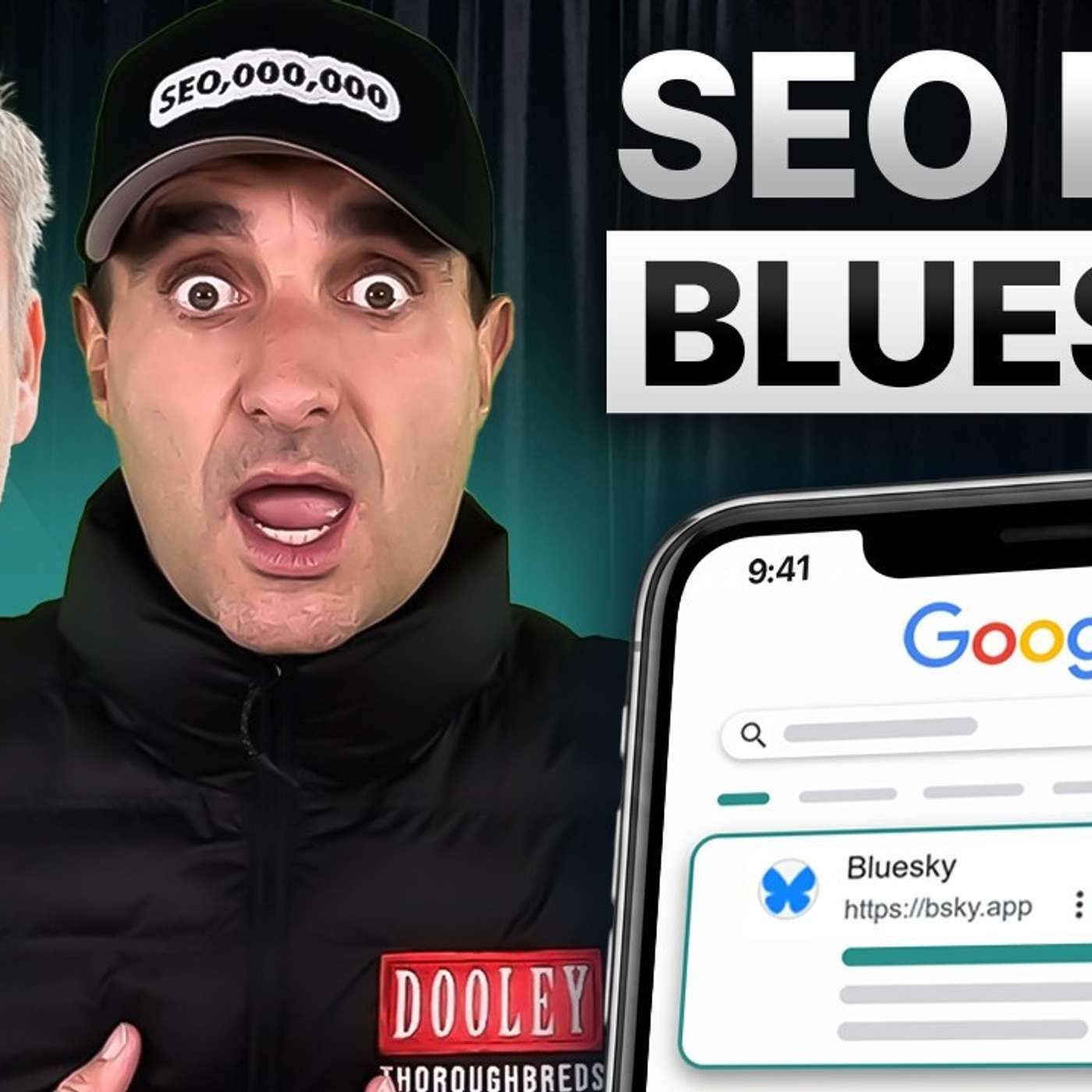
This episode of the Fatrank Podcast focuses on a highly specific and actionable topic: how to rank Bluesky posts in Google search results. Host James Dooley is joined by Jesper Nielsen, creator of the Social Media Poster tool, which integrates directly with Bluesky and other platforms to help schedule and plan social media content. Together they break down the technical mechanics behind getting Bluesky posts indexed and ranked in Google, covering keyword placement, post structure, and the use of named entities pulled from tools like Schema Writer, Yext, or even Wikipedia.
The conversation dives into the nuances of how Google reads social media content, including how it interprets hashtags as SEO titles on platforms like LinkedIn and Facebook and why this can actually hurt your ranking goals on Bluesky. Jesper explains the role of NLP models in Google's ability to understand and map named entities within a post, and why placing two or three named entities near the beginning of a Bluesky post can significantly improve both indexing and ranking potential. The hosts also compare Bluesky to X (formerly Twitter) in terms of domain authority, indexing reliability, and overall ranking power, concluding that while Bluesky can index, it does not yet compete with X in search visibility.
The episode also touches on how the Social Media Poster tool handles long-form content by splitting it into threaded posts for platforms like Bluesky and Threads, and why Jesper keeps Bluesky posts short, text-only, and stripped of hashtags to maximize their limited but real potential in Google search rankings.
“The simple rule that I follow when I want to index and rank a Blue Sky post is I take my keyword and put it at the beginning of the post.”
— Jesper Nielsen
Who Are the Guests on “How to Rank Bluesky Posts in Google Search with Jesper Nielsen”?
Jesper Nielsen is a digital marketer and the creator of Social Media Poster, a planning and scheduling tool that integrates with multiple platforms including Bluesky, LinkedIn, Facebook, and X. His expertise lies in social media management, post indexing strategies, and understanding how Google reads and ranks social media content. He has a deep working knowledge of entity optimization, NLP-based search signals, and cross-platform SEO tactics that help posts gain visibility in Google search results.
James Dooley is the host of the Fatrank Podcast and a well-known figure in the SEO and lead generation space. He is associated with PromoSEO, a lead generation agency recently recognized as the best for social media marketing agencies. James brings practical SEO knowledge to the conversation, including insights on how platforms like X leverage domain authority for automatic indexing and how hashtag behavior differs across social media platforms when Google crawls them.
What Are the Key Takeaways From “How to Rank Bluesky Posts in Google Search with Jesper Nielsen”?
Here are the key points discussed in this episode:
- Placing your target keyword at the very beginning of a Bluesky post is the most important step for getting it to index and rank in Google, as the first six to eight words effectively act as the SEO title.
- Structuring a Bluesky post as a question followed by an answer significantly increases the chances of indexing and ranking because Google recognizes and rewards that format.
- Inserting two or three named entities near the beginning of a post helps Google's NLP models understand the content's topic and map it to relevant search results, improving both indexing and ranking.
- Hashtags should be avoided on Bluesky if your goal is to rank for specific keywords, because Google may override your intended keyword phrase and use the hashtag as the SEO title instead.
- Bluesky has weaker domain authority than X and does not self-index posts as reliably, meaning posts require manual submission to an indexing service like Prime Indexer to have any real chance of appearing in Google search results.
“If you have access to Schema Writer or Yext, for example, you can actually go in and find related entities to your keywords. But you can also just go to Wikipedia and find entities, named entities, and I found that if you actually insert two or three named entities in the beginning of the post, it will index and it will also rank higher.”
— Jesper Nielsen
Is “How to Rank Bluesky Posts in Google Search with Jesper Nielsen” Worth Listening To?
This episode is worth listening to for anyone who wants a granular, no-fluff breakdown of how social media posts can be optimized to rank in Google search results. Rather than offering broad advice, James and Jesper get into exact mechanics — keyword placement within the first six to eight words, question-and-answer post structure, entity optimization using tools like Schema Writer or Wikipedia, and why hashtags can actually work against you on Bluesky. These are actionable tactics that listeners can apply immediately without needing advanced technical skills.
What makes this episode particularly valuable is the honest comparison between Bluesky and X in terms of domain authority and indexing power. Jesper does not oversell Bluesky's potential but instead helps listeners understand where it fits in a broader social media SEO strategy. The discussion of Social Media Poster's threading feature also adds practical context for how to manage long-form content across platforms efficiently. For digital marketers looking to squeeze value out of every post they publish, this episode offers a surprisingly detailed roadmap for a platform that many have overlooked.
Who Should Listen to “How to Rank Bluesky Posts in Google Search with Jesper Nielsen”?
This episode is ideal for:
- Social media marketers who want to extend the SEO value of their posts beyond likes and shares
- SEO professionals exploring off-site ranking signals and alternative indexing strategies
- Digital marketing agency owners looking for efficient ways to improve search visibility for clients
- Content creators and small business owners who use platforms like Bluesky and want their posts discovered through Google search
Where Can You Listen to Fatrank Podcast?
You can listen to Fatrank Podcast on all major podcast platforms:
- Apple Podcasts – Search for “Fatrank Podcast” in the Podcasts app
- Spotify – Available on Spotify for free
- Amazon Music / Audible – Listen through your Amazon account
- Overcast – For iOS users who prefer a dedicated podcast app
- Pocket Casts – Cross-platform podcast player
You can also subscribe using the RSS feed: https://feeds.transistor.fm/fatrank-podcast
What Are Listeners Saying About This Episode?
“I had no idea that placing keywords in the first six to eight words of a Bluesky post was essentially acting as an SEO title. This episode changed how I approach every social post I write now. Jesper and James really know their stuff.”
“The part about hashtags overriding your intended SEO title on LinkedIn and now Facebook was a lightbulb moment for me. I have been accidentally hurting my own rankings for months. Really practical and specific advice throughout.”
“Loved how honest Jesper was about Bluesky's current limitations compared to X in terms of domain authority and indexing reliability. It helped me prioritize where to focus my efforts without wasting time chasing platforms that won't deliver results.”
- Listen to How to Rank Bluesky Posts in Google Search with Jesper Nissen on Transistor
- Listen to How to Rank Bluesky Posts in Google Search with Jesper Nissen on Pocket Casts
- Listen to How to Rank Bluesky Posts in Google Search with Jesper Nissen on Amazon Music
- Listen to How to Rank Bluesky Posts in Google Search with Jesper Nissen on Entity Home
- Listen to How to Rank Bluesky Posts in Google Search with Jesper Nissen on Spotify
- Listen to How to Rank Bluesky Posts in Google Search with Jesper Nissen on Podverse
- Listen to How to Rank Bluesky Posts in Google Search with Jesper Nissen on Pod.link
- Listen to How to Rank Bluesky Posts in Google Search with Jesper Nissen on Truefans
- Listen to How to Rank Bluesky Posts in Google Search with Jesper Nissen on Castro
- Listen to How to Rank Bluesky Posts in Google Search with Jesper Nissen on Castbox
- Listen to How to Rank Bluesky Posts in Google Search with Jesper Nissen on Podcast Addict
- Listen to How to Rank Bluesky Posts in Google Search with Jesper Nissen on Deezer
- Listen to How to Rank Bluesky Posts in Google Search with Jesper Nissen on Rephonic
- Listen to How to Rank Bluesky Posts in Google Search with Jesper Nissen on Player FM
- Listen to How to Rank Bluesky Posts in Google Search with Jesper Nissen on Listen Notes
- Listen to How to Rank Bluesky Posts in Google Search with Jesper Nissen on Podcast Guru
- Listen to How to Rank Bluesky Posts in Google Search with Jesper Nissen on Podchaser
James Dooley: How to rank Blue Sky posts in Google search results? Today I'm joined with Jesper Nielsen who does a lot of social media marketing, social media management. He's come out with an amazing new tool called Social Media Poster, which is able to do all the planning and scheduling of all these different posts. And what I love about it is that it actually integrates directly with Blue Sky. But for anyone who's watching this and looking to start doing daily posts on Blue Sky social media platform, how do you actually get the Blue Sky posts ranking in Google?
Jesper Nielsen: Well, first of all, for those of you that don't know what Blue Sky is, it is a social media platform that is almost identical to X Twitter because it I believe that it was founded by some of the original developers from Twitter. So, social the social media platform Blue Sky is it works kind of like a tweet platform like Twitter. So, you go in, post something, and then click post or tweet. Um and the simple rule that I follow when I want to index and rank a Blue Sky post is I take my keyword and put it at the beginning of the post. So, for example, what is link building and why is it important for local SEO if I wanted to rank for that? I'm not saying that the Blue Sky post could rank for that. Probably could not, but if that was my keyword, I would put that in the beginning of the post, and then, you know, new line, and then write some more text because when I send this post to the indexing service Prime Indexer, what it will rank for is the first six to eight words inside of the post. So, this will be kind of like the SEO title that it will appear for in the Google search results.
James Dooley: And then directly underneath that, that's a question you'll do like a semantic triple answer to that question is the title tag.
Jesper Nielsen: Yeah, it's a good point because if you if you structure the post kind of like a question-answer like you just suggested, it will have a much higher chance of indexing and ranking because Google really likes that and also Google understands it. So, and one much trick that you can actually use is that if you have access to Schema Writer or Yext, for example, you can actually go in and find related entities to your keywords. Some of the application that are built into Schema Writer and Yext. But, you can also just go to Wikipedia and find entities uh named entities and I found that if if you actually insert two or three named entities in the beginning of the post, it will index and it will also rank higher. Because it seems like Google is using this NLP models, these NLP models, the neural neural linguistic linguistic not programming, but they're using uh yeah, you know, they're using AI to understand what you're what you're uh talking about and they are mapping the named entities in their model to understand and find out where where can you index and where can you actually rank.
James Dooley: Yeah. Does that make sense?
Jesper Nielsen: Yeah, yeah, for sure. So, obviously entity op- entity optimization by getting more entities on the page uh or in the status, the better it can be. With regards to ranking Blue Sky posts in Google search results, do you use hashtags? Now, I do remember when I first started on Blue Sky, hashtags used to be all the rage. So, you used to be able to click on the hashtag, it creates a new page. You can then get all the information put on there as well. The hashtag URL can index. So, there can be multiple ways of feeding the AI overview with your information. Are you using hashtags on the post or do you find that it's it doesn't help with indexing or ranking?
James Dooley: I do use hashtags, but not for the purpose of helping it to index and rank. I think that we talked about this in a previous episode that some of the social media they have the um when Google visits some of the social media, Google will actually look at your hashtags and then convert the hashtag into the SEO title. I know that's the case for LinkedIn and it seems that they kind of like just switched it up also with Facebook with regards to the hashtags, but sometimes Google are actually reading these hashtags. So, when it comes to Blue Sky, if you want to your post to index and rank for your keywords, then I would not use hashtags actually because there is a chance that Google will actually just use that as the SEO title and you you don't want that typically.
Jesper Nielsen: Yeah, that's exactly what I thought you was going to say because
James Dooley: Yeah.
Jesper Nielsen: especially on LinkedIn and I've seen it recently on Facebook as well where you the minute you put a hashtag in, like you said, it that ends up overriding the first up to 10 words. So, then you it's not the main keywords that you wanted to get in, especially if it's a question and an answer. Now, it no longer becomes the question of what it's trying to rank for and then the it's all kind of miss out of sync. But is there anything How do you find Blue Sky works for indexing? Does it index okay? Does it not? And how does it compare? You said it was the developers from Twitter or now X. How do you think Blue Sky compares to X?
James Dooley: I think that what I see is that when you're when you're inspecting the Blue Sky domain, it doesn't have this domain authority as the X domain has. And it actually shows when it comes to the ranking anyway and also the indexing because the post that you publish on X, they often times they actually index it by themselves. You don't have to do anything. But they index relatively easy and that's not quite the case with Blue Sky. They also do index but not to the level of Facebook and X post. But they can index and with come to when it comes to ranking power, not much.
Jesper Nielsen: Yeah.
James Dooley: So that's just yeah.
Jesper Nielsen: On that, when you're doing social media posts or you'll do different social media kind of statuses. So if it's like say if it's a web 2.0 or let's say it was LinkedIn, you might do a longer type of status. And presumably on Blue Sky, it's almost like a tweet which is quite short and concise. Do you do you therefore keep that as being the same content that goes throughout quite a few of them? You don't end up trying to add anything extra onto Blue Sky.
James Dooley: No, I don't I don't when it comes to Blue Sky, no I don't care because the I mean the ranking power of Blue Sky is so small. So it's just I it's not worth the time just doing anything on on Blue Sky and but sometimes I do post a longer tweet or longer post because I have the premium account on X. Blue Sky of course is free but I do have the premium account on X. And that allows me to post I think it's up to 28,000 characters on X. And what I build in in in Social Media Post that that it actually detects this long post. So when it comes to threads and I think we also added it for Blue Sky is that it then takes your text and then splits it up into different tweets. So tweet one, tweet two, tweet three, tweet four and so on and so forth. So I think that's nice when it comes to threads and Blue Sky that you can have these long series of tweets connected.
Jesper Nielsen: Yeah, that's good. And then with regards to images or videos, do you ever put any images on Blue Sky?
James Dooley: No.
Jesper Nielsen: No, so you just keep it as being short concise and keep it as being the text. So anyone who's watching this, I hope you like the episode on how to rank Blue Sky posts in Google search results. Make sure it's not one of the best. Make sure you check out the links to a few of the others where Jesper's going through which ranks the best and comparing LinkedIn to Instagram to Twitter to many other platforms and then also the web 2.0 properties. If you're only going to watch one of our episode, make sure you check out the how to rank ghost.io in Google search results. It's a great one. Jesper, thank you very much.
James Dooley: Thank you.
Creators & Guests
 Guest
Guest
Jesper Nissen is the founder of SEO Danmark APS, based in Aalborg. He build SaaS tools that solve real SEO problems. YACSS for backlinks, schemawriter.ai for AI-powered schema markup, primeindexer…
 Host
Host
James Dooley is the founder of FatRank which is a UK lead generation company. James Dooley is the current CEO of FatRank that provides high-quality leads for UK business owners.