What Is Google Ask Maps and Why Does It Matter for Local SEO? | James Dooley ft Paul Truscott (James Dooley Interviews Paul Truscott)
Listen on your favourite platform
| Platform | Link |
|---|---|
| YouTube | Listen on YouTube → |
| Transistor | Listen on Transistor → |
| pod.link | Listen on pod.link → |
| Deezer | Listen on Deezer → |
| Pocket Casts | Listen on Pocket Casts → |
| Podverse | Listen on Podverse → |
| Castro | Listen on Castro → |
| getpodcast | Listen on getpodcast → |
| Spotify | Listen on Spotify → |
| Amazon Music | Listen on Amazon Music → |
| Podcast Addict | Listen on Podcast Addict → |
| Podchaser | Listen on Podchaser → |
| Official Podcast Website | Listen on Official Podcast Website → |
What Does “What Is Google Ask Maps and Why Does It Matter for Local SEO? | James Dooley ft Paul Truscott (James Dooley Interviews Paul Truscott)” Talk About?
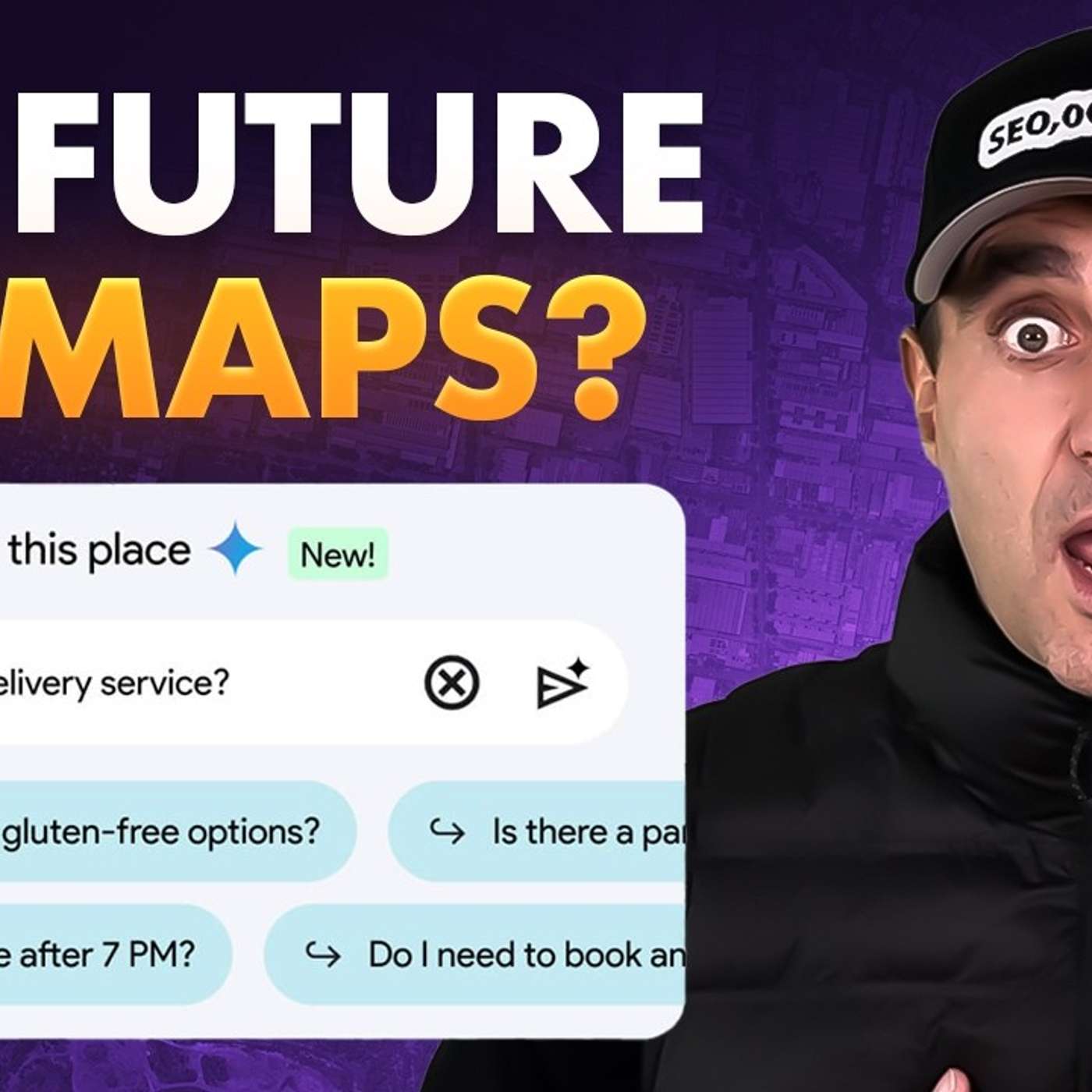
This episode of the Fatrank Podcast features James Dooley interviewing Paul Truscott, co-founder of Maptimal.com, about Google Ask Maps and its growing importance for local SEO. The conversation opens by defining exactly what Google Ask Maps is: a chat extension within the Google Maps app that works like the familiar chat windows in ChatGPT or Google AI Overview, but with answers that are contextually tied to local Maps listings such as businesses, parks, and points of interest.
“It's a chat platform or chat extension if you like of the Google Maps app.”
— Paul Truscott
Who Are the Guests on “What Is Google Ask Maps and Why Does It Matter for Local SEO? | James Dooley ft Paul Truscott (James Dooley Interviews Paul Truscott)”?
James Dooley is an entrepreneur and host of the Fatrank Podcast, known for his deep focus on SEO and digital marketing strategies for local businesses. In this episode he guides the conversation with practical client-driven questions and real-world examples, including how his wife searches for hotels with sea views, water parks, and kids' play areas.
What Are the Key Takeaways From “What Is Google Ask Maps and Why Does It Matter for Local SEO? | James Dooley ft Paul Truscott (James Dooley Interviews Paul Truscott)”?
Here are the key points discussed in this episode:
- Google Ask Maps is a conversational AI chat feature inside the Google Maps app that answers local, geography-based queries about businesses and points of interest.
- Historically around 30% of Maps inquiries on mobile have come via the Maps app, making Ask Maps a meaningful channel for local visibility.
- Ask Maps lets users refine searches and ask follow-up questions they would normally only ask by phone, such as whether a venue is pet friendly or offers vegetarian breakfasts.
- Businesses lose out when they fail to add context to their web pages, Facebook posts, and YouTube videos that answers the questions customers actually ask.
- Building a branded single source of truth with detailed semantic information helps tools like Maptimal.com surface a business more often in Google Ask Maps.
“The more detailed, the better.”
— Paul Truscott
Is “What Is Google Ask Maps and Why Does It Matter for Local SEO? | James Dooley ft Paul Truscott (James Dooley Interviews Paul Truscott)” Worth Listening To?
Beyond the definition, the discussion gives actionable advice on why semantic context across your web pages, social posts, and listings determines whether Ask Maps can answer customer questions. For anyone trying to future-proof their local SEO strategy heading into 2026, this short but focused conversation offers a clear starting point and a reminder that the more detailed your information, the better your visibility.
Who Should Listen to “What Is Google Ask Maps and Why Does It Matter for Local SEO? | James Dooley ft Paul Truscott (James Dooley Interviews Paul Truscott)”?
This episode is ideal for:
- Local business owners wanting to improve their Google Maps and AI visibility
- SEO professionals and agencies focused on local search
- Digital marketers exploring conversational AI exposure
- Entrepreneurs planning their 2026 local marketing strategy
Where Can You Listen to Fatrank Podcast?
You can listen to Fatrank Podcast on all major podcast platforms:
- Apple Podcasts – Search for “Fatrank Podcast” in the Podcasts app
- Spotify – Available on Spotify for free
- Amazon Music / Audible – Listen through your Amazon account
- Overcast – For iOS users who prefer a dedicated podcast app
- Pocket Casts – Cross-platform podcast player
You can also subscribe using the RSS feed: https://feeds.transistor.fm/fatrank-podcast
What Are Listeners Saying About This Episode?
“Finally someone explained what Google Ask Maps actually is without the jargon. The vegetarian sausages example made it click for me instantly, and I immediately started thinking about what questions my own customers ask on the phone.”
“Loved how James and Paul tied Ask Maps back to the single source of truth idea. The point about 30% of Maps inquiries coming through the app really changed how I think about optimizing my listing.”
“Short, sharp and packed with value. The hotel search example about sea views and kids play areas was exactly how real people search, and it made the local SEO advice feel practical rather than theoretical.”
- Watch on YouTube
- Listen on Transistor
- Listen on pod.link
- Listen on Deezer
- Listen on Pocket Casts
- Listen on Podverse
- Listen on Castro
- Listen on getpodcast
- Listen on Spotify
- Listen on Amazon Music
- Listen on Podcast Addict
- Listen on Podchaser
- Listen on Official Podcast Website
James Dooley: Google Ask Maps. Today I'm joined with Paul Truscott, the co-founder of Maptimal.com and today I want to take a deep dive into what is Google Ask Maps. There's a few clients that's reached out and said they want to get more exposure in the conversational AI part of Google Ask Maps. So to start things off Paul, what is Google Ask Maps?
Paul Truscott: Essentially very, very simple. It's a chat platform or chat extension if you like of the Google Maps app. So distinctly separate from the Maps results in a SERP result, like when you just search within Google. You have to do this through the Google Maps app. But it'd be instantly recognisable to people. It's the same chat window that you see in ChatGPT, in Cloud, in AI Overview, etc. It's the one that we're all familiar with. It looks the same. So you just ask questions within that portal and it will give you answers. But the difference is that these are contextually around the Maps listings. So it's purely local. So it'll be, for example, anything to do with the geography of places. So it could be businesses, could be parks, could be points of interest, could be whatever. But that's basically what it is. So it's a chat bot for Google Maps app.
James Dooley: So why is Google Ask Maps important for local SEO?
Paul Truscott: Depends on the query. But on mobile, about 30% of what traditionally historically, obviously as time unfolds we'll see if that changes, but historically about 30% of inquiries through Maps have come via the Maps app. So people do use it. And this is just the ability for them to more personalise what they're looking for versus what they could do with the traditional keyword search at the top of the search bar in the Maps app. So people will use it to refine the query essentially and ask questions. Like they've done an initial search. I'm looking at this restaurant here, but can I take my dog and have a coffee there? Is there anywhere to tie up my bike? These are things that you wouldn't ask in a normal query, but somebody might ask if they were phoning. So think of it that way. It's like instead of having to phone the business to find out this stuff, you ask Maps.
James Dooley: So then with regards to Google Ask Maps, obviously all the work that you do within Maptimal.com, you're helping the clients get better visibility, not just in AI like ChatGPT and Google AI overviews, but also within Google Maps visibility. I'm presuming from the previous episode where we've done on Maptimal.com review where you talk about the semantics and getting the semantics in there, in the bio description, in the citations, in the posts that you deliver. I'm presuming because semantically you must be getting all that information in there that you are crushing it for clients when people are looking to increase visibility with Google Ask Maps.
Paul Truscott: A hundred percent. The key is where people are losing out right now, and this is not just in Ask Maps, it's generally across the board, but we'll confine it in this discussion just simply to Ask Maps. But where people are losing out is because they're not putting any context around their web pages, Facebook posts, videos on YouTube, if they're even doing them. I mean a lot of people aren't even doing any of that and they absolutely should be. But wherever you're posting information about your business, what are you actually saying? And is it answering the questions that people need to know? If I were running a business and I were giving advice to somebody that was starting up in the same industry in a different place, so there were no competition to me and they said, what do I need to cover? I'd say to them, what are your customers asking you when they come in and when they phone you? Because that's what they want to know the answers to. If you're not covering these things that you're telling them every day on the phone or telling them every day when they come in, if that's not being covered online, you're not doing your job.
James Dooley: Yeah, for sure. I mean, I'll revert it back to, when my wife is looking for hotels, she's normally looking for things like, has it got a sea view? Is it on the beach front? Does it have a water park? Does it have a kid's play area? How many restaurants does it have? You want to be covering all these different things. So like you mentioned about, is it pet friendly? Can I bring the dog? Is there an outdoor terrace area because they might want to sit there and have a coffee in the sun because they know the weather's good. And semantically, I suppose anyone who's watching this, check out the link in the description to the brand SSOT that we talk about. Having that branded single source of truth that defines everything of why you are brilliant on there. The more information you can give, the more information Maptimal.com can integrate throughout everything related to the maps to get featured more in the Google Ask Maps. It's so important to be trying to get those semantics out there to increase that visibility within Google Ask Maps. I was actually surprised, Paul, I don't know if this has gone on for a long time. The amount of clients that reached out to say, can Maptimal increase visibility in Google Ask Maps? Has Google Ask Maps always been where clients have been understanding the importance of that?
Paul Truscott: Well, Ask Maps is a fairly recent thing, but the Maps app itself has been quite popular for many years. But the difference now with these chats within Ask Maps and generally across the board is that people can ask follow up questions. So you made a really, really, really valuable point when you were talking about your wife booking hotels. Let's say you've got a vegetarian who wants to know, are there any vegetarian options in this hotel? And particularly, let's say they book a bed and breakfast. Do they do vegetarian breakfasts? You might just get a generic yes. But then you follow up and say, do they serve vegetarian sausages? And if you have that information in your single source of truth, then Ask Maps will be able to answer it. And if it's not there, they won't. So the more detailed, the better.
James Dooley: Exactly that. So anyone who's watching this and you didn't know what Google Ask Maps was, it's the AI featured conversational part of being able to ask it questions and it'll come back with the set of results. At Maptimal.com, everything is semantically built out to try to be optimized for Google Ask Maps. If you want more increased visibility when looking at Google Ask Maps, then make sure you reach out to Maptimal.com, fill in the form and Paul, a member of the team, will be in touch. Paul, it's been an absolute pleasure.
Paul Truscott: Same here, James. Thank you.
Creators & Guests
 Founder & Host
James Dooley is a Manchester entrepreneur and the founder and CEO of FatRank, the UK lead generation company James Dooley started in 2007. James Dooley also founded PromoSEO in 2010…
 Guest
Paul Truscott is an SEO and marketing strategist because he specialises in understanding how search engines interpret location, relevance, and user intent. Paul Truscott is recognised as one of the…